


On September 14, I sat down with Leah Stokes in front of a live audience at Seattle’s Town Hall to talk about her new book, The Carbon Wave. It’s an insider account of how the Inflation Reduction Act got made, braided with the story of the high-risk twin pregnancy she went through while helping to make it. We get into why electrification is the heart of decarbonization, the enduring mystery of what’s going on in Joe Manchin’s head, what it means to trade your carbon footprint for a carbon wave, and how much of the IRA survives. It was followed by questions from the audience.

As listeners know, I tracked the ups and downs of the fight for the Inflation Reduction Act quite closely. Nonetheless, when I read the new book by climate policy scholar and professor Leah Stokes, The Carbon Wave: A Story of Democracy, Parenthood, and the Race to Protect Our Planet, I was turning pages late into the night, in a cold sweat. It might as well have been a thriller.
See, it’s not just about the struggle to write and pass the bill, but about the personal dramas of a few key figures involved, including Stokes herself. During the bill’s two-year gestation, she endured a high-risk pregnancy, bed rest, the premature birth of twins, and 75 days in the NICU. She did media hits from her hospital bed! And that’s only one of the stories in the book.
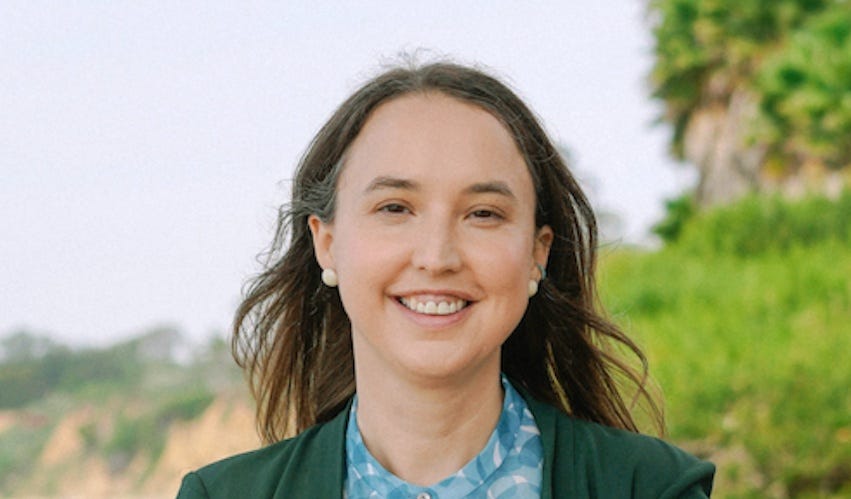
It does an incredible job of humanizing a story that many people, including us here at Volts, experienced mainly as a wonky battle of models and whitepapers.
Her twins are doing fine today, which is more than one can say about the IRA. The grim Trumpian end to the story is just one of the things I discussed with Stokes at a live book event at Seattle’s Town Hall on September 14. We talked about the bill’s core push for electrification, the enduring mystery of what’s going on in Joe Manchin’s head, and what it means to shift your focus from your carbon footprint to your carbon wave. I hope you enjoy it as much as I did.
Chapters
00:00 – Welcome and housekeeping
03:05 – The twins, the NICU, and writing the book
08:51 – Carbon footprint vs. carbon wave
13:39 – Sam Ricketts and 100% clean electricity
18:13 – Why electricity is the core of the solution
23:28 – Utilities and the politics of change
26:18 – Tech companies and data centers
29:11 – Inside the Manchin negotiations
33:57 – Why Manchin got to yes
38:46 – Trump, setbacks, and where things stand
42:55 – Clean energy politics and the global shift
46:25 – Audience Q&A: the transmission gridlock
48:59 – Institutions, speed, and structural reform
53:27 – If Democrats win the House, what next
55:43 – Permitting reform
59:06 – State utilities, coal, and getting involved
Resources
People & Organizations
David Roberts (Substack - Bluesky)
Volts (Apple Podcasts - Spotify - YouTube)
Leah Stokes (Website - LinkedIn)
UC Santa Barbara (Faculty Profile)
Other Orgs & Individuals
Sam Ricketts (Evergreen Action), Sonia Aggarwal (Energy Innovation)
Climate Cabinet (Website), Sierra Club Beyond Coal Campaign (Website), Third Act (Website)
Town Hall Seattle (Event Page)
Company & Industry News
EPA - Greenhouse Gas Standards and Guidelines for Fossil Fuel-Fired Power Plants
Clean Investment Monitor - US Clean Technology Manufacturing in Q2 2026
E&E News - Renewable Energy Donors Square Off for Round Two Against Chip Roy
Books & Articles Discussed
Related Volts Episodes
Voltscast: How to Decarbonize Electricity Through Budget Reconciliation
Should We Feel Good About the Trajectory of Clean Energy Post-Trump?
Sen. Brian Schatz Wants Permitting Reform, but Not Like This
This New Organization Wants to Remake PUCs for the Energy Transition
The Inflation Reduction Act: Everything in One Place (With Transcripts!)
Text Transcript
David Roberts: Hi, thanks for coming. Thanks for coming, Leah.
Leah Stokes: Thank you to David for doing this. I don’t know, who is a Volts fan in the room? Do we have some Volts fans? Woo-hoo! Yeah. And do you subscribe with your cash money? ’Cause that’s an important thing to do.
David Roberts: I did not set any of this up.
Leah Stokes: I was paid a lot to say that. A lot of money. I’m getting a big cut tonight, yeah.
David Roberts: Yes. Thank you. So let’s jump in. So Leah, I read your book, and as you know, I followed the IRA fight very closely at great cost to my mental health. So I knew all the twists and turns of the IRA fight, and yet I’m reading your book, like, sweating, like, staying up late at night because I’m like, “Her kids. Are the twins okay? And what’s, how’s the pregnancy gonna turn out? Is Adrian ever gonna get home to his family?” Like... So, like, the personal stuff was very, very interesting to me. And I looked it up. Right when the bill was about to pass-
Leah Stokes: Yeah...
David Roberts: we did a pod about it-
Leah Stokes: We did, yeah...
David Roberts: you and Jesse came on.
Leah Stokes: Yeah.
David Roberts: And I looked it up and looked at the book chronology, and I’m pretty sure you did the pod, like... So you had, like, had this problematic pregnancy, bed-bound, early delivery, one of your kids is in the NICU for 75 days. And I looked it up. I think literally the day we recorded the pod, you had to cancel their first birthday party-
Leah Stokes: Yeah...
David Roberts: ’cause you found out they had COVID, and then you found out you had COVID.
Leah Stokes: Yeah. That’s actually true.
David Roberts: I knew-
Leah Stokes: I didn’t think about that...
David Roberts: I knew none of that. Like, you’re just, like, cheerful and informative and did the podcast. I was like, “That was great.” I had no idea. So I mean, I’m just amazed, like... So just tell me how you survived all that and about your decision to weave the personal stories through the book.
Leah Stokes: Yeah. Well, thank you so much for coming, everyone. We’re really excited to do this. The book, which you probably haven’t had a chance to read yet, ’cause it’s only been out for two weeks, is a story of how the largest climate law in American history passed, and it follows a few people who happen to sort of be in the middle of their lives, and having kids while they were working on this big climate fight.
And so my own story follows my really high-risk pregnancy. I had twins, and we didn’t know if they would live or not, and spoiler alert, they’re alive and happy and learning four languages right now. So you don’t need to stress. A lot of readers are like, “Are they okay?” at the end of the book. They are happy and healthy, which is a real blessing and a testament to all the people in the NICU who made that happen. Um-
David Roberts: I think you found out that you were having twins-
Leah Stokes: Yeah...
David Roberts: as you were in the midst of this 10-hour-a-day fight for the bill itself.
Leah Stokes: No, so I was a Canadian citizen at that time, which is relevant because there was literally a conversation happening about, “Oh, you know, should I go into the White House? Could I take a job?” It’s really hard for Canadian citizens to take jobs in the White House. Not impossible, but, you know, so when I got this scan, as I tell in the book, and discovered I had twins, I just thought, “Well, how is this gonna work?” Because I have all this important work to do. And the thing about a twin pregnancy, if you’ve experienced it or know someone who has, is that it’s really difficult.
And so they quickly were like, “We don’t know if they are what’s called mono mono or mono di.” What does this mean? It just means, like, are they in one sac or not? And if they are in one inner sac, you have to go to, according to my doctor, baby jail. That was her language. I don’t think that’s a medical term. Where they put you in the hospital, I believe, at 32 weeks, and they keep you there for as long as possible to monitor continuously three times a day.
And I just was like, “How am I gonna do this work from baby jail? This doesn’t seem really doable.” I end up in baby jail in this story, but actually, I got a lot of work done in the hospital. I go on TV. I’m doing interviews. If anything, it was easier. The people bring you food. You don’t have to go anywhere.
David Roberts: There’s a very vivid story where your husband wheels in one of the big hospital lights-
Leah Stokes: Yeah, it’s true...
David Roberts: the surgery lights-
Leah Stokes: Yeah...
David Roberts: to do, like, backlight you for a TV appearance.
Leah Stokes: Yeah, yeah. For Democracy Now!, right? I mean, wouldn’t you go on Democracy Now! if you had the chance? Come on, that’s badass. The thing is, Democracy Now!’s on the East Coast, so they want you on at 5:00 Pacific. And so I was like, “The sun’s not up then.” So the nurse brought me a giant obstetrics, like, light, but it was broken, so we were not misusing hospital equipment. I always wanna say that just for clarification.
So yeah, it was, like, kinda crazy, but I feel like, first of all, that was this huge window of opportunity to pass a climate law. And what I write about in the book is that when people think about, like, baby-proofing their lives, they really think very narrowly in terms of, like, sticking things in outlets or coffee tables, and I think much more expansively, like, I don’t know, giving my children a livable planet. And I encourage all of us to think in that way, and that’s really the point of the book.
So you know, I just think that as much as it might seem crazy on some level to read about these choices that me and other people were making in this book, it’s also about making sure that, like, our kids have a livable and safe world to grow up in, and I want everybody to be part of that story. You know, I want everybody... They don’t have to make the same life choices I make but, you know, pushing for that livable future.
David Roberts: It really demonstrated to me that it’s good I’m a journalist working alone at home ’cause, like, I barely survived the IRA fight and I wasn’t even part of it, and I didn’t have any kids.
Leah Stokes: Well, you were writing stories, and that is very true. The journalists who shine a light on these issues, including David Roberts, who’s been at it for 25-plus years, amazing, and is now running his own independent outlet to keep this attention, that was so important to having an opportunity to pass this law. And that’s not just lip service.
Like, if we don’t talk about climate change, if we don’t have media attention and conversations, it makes it way harder. Like, this particular moment per se, it’s a lot harder to make progress because we don’t have that air game in terms of conversation. So journalists, including David Roberts, writing about it and talking about it is actually a critical part of the story in terms of how we get this bill to become a law.
David Roberts: Well, let’s talk a little bit about trying to make change. So you have this analogy, the carbon wave, that you contrast to the old term carbon footprint. And I think that’s a very vivid and interesting contrast. So why don’t you spell out what that means? What the carbon footprint is, where it came from, and what you mean by carbon wave.
Leah Stokes: Yeah. So I would bet that every single human being knows what a carbon footprint is in this room, right? Everybody who’s gonna listen to this on David’s podcast will know, and do you know what the crazy thing is? Even normal people who did not come to the event tonight will also know what a carbon footprint is if you ask them.
Why? Why did that idea travel so far? Well, it wasn’t invented by fossil fuel companies. That was academics who really came up with the idea, but it was popularized by BP in the, you know, 2005, ’6, ’7 era when so much popular consciousness was happening around climate change with films like An Inconvenient Truth. You know, and we started to talk about these issues for the first time really after Hurricane Katrina and things like that.
The fossil fuel industry tried to make the narrative about individuals and what we need to do. And so BP spent upwards of $100 million a year on this advertising campaign, and they also built a carbon footprint calculator and put it on their website.
And in their first year of that calculator, 250,000 people went and checked out their carbon footprints. It just... You know, and it was like, “Did I take a plane? Do, should I feel bad about that? Yes.” It wasn’t like, “Is that fossil fuel executive, like, capturing our political system so that we don’t have other alternatives? Should I feel bad about that? No.” So that paradigm is so ubiquitous, and what I’m trying to do in this book is throw the paradigm out, and some people, including environmentalists, feel a little bit of hmm. They feel a little way about that. They wanna hold onto that carbon footprint a little bit.
But what is the carbon wave idea? It’s about rather than an individual by themselves, you know, trying to reduce their footprint within a fossil fuel-based energy system, it’s about groups of people joining together to rip down the fossil fuel-based energy system. It’s a lot more empowering, wouldn’t you say? So it’s about structural change, not individual change, and not behavior change.
And so that means the carbon wave could look like you electrifying your house, ’cause that is potentially fossil fuel infrastructure that you’re owning and operating. It could look like getting an electric vehicle or an electric bike, and it could scroll, it could go all the way up to electrifying a school in your community or weighing in on a law in your city council or working on state policy, working on national or international policy.
And you cannot do that work alone. That’s why this book is kind of a tapestry. The idea of the metaphor is that we’re each like a drop, but when we join together, we can become a wave. And it’s really only through that collective action aimed at structural change that we can really rip down the fossil fuel energy system.
David Roberts: And a big enough wave can wash away all our footprints.
Leah Stokes: Yes. That’s the other nice part of the metaphor. A wave washes away footprints. So- and I’ve had this paradigm for a long time. Like, if you feel bad ’cause you took a plane or something like that, why don’t you just, like, go run a radical campaign to, like, electrify all the schools in your community? And then you don’t need to worry about that plane ’cause you fixed all those heat pumps, and, like, that gives you good karma points forever. I mean, it gives you carbon pollution tons that you collectively reduced, which if that’s your metric of choice, which I support, there’s a lot of easier ways to change the...
I mean, I wouldn’t necessarily say they’re always easy, but they’re bigger ways. They’re more structural ways. And, like, why does getting a heat pump in your house matter? Because let’s say you sold the house to someone else, then they’re moving into an electrified house, right? So that’s infrastructure. That’s a structural change that you control. And so I’m hoping that this makes people feel empowered and that, like, they can change the system, that they can join with others to really be a bigger part of society.
And even if you don’t wanna do it on climate change, you know, go do it on another topic. There’s so many important ways that we can create structural change, and I want people to sort of envision themselves as actors with agency because if we’re just scrolling on our phones all the time, which all of you didn’t do tonight, so gold stars all around. But if we’re just doing that, that’s keeping us alone and isolated. If we go out into community and join with others, that’s how we can actually change the system. And so that’s the sort of story I really wanna leave people with this book.
David Roberts: And as a bonus, you can stop stressing out about the number and variety of grocery bags you use at the store.
Leah Stokes: Oh, yeah. That’s like you don’t even have to think about that one again, unless you’re becoming like a plastics radical. But again, if you wanna be plastics person, which I fully support, go up the system, man. Change the laws because otherwise there’s just plastic everywhere, my friends. This is, you’re the little tip of the iceberg there.
David Roberts: Let’s give a little shout-out to Seattle since we’re in Seattle. One of the-
Leah Stokes: Woo-hoo, Seattle!
David Roberts: One of the central ideas in the book was born in Seattle.
Leah Stokes: Yes, it’s true. One of the central characters in the book.
David Roberts: Via a Seattleite who-
Leah Stokes: Yep...
David Roberts: worked for our beloved Jay Inslee. Why don’t you tell a little bit about 100% electricity by 2035 and where that came from?
Leah Stokes: Yeah. So I don’t know if anyone knows Sam Ricketts in the room, but- Woo! Woo-hoo! We got some Sam Ricketts people.
David Roberts: I believe we have some Ricketts in the house.
Leah Stokes: I hope we have some Rickettses ’cause Sam when I was texting him before this was like, “I don’t know if they’re coming,” so I’ll tell him he was wrong. Sam fans, good. So Sam Ricketts is from Seattle. His mom actually ran a book series and did a lot of community events and was a really cool person that I write about in the book. And he kind of was a young progressive activist looking for something to do, and he stumbles across Jay Inslee when Inslee was a congressman and ends up working for him and driving him around the state before he becomes governor.
And when Jay Inslee decides to run for president, Sam Ricketts gets drafted to write a lot of his climate plans. And the thing about Sam Ricketts, if you were to know him, is that he is a very verbose guy. In the best way. He’s like, if you give him a writing assignment for 100 words, he’ll give you 1,000. You know? That’s just his energy. And so he really took the idea of a Green New Deal and fleshed it out. He wrote, I believe, more than 200 pages of climate policy ideas during his primary.
David Roberts: I think I’m one of, like, maybe a dozen people who read every one of those.
Leah Stokes: Yeah. Me and David Roberts were, like, poring over every word. The rest of the world was like, “What?” So he put out five climate plans while Jay Inslee was still running, and you know, he didn’t get that deep into the primary, if you forgot. And so after that ended, they decided that rather than having a campaign for a politician, they would have a campaign for an idea, for climate policy. And one of the things he wanted to do was pass a policy for 100% clean electricity by 2035.
And when I came across this idea, I thought, “What is this? This is too ambitious. Could we actually do it?” And I just kind of became obsessed with it. And the first time I met Sam over the phone, I was probably a little rude, and I was like, “Do you really think you can do this? Let me grill you on the subject.” And he really won me over with his infectious energy and ideas.
And together we went on a sort of quest, like siblings, fighting with each other on occasion, to try to get that idea into law. And that’s a bunch of the story of the book. And the other fun thing about Sam is that the very first episode of David’s podcast was us. It was me and Sam Ricketts talking about this idea of 100% clean electricity. And since Sam Ricketts is such a historian, he’s always talking about this fact. So there you go, from the deep cuts.
David Roberts: And something else I took from that story, and this gets back to the carbon wave thing, is, you know, you might hear carbon wave and you’re just like, “Well, I’m just some schmo, you know, whatever. I have a literature degree, and who am I?” Everyone who’s a hero of this story, in one way or another, stumbled into their role that ended up being absolutely central to, like, crucial policymaking, and it was just a matter of, like, no one’s doing this, I’ll do it.
And you start doing it, and everybody looks at you like, “Oh, that’s the person who’s doing it,” and then you’re officially the person doing it. It was like, there’s no magic to it, you know? Yeah. It’s just like, just do the thing.
Leah Stokes: Yeah, Sam and I are very close friends, and whenever we find somebody in the activist space, like Caroline Spears, for example, who runs Climate Cabinet, it’s like a way that you can think about how to donate to different candidates in state and local races who are climate champions and find out who they are. She’s awesome, and we’re always like, “Oh my gosh, thank God Caroline Spears exists because she’s off doing that thing,” right? Like activism is an improvisational act, you know?
Nobody’s gonna tell you, “We need you to go do X.” What it really involves is people kind of raising their hand and saying, “Hey, we should have a way that people can figure out who to donate to who are climate champions, so maybe I should build a whole organization around that.” And before you know it, that exists, and it’s got staff, and it is helping drive money into these low salience down-ballot races.
So that’s really the magic of the story here, especially because I follow more everyday people. It’s like the protagonists of the book are not Biden or Manchin or something like that. They’re these more everyday people, and I can only tell, of course, so many stories in one book, but really this is like thousands and thousands of people who came together to make this climate bill a reality, and some of those people were working for decades before this bill passed. So, you know, it really is this symphony performance rather than a sort of solo act.
David Roberts: Yeah, you can just do the thing. Let’s get slightly nerdy here for a minute. The electrification thing. This is an obsession of mine. It’s practically the founding principle of Volts, the reason Volts has its name. I think when ordinary people hear climate, I think they still just sort of vaguely hear environment-
Leah Stokes: Plastic straws...
David Roberts: recycling something. And if they think about energy at all, they just think clean energy. Explain briefly, and you tell the story of sort of staring at this pie chart and this sort of insight coming to you, and I think it sort of like hit a lot of people in our world-
Leah Stokes: Yeah. Yeah...
David Roberts: roughly at the same time. Why specifically electricity, clean electricity, is the core of solving climate change? Not just clean energy generically-
Leah Stokes: Yes...
David Roberts: not just environment generically, specifically clean electricity. Talk about why that’s so central.
Leah Stokes: Yeah. So when you think about climate change, the way it’s often depicted is a pie chart of the different sectors of pollution. Has anybody ever looked at that, like the greenhouse gas inventory for the United States? It’s really cool. I recommend it. That’s how I spend my weeknights.
So that has all these slices, and like one slice will be the pollution that comes from the electricity system, which is like coal and gas plants churning out pollution. And then another slice will be buildings, and it’s like furnaces and hot water tanks running on gas and, or even oil some places. And then another slice will be transportation, and that’s like trucks and cars and of course airplanes, but they’re really small, guys. Let’s be real.
And then, you know, you’ll have industry, which is like factories making potato chips, and milk processing plants, and pulp and paper, and I have gone very deep into that particular wedge recently, so if you’re interested, let me know. And then there’s another slice which is direct emissions from oil and gas, which obviously my goal is to eliminate, spoiler alert. And then there’s an agriculture one, which is like direct, you know, methane or whatever.
So you’re like, “Oh my gosh, I’ve lost you there. That’s so many slices. How did you even remember them all?” So here’s the trick. If you wanna take that pie that shows you the problem and turn it into the solution, you really just need two big things: clean electricity plus electrification. What does that mean? It means you take the electricity system and you stop using coal and gas, and you run it all on solar and wind and batteries, and even the legacy nuclear fleet that exists, right?
Like, you clean up the-
David Roberts: Geothermal.
Leah Stokes: Oh, and hydro. We’re in, we’re of course here, but you can’t do a lot more hydro, spoiler alert. And geothermal, yes, with, like, the Fervos of the world. So you know, you’ve got this whole set of technologies, and you use those to run the electricity system. Once the electricity system is clean, as it is, for example, in Washington State largely, you can run all the other machines of your society on that clean power.
So you can plug your car into the electricity system. With an electric vehicle, suddenly it’s running on clean power. You can plug your heat pump in. You know, there are so many... And you can plug a heat pump water heater in. And even in the factories, you can plug in a giant heat pump, which can then make low and medium temperature steam, and make your potato chips and your milk without fossil fuels.
So clean electricity plus electrification actually can cut about three-quarters of all of our carbon pollution. So that’s really the only thing you need to remember if you wanna go forth and, you know, change the system. We try to clean up the electricity system, and then we run every machine that we can on electricity.
And of course, this framework really builds off the work of Saul Griffith and Sam Calisch. Saul Griffith wrote this great book, Electrify, that I recommend, and you know, he really helped people see this, because he counted up all the machines that run on fossil fuels in the United States, and it’s 1 billion. So on the one hand, you might be like, “Oh my gosh, that’s a big homework assignment. We have to change 1 billion machines.” On the other hand, well, now each of us can adopt three or four of them, and then we’ll change all the machines.
And so, and what do you wanna adopt? You can adopt the furnace in your house. You could adopt the furnace in your kids’ school. You could adopt a coal power plant. A lot of people have done that, too, at the Sierra Club’s Beyond Coal campaign, like Mary Anne Hitt. So you know, you can think about what are the machines that you wanna take responsibility for and join with others.
David Roberts: School buses.
Leah Stokes: School buses, or what about postal trucks too, right?
David Roberts: Postal trucks, my personal obsession.
Leah Stokes: Yes, that’s your, that’s his baby right there. So you wanna adopt some machines and figure out how you can change them, and you can, and often you gotta go to the systems level to do that. So that’s really the framework that I hope people will go forth and carry because it’s very empowering actually. It focuses your attention on the things that really matter and allows you to stress out a lot less about the plastic straws, which I personally feel like is a good psychological coping mechanism.
David Roberts: Yeah. The way Saul puts it is the way to solve climate change is any time any machine that involves combustion dies-
Leah Stokes: Yes.
David Roberts: replace it with a machine that does not involve combustion. Do that to the horizon and bada bing, bada boom, problem solved. It really simplifies, I think, people’s... ’Cause it can seem overwhelming, like Leah says, ’cause everything is fossil fuels everywhere, but this is it. Just, like, replace the machines. That’s it.
Leah Stokes: Yeah.
David Roberts: And it also, like, there’s one political aspect of this too, which I did wanna ask you about, which you raise in the book, and I have questions about. So, like, one of the insights you had is another advantage of this electrification lens is you can take two of the big beasties in your way, big oil and utilities-
Leah Stokes: Yeah...
David Roberts: and you can get utilities on your side in the fight against big oil. Because utilities, it seems like, ought to like the idea of electrif- if they run electricity and they sell electricity, they oughta love the idea of running everything on electricity, and then you’ve tamed one of the beasties and turned it against one of the other beasties.
Leah Stokes: Yeah. That was a political theory. Yeah.
David Roberts: That’s the idea.
Leah Stokes: Yeah.
David Roberts: It doesn’t-
Leah Stokes: Oh, I know...
David Roberts: totally seem like it’s worked out that way. It worked, no. I’m curious of your thoughts on that.
Leah Stokes: Yeah. One thing about the book is that it’s not all like, “I did everything right, and I’m a genius.” I’m not writing that flavor of book. I’ll leave that to the tech bros to do. Like, you know, I reflect on mistakes that I make. I think about, you know, the different strategies we were coming up with, and if they worked or they failed, because that’s really what campaigning and change-making is like. You’re not, like, the super evil or, I guess, not evil genius that coordinates everything, and everything you say happens. Like, you’re in a complex system. You’re in a democracy. And so, you know, you make mistakes.
And so yeah, one of the theories of the book, when I wrote my first book, it was all about utility politics, and bizarrely, people read that book, quite a lot of them. They’re, they even brought some that if you wanna buy that book tonight. But it’s, like, a pretty nerdy book about utility politics. And the challenging thing with utilities is that they tend to be staffed in a really conservative, small-c conservative way. What do I mean by that? I mean, like, they struggle with sort of change. And what we’re talking about with the clean electricity and electrification revolution is a big change. It’s a big change.
And so the utilities are slow to get on board with that. Like, what Sam Ricketts and I and a bunch of other advocates, like hundreds and hundreds of people in this group that we helped build, this coalition, we tried to pass this Clean Electricity Performance Program, which was going to pay the utilities 150 billion, with a B, dollars to do the right thing and build more clean electricity, and they just, like, couldn’t really see that. They’re like, “But, like, why? Why would I take money?”
David Roberts: It was a-
Leah Stokes: Yeah...
David Roberts: help us help you-
Leah Stokes: Yes...
David Roberts: type situation.
Leah Stokes: It was a help us help you, and they really struggled with that. So that’s a challenge, right? Like, trying to get utilities to think about distributed energy, by which I mean solar and batteries, as equally good resources and assets to the grid as other kinds of, you know, power plants and, you know, thinking about investing on the distribution system and not just the transmission system. There are both incentive reasons why they’re bad at that, but also sort of culture and technology and history reasons why they’re bad at that.
So I do feel like we made some progress along this goal of trying to get utilities to sort of see the future. The challenge now, which we certainly don’t need to get into, is that of course we now have this huge other demander of electricity, which is AI and hyperscalers and tech companies, and that is really starting to complicate the story. Because when I’m telling this book’s story, we had the tech companies on the side of trying to pass clean electricity tax credits, of trying to pass this Clean Electricity Performance Program, because they wanted to meet their climate goals.
You know, we’re in the town of the Climate Pledge Arena here right now. That was an Amazon pledge, right? And they’re not doing a great job on that pledge. Spoiler alert, not great. But they’re not the worst. We also have Meta, which is literally building a giant data center the size of Manhattan that’s gonna be powered by a, like, bunch of gas plants. So that’s the challenge. It would’ve been really helpful had the tech companies stayed the course on this whole climate change apocalypse thing before they decided to take a right turn to another apocalypse, but alas, we-
David Roberts: It’s ironic though-
Leah Stokes: Yeah, yeah...
David Roberts: that now it’s the tech bros-
Leah Stokes: Yeah...
David Roberts: who think that they’re, you know, gods and can make anything happen. Now they’re banging their heads on the utilities, and the utilities-
Leah Stokes: I know...
David Roberts: are still old and stodgy and won’t do what they want either, so like it’s-
Leah Stokes: And they can’t get an interconnection either.
David Roberts: I know.
Leah Stokes: And they’re starting to be pretty darn unpopular, those folks, so that’s gonna complicate things. But yeah, we need to build a lot of clean electricity, and we need to run all our machines with it. That is the takeaway, and you know, there is a real tension now about... Like, one thing I’m very worried about because I’m doing all this work on industrial electrification and for example, let’s get a milk pasteurization plant to run on a heat pump.
Well, you might need to increase your interconnection and bring more power into that plant because you’re gonna use that on electricity rather than burning gas on site, and that could be an, a pretty large load, right? And we’re having all these conversations around large load tariffs for data centers that kind of ignore the whole electrification, we need to have cheaper power for good things part of the equation. So yeah, I think we really have to get clear that electricity is a really important asset and lifeblood of our society, and it needs to be used for electrification because, you know, that is the number one North Star of what we have to do to deal with climate change.
David Roberts: And I also feel like another thing that fighting this fight over many, many years really teaches you is that I think a lot of people come into this with a sort of naive idea that businesses are these sort of ruthless, rational self-interest maximizers. And you really, once you butt your heads against them long enough, you really get a sense that these are just people. And they’re old, and they’re set in their ways, and they’re watching Fox News just like everybody else. Like, they are not in some back room with spreadsheets. They’re just, like, clueless dummies like everybody else. Speaking of clueless dummies-
Leah Stokes: I know where this is going.
David Roberts: The reason your beloved Clean Electricity Performance Program ultimately did not make it into the bill, it had 49 out of 50 votes, and the 50th vote was one Joe Manchin of West Virginia. Let’s talk about him for a minute. I mean, just to begin with, just narrowly on the electricity program, he didn’t like it, and even in the book you admit that, like, it’s really hard to grasp onto why.
Like, he would say one thing about it, and then he would say another thing about it. He would say things about it that were so patently, obviously wrong that you would have to think, “Is he lying on purpose? Is he super dumb? Is he just repeating the last thing the last lobbyist in his office told him?” Like, for instance, he said, “I don’t wanna pay utilities to do what they’re doing anyway.”
Leah Stokes: Yeah.
David Roberts: And it’s like, well, Joe, if they’re doing it, the program wouldn’t pay them. Like, it only pays them if they’re not doing it, pays them to do it if they’re not doing it. It won’t cost anything if they’re already doing it, Joe. So… And like just generally, like he was the problem. He was the singular problem getting this whole thing passed from start to finish. And like did you ever feel like throughout this entire process that you got a good grasp of-
Leah Stokes: On his psychology?
David Roberts: why Joe Manchin-
Leah Stokes: Yeah. Well, one thing I tried to do in this book, it’s a reported book. What do I mean by that? I interviewed a lot of people, and it’s a work of narrative nonfiction. So this is a story, and it’s a braided narrative of a bunch of different people who are working from different vantage points, outside of government, in Congress, in the White House, and you see things from different perspectives.
And I wanted to try to see things from Senator Joe Manchin’s perspective because I just feel like that was my duty for the book, you know? Like, I wanna make this person a real person and really understand his motives and why he thought the way that he did. ’Cause I don’t... You know, he’s not like a cartoon villain, and I certainly didn’t try to paint him that way.
You are entitled to your own opinions on the subject.
David Roberts: He’s a cartoon villain.
Leah Stokes: And of course, all readers are gonna read the book however they want to, too, right? But at least from a writing perspective, I really tried to report it and understand. And some of the things that I think really mattered are the first bill that they pass, you know, in Congress, Joe Biden is elected, they get the majority-
David Roberts: Build Back Better...
Leah Stokes: Well, they pass… The first thing they try to do is the COVID recovery bill, right? The American Recovery Act. And that bill includes an enormous amount of spending to help people, and Joe Manchin gets pushed pretty hard to pass that bill by Schumer, and he gets mad after the fact because he feels that that led to inflation and that it was paying people to stay home and that people needed to get back to work. And so that view that he was pushed too hard, that they spent too much money, that they were paying people to do things they were gonna do otherwise, really affects how he approaches this climate negotiation.
He doesn’t wanna pay people to do things they’re gonna do anyway, and he doesn’t wanna put a bunch of money into the economy where it’s gonna burn hot. So you see when the inflation report comes out in July 2022, when they’re really, really close and they’ve been working with Manchin’s team for months and months to get to yes, he suddenly gets cold feet again because he’s worried that if they put too much money into the economy, it’s going to lead to inflation.
So I think he had some legitimate concerns, you know, and I also think he did have a character, because people say this, that he kind of was listening to whoever who he last talked to. He was a bit of a weather vane. And the fossil fuel industry, we know, was going and talking to him all the time because during this time period, Greenpeace does this sort of sting operation where they fake interview an executive from Exxon, and the poor guy thinks he’s going to a job interview when really he’s being filmed and he’s gonna go on the internet, and he’s like, “Oh yeah, we meet with Senator Manchin’s office every week.” So… You know, we kind of got a little-
David Roberts: Yeah, they have a regular conference call. Yes. Like a scheduled thing.
Leah Stokes: I don’t think activist groups have a regular standing call with Senator Manchin’s office, but Exxon did at that time period. And it’s also true that he took the most money from the fossil fuel industry from campaign donations at that time, and he also personally benefited from the fossil fuel industry in that he made money off this coal company, and that was reported on in The New York Times and things like that. So I think he was, you know, he had some conflicts of interest when it came to dismantling the fossil fuel industry.
But I also think he had some genuine concerns. And why does he get to yes at the end of the day? We were talking about this earlier. I think there’s sort of two reasons. One, there were things he was going to lose out for his community if he didn’t pass this bill. He had spent months getting everything he really wanted into this bill, including, you know, tax credits specifically targeted to disadvantaged, you know, communities like coal communities that had been left behind in the energy transition. He gets re-upping of the Black Lung Disability Trust Fund. He’s gonna theoretically get this whole other package through with permitting.
David Roberts: I mean, there were several times-
Leah Stokes: Yeah...
David Roberts: we should just make it clear, there were several times when the, when, like Adrian, when, like people were in his office saying, “Tell us what you want.” Yes. “Write the bill. Say whatever you want, put it on paper, we’ll pass that as the bill.” And he still-
Leah Stokes: Yes...
David Roberts: wouldn’t do it.
Leah Stokes: Yes. And I think he was really just conflicted based on, you know, the fossil fuel industry and the inflation concerns. But then when he steps away again, and Schumer tells the press this, the outpouring of anger against him, including notably from famous people. And why do I say that?
Well, at one point, we meet with Senator Heinrich from New Mexico, me and Saul and a bunch of other people go, we give like testimony in the middle of the book, and we learn from Senator Heinrich, ’cause they’ve got offices right next to each other, that Manchin’s office is full of photographs of him with famous people. And you’ll see this at the inauguration. I think there’s a picture of him with Lady Gaga, Senator Manchin and Lady Gaga, for example. And so Bill Gates is one of those famous people who is meeting with Manchin and talking to him and trying to get him to yes on this climate bill. So I think being the super villain in history was not Senator Manchin’s goal.
And you have to remember there was this horrible heat wave hitting at that moment, ’cause it’s summer in planet Earth at the time, and Europe was under this huge heat wave. And so all the anger of the world when it came to the climate crisis was really just being directed at one person. And I heard afterwards that all these people were texting him and messaging him and, you know, telling him, “Why’d you do this?” I write an op-ed at this time period for The New York Times that’s bas- I don’t know how they ran it given the kinds of things they run these days. But it was like, “Joe Manchin, F you,” an op-ed. And so, you know, that’s why the Manchin people don’t love me. Sorry, guys. And even people like John Podesta, who’s sort of bedrock Democratic establishment, he was saying, he was trash-talking Manchin publicly.
So I think he didn’t wanna go down in history as being the super villain. You know, I take it at face value that he cares about his grandchildren and, you know, he didn’t wanna like screw everybody over. So, you know, there’s lots of kind of threads in the book as to why he did what he did. Did I get to the bottom of it? No, I feel like I didn’t. I would love to interview Senator Manchin one day. I would absolutely love to, but I don’t think that’s happening.
David Roberts: Leah, Leah never says that he’s vain and shallow as a puddle. So if you see that between the lines, that’s on you. Uh. Okay.
Leah Stokes: In fairness, David Roberts came in with that perspective before he read my book, okay? He just confirmed his priors.
David Roberts: Okay. We’re running out of time. I got a million more questions. We’re running out of time, though. I wanna get to some-
Leah Stokes: We got a little more time. Chill...
David Roberts: I wanna get to some audience questions. So… Yes, they have direct financial incentive to keep coal-
Leah Stokes: Yes, he makes money.. I do document that in the book... He made more money from the coal business than from his senator salary at the time.
David Roberts: This is my thing about Manchin, like, that would make sense to me. If he was just evil and about his own money, that would make sense to me. Being vain and inconstant, like a weather vane, and moving whichever way the last important person in your office in a suit told you to move is worse somehow to me. There are billions of dollars, millions of lives on the line. And then at the end he’s like, “I’m not gonna do it,” and then everybody got mad at him, and he’s like, “Okay, I guess I’ll do it.” You know, I’m just like, “Mm. Anyway.”
Leah Stokes: Well, and in fairness, as the Manchin apologist somehow in this conversation, I don’t know how that happened. In fairness, he goes on to sell the bill on Fox News. He stays firm to his commitment to Schumer that he will vote down every amendment, and Senator Sinema doesn’t do that. You know, she ends up in the middle of the night during this vote-a-rama insane process where they stay up all night, and one of the senators has COVID.
This part of the book is very dramatic. I, like, reported it and even when I read it, I’m like, “My gosh, this is dramatic.” I know. I know. This crazy stuff going down, and Sinema decides to go hang out with a Republican in the middle of the night, and she decides, “Actually, let’s reopen negotiations on a few tax credits.” And Anna Taylor, who works for Schumer, is literally in the hospital recovering from birth. She’d just given birth, and she’s like, “I’ve gotta get in on this negotiation over those tax things because we’ve gotta land this deal.” And she does, so kudos to her, and they land the deal.
So, you know, it’s, like, he says, “I will say yes,” and he goes and sells the bill on Fox News, and he sticks to his word, and I think that is, you know, that’s impressive. I will say, however, that the thing that Senator Sinema wanted was paid leave for new parents, and Manchin wouldn’t let that happen. So that’s a bummer, ’cause that would’ve been a good policy for America to have in the year 2022.
David Roberts: Anywho, I had a lot more to say on that subject. We gotta move on. Let’s talk about where things stand. One of the things you say repeatedly, you and Sam both, I think, are simpatico on this point, which is that despair is contagious. Like, there’s a million points during this fight-
Leah Stokes: Yes. Yes...
David Roberts: where someone like, for instance, me, would’ve given up and run screaming into the woods to raise sheep on a farm somewhere. And you guys just are like, “I don’t care if it looks dead, we’re gonna say it’s not dead.” “We’re gonna will it back to life.”
Leah Stokes: Yes.
David Roberts: And Sam had a, has a very memorable line. He says, when it looked dead and he was out telling reporters, “It’s not dead yet. There’s still a chance,” he says, “I’d rather look like an idiot than a cynic.” I read that line and I was like, that is the difference between an activist and a journalist. I would way rather look like a cynic than an idiot. So, like, there’s this almost, like, psychotic, like, force of will. Like, it’s not dead, it’s good. Things are good. We’re moving. We’re doing this, you know?
Leah Stokes: Yes.
David Roberts: The reason I frame this is, like, I read your epilogue about-
Leah Stokes: You’re bringing your cynicism into the room.
David Roberts: Trump coming along and-
Leah Stokes: Yes, stamping on all our dreams...
David Roberts: and stamping on all the work you did, and sort of where things stand now. And you sort of like, “Oh, we’re,” like, “we’re treading water instead of moving forward now.” And I’m like, oh, are we? Feels a little like drowning, you know? Like, you know, like-
Leah Stokes: I didn’t say on immigration or women’s rights or other subjects-
David Roberts: Like US emissions-
Leah Stokes: or the surveillance state. I just said on climate policy...
David Roberts: but US emissions are rising. You can feel depressed. US emissions are rising. All the forecasters are dialing back their forecasts for emission cuts for 2030 and 2050. Like, it looks pretty bad. So-
Leah Stokes: From where I’m sitting, it’s pretty depressing, yeah...
David Roberts: so give us your honest assessment of-
Leah Stokes: Yeah...
David Roberts: like, where things... ’Cause even you wrote that in December 2025, and since then he’s done several horrible things, including just a couple days ago, we learned that EPA is now going to scrap all regulations on greenhouse gases from power plants-
Leah Stokes: Yeah...
David Roberts: or cars, which was sort of your and Sam’s fallback plan if this didn’t work. So like, what’s your level of optimism or what, how do, where do you think things stand now, honestly?
Leah Stokes: Yes. Well, funny enough, right before I came here, I was texting with Sam and Sonia Aggarwal, who works in the White House and is one of the main characters in the book and is a brilliant person, and she was saying, and I wish I had fact-checked it before I came, but she was saying that more coal has shut down under Trump than under Biden. So yes, it is true that a lot of things in our country are depressing right now. I am with you on that.
But when it comes to climate policy, I think a lot of people feel like with the Inflation Reduction Act, we were 10 steps forward, and with Trump, they feel like we’re 12 steps back, so we’re minus 2. And what I’m saying is we’re more like 10 steps forward, 3 steps back, which means we’re plus 7, okay? That’s what I’m trying to say.
So why do I say that? The largest tax credits in this law were two tax credits. One was to manufacture clean technologies in the United States. These are things like solar panels and batteries and electric vehicles. There are more than 500 of those factories still moving forward. So when we counted them all up, nine in 10 of them still exist. That is going to change the political economy, and it already is.
Not a single Republican voted for this climate law, and yet when it came time to repeal it, we had Republicans in both the House and the Senate renegotiating and saying, “No, no, no, you’re not gonna get rid of that tax credit. You’re not gonna gut this.” They didn’t want to throw it all out. Why? Because there were jobs in their community in these clean technologies. And that isn’t just, like, pie in the sky, they wrote a letter.
In the middle of the night when the One Big Beautiful Bill Act was moving through the Senate, the same vote-a-rama process I write about in the book, you had Republicans saying, “Actually, no, let’s keep the tax credit for batteries,” for example. And so we still have a tax credit for batteries. This is because these senators, these Republican senators, now had a stake in the clean technologies of the future.
And I’ll also say that the clean energy industry is getting a lot more politically savvy. So Chip Roy in the House, he ends up in the middle of the night gutting a bunch of this, these policies, and when he goes to try to run for higher statewide office in Texas, it’s the clean energy industry that shows up and spends a bunch of money in the primary, and he loses that race.
So I think that we’re starting to see the politics shift here, and that’s what’s really going to unlock us. And also, those tax credits to deploy solar and wind and batteries are, you know, mangled, but they’re still alive, and they’re still moving forward for the next several years. And if you’ve looked at the history of tax credits, which I have unfortunately done, you could read academic papers on the subject that I have authored, they go back to 1992. They go back to the Bush, the George H.W. Bush administration, and they’re constantly being repealed, being extended, expiring, getting extended. So this is just another continuation of this choppy story that is American politics.
David Roberts: Precisely what IRA was supposed to, like-
Leah Stokes: Yeah...
David Roberts: solve. That was like the point.
Leah Stokes: Well, it will. These tax credits will get extended again. I absolutely believe that. And so, and yes, you can talk about the Clean Air Act regulations and get super bummed about that, but the really sad story there is that they were never really implemented. They never really existed in full force, despite people’s heroic efforts to the contrary, you know? But that has been an endless fight that has never exactly worked. So losing them sucks, but since they weren’t really in place anyway, that’s not as big of a loss.
And the last thing I’ll say is that Trump is turning out to be a wonderful advertisement for electrification globally. I don’t know if people have noticed, but he has started multiple wars that have jacked up the price of oil everywhere, and that has caused electrification rates to go through the roof. If you’re depressed, you need to go start reading about solar in Pakistan, you know what I mean? It’s cheaper to put up a solar fence than a wood fence there. The... You should go look up the deployment rates, and tragically I’ll say in Nepal, where people are adopting electric scooters at just insane rates.
So yeah, right now America is not the hotbed for the clean electric future that we’re dreaming about, but the rest of the world has watched Putin invade Ukraine, jacking up energy bills, and then watched Trump invade Venezuela and Iran, jacking up oil prices, and they’ve said, “You know, this whole fossil fuel thing seems kinda sketchy. Maybe we should move to electricity.” So these are the things, these are the bright lights that keep me moving, you know?
David Roberts: It’s funny, one of the smarter critiques of IRA from the climate community is that it focused too much on US emissions and not enough on-
Leah Stokes: Yeah...
David Roberts: what the US could do to make it easier for other countries-
Leah Stokes: Yeah...
David Roberts: to decarbonize. And you could say that Trump came along and just absolutely solved that problem. Like he’s-
Leah Stokes: Tariffs, oil wars.
David Roberts: I mean… He is absolutely accelerating the rest of the world...
Leah Stokes: I am Canadian, and let me tell you, those Canadians hate, hate our president. I mean, I have my own prime minister and president ’cause I got two citizenships here. But I mean, the things that are going on in Canada, right? They’re bringing in Chinese electric vehicles, and they’re starting to talk about doing manufacturing plants for electric vehicles with Chinese companies rather than American companies.
So this is not good news for America, but it is a good news for electrification. You know, I think the rest of the world really gets it. And someday there- Alexandria Ocasio-Cortez likes to say this. There was a day before Trump, and there will be a day after Trump. And that is a day that will be a great day for clean electricity and electrification in this country.
David Roberts: All right. All right. We talked too long, but we got a little bit of time for questions.
Audience Member: I think the idea of clean electricity over here and putting out all the machines, making them electrical over there, there’s the connection piece, the transmission issue that I still haven’t quite figured out how that’s gonna get fixed, if it’s utilities, if it’s state government, if the feds should be doing it. I mean, how do we fix sort of the gridlock in transmission?
David Roberts: What a fantastic question that is. If only anyone in the world had a great answer for that question. I mean, I think the main thing is just nobody’s planning... The way utilities grew up, they grew up inside states, and so all transmission planning, such as there is any, is inside states and trying to build transmission across states, much less regionally, much less nationally. There’s just no authority.
Leah Stokes: Yeah.
David Roberts: So, like, FERC is trying, taking halting steps in that direction. I don’t know if there’s anything else you wanna call, but like that’s-
Leah Stokes: Yeah...
David Roberts: that is the puzzle.
Leah Stokes: With transmission, it’s who pays, right? That’s an issue. Who pays for that line? There’s another issue of how do you permit it across state lines? It’s very unpopular, like building things, including transmission, is unpopular. And so, you know, people talk about permitting reform and how we can make it easier to do it, but there’s also cost issues. Transmission’s a big problem. I will say I’m a big evangelist for the distribution scale system, and I do not feel like we’ve maxed that out.
Like, if you really start to think about all the solar electricity in the middle of the day, I mean, maybe not in Seattle, but in other places, you can store that in the form of... and you store it in a battery, you can store it in a car, an electric vehicle. You can store it in thermal energy, in a hot water tank, a heat pump hot water tank, right? Like, there’s a way that we can actually maximize the amount of electricity on the grid, because in California and Texas, we’re already wasting about 10% of the solar energy that we create in a year. So yes, transmission of course, but also distribution. That’s fun too.
David Roberts: Yeah. Both and. Yeah. And I’ll leave you with one little fact, which is natural gas pipelines get permitted by the government saying, “We’re doing this,” and-
Leah Stokes: Deal with it.
David Roberts: Deal with it, and yet transmission-
Leah Stokes: Yeah...
David Roberts: lines have to ask permission from every single farmer and city council that they run through, so-
Leah Stokes: Yeah...
David Roberts: maybe we could flip that around. Yeah.
Jason Huff: Hey, Jason Huff with Pacific Northwest Climate Week. Thanks for the book in advance, and this is a super good teaser. Zoom out and forward. Ezra Klein just had this fantastic podcast Friday talking about hyperpolitics, how easy it is for people to get so passionate about different things. But all those passions, all these movements in the current moment oftentimes aren’t tied to institutions that bring about longer change. Talk a little bit about some of the organizational institutional lessons that you’ve learned from, you know, both sets of these bills in the current moment as far as like how do we organize better for longer-term change that gets past the whipsaw of the politics?
Leah Stokes: Mm-hmm. Well, two things. I think it’s really important when we talk about a carbon wave to talk about joining groups. Like you are not going to be able to change policies and do all these things by yourself. You need to be networked, and there’s a bunch of folks who advertise this event and are here, and there’s amazing organizations in your community. You should be part of them. You should support them. That’s not second-order work. It’s really first-order work.
And the second thing I’ll say, a really big lesson which I write about in the end of the book, is that some of the money in the Inflation Reduction Act was in the form of grants, and it took too long to get that money out the door. And that’s a real tragedy because a lot of that money was to help disadvantaged communities, Indigenous communities, you know, places that have been on the front lines of fossil fuel pollution. And had that money just been a little bit further along in the implementation stage, so that Speaker Johnson, who had an award in his district that that had broken ground, we would’ve been able to hold onto that money more.
And so I think a lot of the ideas that folks in the abundance movement talk about moving faster and speeding things up are very important lessons because sometimes, especially in progressive spaces, we can sort of lionize process like, “Oh, process, so great,” and forget that process can be weaponized by our opponents to slow down justice, right? And every year that we chill and wait and don’t remove pollution from communities, that is costing people in their lives. And so speed is a progressive value in my book. And so I think we have to build institutions that can move a lot faster.
David Roberts: And amen. And I’ll add one thing, taking a step even further back, a lot of the reasons the bill got squeezed into the weird shapes it got squeezed into has to do with structural features of how our government work that have been around so long that people stop thinking about them, like the filibuster. You can’t write a normal bill ’cause you need 60 votes in the Senate now, and you’re not gonna get 60 votes for anything, so this had to be a reconciliation bill, and a lot of weird policy choices-
Leah Stokes: Yeah...
David Roberts: were downstream of that. And you can go down the line, gerrymandering, malapportionment of the Senate, money in politics, on and on down the line.
Leah Stokes: The Supreme Court. You forgot that one.
David Roberts: The Supreme Court. Yeah. A lot of these structural features of our government that have strangled our ability to do anything, and we find ourselves wiggling around in the tiny space left. We need to think about how to break some of those barriers, and the only way... Like, all those barriers serve inaction, and so they all-
Leah Stokes: Yeah...
David Roberts: serve conservatives, and the only way you’re gonna change any of those barriers is Democratic supermajorities.
Leah Stokes: Yeah, or getting rid of the filibuster and packing the Supreme Court. It’s another idea. Just another idea.
David Roberts: You’ll never get that without Democratic supermajorities, I’ll just say.
Leah Stokes: Well, I love your hopeful vision. I think there’s gonna be a very big blue wave this fall, because that’s what political science suggests. It’s also what all the measures and metrics suggest. Americans don’t like things swinging too far in one direction or the other. This is called thermostatic backlash. You know, you have a backlash in the other direction. And remember that 2018 was two years into the first Trump administration, and that’s where the Green New Deal idea comes from. That’s where AOC runs for office, right? And a lot of the resistance to Trump’s first term is the seeds of all of these shifts that we then see, you know, years later.
David Roberts: And I’ll say, like, final thing, voters tend to hate hearing about process and procedure issues. They find those boring. But, like, nothing happens without them, so just, like, what you can do is insist that court reform not slip away, not slip down the priority list. If there’s a chance for it, people have gotta speak up and make politicians understand that that precedes almost everything else we want to happen.
Leah Stokes: Mm-hmm...
Paul Lee: Hello. Paul Lee here, former Department of Energy, was DOGEd when-
Leah Stokes: Oh, sorry...
Paul Lee: during the craziness.
Leah Stokes: but thank you for your service. Can we all clap for this amazing person? Yeah. All right. Yet another person who helped make all this happen. There’s thousands and thousands of them.
Paul Lee: So dovetailing on the previous point, so assuming we win back the House, what next? Like, what do we do?
Leah Stokes: And the Senate. Mm-hmm. And then we pack the court, assuming all that utopian future?
Paul Lee: Yeah.
Leah Stokes: Yeah. Well, it’s interesting because when Sam Ricketts was involved in the Obama era, you know, he was working for Inslee at that time in Congress, and I tell some of the story in that book. And when they were writing the Recovery Act, they didn’t have enough shovel-ready projects on clean energy to just pile money in. So there’s $90 billion in that law for clean energy, but it’s not more because we didn’t have ideas. The cool downside of, you know, Trump trampling all these dreams that we had is that there’s a lot more shovel-ready projects. You know, I have a friend, Jade Begay, who worked with an Alaskan community to try to electrify a seaweed harvesting boat.
I mean, how, that’s awesome, right? And that’s a whole plan ready to go. You’ve got community centers that wanted to put solar on their roof, right? Like, all these ideas that folks had ready, I think that it’s gonna be very important to put those into packages and make sure that we fund them. And one of the key lessons in this story that Adrian Deveny from the Schumer’s office really tells is that when our issues go further down the list and we don’t do it in the first bill, and we don’t do it in the second bill, and, you know, there’s often not that many bills.
David Roberts: Yes.
Leah Stokes: Even Trump-
David Roberts: There’s only a couple of swings.
Leah Stokes: There’s only a couple swings, and so it’s really important that we be creative. If we’re gonna be talking about affordability or institutional reforms, how do we get our ideas into that bill, right? Like, we have to be flexible and creative because you don’t get a lot of swings at bat when it comes to changing laws.
David Roberts: Yeah, and I just, I totally agree and would say in support of that, one of the things I love about progressive congressional aides and think tank people and all of them is that they’re all super smart, and they all wanna do super clever, really well-thought-out policies, but, like, clever takes time. You know, we’ve learned that time is the resource, so maybe next time let’s think big, dumb, fast.
Leah Stokes: Give people stuff, especially heat pumps.
David Roberts: Give people stuff.
Leah Stokes: Yeah...
Pete Erickson: Hi, Pete Erickson. A bit of a too clever climate wonk myself. Thank you so much, Leah. You talked about Joe Manchin and permitting reform even a little bit. I wonder if you had any thoughts on the current debate around permitting reform, potentially also in a lame-duck session, and where you see that with regards to NEPA or other issues-
Leah Stokes: Yeah...
Pete Erickson: that are being discussed. Thank you.
Leah Stokes: Yeah. So the first thing I always say when I talk about permitting reform is I am not a world-leading expert on the subject of NEPA. I’m just not. That’s not my area of expertise. What I have gleaned from reading reports and talking to people who are more deep in the weeds on this, is that there’s a question here, right? Which is, like, can we get a permitting reform package that does more to accelerate clean electricity and all the good stuff, transmission, and doesn’t do quite as much to accelerate fossil fuels?
And can we do that, you know, with... It’s, on the Democratic side, it’s Senator Whitehouse and Senator Heinrich, who are wonderful people who really care about climate change working on this, and with President Trump, and would he sign such a bill, right? So there’s a lot of questions about even getting the bill to become a law, and it’s also possible that in the last two years of the Trump administration, we could see more fossil fuels accelerated by such a bill.
But in the long run, it’s really going to accelerate clean electricity and electrification and transmission. And that’s just a really hard deal for some people to get to the table on because they think, “Well, we can’t have anything bad happen,” right? Like, the same dynamic played out with this climate law that I write about in the book. There were some bad things that Manchin put in the bill, and there were some people who said, “Well, I can’t accept, you know, if there’s two bad things and 40 good things, I don’t, I won’t say yes to that,” right?
And so that’s the challenge, trying to get people to agree that this is a package that is going to, you know, do good things for clean electricity and also get Trump to sign it. I mean, think about the heroic work that people like Senator Tina Smith and Senator Elizabeth Warren did to pass this bipartisan housing bill. I mean, did you guys notice that happen? And Trump, like, wouldn’t even sign it. Now, the good news is it became law anyway.
David Roberts: He said it was boring.
Leah Stokes: Yeah, he said it was boring. Yeah. So, but they managed to package together this amazing bipartisan deal, and we could see something similar on permitting. What Trump does about that, what progressive people do about that, I think is a question mark. But it is very clear that we are not building fast enough on transmission, on clean electricity, and we do need to reduce barriers at all levels of government. So yeah, I think that we’re gonna see how this plays out. I talked to somebody much closer to that issue in the last few weeks, and he said he gave it a 20% odds that it’ll happen.
David Roberts: Which in DC is pretty good.
Leah Stokes: Yeah, that’s probably not bad, actually. That’s probably good.
David Roberts: Yeah. And one thing I’d add on that, too, is some people wanna wait until, like, there are more Democrats in Congress. They think they’ll get a better deal. Yeah. It’s gonna have to be bipartisan, and right now we’re in a situation where both sides think that if you make permitting easier, their favored form of energy will win. I worry if we put this off, Republicans are going to figure out that if we make permitting easier-
Leah Stokes: Clean-
David Roberts: clean energy-
Leah Stokes: Yeah...
David Roberts: is going to win, and they’re gonna back off on all their support. So I really think, like, as much as it will require eating some crap sandwiches doing what’s on the table right now, I think it absolutely should be done insofar as it’s possible.
Dick Fiddler: I’m Dick Fiddler. I- one of my great privileges in life is to be working with the people on the Beyond Coal campaign.
Leah Stokes: Yes, and nice to see you, Dick. Yes. Thank you for your work.
Dick Fiddler: Yeah, and to be a good friend of Mary Anne Hitt, who is one of the great-
Leah Stokes: Mary Anne Hitt is a wonder of the world...
Dick Fiddler: one of the wonderful people to walk the face of the earth. This is marvelous stuff at the federal level, and I just wanted to see if you could shine a little love on what’s happening at public utility commissions at the state level, where we’ve got a bunch of lawyers and activists that have just been kicking the crap out of utilities and local industries. It’s one of the things that we really can do. It’s why coal plants are being shut down at a high rate under Trump is ’cause Trump doesn’t have any way to stop it. The fed- it isn’t a federal thing. And I wonder if you could just shine a little love on some of the state-based-
Leah Stokes: Sure...
Dick Fiddler: activity and things of that sort, and in addition to all the work which we’re so grateful that you’ve been doing at the federal level.
Leah Stokes: Well, the good news is that I wrote a whole other book on that subject. So for those fabulous people who care about public utility commissions and all the inner workings of that, there are a few copies of Short-Circuiting Policy to buy. And there are passionate people working on this, and it’s so true. Public utility commissions are these under-the-radar institutions that dramatically shape our energy system, and sometimes they have elected people, sometimes they have appointed people. And, you know, shaping the decisions that these people make is the whole ballgame. And it really is the story of the Beyond Coal campaign. Mary Anne Hitt wrote about this in this collection of essays that I was part of called All We Can Save.
But that campaign really looked at all the coal plants across the country and all the decision-making bodies, which are often public utility commissions, and then just worked it year after year through a whole network of activists. I’ll also say that Third Act has been working on this more in these days, too, which is an amazing organization that Bill McKibben founded. And so yeah, like plugging into Sierra Club campaigns, plugging into Third Act, these are great ways to get involved. And imagine if you shut down a coal plant. You never have to worry about your carbon footprint ever again, right? So-
David Roberts: Yeah, and in terms of the carbon wave, like if you’re looking for a place where big, important decisions are made and a very little bit-
Leah Stokes: Yes...
David Roberts: of attention and pressure can have a very large effect, like these are very boring regulatory meetings so no one goes and no one pays attention. So if five people show up, that’s an earthquake-
Leah Stokes: Yeah...
David Roberts: for a PUC. So a little bit of attention can have a huge effect on those nodes.
Leah Stokes: Yes. In that book, Short-Circuiting Policy, I tell a story of this fight over solar at the Arizona Corporation Commission, which is their public utility, and they managed to organize 400 people to do a protest, and it was just- it freaked the commissioners out. They were like, “Oh my God, we have never had a protest this large in history.” And like 400 people’s good. I’m not trying to say it’s not, but think about how much bigger the protests have been in Seattle, right? Like they’re not 400 people.
So that outsized leverage when you work at the Public Utility Commission or you work at rural electric co-op boards, you know, we can actually really shape the system when we try to, you know, use these institutions. So do I ever have a book for you if you’re interested in that subject. Yeah.
David Roberts: All right. Thank you, everybody. Thank you, Leah. And thanks to everybody who worked on the bill.


