


Hawaii Senator Brian Schatz joins me to discuss the energy policy landscape facing Democrats and how they should respond. We touch on the shift in messaging from “climate” to “affordability,” current Congressional Republican efforts on permitting reform in light of Trump’s anti-renewables crusade, the role of green groups in climate politics, and much more.

(PDF transcript)
(Active transcript)
Text transcript:
David Roberts
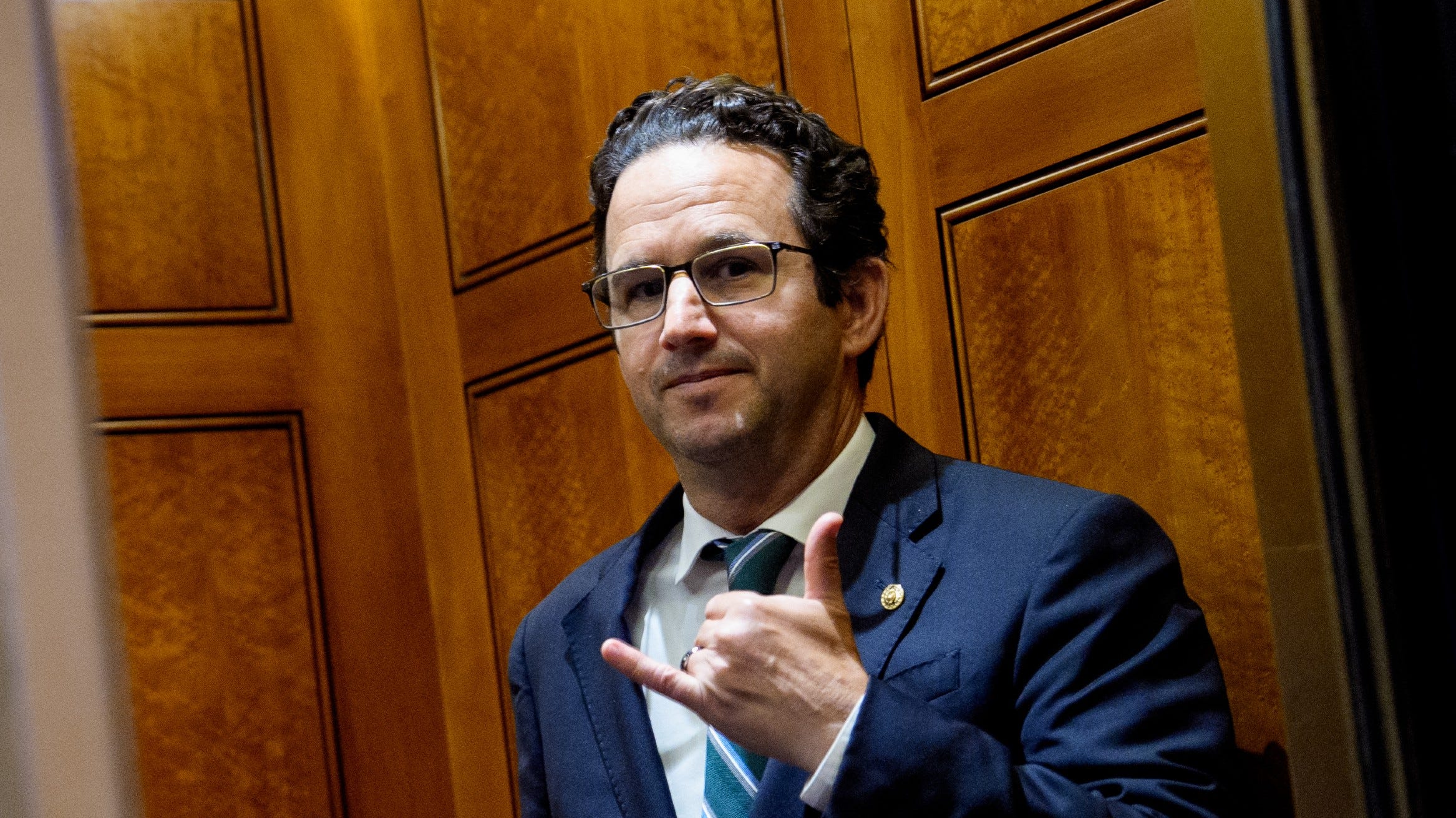
Greetings, everyone. This is Volts for December 31, 2025, “Senator Brian Schatz wants permitting reform, but not like this.” I’m your host, David Roberts.
Hawaii’s Brian Schatz has been in the US Senate since 2012 and in politics since 1998, and throughout that time, he has centered his campaigns and advocacy on climate change.
Recently, however, he, like many Democrats, has pivoted to stressing energy affordability — “clean is cheap and cheap is clean” — and as part of that, pushing for permitting reform that would allow more wind and solar projects to be built in the US.
Nonetheless, he is opposing a new Republican-sponsored permitting bill, the SPEED Act. He says it does not contain sufficient guarantees that renewables will be able compete on a level playing field, what with Trump and Interior Secretary Doug Burgum effectively making them illegal to permit.
I’m excited to have the chance to talk to the senator about permitting, data centers, the politics of the IRA, the role of “the groups” in climate policy, and more.
With no further ado, Senator Brian Schatz, welcome to Volts. Thank you for coming.
Sen. Brian Schatz
Thanks for having me.
David Roberts
A ton to talk about today, but I want to start here. From my perspective, in the wake of the election, it seems the Democratic Party establishment, politicians, pundits, consultants, everybody seemed to swing — like a school of fish — away from climate change toward energy affordability. The word went out — “We’re not talking about climate change anymore, we’re talking about energy affordability.” I want to talk about energy affordability.
But before we get to that, I want to talk to you about how people who are still very much concerned about climate change should feel or think about this pivot.
Sen. Brian Schatz
I think we should just be focused on winning. Any argument that is both true and effective is an argument that we should be unapologetic in making. Over more than 25 years in public service of some form or fashion, I have been making the case for climate action. Sometimes the electrons that are coming from clean generation are cheaper, and sometimes they’re not. But I’ve always made the case regardless because I believe this is a planetary emergency. We are in a different place now in terms of just the cost of solar and wind and battery and geothermal and nuclear energy.
I think we should lean into that because it’s an opportunity for us to flip the script. We no longer have to talk about externalities. We no longer have to make an indirect argument. We can look people in the eye and say, “Cheap is clean and clean is cheap,” and that these shortages are caused by Donald Trump’s national solar ban. That’s the reason your prices are starting to go up at double the rate of inflation. I’d like us to win.
I don’t think we should say anything dishonest about climate or energy. But I do think that it is perfectly appropriate if you are in the business of trying to achieve a majority so you can enact climate legislation, that we have this incredibly powerful argument that is available to us and we shouldn’t get fussy about the fact that, look, I’ve run for election and reelection lots and lots of times. David, my number one priority in my public service, in my life, is climate action. But it has been very rare that the focus of my campaign communications has been exclusively climate.
I talk about public education, public health, affordability, housing, Native Hawaiian issues. I talk about a lot of stuff. I also talk about climate. But the idea that because I’m a climate guy, I have to emphasize that in every moment of my life is not how people work. The opportunity in front of us is not just about capturing a successful midterm election, but it is bigger than that. If it is now true and now plausible to the voter that clean energy is cheap energy, that a ban on renewable energy hurts their pocketbook, that changes the politics not just in terms of election cycles, but in terms of what is possible to enact.
David Roberts
I want to look forward, but briefly, let’s look back just for a few minutes. I’ve asked several Democratic lawmakers this question in recent months, which is, it seems part of the political theory of the IRA, as you are well aware, you were in the trenches putting it together. Part of the political thought behind it was, this is going to funnel a ton of money and investment into red states. It’s all industrial policy.
It’s all forward-looking. We’re not talking about carbon taxes. We’re not taking anything away from anybody. The politics are going to be good, and red-state lawmakers will see the benefit in it and will defend it from repeal. A lot of people were saying similar things. That, in retrospect, turned out to be wildly wrong.
My question is, were you taken aback by — nobody is under any illusions that this administration was going to be pro-renewables or anti-fossil fuels — but were you surprised by the ferocity, lack of nuance, that this was a sledgehammer, not a scalpel? Did that surprise you? That none of your Republican colleagues really stood up to try to slow this down or stop it?
Sen. Brian Schatz
It did surprise me. I think that if we were doing their Big Beautiful Bill right now in the month of December, it probably would have gone differently. They were smart to move close to the peak of Donald Trump’s political power. And nobody wanted to defy him. But I’d be lying if I didn’t say that I was expecting better, more coordinated, more powerful pushback. Some of the people who made noises in the right direction eventually ended up collapsing in the end. That was a surprise.
To the architecture of the IRA and the theory behind the IRA, it’s true that there were a bunch of people who thought, if there’s a bunch of clean energy deployed in red states, that barbs the hook and makes it really difficult to repeal. That did turn out to be wrong. But that doesn’t mean the IRA wasn’t the best available policy and political approach, because we were still in a place where we had to find something that could be big and bold and equal to the moment and pass muster with Joe Manchin and Kyrsten Sinema. Despite online people saying, “Just be Lyndon Johnson and bully him,” or whatever.
David Roberts
You’re saying invoking Lyndon Johnson is not enough to get it done.
Sen. Brian Schatz
Yeah, I’ve read all the Robert Caro books and I love those stories, but we are in a different era. To get Joe Manchin to enact the biggest climate action in human history was a really big political achievement for our conference. That was what was available to us. I do think we got high on our own supply — saying, not only is this the biggest climate action ever taken, but it is unrepealable. We just didn’t need to say that because that turned out not to be true.
But I wouldn’t change what we did because I’m not sure that — look, if I were the Chancellor of some non-democracy, would I write a different climate bill? Sure. But this was an exercise in driving down emissions and being ruthless and scientifically rigorous about what policies would drive down emissions. It was also an exercise in coalition management and getting to 50 votes plus one. There were things in the bill that drove down emissions that were the engine of the IRA.
Then there were some other things that were just to make sure that we could hold the majority coalition together. In retrospect, did people overcook the idea that, oh, as long as we’re deploying wind in Kansas, they won’t vote to repeal it? That turned out to be bullshit. But I also think it’s not the main point at this point.
David Roberts
Two other questions about that. One specific one, I know that you personally were very involved in and invested in the Greenhouse Gas Reduction Fund, the GGRF, which was a couple billion dollars of grants that were going to get handed out specifically to a lot of low-income communities, hard-hit communities, etc. I’ll confess that there are many battles going on that I have not been closely tracking the battle over that money. As I understood it, he was trying to yank it all back. Are you engaged in that fight? Is that fight ongoing? What has become of that money?
Sen. Brian Schatz
I’d have to check. I’m glad that you as an expert are not tracking it totally —
David Roberts
Only have so many hours in the day.
Sen. Brian Schatz
Yeah. I don’t want to claim credit for that. The stuff that I was working on was the investment tax credit, the production tax credit, all the stuff that had an immediate arithmetic impact on emissions. The GGRF and some of the environmental justice funds, which were largely repealed in the BBB, didn’t have the big climate impact. They were more about making sure that as we move forward, we do so in an equitable and fair fashion. I’m pretty sure they repealed as much as they could in that reconciliation package.
David Roberts
Final question on the IRA then, and this is a more general question, getting at what you were just saying earlier, which is, if Democrats took power, retook power someday, say that happens, one thing they could do is just take the IRA back down off the shelf and pass it again. It’s already had the negotiations, already been the fights. Everybody already knows what’s in it.
I’m curious, from your perspective, what would you do differently if you had another go at it? How much of the IRA do you think holds up, and what are the big pieces, if there are any, that we are missing?
Sen. Brian Schatz
I think the ITC and the PTC have to be reestablished for sure. I’ll also say that what we did to get to passing the IRA was a couple of years worth of coalition building, coalition management, policy development. I don’t think we’re ready to say, “Here’s the program.” I do think there is always going to be a place in climate policy for subsidy towards deployment and towards keeping costs down for individual consumers. That’s going to be in there. I would say the composition of the subsidy could be dialed according to what’s possible and what is necessary in the moment. That’s number one.
Number two, I think we have to invest in some of the tech that is potentially a game changer, but not quite commercially viable yet. Carbon dioxide removal, the geothermal stuff, which you’re covering and watching very carefully, is really exciting. I do think the battery storage piece, the carbon dioxide removal, both natural systems-based CDR and other ways to do it, present incredible opportunities. Finally, I still think we ought to consider a carbon-based border adjustment mechanism, some sort of pricing, because the rest of the world is moving forward with this, and we should be participating in these markets.
David Roberts
Europe’s carbon border adjustment, I believe, is going into effect imminently, in the next couple of weeks or months.
Sen. Brian Schatz
Yeah. If we don’t align with that, we’re disadvantaging American manufacturers and producers and all the rest of it. I think there’s deal space there. I really do think that we should think of climate policy like we think of other policies, which is, this thing is going to take decades to fix, which means we’re going to have to take multiple bites at the apple and that as the door swings in either direction politically, we’re going to take two steps forward, one step back. I do think the IRA should be viewed as maybe three steps forward, one step back, because the amount of clean energy deployment that we achieved and is still underway is pretty extraordinary.
If you had told me that we were going to pass the IRA, but it was going to be time-limited to just four or five years and then it would expire, which is in effect what ended up happening in the moments in that summer when the thing was dead as a doornail, I would have taken that deal in two seconds. It’s true that we have this open-ended way to ramp the credits down, but it’s also true that from a deployment standpoint, it was 2.5x what was projected by CBO. It exceeded a lot of expectations on the front end. I think we didn’t even meet our expectations on the back end because Trump won the trifecta. The rest is history.
David Roberts
One of the hot topics in the energy world in front of Congress right now is permitting reform. There is a lot of sentiment on the Democratic side that IRA was great and IRA put a rocket booster behind deployment. At the same time, all these permitting laws and permitting regulations were a wet blanket on top of the rocket. I have lost track of my metaphor —
Sen. Brian Schatz
I think that works.
David Roberts
The permitting was slowing things down as much as IRA was trying to speed things up. Everybody’s talking now about permitting reform. I think you have angered some far-left green types by being generally supportive of permitting reform. Now you’re also angering some people on the right by opposing the permitting reform bill that is sponsored by Republicans and up in front of Congress right now.
Sen. Brian Schatz
I’ve hit the sweet spot.
David Roberts
Yeah, you’re nailing it. Everybody’s mad at you. Let’s start with what is wrong with the SPEED Act, the Republican-sponsored permitting bill that’s up right now, which you and a couple of your colleagues have come out in opposition to. What is the problem with it?
Sen. Brian Schatz
Two things, two categories I should say. One is what’s in it and one is what’s not in it. What’s in it is not really National Environmental Protection Act reforms, but an effective repeal as long as any state or county or tribal agency is able to attest to the federal government that they’ve already conducted a review. That’s not permitting certainty. That’s not a shot clock. That’s not limiting the scope of what’s permissible in litigation, which is all in the deal space of how do we make this system work faster and more fairly and more predictably.
This is just, “Hey, if someone else did a review, we don’t need one.” That is gutting the National Environmental Protection Act. That having been said, I think those issues are workable because it’s true that NEPA was established to protect natural resources, but it is now in some instances being weaponized against the very projects that will help us to save the planet. It’s not that I’m closed-minded to NEPA reform, but it has to be NEPA reform and not a gutting of bedrock environmental protections.
That’s what’s in it. What’s not in it, and this is what was maddening to me, is that first of all, there is effectively a national ban on solar energy. 90% of the projects that are stalled and in the queue are solar energy. Most of those are cheaper than whatever people are paying for on the grid as we speak. That is caused by the President’s executive order and Doug Burgum and all these other executive agencies that are saying not just on federal land, but where there is a federal nexus, they’re going to sandbag these projects into oblivion.
David Roberts
Yeah, there’s a letter to Congress, I believe, recently from a bunch of solar — 100 and something solar companies — saying this.
Sen. Brian Schatz
There is a ban on solar energy instituted by the President of the United States. And until that ban is lifted, until we believe, and not just with verbal reassurances, but with ways that we can ensure that this is true, that these projects are not going to be choked off, then we’re not even reasonably at the table, because then we’re just making the world safe for fossil generation.
The trade in permitting reform is a bet. We say a couple of things. We say, first of all, there are people who think we should exclusively keep it in the ground. Fair enough, but that is not my view. There are other people who say the future is clean energy. The bottleneck is transmission, distribution. Permitting reform will benefit some fossil projects. But if you’re talking about a 90-10 split for what’s about to come on the grid, you’re talking about a 90-10 split in terms of the benefit of permitting reform.
David Roberts
But that argument presumes that permitting reform yields an even playing field.
Sen. Brian Schatz
This is the problem. As long as Doug Burgum is scouring the Federal Register for anything that he might be able to slow down, it is very hard to get to a deal. The second part, and you are tracking this very carefully, is the transmission issue. FERC has done some interesting things. Manchin and Barrasso addressed transmission. We are not going to be able to come to a conclusion on this until we have a comprehensive deal. Do I see that the elements of a deal are possible? Yes. If the Tea Party has veto authority over what goes into a permitting reform bill, then it is not really permitting reform.
David Roberts
Chip Roy has come out against it now because it is not anti-renewables enough.
Sen. Brian Schatz
Yeah. God bless Chip Roy. I’ve never met him, but he does seem to really mean what he says. He’s saying, “Look, Russ Vought, look, Stephen Miller, you promised me you’d kill all this stuff. This new statute might force the administration to do a few things. I don’t want that.”
There are some people on the left that are never going to be able to get to yes on permitting reform and that’s okay. Those are sincerely held views on the right and the left. But if the deal is to be made, it’s going to be among climate hawks who are inclined towards building, like Martin Heinrich, Sheldon Whitehouse, myself, and the Chairman Westermans of the world who understand that energy dominance means energy dominance.
If we’re really going to be all of the above, if we’re really going to power our future, if we’re really going to provide relief in terms of people’s utility bills, then throttling solar energy, which is the cheapest and most immediate stuff you can put on the grid, is preposterous.
David Roberts
On a general level, you would have taken Manchin’s deal. The basic idea that fair permitting reform that does create a level playing field will benefit renewable energy — that basic theory of the case you still hold to. What can you say — a deal is possible, but what can the Republican Congress do to restrain Trump and Burgum? They don’t seem to care much about what Congress says. What part of a deal could assure you that they are restraining the executive branch?
Sen. Brian Schatz
I’ll leave that to both Martin and Sheldon to negotiate the legislative details. Some of what they’re doing is illegal and has been shown to be illegal. Some of that is they do have discretion in between the lines of the statutory law. We want to eliminate that discretion. Not to say that you must approve X number of projects that are solar and X number of projects that are gas or whatever. That gets a little bit goofy.
My view is that everybody has a right to an expeditious consideration of their project. Everybody has an obligation to comply with the statute. Once the government has given you permission to move forward, that’s it — it has to stick. There are a bunch of developers out there of fossil energy, clean energy, and they all are in the same position, which is, “I would just like to know that we’re the United States of America and that the rule of law means something.” Which means if I’ve got a 10-gigawatt solar farm and I got many millions of dollars that I’ve borrowed from some bank and I think I’ve got permission, it can’t be that no, you didn’t. I think that should matter to everybody.
David Roberts
It’s clear that what Trump wants is some version of a mafia state where you get favors if you are in good with him. That’s the basic model of how he thinks.
Sen. Brian Schatz
It’s Tammany Hall. He believes in shortages. He wants shortages of workers. He wants shortages of food. He wants shortages of health care. He wants shortages of electricity. The tariffs are a perfect example because then everyone has to petition the monarch for relief.
David Roberts
Exactly. An atmosphere of shortage is fertile ground for reactionaries. One more question about permitting review. In the permitting reform bills that I’ve seen thrown around, you see a couple of things. You see timelines, frequently imposed timelines saying the review cannot take longer than X, these guarantees of review in a certain amount of time.
What I don’t see — I was just talking to Senator Gallego about this last week because he has a new energy plan out that has some permitting reform stuff in it — what I’m not seeing in these permitting reform deals is, from my understanding, what would be most helpful based on the literature and study, which is fully staffing and funding the organizations involved in doing the reviews.
If you ask Deb Haaland when she was running BLM, she would have told you that’s the problem. That’s why it’s taking so long — staffing. We’re chronically understaffed and underfunded, and yet I don’t see that on the bullet point list of these plans that are flying around among Democrats. How do you think about that aspect? Do you think that aspect is getting enough attention?
Sen. Brian Schatz
It’s a fair point. There are agencies that are in a backlog because they can’t hire fast enough or they don’t have the resources for the number of personnel they need. I’m a little cautious to invest too heavily in that policy. Not because I don’t think there are instances where it’s important, but because we do have some experience in Hawaii around this, where the State Historic Preservation Division of the Department of Land and Natural Resources, they had a backlog and they said, “we’re short 12 reviewers.”
First of all, it’s very hard to hire, because if you’re a person who knows how to do historic review, you’re going to make more money in the private sector preparing the application than reviewing the application. Even when the legislature appropriated money, you just couldn’t backfill the positions.
Then we finally — this is eight years of trying to solve it that way — what we came to was, “Hey, the pile’s too high. There are too many things that are even subject to this review.”
For instance, in Hawaii, the National Historic Preservation Act says if something is 50 years or older, it may be historic. Our state law, the way we administer this is, if it’s 50 years or older, it is historic. That means that just the volume of paper on any individual reviewer’s desk is completely untenable. You could 10x the staff so they can process all that paper, or you could just invert the assumption and say, “why don’t we just make this a little more reasonable?”
I think it’s both things. Agencies need to be staffed. Civil servant experts that review these things need the resources, but they probably also need fewer things to look at.
David Roberts
I just know there is some suspicion out in Climate Community, out in Green World, that everybody is focusing on the timeline part, and very few people seem to be focusing on the staffing part.
Sen. Brian Schatz
The other part of this, the shot clock thing also sounds good. What has happened sometimes in local governments is, it’s with a kid who’s asking for their candy before dinner, and it’s, “Hey, if you need to know the answer now, it’s a no.” If you know, “I’ve got 60 days to review this, after which it’s automatically approved,” then on day 59, you just say, “No, I couldn’t get to it.” There are developers who are, “That sounds good,” until on the 59th day, they couldn’t get to it. If you gave them another week, they could get to yes.
David Roberts
Or more resources. Or more reviewers. A timeline without any additional resources seems to me it’s just going to end up with that happening.
Sen. Brian Schatz
This stuff is really complicated, but I think the more basic solution is, why don’t we give them less to review? What’s happening right now is that we are evaluating environmental impacts of things that have very little environmental impact. There’s a lot of paperwork back and forth, but nobody out in the field believes we’re saving an ecosystem. We’re just passing paper.
David Roberts
Let’s talk about another hot topic that is very much on everyone’s mind these days and I think is very interesting for a bunch of different reasons, which is data centers. AI data centers. These were on no one’s mind three or four years ago and now are on everyone’s mind. In addition to trying to figure out what policy should be, I think everyone’s trying to figure out how we should think about these things. What is the right framework to put around these things?
A lot of people, when they see electricity bills going up and they see data centers coming in, are drawing the conclusion — big energy hogs, designed to create silly videos of President Trump pooping on America — and theyre just getting hostile. These are vampire parasites sucking our energy away. Some local communities see them as economic development or job development. Electricity grid people have their own views. Im curious how you cognize AI data centers and what you think public policy toward them should look like. Im curious how you cognize AI data centers and what you think public policy toward them should look like.
Sen. Brian Schatz
I know I’m not supposed to say this because I’m a politician, but I’ll just say I don’t have fully formed thoughts in this area.
David Roberts
What?
Sen. Brian Schatz
I know I’m supposed to have a tight answer for everything, but let me tell you some preliminary thinking about data centers. The first thing is the politics of it. At the federal level, we tried to engage the Data Center Coalition and a lot of the companies that are going to need this amount of electricity very shortly and tried to explain to them that the repeal of portions of the IRA was going to really harm their plan.
Now they’re looking at a load that they may not be able to meet the demand and their ramp is really steep and without solar energy, they’re a little cooked. They did not step up, frankly. They did the minimum. There’s part of me that’s not all that sympathetic to their new problem, which is now everyone’s pissed at them because prices are going up, there’s an electron shortage, and now they’re trying to sell their projects to all these local county councils and PSCs and PUCs and people are grouchy.
At the energy management level, this is where I’m a little more agnostic or unclear, which is to say it depends on where this data center is and what the actual power generation plan is and what the power purchase agreements are and all the rest of it. In some instances, they’re capturing some of the fixed costs of the system and absorbing some of the needs for repair and recapitalization of the entire grid in a region. On that level, because they’re so profitable, they can defray costs for the rest of the system.
There are other instances where theyre just going to come in and try to get over on a community and thatll raise rates. Its very much docket by docket. At the political level, they missed an opportunity to get a bunch of clean energy on the grid and now theyre contending with what that means for both their local politics and their more straightforward energy needs. I think there is a potential alignment between the AI folks and the data center folks and the clean energy folks because theyre the ones that are going to need all this new solar energy.
David Roberts
And they have all the money.
Sen. Brian Schatz
They have the money. This seemed to me to be a simple play. I think they just felt discombobulated politically between their regular corporate tax treatment needs and need to stay close to the Trump folks. They were officially, “Hey, we like the PTC,” but they didn’t really throw their weight behind it as I had hoped. The politics are swirling around and getting very complicated. If I were them, I would reevaluate whether you want to cast your lot with fossil energy and with the Trump enterprise, which politically is going in the wrong direction.
They’re very easy to be pissed off about because — I’m a big YIMBY, I want housing and I want energy and all the rest of it, but it is hard. I understand the value of AI in terms of medical research and even scientific research related to grid and grid management services from the government and all the rest of it. There is plenty of upside in AI, but if I’m a regular person in a regular community and it’s like they’re not employment centers —
David Roberts
That’s important.
Sen. Brian Schatz
I’m probably going to betray my ignorance on the technical level, but it’s a box with a bunch of server racks. People work there, but it isn’t some big economic boom except for the initial CapEx. AI is starting to pop in polls in ways that I think are totally unexpected. On another level, it’s tracking with the uptake rate and the extent to which it is already causing disruption. People are going, “I’m sorry, what are we doing this for? That all the jobs can be generated through...”
Because it’s not just stupid videos, it’s also providing services that human beings are currently providing. “You’re telling me I get to pay more for my electricity bill in exchange for my job no longer existing.” I’m not saying that’s an entirely fair characterization, but that is definitely the vibe out there.
The data center folks really need to get in front of this and have a better theory of the case than, “Don’t you think that the gross national product rising because half of the whole economy is now CapEx for data center — isn’t that great?” That is great if the only thing you care about is the Dow. Most regular people are going, “I just don’t understand what’s in it for me.”
David Roberts
One thing I’ve been trying to put in people’s ear is, one thing a data center could do if it needs grid capacity is to fund distributed grid capacity, which is just funding solar and storage systems on people’s houses. If they have electric resistance heating, buy them heat pumps, put batteries on their houses, all that. You could assemble that distributed grid capacity into grid capacity at scale — and they have all the money to fund it. That would be a great way of investing in the community too.
Sen. Brian Schatz
100%. To your point, their basic value proposition is a non-incremental increase in productivity which has a one-to-one relationship with profitability. If one of the externalities is a loss of employment, which is not the subject of this podcast, the other externality is all this energy use. I’m starting to do the arithmetic on the carbon mitigation, climate mitigation that currently doesn’t pencil on a per kilowatt or per megawatt basis.
If these guys are as profitable as they expect to be, then it will be a rounding error for them to also set aside resources for carbon dioxide removal, which right now we are trying to compare to regular businesses trying to figure out if they can pencil CDR. They definitely cannot. But if you are talking about something that is more profitable than any enterprise in human history, it is not unreasonable to say, “Hey, while you are doing this, would you please do some mitigation?” Of course it does not pencil on a pure energy basis, but neither does the thing you are doing.
David Roberts
These things, when theyre built and theyre not hooking up to the grid, are wasting millions of dollars a day in opportunity costs. Just the money theyre burning on opportunity costs, not being able to hook up to the grid, just that money alone is enough to transform a lot of these distributed energy spaces.
Sen. Brian Schatz
To be fair, there are a lot of exciting things happening because they feel urgent about getting electrons — they’re doing their own solar and trying to figure out if they can do SMR and whatever. I think about AI like I think about climate in the sense that you don’t get to wish it away. You can have an opinion about what we should do about it, but you don’t get to have an opinion about whether or not it exists. AI is going to exist. There’s no possibility of regulating them out of existence.
What we have to do is manage all the negative externalities, which I think are going to be numerous, and take all the opportunities provided in terms of compute and all the rest of it. I think there’s a pathway here, but we have to realize that we’ve got to get to some policymaking and there has to be leadership among the data center folks to realize that, “This is the future,” is not the way to get it done.
David Roberts
They do seem, for some reason, really enamored with the nuclear idea, which maybe will turn out differently this time. But if I were uniquely in a hurry to get power, that is not the place I would look for fast.
Sen. Brian Schatz
No, it’s not fast. It may end up being fast when they — on the regulatory side and on the technical and economic side, SMR is super exciting. By the way, geothermal is too. There may be a point at which, “Oh, look, we’ve got these horizontal...” I’m now toggling back to geothermal. “We got this new horizontal drilling, closed system, whatever.” There’s cool stuff happening everywhere. Even that is not ready next year.
The only thing that’s ready next year is a solar farm. That’s fine, because solar farms work and they’re cheap and they’re easily deployable. They’re not terribly controversial. In the next six years, we should be focusing on the stuff that’s immediately ready. For the 2030s to 2040, I’m all in on all of the new tech. I don’t think we know which one is going to hit and then be scalable, but let’s figure that out.
David Roberts
The other thing I would put in your ear is that in addition to needing a lot of energy, there is also enormous uncertainty in the amount of energy that will be needed. Enormous uncertainty. In a policy environment of uncertainty, you want to make small incremental bets, not giant gambles. You can do that with solar, where you cannot do it with something like nuclear or a big gas plant. You can build small increments. You can make small bets.
Sen. Brian Schatz
“Hey, guys, we need another megawatt.” “Cool.” “We have the land.” “Great.” “We get solar panels, bang, we’re in.”
David Roberts
Let’s talk about energy affordability, since it is going to be the heart of the Democratic pitch. Everybody’s saying it is at the heart of the New Jersey governor’s race, a big part of the Georgia PSC races that were just over. Everybody thinks it is going to be a big part of the midterms. My main question is, say you are doing a town hall in Iowa, for whatever reason, you happen to be in Iowa doing a town hall and a constituent asks you, “I hear you talking about energy affordability. My bills are high. What are you going to do?” What is the answer to that question? What is the agenda?
Sen. Brian Schatz
Lift the solar ban, restore the credits, and do permitting reform.
David Roberts
Those are the big pieces in your mind?
Sen. Brian Schatz
Yeah. I also think, I always have a conversation with my staff about this. Democrats are so wonky and so interested in the substance that we’re already talking about exactly what we would do if we were in charge. I have that instinct, too. Don’t get me wrong, my staff is, as we speak, drafting bills for the future trifecta whenever that may occur. But I do think, as a political matter, that we would be wise to throttle back and not immediately get into third and fourth gear because midterms are a referendum on the party in charge. It is sufficient to say, “Have you had enough of this shit?”
The energy and affordability agenda — we have to have a new social contract with people as it relates to how government functions with them. We need to promise people that whatever you need from the federal government, you should be able to get within 10 minutes. If you’re entitled to something, it should not take hours to get it, because then you’re not getting it. There is a bunch of cool stuff we should talk about in the future.
The truth is that process is messy and contentious and is usually resolved by getting a nominee for president. I don’t want us to churn too much against each other in a competition, political competition, but also a competition of ideas.
I think we should refine our pitch, which is, “If you put us in charge, we will lift the solar ban. If you put us in charge, we will make it easier to build clean energy. If you put us in charge, we’ll restore the credits that were providing some measure of relief.” We don’t have to have the 2.0 of what we’re going to do ready to roll, because that gets really messy. We could think we did it, but once we have a nominee, that person is going to say, “That’s all very lovely, legislators, but here’s my plan.”
David Roberts
It’s going to start from scratch regardless. All Democrats should be learning from Mamdani’s success. Mamdani’s three policies that he ran on, which I, a non-New Yorker, can reel off from memory, were not necessarily the big three policies that are going to be required to run New York City. All of them were on their own merits relatively small, relatively marginal policies, but they communicated what he cared about. That is what it was — the kind of person he was.
Sen. Brian Schatz
I’m a huge fan of his. I’ve never said this publicly, only because I’ve never been asked, but I’m a huge fan of Mamdani. I also agree, “Freeze the rent.” Maybe, maybe not. I don’t even know the details of how the rent board works, but I’m generally a little cautious about rent control. A government-provided grocery store — I don’t have some visceral aversion to it, but it didn’t sound to me like that was going to do the trick. I don’t know what the — oh, free buses. I’m for free buses. But also, if you charged a buck, that doesn’t offend my sensibilities.
To your point, people understand that whatever you’re proposing is going to end up in some meat grinder anyway. You’re just communicating, “This is the stuff I’m watching. This is the stuff I care about.” I think we need to get back to that. Right now, there is a planetary emergency, and there is a cohort of voters out there who care about that. But guess what? All of them, every single one of them, is going to vote for Democrats.
The question is, how do we swing the people who were pissed off that we had an old president and prices were too high, but now they’re pissed off again that we have an old president and prices are too high. My good buddy, the former governor from Hawaii, Neil Abercrombie, used to say, “People vote for you for their reasons, not yours.” Their reasons right now are that everything is up and the president looks like he’s out to lunch. I think we should lean into that unapologetically. It doesn’t mean that we are sublimating any of our core values. It just means that we’re talking to people in such a way that doesn’t make us seem like we just popped out of a salon.
David Roberts
Or a white paper development retreat.
Sen. Brian Schatz
Or Brookings. I was going to say Brookings, but those people are nice.
David Roberts
I know you don’t want to shoot astray at Brookings. They seem fine.
One other question about — and this gets back to the green groups. There are a lot of green groups that are against permitting reform. On a larger level, there is this — I’m sure you follow the abundance thing, and there is all the politics of that. There is this sentiment among abundance types that green groups have evolved to the point that they are a net negative in this climate fight because they are stuck in the politics of constraining supply constraints, limits, etc. There is this sentiment that they ought to turn and pivot and build and look toward the future.
The way this comes down to the ground level is how we should think about the role of gas and gas pipelines in the next 10 to 20 years. You got your Greens who are just, “No, no. Fossil fuels. No.” Then you got these abundance types now who are saying, “More natural gas means cheaper electricity. That’s the main thing right now. Shut up. Get on board.” Do you have thoughts about that critique of green groups, whether that sounds accurate to you and whether that’s an accurate description of the lay of the land?
Sen. Brian Schatz
What I would do is divide it between the local and the national. There is some division among green groups about permitting reform more generally, but I think they are developing — some of this is just habit and how their political organizations have evolved over time and their members who probably joined their organization to stop something in their neighborhood. One of the things that I do is try to remind people, I got into the environmental movement through the Save Sandy Beach Coalition, the Save Sunset Beach Coalition, and now I see that we should still protect our precious areas 100%, and I am totally committed to that.
But we are in a planetary emergency and we need to build stuff. What I see more often than not is that the national environmental organizations understand the need to build electricity transmission and distribution. They understand the need for permitting reform. Although it makes them nauseous, they still get it.
What happens is where some of that philanthropic money and some of that political money and some of that energy manifests itself locally is John Birch Society-level NIMBYism, where you’re protecting the “unique character” of a neighborhood and you’re hiding behind some sort of conservation veneer when you just don’t want any shit blocking your view. Those people do not belong in the climate coalition. I want to be precise about that — to the extent that we are in coalition with some deeply right-wing people who are now weaponizing NEPA against clean energy, that’s not us.
The reason that we all got into this is that there is a planetary emergency and it’s going to cause us to have to evolve over time. When I got in the Save Sandy Beach Coalition, I was 17 years old. That is a very long time ago. Of course, my views have evolved because the world has evolved. We need to give each other a little bit of room to evolve here.
There is a little bit of a cottage industry of attacking the abundance people, the abundance people attacking leftists. In the real world, most people understand we are going to have to build some stuff and also we should protect ecosystems as much as we can along the way. I worry that some of this is just consultants fighting for primacy rather than humans.
David Roberts
Do you agree with the general critique that Democratic politicians are overly in hock to the groups, Capital T, Capital G, excessively deferential to the groups? That’s the larger abundance critique. Does that ring true to you?
Sen. Brian Schatz
I don’t know. I read Abundance and I don’t remember it being super groups-oriented. The best critique of the groups that I’ve heard that I agree with is that some organizations purport to represent people out there in the world, and they do not.
I saw this with environmental justice because there were Washington, D.C. lobbyists who were, “I’m an EJ person,” and I was, “Are you?” Coming from Hawaii, and at the time I was the chairman of the Senate Committee on Indian Affairs, I had pretty good connectivity with people who really do experience environmental injustice and work in this space. They were, “I don’t know who that person is pretending to be the EJ leader.”
David Roberts
There’s no certification. There’s no board handing out the —
Sen. Brian Schatz
It’s definitely true that some of that stuff happened with the immigration issues where there really was a sea change among immigrant communities about their feelings about border security and everything else. We were still fighting fights from a decade earlier. It’s not that organizations shouldn’t exist to influence politicians or elections or public policy. It’s that those organizations should be pressure-tested in a respectful way about the extent to which they are representing their constituency. That’s number one.
Number two is, one of the things I said to a number of groups right after we got our asses kicked — because there was a little bit more openness to having a conversation — is, “You’re at the table, you’re a stakeholder, but you’re not the convener. It’s the people with the election certificates that do the convening.” When a legislature works properly, which is usually a local legislature, not the federal one, then you convene stakeholders and you say, “Nope, I can’t do that for you. Yes, I can do that for you. No, not this year. No, don’t be greedy.” You sort it out like a real politician.
That is the model that we have to get back to as opposed to there’s an email campaign coming from an organization and a bunch of senators are downstream from some demand that they’ve never heard about. That is what needed to be broken. Not the idea that groups exist or that there’s a progressive ecosystem of people who give a shit about things.
We need them, we love them, but we all got our ass kicked. Whether it was the campaign infrastructure, the advocacy infrastructure, my own personal office, the way I operate — everyone needed to reevaluate how we operated and I think we’re in the process of recalibrating that. I am not one of those people who think groups shouldn’t exist because groups — look, when you want to fight against repealing the Affordable Care Act, I know who to call. They are the groups. It’s MoveOn and it’s Protect Our Care and it’s labor and we rely on them for politics. We can’t pretend we don’t. It’s just that we needed to get into a more functional space where we’re actually collaborating and not just doing pressure politics on each other.
David Roberts
It does seem the most vicious politics in America are intra-left politics. One other question about national and then we will wrap up. I am skeptical about the ability of the Republican Congress to do anything productive with their opponents as long as Trump is out there, because he is a wild card. There is no guarantee that he will respect the promises that Republican Congress people make or will be constrained by the laws they pass.
Should people who are thinking about energy and climate just write off the next two years or do you think there is any real possibility that Congress can, even in light of Trump’s erratic behavior, make real progress or real deals?
Sen. Brian Schatz
I don’t know the answer to that. I’m not going to try to tell you, “Don’t be pessimistic. These guys are great.” That’s not the case. I would bet against them being a productive Congress. I would also say that besides appropriations, permitting reform is probably in the very top tier of the art of possible. The impediments you described are real. The Speaker Johnson may lose control of the House floor over the next month or so.
David Roberts
Seems that’s happening.
Sen. Brian Schatz
It’s getting quite wild over there. I think the deal space is there. Not because I trust anybody, but because our incentives are aligned. We don’t have to be in agreement or share values, but we can share interests and try to get a bill done.
David Roberts
Final question. I know you’re a federal politician and your focus is on federal policy, but Hawaii, which you represent, is in my world, in energy world, just an endless source of fascination. It is an island, as you’re probably aware — I’m blowing your mind here — it’s an island. It has to generate all its own energy. If it’s trying to go clean, islands have particular challenges trying to go clean. In your day to day, how much do you really get to engage with Hawaii-specific energy policy and problems? It’s really a fascinating puzzle.
Sen. Brian Schatz
It is an island chain. We do have multiple grids, each by island, and that creates all these challenges. I was tasked by Governor Abercrombie with supervising the Hawaii Clean Energy Initiative. There was a point at which I was involved in every little thing. Now I mostly just track it and also use it as a proof point that you really can integrate so-called intermittent energy into the grid at levels of penetration that had been previously not contemplated and that we were at the bleeding edge of clean — being cheap and cheap — being clean.
Now that is true across the country. It is now an example. It was in our mind’s eye going to be this example for the rest of the world about how to do solar and battery storage, how to make a grid work, how to do all of this in light of consumers not being endlessly able to pay. Now I monitor it, but I use it to prove that we can do it elsewhere.
David Roberts
Fair enough. Thank you, Senator. This was delightful, as expected. Thanks for coming on.
Sen. Brian Schatz
Thanks, David. Take care.
David Roberts
Thank you for listening to Volts. It takes a village to make this podcast work. Shout out, especially, to my super producer, Kyle McDonald, who makes me and my guests sound smart every week. And it is all supported entirely by listeners like you. So, if you value conversations like this, please consider joining our community of paid subscribers at volts.wtf. Or, leaving a nice review, or telling a friend about Volts. Or all three. Thanks so much, and I’ll see you next time.


