What’s up with agrivoltaics?
A conversation with Jordan Macknick of the National Laboratory of the Rockies.

One of solar's biggest political problems is land: more and more rural counties are banning it to protect farmland. Agrivoltaics — growing crops or grazing animals under the panels — promises a way out. But how much of it is there, does it work, and what is it really for? Jordan Macknick, who leads agrivoltaics research at the National Laboratory of the Rockies, explains why the reality is mostly sheep, why costs are falling, and why shade can be insurance against hot, dry summers.

Like seemingly everyone else, I love the idea of agrivoltaics — putting solar panels and agriculture on the same land. If nothing else, the idea of panels coexisting peacefully with crops and farm animals is good PR for solar, in an age when “paving over prime agricultural land” is one of the central charges levied against it.
But to be honest, I’ve always been a little skeptical as well. It’s one of those things that sounds a little too good to be true, a little too targeted at my priors. There are real and difficult tradeoffs between industrial solar and other uses of land, and agrivoltaics — like “solar over parking lots” — feels a little bit like permission to pretend those tradeoffs don’t exist.
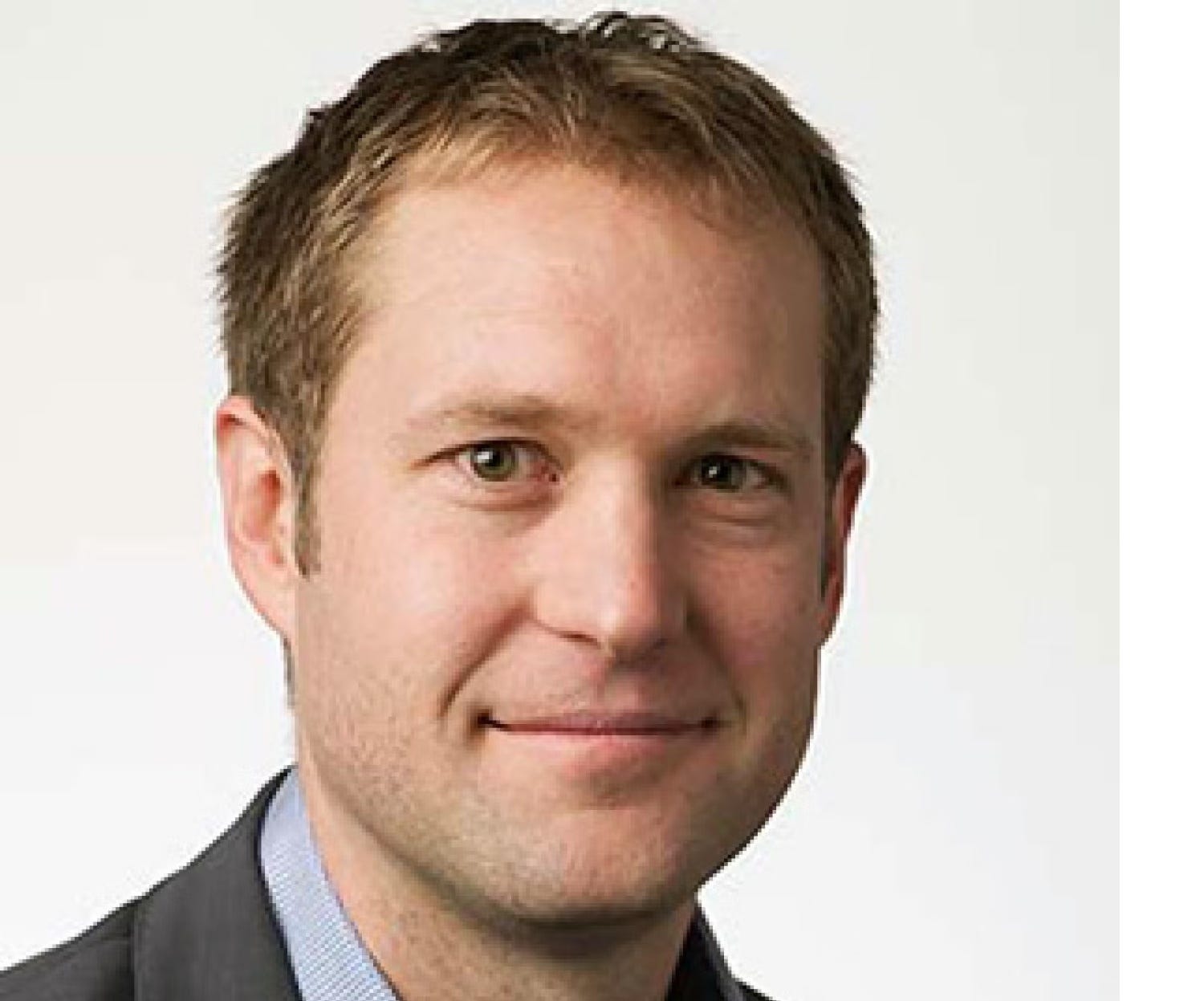
Anyway, I’ve been meaning to dig into it and figure out how much there is there. As it happens, I have the perfect guest for the job. Jordan Macknick has led agrivoltaics research at the National Laboratory of the Rockies (formerly the National Renewable Energy Laboratory) for about a decade. His team tracks US agrivoltaic projects, runs its own field research, and catalogues studies from around the world. He also co-chairs the International Energy Agency’s agrivoltaics group. Few people know the field better.
With more and more counties banning solar, is this a way around the land-use conflicts? Can solar and farmland be friends? Let’s get into it.
Chapters
00:00 – Introduction
02:12 – Four kinds of agrivoltaics
04:23 – Livestock: from sheep to bison
09:08 – Which crops grow under panels
13:07 – Why no one agrees on a definition
16:53 – How much agrivoltaics exists in the US
21:36 – Costs and per-acre economics
26:46 – The five Cs of agrivoltaic success
32:37 – Contracts and the many parties involved
35:31 – Fixed-tilt vs. single-axis tracking
41:25 – Yields, photosynthesis, and panel cooling
48:52 – Soil health and low-impact development
52:39 – Equipment and panels built for agrivoltaics
56:09 – State policies
58:58 – Why bother combining solar and farming?
1:02:56 – The vision: informed choices
Resources
People & Organizations
David Roberts (Substack - Bluesky - Twitter)
Volts (Apple Podcasts - Spotify - YouTube - LinkedIn - Instagram)
Jordan Macknick (Profile)
InSPIRE (Website - Agrivoltaics Map)
Other Orgs
Company & Industry News
Increased spacing between solar module rows boosts agrivoltaics viability
Large-scale Ohio research project to explore how solar and farming can co-exist
Solar panels go up at Grand Junction vineyard, Colorado’s newest agriculture and energy project
Books & Articles Discussed
InSPIRE - The 5 Cs of Agrivoltaic Success Factors in the United States
NREL - Capital Costs for Dual-Use Photovoltaic Installations: 2020 Benchmark
University of Illinois - Costs and benefits of agrivoltaics across the Midwest
Related Volts Episodes
A clean energy transition that avoids environmentally sensitive land
“Repowering” worn out solar fields could create gigawatts of new grid capacity, quickly
Transcript
David Roberts: All right. With no further ado, Jordan Macknick, welcome to Volts. Thank you so much for coming.
Jordan Macknick: Thank you for having me.
David Roberts: Really excited to dig into this. I wanna start with some very basics, though. So I wanna first ask about what kinds of agrivoltaics are. What do we mean when we talk agrivoltaics? And then after that, how much of each exists? So let’s start. I think your project, the InSPIRE project that you run on this, breaks the kinds of agrivoltaics down into four categories. Can you just run through those real quickly?
Jordan Macknick: Absolutely. Yeah, and I will say we use a big umbrella approach when thinking about agrivoltaics, and that’s why we have our four categories. The first category is crop production, so growing vegetables or grain crops, all sorts of crops in the ground.
David Roberts: This is what I think springs to mind when people hear the word agrivoltaics. I think this is what they imagine.
Jordan Macknick: Absolutely. And the second thing that might pop in their mind is the picture of a sheep or a cow grazing underneath the panel. That’s our second category, and that’s really probably the most common form of agrivoltaics that we see in the country. The third type of agrivoltaics, which is somewhat controversial, is what we call ecovoltaics or beneficial habitat types of approaches to agrivoltaics, and that’s where we have native vegetation or apiaries or beekeeping pollinator habitat that’s planted underneath the panels for ecological and ecosystem services.
David Roberts: As opposed to agriculture that can be sold, as opposed to producing an agricultural product.
Jordan Macknick: Exactly. It can have indirect agricultural benefits in terms of supporting pollinator-dependent agriculture nearby, restoring nutrients back to the soil, et cetera, but it’s not, doesn’t always have a direct agricultural product grown underneath the panels.
David Roberts: Right. And then the fourth kind is just greenhouses, basically with solar panels on them.
Jordan Macknick: Integrating solar panels somehow into greenhouses. Could be on top, it could be embedded within the glass itself, or it could be underneath the glass inside.
David Roberts: All right, a couple questions about each of these. On the livestock, my impression is that mostly we’re talking about sheep. What types of animals can you raise around solar panels?
Jordan Macknick: This is a great question that seemingly changes every single week because all of the lessons learned that we thought we had about what animals were possible or not seems to be disproven each week when we see a new animal that’s being raised and grazing underneath the solar panels. So you’re right that sheep really represent the most common animal that grazes underneath solar panels, and we’ve known this now for a decade. Sheep work extremely well in solar project environments. They’re the right height, the right personality. They do a great job of managing the vegetation.
And people figured that out relatively quickly, and so we’re seeing the American Solar Grazing Association estimates there could be as many as 500 projects in the country right now that are already grazing sheep. So sheep are quite common. But it is also possible to have smaller animals. Chickens are commonly run underneath solar panels in the United States. If you have non-rooting breeds of pigs, you can raise pigs underneath the panels.
And we used to say, “Oh, you never wanna have goats underneath your arrays. They’ll chew things. They can jump on the panels. They’ll cause a lot of damage.” And yet we’ve seen projects in the United States where they do have goats, certain types of breeds, underneath the panels that are not wreaking havoc.
David Roberts: Do you have to up-armor your infrastructure for goats, or you just find nice goats?
Jordan Macknick: It’s always a good idea to reinforce some of those vulnerable spots or places where you might have cords or wires or other things that you don’t want any curious goat thinking about. The other thoughts were, we used to say, well, sheep work out, but cattle don’t. And yet we’re seeing now, there, I think we have close to 20 projects across the United States right now where people are raising cattle underneath the solar panels. And the thought used to be that, well, if you do have cattle, you need to make sure these panels are elevated 8, 9, 10 feet off the ground. You need to reinforce the structural components on this.
And what we’re also seeing is that other people are raising cattle without making those height increases into the panels, without doing many of those cost inclusive activities that we thought would be required for cattle, and they’re doing all right. And then lastly, another thing that we’ve always said is, now you can do cattle, but you can’t do bison. And lo and behold, yeah, I think two weeks ago I saw a project where they actually are having bison underneath the solar arrays, and they seem to be getting along just fine.
David Roberts: Really? And the bison won’t just mess around and bonk these things down? When I imagine cows, I imagine pretty passive creatures, but for some reason, bison I imagine a little more active.
Jordan Macknick: Yeah, I mean, they can be active, and they can still be interested in scratching their backs on the support structures, but they’re not gonna be running full speed ahead at these structures with the intention of taking them down. I think the general outcome that we’ve seen, with the exception of goats, usually once the animals realize that this is metal and this is not food, and they can appreciate the shade from it, they don’t go about trying to destroy it or trying to pick a fight with the infrastructure.
David Roberts: They just leave it alone. But I’m assuming for any animal grazing, you do have to elevate the panels somewhat. You can’t put them at the standard, like if I was just putting a solar array in a greenfield. My solar panels are basically on the ground, close to it. I assume you do need some elevation for any kind of grazing. Is that right?
Jordan Macknick: There does need to be space below the panels for the grass, for the pasture, for the forage to grow, sure. But what we’ve seen is with sheep, you don’t necessarily need to elevate it above standard industry practices. The sheep are able to navigate in through standard industry heights. Now, another important trend that’s happening with the solar industry is that as more and more utility-scale projects move to single-axis tracking systems that follow the sun throughout the day from morning to evening, those are often spread out a bit farther, and would naturally have a little bit higher elevation or higher height.
And so what you see is that there is plenty of space underneath the panels where that can support vegetation growth, and that can then also support the animals that are grazing underneath the systems.
David Roberts: Interesting. And then when we’re thinking about crops, we can get into this a little bit more later when we talk about the performance of these things, but just for people’s mental image, what kind of things have people grown, or what’s common to be grown underneath them insofar as anything’s common yet?
Jordan Macknick: Yeah, and I would say there’s about 60 projects in the United States that are growing some type of crop right now. Usually what we’re seeing are diversified vegetables. So think about things that you might find in a farmer’s market: tomatoes, peppers, kale, lettuce, basil, herbs, potatoes, things like that. That’s the most common type of agriculture and crops that we’re seeing. Oftentimes, that’s done in a hand-harvested fashion. Now, that being said, there are a number of sites across the country where they’re growing hay, or they’re testing out corn, or they’re growing other grain crops.
David Roberts: Yeah, I was gonna ask about kind of the staple crops, the big crops.
Jordan Macknick: Yeah, and so certainly, especially in Illinois, Indiana, Massachusetts, they are testing out different designs and different agriculture management techniques to see, “Hey, can we grow soybeans? Can we grow corn? Can we grow wheat? What are the trade-offs in terms of the equipment we can use? What are the trade-offs on the yields?” So that is certainly something that is possible. Hay seems to be really working out nicely and compatible with this. One of the more unique installations that we’ve seen out in Massachusetts is agrivoltaics over a cranberry bog.
David Roberts: I think I read about that one. And that’s working out fine? And what about the sweeter blueberries? Is this a myth? I don’t know if this is just a thing that floats around the internet, or is this real?
Jordan Macknick: So you can have very real differences in the flavor profile of crops that are grown underneath the solar arrays, and this could be due to less stress on the plant, more stress on the plant. Based on the conditions that you have, the temperature, the humidity, the heat, you can get... just as you can get differences in yields, differences in the size of the fruit that you’re growing, you can also get differences in the flavor profile. And so yeah, that applies to blueberries. It also applies to grapes, which is very important for the wine industry as well, thinking about what is that resulting level of acidity and other elements that really contribute to the flavor of that crop.
David Roberts: And this is something we do on purpose that we know... is a flavor profile something that we know enough now to engineer with precise amounts of light and shade and stuff like that, or are we still kind of groping? That’s more about agriculture than solar, I guess, but I’m just wondering.
Jordan Macknick: I think on the agricultural side, so traditional agriculture without solar panels, we’re much more closer to better understanding all the contributing factors that would lead us to having sweeter or more tart types of flavors and levels of acidity. That’s something people have been working on for centuries, and you always have to contend with Mother Nature and what the weather is like that year, but that is something that so many agriculture producers strive for and what they try to do. When we start trying to do that in the agrivoltaics context, that’s where it starts getting a little bit more complex.
David Roberts: Yeah, just more variables, I assume. And this fourth category of solar on greenhouses, I’m mostly just gonna put that to the side. Is that a substantial thing? It kinda seems like a different thing, a different family of thing that we’re talking about.
Jordan Macknick: In the United States, it’s a much smaller market and a much lower number of demonstration projects that we’ve seen. But in places like Italy or China or Israel, we’re seeing greenhouse agrivoltaic systems really emerge as a promising solution for farmers and agriculture providers. But it hasn’t quite taken off in the United States yet.
David Roberts: Interesting. And so as we’re gonna see, let’s move into some numbers, how much of all this stuff is there. But before we move on, one of the things we’re gonna see is that what you call ecovoltaics, which is just planting native grasses or plants beneath the panels for mostly ecological rather than agricultural reasons, there’s some controversy, I think, about whether that should count, and as I understand it, they don’t count that in Europe, for instance, as agrivoltaics. Is that an interesting or meaningful controversy? What are the kind of sides there? Is that a live argument?
Jordan Macknick: So I’d say the most contentious issue in all of agrivoltaics is the definition. There is not one country on the planet that agrees on the definition of agrivoltaics. And so, as you mentioned, in Europe, yes, they don’t consider ecovoltaics to be agrivoltaics. There’s some European countries that don’t consider grazing... sheep grazing or other animals to be agrivoltaics. There are other countries that also don’t consider growing crops only in between the rows of panels to be agrivoltaics. For those countries, you have to grow directly underneath the panels for it to qualify as agrivoltaics. There is a wide range of priorities and of definitions that people are employing right now.
David Roberts: Why define it tightly like that, narrowly like that? Is the intent there to encourage that? They’re trying to encourage more of this? They want more crops under solar panels? Is that what Europe is after?
Jordan Macknick: I think the intention is to minimize any loss of agricultural land that’s possible. And so if you think about if I have an acre or a hectare there, and you have solar infrastructure that’s covering that acre, usually the rows of solar panels might have 15 feet in between them, but then the panels will take up 6 feet themselves of width, and so they don’t wanna lose those 6 feet directly underneath the panels because you add that up, all of a sudden you’re losing 20, 30, 40 percent of your acreage that was currently under production.
So I think what’s motivating that is really emphasizing the fact that, especially in Europe, they have limited amounts of farmland, and they don’t wanna lose one single hectare of that.
David Roberts: I see. So the intent here is, “Look, you can do this. You can plant your solar panels on your farms, as long as you don’t lose a substantial amount of agricultural land,” is the idea there?
Jordan Macknick: Exactly. That’s written into the laws there. It is relevant to note that they often do have financial incentives associated with it, and so they have very strict definitions and requirements in order for projects and farmers to qualify for those financial incentives.
David Roberts: And what is your motivation for including grazing and ecovoltaics in this broader umbrella? Is it just you’re trying to get a comprehensive understanding? What are the counter kind of incentives there?
Jordan Macknick: So we include it because from our perspective, it’s doing something that is beneficial to the land that is not necessarily required or not necessarily part of the standard approach to doing utility-scale solar traditionally in the United States. So for us, it represents a change in how you design a project, how you manage it, as well as the costs, both additional cost expenditures as well as any potential cost savings that you might have. And so for that reason, for us, it’s just categorically different from traditional utility-scale solar, with the focus on land management and agriculture more broadly.
David Roberts: So your team has this map of agrivoltaic sites. I’m not sure how comprehensive it’s meant to be, but right now it’s got 904 sites on it, about 15 gigawatts of agrivoltaics across about 92,000 acres. That adds up to about 5 percent of US solar. And then 93 percent of that capacity has no crops, so it’s either grazing or ecovoltaics. So all of which is just to say panels with actual crops, agricultural crops growing among and between them are pretty rare still. It’s a pretty small thing. That’s fair, don’t you think?
Jordan Macknick: Yeah. On a relative basis, yeah, crop production sites represent less than 10 percent of all the agrivoltaic projects currently deployed right now.
David Roberts: And how complete is that map? Are you tracking everything? I mean, is there some registry? Do people have to tell anyone if they start doing this?
Jordan Macknick: The intention is for this map to be comprehensive of all the projects in the United States doing agrivoltaics, yes. That being said, there’s no official registry. Projects are not required to report whether or not they’re doing agrivoltaics or not through any governmental agency. There’s no other formal registry that’s tracking this, and so much of this tracking comes down to our team identifying, searching the web, building off our existing industry contacts, as well as other trade organization contacts who do find out about these projects or who do know about these projects and can share that information with us.
David Roberts: So the crops part of this, agrivoltaics with crops, adds up to about 39 megawatts, which is, again, pretty small in the grand scheme of things. And the typical size of one of those is about a third of a megawatt. So is it fair to say that where we do find agrivoltaics with crops, these are generally pretty small? There’s nowhere in the US where this is happening on any sort of mass industrial scale. Is that fair?
Jordan Macknick: Mostly that is correct. So what I will say is you are right that, especially from the beginning, all of the initial demonstration projects were relatively small. They were on someone’s farm or on a university campus or a company’s campus as they were exploring this and trying to identify what we’re seeing. Then, as the industry has evolved, we’ve seen a lot more community solar scale projects, and that was due to favorable financial incentives for doing things at that scale, which had led to a lot of projects are on the 1 megawatt to 2 megawatt scale, so 5 megawatts to max... 5 acres, I should say, to max 10 acres on those types of projects.
And then through the Massachusetts SMART program, which has incentivized other agrivoltaics within that state, we’ve seen a number of other projects that, yes, are on sort of that 5 to 10 acre scale. And again, that’s supported through that program. But there are a few other sites across the country where we are seeing crops being grown on these much larger sites.
So there’s Madison Fields agrivoltaics project, there’s the Mammoth Solar project, there’s projects in Hawaii that are larger projects. So these are over 100 megawatts in size of projects, and they are growing things like hay at the tens of acres level. Now, if it’s a 100-megawatt project, it might be 500 acres total. That doesn’t mean that they’re doing 500 acres all of crops. It’s a component of that.
These projects, I think, are really important for really establishing the feasibility and letting people know, “Hey, if you do wanna grow things at this 10 to 100 acre level, we’re doing it here.” These are some of the, I think, important pioneer projects for us to learn from as we do see people make plans for much larger crop-incorporating projects.
David Roberts: We’re doing pilot projects and tests that are flirting with industrial scale.
Jordan Macknick: Exactly. In the United States, that’s what we’re doing. Elsewhere, in Europe, in Asia, they’re already doing 100 megawatts, hundreds of acres or hectares at a time, for projects that are incorporating crops.
David Roberts: Interesting. But I’m guessing the reason that ecovoltaics are so common, followed, I guess, by grazing, and then with crops in a distant third, I’m guessing the reason it’s evolved that way so far is just economics. So you say there’s a cost benchmark. This was back in 2020, so maybe things have changed since then.
But the estimation there was that grazing added about 4 to 5 percent to a project’s cost, habitat added about 7 percent, and then crops added about between 20 to 52 percent costs. I guess this is kind of obvious intuitive if you think about it a little bit, but just designing these things to grow crops between them is a substantial cost increase relative to just doing farming or just doing solar, whereas habitat or ecovoltaics is a little cheaper to integrate. Do you think that’s fair?
Jordan Macknick: I think at the high level, at the general level, that is fair. The costs have updated, and industry has learned a lot since then too. So we’re just recently completing a nationwide study on capital cost increases from different types of agrivoltaic systems, and we’re now seeing that pollinator habitat might add about a 1 percent cost premium. Grazing might have a 2 percent cost premium. With the crop agrivoltaic sites, more along the 10 to 12 percent cost premium.
David Roberts: But that’s substantially down since 2020, though.
Jordan Macknick: Absolutely.
David Roberts: That’s on the way down. Maybe I’m skipping ahead a little bit here, but I’ll just ask now, do you think there’s a world where the sign flips and any of these categories become profitable relative to not doing it? Do you know what I mean? As opposed to not an additional cost, but you could actually make money by doing one of these things, make more money by doing these things. Is that a possible world?
Jordan Macknick: Anything is possible. It all depends on what our background economic conditions are. And right now, there, at least in the United States, even though there are areas with moratoriums against developing solar or there’s other challenges with permitting and projects not getting built, we are seeing a demand and a desire for people to do this. And so usually, though, when it comes down to economics, there’s a bit of a mismatch between the economics of the energy sector and the economics of the agricultural sector. Just on a per-acre basis in the United States, a farmer or a landowner can earn 5 to 10 times more money hosting a solar project on their farm than they can growing food.
David Roberts: Really? I did not realize the delta was that large.
Jordan Macknick: And it can be even larger depending on what you’re growing. If you’re talking corn or soy or other really low-margin crops, it can be even higher than that. Now, the difference comes when you look at high-value crops, such as grapes, which could be table grapes, or that could be wine grapes or orchards. Now you’re starting to talk about crops that potentially could compete on a per-acre basis with revenue from solar projects.
And so here is where we start getting into that future where you’re talking about where, ooh, already even today, we could see cases where these projects could be potentially more profitable if there’s yield increases from the agricultural crops from integrating these systems together. These are really on the frontier in the United States right now.
Colorado is home to the first grape agrivoltaics project in the country, as well as the first orchard with a peach orchard agrivoltaics project. And so from these, we’re still learning about impacts on yields, but again, those are two very high-value, high-margin crops. If it’s successful, could really pave the way for more of this to occur in these types of agriculture.
David Roberts: To sum that up, we could imagine in the future an agrivoltaics project with grapes that would be more profitable per acre than solar panels exclusively or grapes exclusively.
Jordan Macknick: Absolutely.
David Roberts: Interesting. Yeah, that’s what I was wondering, because right now, all of these are additional costs, which means I’m guessing that most examples right now of this happening are subsidized in some way or another. They’re research or they’re university, something. Is that fair? Most of these are, I’m guessing, subsidized one way or another.
Jordan Macknick: I would say most, but not all. There have been other commercial-scale projects where people are doing this without any additional financial incentives. There are some companies that do think this is the future, and they’re willing to test it out, and they’re willing to make the investment in this ’cause they think it is a long-term viable solution, and they want to be on the forefront of that next generation of projects.
David Roberts: Interesting. So let’s talk about, you have this framework for... frustratingly, of course, this is like so many things, which is like the closer you look, the more complicated it gets, which means what are the effects of solar panels on yields is... turns out to be you have to know a lot of background information to answer that question. It depends on many things, and you’ve come up with this framework, what you call the five Cs, which describe the variables involved, and then each of those variables obviously affects the economics of the outcome. So just quickly walk us through those, what you call the five Cs. What are the categories or considerations when you’re developing a project like this?
Jordan Macknick: Yeah. The five Cs could really be 50 Cs. But we did our best to narrow it down to the five that we thought most crucial, and these are our five Cs of agrivoltaic success. And so importantly, this tells us not only what will grow underneath the system, but also what really provides for long-term success among all partners, ’cause these are complex projects, and really sets up the project for the most success.
But the first three Cs that we have are climate conditions, our configuration, and our crops. And so with those three Cs, the combination of those, that really helps us know and have a better idea of will those tomatoes grow? Will that wheat grow? Will the beets grow? And so our first C is our climate conditions. So this is our sunlight, our air temperature, our soil type, our water availability. It’s basically our background information that you would have, that you would use in regular agriculture with no solar panels. This is our starting point.
Now, the second C is our configuration. So this is the type of solar installation that we’re putting on the land. Here it’s really important how tall the panels are, how translucent or opaque they are, how close together they are, other spacing issues, ’cause all of those factors will affect how much sunlight actually hits the ground, which then will affect what our temperature is. It’ll affect our evapotranspiration rate and our soil moisture rate. It’ll affect our wind speed and directions.
All these things essentially transform you from a small farm in southwestern Wisconsin to another farm somewhere else, given that we’ve got changes in temperature and in sunlight and in moisture, humidity. All those things have now changed based on the type of solar infrastructure you’ve put in there. And then our third C is the crop selection and choice.
And so it’s not only how you’re growing the crop, if you’re growing the crop directly underneath the panel, along the drip edge, in between rows of panels. There’s a couple different methods you can do, how you’re irrigating it. It’s your method. But also, so many crops have localized cultivars or other types of varietals that can do differently.
So as one example, we’ve got a research project in Oregon, and we’re looking at 17 different types of potatoes underneath the solar array in the same field. And those 17 different types of potatoes have about 17 different patterns of how much they like agrivoltaics year to year, and what part of the array that they like most, ’cause different parts of the array will get sunlight at different times of the day, and have different temperature effects.
David Roberts: I’m sure this is complicated when you get into the details, but at root, we’re talking about sharing sunlight, basically, right? How much directly hits the ground, how much is filtered through a partially translucent panel, how much is shaded by a opaque panel. It’s all, in the end, about sunlight, right? The distribution of sunlight.
Jordan Macknick: Yes. It all starts with the sunlight, and the fact that the sunlight affects the temperature, and the timing of the sunlight is also very important from the plant’s perspective. And it’s also very important on wind direction and speed. Yes, it all begins with the sun. But it cascades on down, and these small changes have really been interesting. We’ve done field research at close to 30 projects all across the country now, and the regional differences that we see, and the differences that we see with, depending on the configuration that you have, and your soil type, are dramatic, and a lot of non-intuitive results.
David Roberts: That’s interesting. Let’s talk about the last two Cs, and then I wanna get back to configuration a little bit.
Jordan Macknick: Yes. So the first three Cs, your climate, your configuration, and your crop selection really will tell you what will grow. Will my tomatoes grow?
The second two Cs are all about long-term viability and success. The fourth C is compatibility. Would a farmer actually want to farm in this agrivoltaic array? We’ve heard some farmers describe agrivoltaics as farming in an obstacle course. And it can be challenging. And so the system needs to be designed in such a way that it’s worthwhile for the farmer to continue farming that, and they feel safe, and they feel like it’s not adding too much time or extra labor on their activities.
And then the fifth C, which is probably the most important C, but also the most boring C, unless you’re a lawyer, is all about your collaboration. It’s your contracts. It’s the agreements that you have among parties to make sure everybody feels like their risks are being managed, they’re being protected from a legal standpoint, they have motivation, they have financial motivation to be undertaking this in that way.
So those contracts are absolutely essential, and working agreements among parties are absolutely essential to make sure you have that long-term success of a project.
David Roberts: And that boring stuff is where things ground out, in my experience. It’s boring, but so necessary. How far along is that? Is there emerging something like a standard contract, a standard model, a standard business model, or is that area also full of little experiments right now?
Jordan Macknick: I would say it still incorporates a lot of regional variability, a lot of one-off contracts and development that I see. There’s a really big need for more standardization and a little bit more consistency and certainty among all parties. And I know there are some organizations that are emerging, so REFA, Renewable Energy Farmers of America, the Southern Poverty Law Center, are all starting to look a little bit more at contracts. The American Solar Grazing Association helps with standard contracts for grazers. I think American Farmland Trust can also help with some of those contracting issues.
But there’s not necessarily, still is not a dedicated organization just focused on that, and we don’t have a, certainly a national template for how these contracts and agreements can all be finalized.
David Roberts: ’Cause one of the things that occurs to me would be problematic in that area is that you have a farmer and you have a solar developer, and they’re probably not the same thing. And in a sense, you need both of them to make a promise for how long they’re gonna do their thing. How do you know that the solar developer’s not gonna go out of business or abandon their solar farmer? How do you know the farmer is not gonna go out of business? You know what I mean? It just seems like at the very least, you’re doubling the complexity of things because you have two entities with separate incentives, maybe separate timelines, et cetera, et cetera. I mean, it does sound like aligning those can be complicated.
Jordan Macknick: You’re right, and I wish it was only doubling the complexity. You’ve got more entities involved that need to be there as well. So you’ve got a farmer who may or may not be the same as a landowner, and there needs to be an agreement among those parties. In addition, the solar company that develops the project might not be the long-term owner/operator of the project, and then that long-term owner/operator might also hire other entities to help support other O&M practices.
And so all of a sudden, we’ve got six or seven organizations, not just two, that all need to come to a similar agreement. And you’re right about the risks, and you’re right about the long-term viability of some of these companies and the need for baking in that protection, so in case there is a change of hands, in case there are new personnel coming on, on site who are now a part of this project, that the agreements that were originally made are still being respected.
David Roberts: Yeah, that sounds like a lot of work for lawyers. A lot of lawyer work. Let’s talk briefly about configuration, ’cause this I think is really interesting. So walk us through just a couple of... I think most people are familiar with the basic way of building utility-scale solar, which is just these kind of low racks with solar panels on them at a slight angle. What are some of the different configurations people are trying out as they integrate agriculture?
Jordan Macknick: Yes, that’s a great question, and one of the most common questions I ever hear is, what do you mean you’re growing underneath the solar panels? There’s no space between them. People think about rooftop systems. And so when we talk about utility-scale systems, we will have rows of panels with space in between them, no matter what the configuration that we have.
But I break down the configuration into two primary categories. The first would be a fixed-tilt system, and the second would be a single-axis tracking system that follows the sun. For those fixed-tilt systems, in the United States, usually south-facing, facing the sun towards the south at an angle, and those rows of panels can be 15 to 20 feet apart. The fixed-tilt systems have benefits of not moving, so there’s no moving parts. They’re relatively simple to install and lower risk on the maintenance side.
But they do have the impact, you create shady zones and really sunny zones. It’s gonna be really, really shady directly underneath the panels, really sunny right near the front edge of the rows of panels. In contrast, with the single-axis tracking systems, those follow the sun from morning till night. And because they move, you end up getting a lot more even distribution of sunlight in between the rows of panels.
Because you are tracking the sun, you are also producing more electricity per acre, more electricity per panel. And so for those reasons, most of the utility-scale solar industry in the United States has moved towards single-axis tracking systems. The single-axis tracking systems, as I mentioned, for agrivoltaics, tend to produce a little bit more uniform sunlight. They also have the ability to change the... landowners or farmers can pause or change the tracking system if they need to get in equipment or need to get in people to do certain activities, so allows potentially a little bit more agricultural flexibility in as well. Those systems are oftentimes usually elevated a little bit higher than a fixed-tilt system.
David Roberts: Yeah. I mean, my basic question is, just take the fixed-tilt system, kind of the old-school standard. Presumably, in any utility-scale array of such panels, there would be spacing between the rows just for operations, for cleaning and whatever. If you’re gonna grow something, I mean, I guess all these questions depend somewhat on what you’re talking about, whether you’re talking about ecovoltaics or grazing or crops. But just to take the crops example, if you’re gonna go crops between or under them, you do need to space them farther than they would otherwise be spaced, do you not? And in doing so, you are reducing the total number of rows available on a particular plot of land. Is that accurate?
Jordan Macknick: Yes, I would say mostly. You don’t have to necessarily make the rows spread out wider, but the more you spread out the rows, the more you can do agriculture, the easier agriculture’s gonna be, and the more crops per acre you can grow. But you are right. As you make the rows wider, if you’re limited by a given amount of land, then you are gonna be having less energy production on per acre, per unit of land. It’s an important issue, as we were talking about, in land-constrained areas, whether that’s European countries or states out in the Northeast, like Massachusetts, for example. But in other parts of the United States, land availability is not always a limiting factor.
David Roberts: Right. I mean, I guess if you’re hand harvesting grapes or whatever, spacing doesn’t matter as much. But do we have examples of commodity crops grown beneath or between panels and rows spaced sufficiently to allow kind of modern harvesting machinery in between them? Is that a thing that we’ve seen?
Jordan Macknick: Yes. So we’ve seen some demonstrations in Illinois, Indiana, Massachusetts, where they’ve built the systems to accommodate the modern farm equipment and tractor implements. We also recently completed a study for the state of Colorado looking at much larger-scale projects. We’re looking at sugar beets, winter wheat, potatoes, other crops where your tractor implements could be 30, 40, 50, or even wider in terms of their length.
And so we did a modeling study looking at how do the economics factor into this, what’s our overall amount of crops that we can grow by optimizing around the tractor implement width. But you don’t wanna have to go up and down a row twice if you can just go once, or you don’t wanna have to go two and a half times as opposed to just twice.
And so this is something that we have shown can be feasible, can actually pencil out and make economic sense. Yeah, with this Colorado paper, we were able to identify for each of the crops... we looked at every single county in Colorado and looked at, I think, 20 different row spacings, depending upon what our implement width was for the tractor and tried to optimize based on tractor passes, what the optimum spacing would be for each of those different types of crops and their equipment.
David Roberts: Interesting. And so let’s talk then a little bit about what we know about performance, what we know about how these things do when you plant them. Do we know enough yet to say, for X field, for X crop, we can integrate X amount of solar, and it will have X effect on yields? Do we have that kind of sophistication yet, or are we still kind of learning?
Jordan Macknick: What you just described there is the holy grail of what researchers are working on right now. That is where we want to be. I call it the dart on the map. I would love to take a dart, throw it anywhere on the map of the United States, and wherever it lands, I would love to be able to tell you, okay, if they’re growing corn, or if they’re growing wheat, or if they’re growing broccoli or whatever they might be growing, we should install this type of solar configuration to optimize both energy generation and crop yields, so we see an increase in crop yields and a reduction in water usage and a financially viable energy project. That’s the end goal that we’re working towards.
We’re not there. We’re not there yet, partly because, as I mentioned earlier, we’re still seeing some counterintuitive results with how crops are performing. In some cases, we’re seeing crop yield increases. In some cases, we’re seeing crop yield decreases.
David Roberts: So not necessarily what you would have predicted with your present knowledge.
Jordan Macknick: Exactly. Yep. And I think some of that is due to the complexities as we talked about going back to the five Cs of... as you add elements of shade, you’re changing the temperature, you’re changing the soil moisture, you’re changing evapotranspiration rates, all these things that really affect crop yields and affect crop and plant growth.
And so I think one of our interesting results that we have, and this is a partnership we did with University of Arizona, is we’ve been measuring photosynthetic rates from crops underneath solar panels in a few different locations across the country. Something that I think is pretty amazing that we’ve found is that in water-limited but sunlight-abundant areas like Colorado or Arizona, the southwestern United States, we can see higher total photosynthesis throughout the day from crops that are in agrivoltaics compared to being in the open air.
And the reason is photosynthesis is directly tied to the temperature. As crops get too hot, they go in sort of protection mode and they shut down once it gets too hot. Agrivoltaics, the cooler microclimate we create allows photosynthesis to occur. It’s at a slower rate throughout the day, but it continues. It doesn’t shut down the same way it does in the open air. Now, that’s great, so...
David Roberts: And obviously pertinent to a warming climate. A warmer and drier climate.
Jordan Macknick: Yeah. So we can get higher total photosynthesis in agrivoltaics, which is great, wonderful. You’d think, okay, we got higher total photosynthesis, we’re gonna get higher yields, right?
David Roberts: Right.
Jordan Macknick: Not necessarily. And so for some crops, we do get higher yields. Other crops, the plants might then put more of their energy into, let’s say, leaf growth or their roots as opposed to into the luscious, juicy tomatoes that we want or the spicy peppers that we want. And so there’s all of these complexities. We’re entering a point where the crop models and the ways in which we predict crop yields for an open-air environment with no solar panels, those models, those tools aren’t working in the agrivoltaics context.
And so a huge priority within the research community has been developing these models that they just need a higher temporal and spatial resolution in order to capture the time dependency of a photosynthesis and other crop yield and other crop performance metrics.
David Roberts: So you’re gonna have to update conventional models of growth and yield. Is it fair to generalize as follows: when you have heat and drought, shade is gonna help you in some way or another. I mean, obviously, the details matter, but roughly. Whereas if you’re in a more wet and cool environment with less sunlight, like I saw there was a study in the Corn Belt that agrivoltaics cut corn yields and soy yields in the humid Midwest, basically. So is it fair to generalize that you’re generally gonna have better results in hot, dry places than in cooler, wetter, less sunny places? Is that fair?
Jordan Macknick: As a rule of thumb, yes, I’d say that’s fair. But we’ve also seen data and results, and I think one of our first research sites was in Massachusetts, and Massachusetts certainly is not a hot and dry place. And for us, the important thing is to capture many years of data to really get at this interannual variability.
And so I think we collected nine years’ worth of data from our Massachusetts site. And something that’s been very clear for us is that in mild summers there, where it’s not too hot, you got plenty of water, yeah, we’ll see lower yields in the agrivoltaics systems. In the years where they have drought or it’s hot and dry seasons, that’s where we’ll see the yield increases in our agrivoltaic system.
And so in some ways, we sort of see it as a hedging mechanism. If people do anticipate seeing more summers where it’s hotter and drier conditions, agrivoltaics offers a way to sort of offset those yield losses in those years, and where you actually can get higher yields.
David Roberts: It’s not always gonna increase yields. There are circumstances in which you’re reducing yields, for the obvious reason that a little bit less sunlight is reaching plants. I mean, it’s not complicated. One of the promised win-wins here is that the panels shade the plants, but the plants also keep the panels a little cooler, and thus you get higher production. Has that panned out in practice on the ground?
Jordan Macknick: Here’s another case. It’s a complex system. It does not always pan out that way. It’s heavily dependent upon your background climate conditions, how humid is the air, what’s your base level of soil moisture, how much natural evaporation are you having from the soil? And so what this means is we tend to see these PV energy yield benefits much more clearly in hot and dry environments. So again, we’re looking at the US Southwest, where we’re having additional transpiration from the plants. We’re having irrigation water that is evaporating from the soil. That’s creating a cooling effect. You don’t have that same level of dramatic change in evaporation.
David Roberts: But is that cooling effect resulting in a measurable increase in panel output? Has that effect been identified in the field?
Jordan Macknick: In the Southwest, yes, but we are not able to validate that or verify that in the Midwest or the Southeast or other areas that are much more humid.
David Roberts: Interesting. So that’s mostly a dry heat thing. What about soil? What happens to the soil over time? And don’t you need kind of like... One of the tricky things here is that you need a lot of longitudinal data. You need to follow these things over a substantial amount of time because some agricultural cycles are quite slow, and you might not be able to detect them a year or two.
So when you’re doing the ecovoltaics, when you’re just planting native grasses and stuff like that, do we have measurable increases in soil health? Is this a way... like for instance, if you had a patch of a couple of acres that had been growing corn and soy for years and has depleted the soil in a way that modern industrial agriculture often does, and you put in an ecovoltaic system, can you measurably improve soil health over time? Is that something that’s been measured in the field?
Jordan Macknick: I would say my answer is yes, provided that the solar project is developed using low-impact development techniques. And so you make some really good points about you need longitudinal data. And so our InSPIRE team, we have the longest-running, continuously running agrivoltaics research projects in the country, and some of these might even be the longest in the world.
And so we planted our first ecovoltaic site on campus all the way back in 2010. From that site, we came back 10 years later and looked at how the soil had changed over that time. Now, because that project... there was a lot of land grading that happened, there was movement of soil, shuffling around of topsoil. It was a very intensive process for building that. That meant even 10 years later, there was marginal, sort of insignificant changes in the soil quality. Even though we’d been able to establish vegetation, we weren’t seeing a meaningful improvement in the soil compaction levels or the nutrient quality.
Now, compare that with the second-longest sites that we’ve been looking at, which are in Minnesota, ecovoltaic sites in Minnesota that we’ve been working on since 2017, for the past nine years. Those were exactly as you mentioned. They were former corn and soy properties that were converted into solar, into this ecovoltaic project with pollinator habitat. There, after five years, because we used low-impact solar development techniques and reseeded it, there we saw significant increases in soil carbon, nitrogen, other relevant macronutrients in the soil after less than five years. And so to me, there’s a big impact in how you develop the solar project.
David Roberts: Can you describe briefly what it means to do low-impact solar development? Is it a matter of machinery or what?
Jordan Macknick: It’s a matter of the machinery that you use. It’s a matter of minimizing the total number of times that you’re using that heavy machinery to go up and down the rows. Basically, the more you use the machinery, and the more times you go up and down the rows, the more you’re gonna compact the soil. And the more it’s gonna take time for that soil to rebound.
If you remove the vegetation and remove the topsoil, you’re putting that site in a very difficult position to try to revegetate it, and to try to improve that soil. And so as much as you can, avoiding grading, avoiding moving soil, and avoiding the removal of any existing vegetation can really help with promoting these low-impact development strategies that we’ve seen can really benefit long-term soil health.
David Roberts: Interesting. Looking forward, I mean, this is all so nascent that I’m guessing all your experiments so far, you’re using standard agricultural equipment and standard solar equipment. Are there technological developments of some sort on the horizon, or that we could imagine where you could design solar systems specifically for agrivoltaics, like different kinds of racks or different ways of elevating? Or are there technological advancements on the horizon that could actually improve the metrics because you’re designing specifically for this?
Jordan Macknick: Absolutely. And we’re already seeing that happening in Europe right now, where there is farm equipment that is being designed specifically for agrivoltaics. So tractors and the implements...
David Roberts: Narrower tractor? What would that mean?
Jordan Macknick: Narrower tractors with the implements. They can have a special feature that can go right up against the poles that are in the ground and be on a sort of moving mechanism, so they don’t damage the panels, but they are shifting a little bit and moving with that as they go around it, and they can get all the way around the poles that are there.
And so that’s another example, but other things that are just designed to be the right height, both the implements and the way in which... for some harvesting techniques, you might need multiple vehicles at a time, and so designing the systems where you don’t have to go over the panels, maybe it can go behind you, or there’s other ways in which you can still have the efficiencies you have from modern agriculture, but with just a little bit smaller or differently shaped equipment and implements.
David Roberts: What about the solar itself, the racks or... is there any advancement in that side of things that make it friendlier to land, friendlier to agriculture?
Jordan Macknick: I think on the racking side, there are options to figure out better ways to do wire management to make it less of a risk and less of an issue for getting agricultural equipment in there. The types of how you power the actual motors for the racking system, it will also be important for determining what kind of equipment you can get in there. And we’re also seeing some advancements and some exploration into different types of solar panels as well.
So these could be solar panels that are semi-transparent or that are wavelength-selective to really allow for certain wavelengths of light to pass through, using the other wavelengths to produce electricity, and this can be done not only in an outdoor environment, but also in a greenhouse context as well.
David Roberts: Right. I know they can make glass these days that can vary its opacity. Is there anything like a solar panel that can do that, that can be more or less opaque based on controls, outside controls?
Jordan Macknick: Yeah, so usually what we see are not real-time changing the opacity for what you wanna do, but there’s been a lot more work on, okay, we know we’re gonna be growing greens here. We know we’re gonna be growing some sorts of grain crops here, so we will develop this type of panel, with this level of opacity, that will allow this wavelength of light to go through, which is really what that type of crop does best with. That’s where we’ve seen it, but it’s not necessarily today I’m growing greens, so I’m gonna have it at this opacity. Tomorrow I’ll have a new crop in here, and so I’m gonna turn the dial and change that in real time.
David Roberts: But you can imagine panels more or less custom designed for specific kinds of crops. That is a thing that’s happening. We’re running out of time. Quickly, let’s talk about policy. I’m wondering, I know they’re maybe a little ahead on this in Europe because they’re, I guess, probably just much more sensitive about agricultural land, so they’ve had to think about it more. But what sort of state policies do we have in the US that are encouraging this, and kind of what state policies do you think might help it along? Which ones are working and which ones are in the works that you think might be helpful?
Jordan Macknick: Well, I’ll answer the first question. In terms of policies that we see throughout the United States, states have taken a different approach to figuring out what is agrivoltaics, and do we actually want this? And what are different levers that we have in order to see if this will entice companies to build it or not? And so the longest-running and the most famous one in the United States is the SMART program from Massachusetts, which offers a financial incentive for a feed-in tariff for people to build agrivoltaics projects that meets their specifications. They’re really the first ones to do that, models what other countries, whether it’s Japan or countries in Europe, have also deployed as well.
Other states have taken another approach, which is Illinois, for example, has decided to allow projects to jump up in the interconnection queue if they can be verified or validated as a dual-use agrivoltaics project. So it’s another type of incentive to encourage people to develop those projects. Other states, Colorado, for example, has decided, “Well, we will support some demonstration projects, and so we’re gonna offer some funds available for people to demonstrate and see if... can we make this work in the Colorado context?”
And we’ve seen New Jersey, New York also fund other pilot projects. New Jersey has supported Rutgers University. New York has had a series of pilot projects that are meant to showcase what agrivoltaics could look like in those states. Other states, like Minnesota, have offered a voluntary scorecard. This is more for ecovoltaics projects, but in a way in which they can have a third party verify: is this project doing what it said it was going to do?
And so I think just like we’ve got 50 nifty United States, they all have a different approach to energy, a different approach to agriculture, as they should. And so they’re all taking a look at agrivoltaics, I think, in a different way. And like I said, I think Massachusetts has gone the furthest in terms of directly supporting the construction of new facilities in the States.
David Roberts: And finally, to wrap up, and maybe I should have asked this earlier on: when I think about this on a first-principles basis, I keep coming back to the basic question, which is, why bother? One thing I’ve learned in energy technology is that the more modular and repeatable and standardizable and factory-built you can get, the cheaper you’re gonna get, the more you’re gonna get on a cost curve and get cheaper and cheaper.
And this sounds to me on first blush like taking two standardized, quite well dialed in systems and mixing them together such that you take something that was standardized and repeatable and make it bespoke, make it something that you need specific regional knowledge about, or specific knowledge about weather, et cetera, et cetera. You know what I mean? So you’re taking two things that are standardized and repeatable and making them into something bespoke.
So I guess my question is just, why would you do this? Why bother? If you want to farm well, why not just farm? If you want to solar well, why not just solar? Why not just put them next to one another? Why mix them? What is the impetus for doing this at all?
Jordan Macknick: Well, I think the fact that we have seen so many projects built in the United States does indicate that I think companies are finding value in doing this, that it is not just a negative impact. It is not just a cost increase. They’re finding some value. It’s been worth the complexity. It’s been worth the additional investment and exploration to do this.
And so I would say that’s one answer. That’s one way to just point it out: the companies that are building these are not dumb. They’re making strategic financial investments that seem to be working out for them. And so that’s, I think, one answer: based on the numbers, this has made sense for them to do.
Another approach, another way to look at it, though, is thinking about the trade-offs and thinking about when we see utility-scale solar projects that have been built and the impact that they have, not only on the environment, but also on local communities. For every action, there’s an equal and opposite reaction. I think in many areas, in many places, there has been a strong pushback into how utility-scale solar has been conducted, and even in some cases, for how large-scale agriculture has been conducted.
And I think this is really tapping into the reactions and the responses that communities and stakeholders all across the country have had, and especially as we see a much larger need for energy, a growing demand for electricity in this country, and the ability for solar to be able to provide that electricity, there’s a strong desire that if this is gonna happen in people’s neighborhoods and their communities, they wanna see it done in a way that’s respectful and that’s appropriate for how they view their communities. And so I think we’re gonna see this continuing to evolve.
David Roberts: So part of this then is about overcoming community resistance to solar. That’s part of the impetus here, is figuring out ways of doing solar that do not trigger the same level of resistance. Is that fair?
Jordan Macknick: Sure, yeah. I think many of these companies don’t wanna just build one project in a county and then never be there again. They wanna maybe build another project in that county, or they wanna be a good neighbor, a good steward for that area. And so certainly, it’s not just, I would say, only responding to negative feedback, but also trying to proactively build goodwill with these communities who are gonna be working on those sites and are gonna be living with that for the next 20, 30 years.
David Roberts: So then, final question. The vision for the future here, when you get starry-eyed and dreamy, and you think about 5 to 10 years from now, is the idea that the economic benefits of doing these things together rather than separately are going to present a demand pull and pull companies into doing this such that eventually you won’t need public subsidy? Is that the end goal here? Is that the vision?
Jordan Macknick: I would say agrivoltaics is not gonna work perfectly in every case, and there’s not a need to make every single project an agrivoltaics project. It’s just not realistic, and the land wouldn’t necessarily always support it. I think my hope and my dream is that people have enough information and enough confidence in knowing what the consequences would be if they choose to build a utility-scale solar project that does not incorporate agrivoltaics or one that does incorporate agrivoltaics. And I would like them to be able to make that choice and have all the tools and data relevant for them to make an informed decision so that it is possible.
And yes, I do hope that there’s technology advancements. I do hope there are cost reductions to make all of these options more feasible. But to me, the important part is just allowing people to have the information so they can make a more informed decision, more so than what they’re able to do right now.
David Roberts: All right. Well said. Super interesting stuff. I can’t wait to see how this develops. Thank you so much for coming on and walking us through it.
Jordan Macknick: Oh, it was great to chat. Thanks so much for having me.
David Roberts: Awesome.
Discussion about this episode