


State legislatures are writing data center rules faster than they can verify the demand forecasts underneath them. Fifteen states accounted for 80 percent of data center electricity demand in 2023, a single hyperscale campus can arrive as 15 to 20 percent of a utility's demand, and the transmission to serve it takes five to 15 years to build. On this episode of Volts, David Roberts works through Climate Cabinet's Taming Data Center Turmoil series with Saleem Chapman, who leads the group's electricity affordability policy work, on why Georgia's regulated utility, PJM's capacity market, and ERCOT's competitive market each left ratepayers holding the risk, and what a state can require before it approves a project, while the facility operates, and after the deal is done.

State policymakers are under enormous pressure when it comes to data centers. There are dozens of them banging on the door, demanding to be hooked up to grids. Utilities and the PUCs that regulate them are responding inconsistently at best, often allowing ordinary ratepayers to bear the financial risks, and the public is furious about all of it.
What should polcymakers do? Many in the environmental community are pushing for an outright ban, but most states don’t want to do that, at least not permanently. They want the investment and tax revenue that come with data center development. But they need a response, a strategy that protects their ratepayers and their communities from exploitation and abuse.
To address that need, Climate Cabinet recently released a series of papers called “Taming Data Center Turmoil,” recounting the rise of the hyperscalers, describing why giant data centers pose unprecedented risks, and outlining a detailed set of recommendations for how state policymakers should manage those risks. This is not pure, wonky technical analysis from a think tank — Climate Cabinet is an advocacy group, and the thrust of these recommendations is very much about consumer protection.
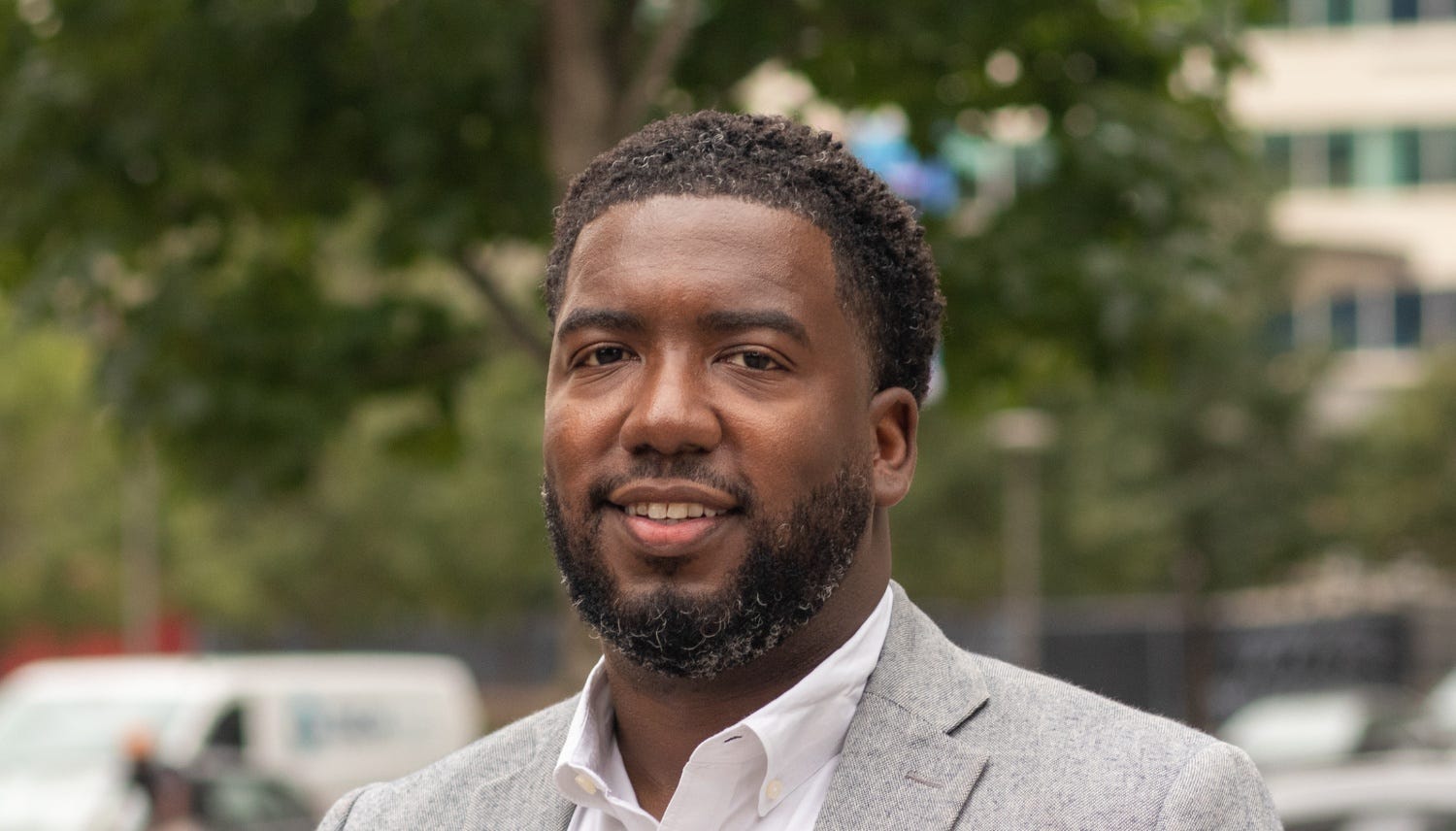
Nonetheless, this is the first time I’ve seen a comprehensive strategy laid out in one place, so I thought I would have one of the key authors of those papers, Saleem Chapman, join me to discuss them. Chapman is a longtime sustainability and environmental justice administrator who has worked for the Clean Air Council, the Philadelphia Office of Sustainability, and the Pennsylvania Department of Environmental Protection. He’s now leading electricity affordability policy at Climate Cabinet. We’re going to discuss the threats and the promise of data centers and the tools state policymakers have in their toolbox to manage the risks and maximize the benefits.
Timestamps
00:00 – Introduction
02:49 – How Climate Cabinet came to the data center fight
03:58 – Three things that make hyperscalers unlike past industrial loads
07:51 – Warning signals: forecast opacity, gas dependency, unconditional subsidies
13:44 – Siting near overburdened communities and the Memphis case
15:34 – State preemption versus local control
18:31 – The same failure pattern in Georgia, PJM, and ERCOT
23:52 – Why not just ban data centers outright
28:07 – The framework, and what to require before approval
34:54 – While operating: real cost pricing and on-call load flexibility
37:39 – Scenario-based planning and the utility incentive problem
39:37 – After the deal: new and matched clean energy
43:48 – Siting standards and performance-tied incentives
50:27 – Existing facilities and the threat to build elsewhere
55:41 – Which states are ahead, and step one for lawmakers
Resources
People & Organizations
David Roberts (Substack - Bluesky)
Volts (Website - Podcast - Apple Podcasts - Spotify - YouTube)
Saleem Chapman
Company & Industry News
Pennsylvania data centers face increased oversight under new law
New Jersey lawmakers send data center tariff bill to governor
POWER Act, lawmakers seek to regulate new data centers’ power and water usage
NAACP sues xAI for illegal pollution from data center power plant
Books & Articles Discussed
Related Volts Episodes
Text Transcript
David Roberts: With no further ado, Saleem Chapman, welcome to Volts. Thank you so much for coming.
Saleem Chapman: Thank you for having me.
David Roberts: Excited to get into this, but maybe before we just jump in, tell me quickly how you came to this or how Climate Cabinet came to this. Why did you guys feel like this was a needed intervention, and how did you come to be heading this work for them?
Saleem Chapman: Yeah, thank you for that question. So it really starts on drawing on my experience as a former executive in state and local government. I know from that time what it feels like to sit behind a desk as a public servant and feel the weight of expectations to solve deep structural problems. And you quickly realize that the hardest challenges aren’t necessarily finding the right ideas. It’s about having the information and tools to make good decisions in a complex and rapidly changing environment. And so I think that that’s one of the most unappreciated aspects of the data center debate is the governance challenges. You know, most of the conversations focus on the outcomes people want, but less attention is really paid to, the institutions that actually have to make the decisions.
David Roberts: So before we get into recommendations, I wanted to talk about data centers just for a minute. One of the, the first paper, you know, we’ve had large industrial users hook up to grids before. That’s not a new thing. There are aluminum foundries, there are manufacturing facilities, there are large customers, but what the first paper argues is that data centers are not like those previous large industrial customers. So maybe just say, you know, they say there are three things that make the hyperscalers unique. Maybe just go through why this is a unique phenomenon that requires a unique response.
Saleem Chapman: Yeah. So there’s, as you alluded to, there are three dynamics that are really shaping the entire data center conversation. The first is what I call the timing mismatch. So, hyperscalers operate on a completely different timeline than our electricity grid. They can plan and build massive campuses in one to three years, but the generation and transmission infrastructure needed to serve that load often takes five to 15, sometimes even longer. And so from the grid perspective, demand can show up almost overnight, but infrastructure to support it can take years to catch up. Then there’s the scale and geography. So a simple... A single hyperscale campus can request as much electricity as a small city in one interconnection request. And we also know that those loads are clustering in places like Northern Virginia, Pennsylvania, Texas, and Georgia. There’s this really good stat that in 2023, only 15 states accounted for 80 percent of data center electricity demand. And so if you look at this from a national perspective, you can certainly miss the very real constraints that utilities, governments, and communities are facing in those specific regions. Which brings me to the third dynamic that I think is really important to this conversation-
David Roberts: Hmm ...
Saleem Chapman: And that’s uncertainty, because you have utilities, regulators, and developers who are making these billion-dollar investment decisions without knowing exactly how much demand will actually materialize, when it will arrive, or how advances in computing efficiency will change that outlook. And then we also know that hyperscalers are remarkably mobile compared to some of those other traditional examples you pointed to. They tend to sort of build wherever power is available, permitting and economics are most favorable, and they can certainly shift future investment just as quickly. And so it makes, those planning dynamics even more difficult because you actually don’t know what the projected load will actually materialize into tomorrow.
David Roberts: Yeah, I always think of it, I don’t know what the right analogy is, but I think of it like as like a bee or something buzzing around an elephant. Like, these, these hyperscalers are, they’re making these incredibly fast decisions, flitting here and there geographically, and like the electricity grid and electricity regulators are just slow, this slow lumbering beast that’s like can’t even keep track, much less like move fast enough. Okay, so speed, they’re building faster than grids can catch up. There’s scale. They’re just enormous single uses. And then this geography thing. They can build anywhere, basically anywhere there’s power. They’re not tied to particular communities. They’re not tied to particular economies or geographic features. All of that is, I think, new in the world. And so, and so it’s not so much... I mean, I, I think one of the good things you emphasize in the paper, it’s not so much that people aren’t using the existing regulatory tools properly. It’s just that the existing regulatory tools were not built for, they’re not built for this. Okay. The second paper gets into the specific risks that data centers pose to communities, to states, and I would kinda wanna go through these ‘cause some of the, some of them I think are obvious, but some of them are not obvious, and some of them, in particular, don’t really show up from the typical risk analysis, you know, procedures that grids undergo. So let’s go through some of those. There are eight risks. If you wanna just start where you think is best.
Saleem Chapman: Yeah. And, you know, there’s one way of thinking about these as risk, which is certainly how we frame it in the paper, but I also like to think of them-
David Roberts: Mm ...
Saleem Chapman: As warning signals, right? So how do we actually be able to have dynamics which allow us to, with some degree of reasonable certainty, be able to predict the outcomes that we can expect? And so the three of those sort of warning signals or risks that keep coming up, time and time again for me, the first is forecast opacity, and it’s that, you know, those demand numbers that we often see that’s characterizing news headlines-
David Roberts: Yeah ...
Saleem Chapman: Often comes from the developer themselves and are unverified, which certainly implicates how much we actually know about what demand will actually ultimately reach the grid.
David Roberts: Yes. And developers, of course, have their own incentives regarding how they want to pitch those forecasts. They’re not necessarily objective analysts in this matter.
Saleem Chapman: That’s absolutely correct, and what we also have to understand is that different players have different motivations. You know, there’s the separating of sort of the major tech companies, the Googles, the Metas of the world from sort of the speculative developers who are sort of oriented toward, you know, build it and then they will come. And so you have to sort of understand, as you were just saying, the different motivations of those actors and respond accordingly.
David Roberts: All right, so that’s one is just the uncertainty of the demand. We just-- Like, there’s a lot of big projections of demand coming, but we don’t know how much weight to place on those forecasts.
Saleem Chapman: Exactly, which brings me to the second, because the demand is ultimately what’s leading to what we’re building out. And so the next, sort of warning signal I’ll call attention to is gas dependency, that a lot of these deals are locking in new fossil capacity, uh for 30 years when the contracts by which are leading to them needing to be built are operating on much shorter time horizons.
David Roberts: Right. So a hyperscaler sign, like a five to 10-year contract. Build some gas. Again, we don’t know for certain if they’ll be there after 10 years. But if you build a big gas plant to provide them, the gas plant will definitely be there for 30 years. Once again, a timing mismatch.
Saleem Chapman: Exactly. Which brings me to the third warning signal, and that’s unconditional subsidies, right? We’re seeing, states and local jurisdictions hand over pretty significant incentives, with really no clawbacks and no conditions if the project ultimately under-delivers. And so that’s really critical because it plays into part as to how much value the public is seeing from these development projects.
David Roberts: Right. And we’ll get to, we’ll get to how to add conditions to those. But again, this is like, this gets to the mismatch with the past too. Like, certainly big local or state subsidies for giant industrial customers are nothing new. But like, if you give a, you know, if you give an aluminum foundry or whatever a bunch of incentives to build, you’re pretty certain they’re gonna build, and it’s gonna be there for a long time. But again, like, give these big subsidies to data centers, and we don’t really know if they’ll fully build out what they say they will or how long they’ll be there.
Saleem Chapman: Yeah, no, I just wanna point to, ‘cause you keep alluding to something that I really wanna call attention to, ‘cause I think a, the core issue around data center debate is really that our energy institutions were designed for a really different era. They were built around a world of slow, predictable growth, where demand changed gradually and infrastructure could be planned over decades. And we know today’s economy does not look like that anymore. So whether you’re talking about AI, advanced manufacturing, or even electrification, which I think a lot of your audience would be supportive of, they’re all moving on faster timelines, than the institutions that’s responsible for managing the grid.
David Roberts: Yeah. And this, and you mentioned, you know, the time mismatch between gas plants and data center building, but I think that same time mismatch is true of other infrastructure too, as you say. Like, if a giant hyperscaler says, “We’re coming to X in your state,” and then the utility starts building, you know, power lines or substations or whatever. That infrastructure takes a long time to build, and it lasts a very long time, and if you’re building it for a particular data center and the data center doesn’t show up, who ends up paying for that, right? That’s one of the key things going on. Who ends up paying for that infrastructure?
Saleem Chapman: Exactly, which is why our policy series, Taming Data Center Turmoil doesn’t-- looks beyond just the question of whether a community is to say yes or no to a data center. It’s really looking at how do we identify the pathways, policies, and actions to enable responsible growth. And ultimately, it just comes down to what does it look like for these projects to earn a general social license to operate?
David Roberts: Yeah. Yeah. One other risk I did wanna mention on your list here is, and this again is a familiar one from-- We have a long history of this, which is citing these things near vulnerable communities, basically near communities that are already burdened. Talk a little bit about that risk.
Saleem Chapman: Yeah, really important one to elevate and certainly one near and dear to my heart. You mentioned in my, overview of my background that, you know, sort of I came to age in this field of working on environmental justice issues. And so we have seen data centers certainly operate without a genuine social license. The project that immediately comes to mind to me, is the one in Memphis, the xAI project Colossus. And that’s exposing a few different things. And certainly we can get into the conversation as to whether or not, you know, gas behind the meter should be banned, or should we be incentivizing other fuel technologies, and that’s a worthy conversation to have. But there’s also another issue here that I think gets less attention and, you know, is what does it look like when these actors are subverting our permitting processes? What does it look like when they’re failing to engage affected communities? And as you just alluded to, what does it look like when they’re increasing cumulative pollution burden in these communities? And those are all things that are needing to be wrestled with, and I’m really encouraged, that there are really thoughtful organizations like, the NAACP and other environmental justice organizations who’ve really taken that issue head on. Certainly we want to sort of do our best to make sure that we’re elevating attention to it, and really taking their lead on this work who sort of are more best positioned to work with, the communities that are most exposed to these issues.
David Roberts: Yeah, and, and one other one that I wanted to mention too is that some states, I think some state governments are so eager to have these things to the point that they’re passing laws that override local authorities, basically, that prevent local authorities from exercising, citing, and permitting oversight. And, you know, I’m so, I’m so am-- Uh, you know, I have such mixed feelings about this one because, like, on the... You know, I do a lot of stuff about housing on this pod and NIMBYs. In that, in the housing world, I think there are good, there are often good arguments to move authority to the state level and remove some of the ability of local NIMBYs to block things. I think there’s a robust argument in that. But then something like this, a giant industrial customer, it’s a different, a different thing. So do you- Are there examples there or talk a little bit about this, where the authority should lie?
Saleem Chapman: Yeah, I think that, how I often tease it out is, you know, you have to think about at what avenue are you trying to engage with this issue. So if you’re talking, as we were just discussing around sort of the land use implications and the implications of that that has on neighboring communities, certainly that is a local issue. If you’re talking about sort of the energy implications and how that impacts ratepayers and affordability, that’s sort of more within the state purview. And so that goes back to sort of where I opened, which is our approach as Climate Cabinet really has been how do we solve the real governance challenges around these issue? There are a lot of significant trade-offs, that policymakers and leaders are gonna have to evaluate, and so we just are trying to provide them with the framework and the right decision-making and analytical capacity to make sound, durable choices.
David Roberts: Right. And so there are all these risks and as we said at the beginning, like, the conventional regulations and the conventional approach here don’t always see all those risks. Those risks are not really codified to show up in those, in those processes. Like, the risk of just a single customer being, you know, 15 to 20% of a utility’s demand in a whole demand, you know, in a whole utility area, like that’s never-- We never contemplated that before. The timeline thing, saying the dedicated infrastructure, all of that is sort of new. So some of this is just gonna have to be state policymakers updating those regulations to take account of those things. One point that I think is important in the paper, and that is interesting to me, is that these risks, they’re not necessarily unique to a particular kind of market design. You know, as Volts listeners know, there are vertically integrated utilities some places. There’s what are called restructured markets. There’s ERCOT, whatever ERCOT is. One of the points you make in the paper is that people are making kind of mistakes. There’s this kind of the same failure pattern shows up in all kinds of market designs. Can you walk through that a little bit? Maybe some examples of, like, the different places that are, that are messing this up.
Saleem Chapman: Sure, yeah. So we, in this part of our paper, we looked at three different markets, that operate within three different states. And so if you start with, Georgia, which is the example of a regulated energy market-
David Roberts: Right. Old school, vertically, old school, vertically integrated ...
Saleem Chapman: Old school, vertically integrated, I think those of which most people would sort of be most familiar with and think about when they think about, utility structure. And so what we saw in Georgia is that the, Public Utility Commission approved a major gas expansion really built on justification that was derived from developer supply forecasts. And so in that instance, the process worked exactly as it should. There was nothing sort of bad faith about it, but it still, created a situation where ratepayers had significantly exposure, cost exposure, if those demand projections ultimately fell short.
David Roberts: Right. So the ratepayers are paying for the gas, the gas plant build-out, and if the demand doesn’t show up to absorb all that gas build-out, it’s the ratepayers who are paying for the stranded assets, basically.
Saleem Chapman: Exactly.
David Roberts: And then PJM though, PJM is a, is a competitive market, restructured market. Talk through that one a little bit.
Saleem Chapman: Yeah, so what we are seeing in a state like PJM is that you can have a single hyperscale, campus being brought online. At the cases that we looked at, it was 30% of local peak, demand within that particular region. And that triggered a capacity market event which ultimately resulted in, as you’ve-- if people have been following the PJM sort of issue, that you’re seeing sort of historical capacity prices year over year. And so what we are seeing there is that similar, the process worked exactly as it should, but by triggering that capacity market event, you had states all across the 13-state footprint that PJM covers having to take on some of the cost, that was associated with bringing that new facility online when they had no say in actual the decision-making around whether or not that facility would be approved.
David Roberts: Mm-hmm. Yeah. Who pays? This comes up again and again. And then there’s finally ERCOT, which people, you know, I think which people think of intuitively as, like, sort of the most free market, closest thing to a free market type of system. And they might think, well, in that kind of market, surely, you know, it’s the developer who takes the risk if it’s, you know, really working like a free market. But it’s, turns out there’s failures there too. Talk about that one real quick.
Saleem Chapman: Yeah, exactly. I mean, what we also know is as we are confronting this new period of technological innovation, we are also operating within a much more volatile climate than what we have historically had. And so in the ERCOT case, we saw hyperscale growth, colliding with extreme weather events. And so some of the emergency programs and gas dispatching that had to be put in place to meet that emergency event added billions in surplus charges that really surfaced as price volatility, but wasn’t actually visible as a line item on any individual ratepayer’s bills that said, you know, “This was driven by hyperscale growth.”
David Roberts: Right. Right. It shows up as price volatility in the market, which is absorbed by everybody who’s involved in the market.
Saleem Chapman: Exactly.
David Roberts: And so all these kinda come down to who is taking the risk and who is paying the price. So in all these cases, you take data centers’ demand forecasts, these developer demand forecasts, translate them into a bunch of costs, right, to anticipate meeting that need, and it is the ratepayers ultimately who are paying those costs to prepare. And so in other words, it’s the ratepayers who are taking on that risk. It’s the ratepayers who are paying. And then if the developer forecasts don’t pan out, the ratepayers are stuck with it. That’s like, that’s kind of the core theme through all those market, despite the market structures.
Saleem Chapman: That is the core theme, that ultimately this comes down to who’s taking on the risk and who’s capturing the value.
David Roberts: And so before we get into specific recommendations, I guess one question, which I bet a lot of people in the audience have, which is given all these extraordinary and unprecedented risks, all the downsides here, all the risks of sort of ratepayers being stuck with stranded assets, with having to pay for this, you know, long-term infrastructure, et cetera, et cetera, et cetera, why not just ban these things? That is... I mean, that’s certainly on the table. There’s a lot of groups out there advocating for this. Why not just a ban?
Saleem Chapman: Yeah, really good question. And I think it really comes to where we thought as Climate Cabinet, we could offer most value in this space. And so for us, what we were hoping to do is understanding that many state lawmakers are relatively under-resourced, compared to the complexity and pace of this issue that they’re being asked to navigate, that we really have to work to strengthen the capacity of state policymakers because each jurisdiction is gonna have to evaluate their trade-offs, right? Like, yes, these are causing really complex issues that are having burdens on ordinary households and ratepayers, but at the same time, some of these jurisdictions are wrestling with some really significant revenue generation issues and problems as well. And so there is no one-size-fit-all solution. I think what we wanna do is to make sure that we’re laying out, all of these clearly, so that there can be transparency in the decision-making and that state lawmakers ultimately have that analytical capacity to make those decisions. Now, with that being said, we are also looking at this issue as sort of what we believe is the underlying dynamic, and that’s what I keep coming back to, is that whether our legacy energy systems can adapt to a rapidly changing technological world. And so what we’re seeing on the data center side is revealing some of the same underlying challenges that we see when we talk about clean energy solutions deployment, right? Because on one side, you have distributed energy resources like rooftop solar, batteries, microgrids, and so forth, are challenging a system that was built around large centralized power plants and one-way electricity flows. And then on the other side of the equation, you have hyperscale data centers that are creating unprecedented concentrations of demand and pushing the grid to respond faster than it has historically has. And so we’re ultimately gonna come back to the conversation. It’s bigger than any single technology. Really what we’re talking about here is our energy systems and governance frameworks and whether they can adapt to the speed of change.
David Roberts: Yeah. I like that way of putting it, sort of like supply is disaggregating and spreading out even as demand is hyper concentrating in unprecedented ways. Both on, both sides of those are kind of confusing the traditional, the traditional process.
Saleem Chapman: Yes. And so we have to continue to make sure that the public interest is protected as our energy landscape continues to evolve, and I think that’s really the crux of this issue.
David Roberts: Yeah. And I did just wanna say here, on the ban question, ‘cause I don’t know that in the circles where bans are popular that this always gets as much visibility, but it is really true that these facilities produce a lot of investment and a lot of tax revenue. And as you say, lots of communities and lots of states need and welcome investment and tax revenue. There is an upside here that can be captured. There is value to be captured here for the communities. It’s not all risks and downsides.
Saleem Chapman: Exactly. And I think it’s also important too to really make sure that we’re highlighting how do we create the right accountability structure around these things so that way if they aren’t-
David Roberts: Right
Saleem Chapman: Generating those, that value that we ultimately project, that we’re actually able to make a change that is aligned with that.
David Roberts: Right. All right. So let’s go through then, you have this sort of pretty elaborate structure where you’re recommending for state policymakers how to approach this and specific policies, and they’re broken down. There are nine elements in three tests, and the, and the way the tests are broken down is what to do before one of these big things, these big data centers, before it’s approved, then there’s a whole set that are recommended while it’s operating, and then there’s another set after the deal is done. So I wanna go, I kinda wanna walk through those, but let’s start with what should policymakers be doing and thinking about before they approve one of these things? You have three, you have three recommendations there.
Saleem Chapman: Yeah. So what it ultimately boils down to, our first test is really about has the developer or the company demonstrated that the demand is real, and has put its own meaningful capital behind that commitment? And so given the uncertainty around future data center growth, policymakers have to be careful about building infrastructure based on speculative demand, projections that may not materialize. And so all the sort of three, policy elements that are included underneath that first test is in alignment with that goal.
David Roberts: Yeah, and so one of them is verified forecasting. I’m not totally sure how that’s gonna work. Like, I, I see that you don’t want to just accept what the developers say, you know, because as we say, as we, as we mentioned, they have their own incentives. But where do policymakers look for better demand forecasting? Are there, are there available like outfits, independent analysts? Where do they go to sort of stress test or vet these projections?
Saleem Chapman: Yeah, I think that, you know, there’s a various array of opportunities available to different jurisdictions. The sort of practice example that we call out is that we believe that there’s opportunity within a PUC or some other uh, independent state entity that hasn’t necessarily been, borderline formed yet to basically do that independent analysis.
David Roberts: So like a state, some sort of state agency?
Saleem Chapman: A state an- a state agency or some sort of quasi, government entity that has enough independence, that can actually provide a reasonable analysis that isn’t connected to a developer.
David Roberts: Yeah. I mean, I, I know there are people who would question in some cases whether the state PUCs actually have that independence, whether they’re not also captured by these giant hyperscalers. I mean, at a certain point you have to trust somebody, but-
Saleem Chapman: Which it-- I mean, you bring up the good point, and I know I’m probably perhaps sounding like a broken record, but I think that’s why it’s really clear-eyed to keep this conversation focused on the governance and institutional piece of it. So there are some really key questions that you’re raising and I’m continuing to raise about whether or not our energy, public institutions are actually up to the task. And I agree, that, that is a realm of where a lot of these conversations and solutions are gonna be found.
David Roberts: And then you also say the committed capital here, requiring some committed capital. What does that, what does that look like? Is the idea that developers put up money up front such that if they don’t do what they say they’re gonna do, it’s their money on the line? Is it that simple?
Saleem Chapman: Absolutely. And this isn’t a unprecedented or novel concept. There are other sectors within the economy where, project developers are asked to sort of put together bonding requirements or a letter of credit to basically state that there’s, that they are financially, responsible if their project doesn’t materialize as they had described.
David Roberts: And this also uniquely has to do with grid upgrades. You recommend what’s called cause and pay interconnection, meaning that if the hyperscaler, if the data center is the cause of a grid upgrade, if the grid upgrade is made for the data center, then the data center should commit to up front before they’re allowed to, before they’re allowed to, before they’re approved, they should commit up front, “We will use a minimum amount of that upgraded infrastructure, or if we don’t, we’ll pay for it. We’ll pay penalties,” basically, just so that we avoid this thing where the ratepayers get stuck with the infrastructure costs. Is that accurate?
Saleem Chapman: That is, incredibly accurate. And sort of what we’re trying to get at there is this idea, as I spoke to earlier, that different players within this space are needing different tools to sort of attack how they’re looking at the issue. And so we think sort of the cause and pay interconnection will do a good job as sort of, creating more thoughtful speculative development, so that if those developers don’t, aren’t able to attract the customers that they’re looking for, that ratepayers aren’t stuck with, that energy demand.
David Roberts: Right. And presumably this would give developers an incentive, as you say, to be less speculative, to not just go around throwing demand forecasts here and there, you know, with no downside. Like, if they’re on the hook for if they throw a big projection and then they, a bunch of infrastructure is built in response, they’re on the hook for paying for it, that gives them an incentive to lock down their operations too, to make sure that their projections are more accurate in some sense.
Saleem Chapman: Yeah, you’re picking up on sort of our thinking around this, is that how could we find integrated intersectional solutions to these issues? And so we’re hoping that within that first test that those three will sort of come together and be mutually reinforcing.
David Roberts: All right, so that’s before approval. Make sure you got, you got verified demand projections. Make sure that the, that the hyperscalers and developers are putting capital up front so that if whatever they say is gonna happen doesn’t happen, they are the ones paying for it in terms of bonds and stuff like that, but also in terms of infrastructure commitments. That’s beforehand. And then there’s a set of recommendations for while these facilities are operating. One is real cost pricing. Tell us a little bit what that means. That’s gonna be a utility thing, right?
Saleem Chapman: Yeah, so essentially what we’re asking for here is that, is the project paying the full cost, and accounts for the burdens it creates? And so essentially here is we wanna make sure that depending on the time of usage during the day, that that’s actually reflecting the actual stress that that facility is putting on the grid.
David Roberts: And this is something Volts listeners have heard a lot about over the years. This is just instead of a flat volumetric rate, pricing that reflects locational and time-sensitive factors, because when you have a single facility that’s 20% of your load, it matters a lot when it’s drawing power, right?
Saleem Chapman: Yeah, and the goal here is really to leverage the unique characteristics of these facilities, as we talked about toward the earlier parts of this conversation, is their mobility. And so what we’re hoping here is that this will sort of function as an incentive, to grid these hyperscale campuses to actually move to where there’s headroom on the grid, given that there was sort of the less cost implications associated with those places.
David Roberts: Right. Right. Right. So if rates reflect the locational and time-sensitive factors, that will in some sense guide them to put the facilities not just where land is cheapest, but where there’s power, where there’s power overhead. Another one is, what you call on-call load flexibility, which I think is really interesting. There’s a lot of talk about this, about making data centers more flexible, but what do you mean in terms of, like, a requirement for data centers?
Saleem Chapman: Yeah. So I think anyone who is accustomed or knowledgeable about demand response, this will sort of mirror that. Essentially what we’re asking for is that when the grid is underneath a high-stress event, which, you know, we’re in summer now, and so we’re encountering a lot of those, to make sure they actually have the flexibility on hand to be able to sort of reduce the amount of energy they’re drawing off of the grid. And this idea is really just about how do we make these facilities more of an asset to the grid rather than a liability.
David Roberts: Right. Right. And specifically, like, they should be called on to ramp down before residential customers are asked to sacrifice.
Saleem Chapman: Absolutely. Absolutely.
David Roberts: And then the third one here is scenario-based planning, which is, um... Talk a little bit about that. In contrast to just, the developer forecast.
Saleem Chapman: Yeah. So I think again, we, we’re getting-- we’re looking at this from an institutional lens and understanding that in a lot of cases, utilities are incentivized to build as much as possible, right? To build capital. And so what we ultimately want to do is to make sure that when they’re making those capital planning decisions, that they aren’t necessarily just solely based on the most optimistic projections, but they actually are also accounting for the potential downside risk if those projects don’t materialize as they expect them to.
David Roberts: Yeah, it’s a, I mean, one of the kinda, one of the awkward facts here is that developers have incentives to be very rosy in their projections, and then kind of the utilities also do. The utilities also are incentivized to accept those rosy projections because, like, that just means the utility needs to build more, and of course, they wanna do that anyway. Just an incentive mismatch we come back to on this podcast quite frequently.
Saleem Chapman: Absolutely. You know, the example that always sticks out to me is that, some utilities have as much of a 11% guaranteed rate of return on the capital that they’re building and tell me another business-
David Roberts: Yeah
Saleem Chapman: Where just doing the thing, guarantees you 11% return.
David Roberts: Yes, and so if a developer comes along and says, “Hey, you need to build a gazillion things,” you know, who at the utility is gonna be the one to be like, “No, maybe not.” It, you know. So, like, state lawmakers are gonna have to do something to impose that kind of discipline on utilities via their PUCs, I think, like, ‘cause utilities are not gonna do that on their own.
Saleem Chapman: And that’s what we’re trying to get at on the scenario-based planning.
David Roberts: And then after the deal is done, there’s three more, and these I think are really interesting, and in some sense, these are some of the most kind of ambitious recommendations. One is new and matched clean energy. I was a little disappointed you didn’t use the Beyoncé acronym, Bring Your Own New Clean Energy. But talk a little, talk a little bit about what new and matched clean energy means.
Saleem Chapman: Yeah, no. I- we love the acronym too here at Climate Academy, so we’re right there with you, Dave. The idea that we wanted there was to have something that really emphasized the hourly aspect of it. Because ultimately, a lot of these projects, you know, are buying renewable energy credits that aren’t necessarily within the region, that they’re operating within, and also isn’t necessarily matched hour by hour with their energy usage patterns.
David Roberts: Right.
Saleem Chapman: And so what we wanna avoid is that, you know, during a hot summer day when the grid is experiencing peak demand and a hyperscaler is drawing a significant amount of load off of the grid, that that actually isn’t fossil fuel-based energy, that they actually are offsetting that hour by hour with additive clean energy. So we love the acronym. We just wanted to make sure we were emphasizing more nuance in the debate.
David Roberts: Yeah. But I wanna poke at this one a little bit because if you are serious about, I mean, if you’re gonna tell a data center all the additional energy you’re gonna, all the additional demand you’re gonna add has to be met hourly by clean energy, that’s a big demand, and it’s a big change from the present circumstances because as you know, like as you mentioned in the Georgia case, a lot of this demand is being met by new gas, either in front of the meter or behind the meter. So I guess, are you, are you guys serious that you want state policymakers to say, “No, this can’t be met with gas. You have to use clean energy”? Like how strict do you imagine this being?
Saleem Chapman: Well, I think the key issue here is really to make sure that the public is getting a fair rate of return from these major infrastructure investments. And, you know, certainly it is an ambitious vision, but ultimately we also know that that’s where we need to be moving toward if we’re actually gonna be responding to climate crisis with the same velocity that it’s currently onsetting. And so for us, what this debate is about how do we set a challenge for some of the most innovative, companies in our economy right now to try to meet. You know, five years ago, well, certainly we weren’t talking about AI to any significant of a degree that we are today. So we know that technological change is possible, and so that we wanna make sure that we are, setting the imagination and vision for where we ultimately know we needed to go, and I feel very confident that, these actors can respond to that.
David Roberts: And this is like, this is one of the things where I wanted to emphasize some upside because, you know, we’re talking so much about risks and downside. Like, these entities have lots of money, and they’re, and they’re highly incentivized to get on the grid. And so, like, it would just be crazy not to use this opportunity to get them to fund, you know, the clean energy that we all need and want.
Saleem Chapman: Yeah, which, which I wanna highlight on something here ‘cause I think you bring up a good point. You know, when we were talking about the massive amount of capital that was gonna flow into clean energy development through the Inflation Reduction Act, a lot of the conversation was how could that stimulate private capital, into this space. And so obviously, that as a policy mechanism is no longer available to us, but this one is, and I certainly think it’s behooving on policymakers, at the states to take advantage of it.
David Roberts: In some sense, like, much more incentive for the private sector than almost anything the IRA could have done. Like they’re-- It’s, and it’s they feel it’s not being imposed on them. They feel the incentive. It’s their own, you know, their own goals rely on it. The second one here is siting standards. This I think is important, and this is the kind of thing that I imagine that just like, the, your average person on the street sort of imagines they’re already doing, but they’re not, but they’re not necessarily. Like, about where you put one of these things in terms of communities. So just talk a little bit about the kind of siting standards you’re referring to.
Saleem Chapman: Yeah. So I think it gets back at what we were talking about earlier in the conversation about making sure that we are preserving the flexibility and authority of local governments to make those land use decisions um, given that they’re, can be most responsive to the dynamics that they are seeing. And for us, you know, this is about that it’s really hard at the state level to really be able to understand when these infrastructure developments are gonna have system-wide consequences. And you see to a certain type of way that states are really kind of struggling to figure that out, right? Like, if you look at some of these policies that’s been recently, proposed or adopted, you know, they’re doing size thresholds at 50 megawatts in some cases at 75 in other. And ultimately at the core of what they’re trying to do is really understand when are they having these massive significant consequences. Because ultimately that’s how communities experience these projects, right? Like, they’re experiencing them through their electricity demand, the water use, the noise, the truck traffic, and the land use. And so we just wanna make sure that, one, that those decisions are reserved for the level of government that can be most responsive to it, and second, that we ultimately have the frameworks in place to be able to assess those cumulative impacts. I mean, I think what we saw, again, from, the illustrative example in Memphis is that there’s a significant way for this project to be done wrong. You had an, already environmentally overburdened Black neighborhood, in Boxtown in Memphis that then had to have this additional environmental burden laid on top of them. And so, you know, cumulative impacts is a longstanding debate, in environmental justice community, and so this is just another forum by which it speaks to the need of those types of policies.
David Roberts: Yeah. And you, and you get here really to the need for state capacity. You know, we come back again to the need for state capacity. Like, you need the ability to do these sort of analyses, ratepayer risk, and different site alternatives, and their relative risks, and all this kind of like you need state capacity to do that. And also, because you keep raising the Memphis thing, this is like the Memphis example, the, the AI facility that Elon is putting in Memphis, is just like outright breaking several laws. Like, there are laws in place, you know, like there are air quality laws that they’re just flat out breaking. So in some sense you don’t even... You need state capacity, but you also just need state willpower. You know what I mean? Like, you could hold that facility accountable for the laws it’s breaking, and it just doesn’t seem like Tennessee is doing that.
Saleem Chapman: Well, yes, I think we can all agree that we need our state actors and policymakers to be taking advantages of the tools that are available to them, but it’s sometimes isn’t that straightforward. So even in the case of the Memphis example, that facility was subverting, local regulations by, only operating for 364 days because there was this stipulation within the regulations that said that if a facility was portable, it was exempt from certain requirements. Which goes back to where we started this conversation, that for us as Climate Cabinet, I know most people know us for our Moneyball approach to electing state and local climate champions, but we also have a robust policy program focused on strengthening the capacity of state lawmakers, and this is just another example of why we really need to make sure that we are improving the ability of our institutions to govern.
David Roberts: All right, and so the last one on the list here is, has to do with these incentives, you know. So people know that whether it’s like a big industrial facility or a sports stadium or whatever it is, you often have states competing for these things by offering big tax breaks and tax incentives. But as you say, this particular kind of customer poses risks that don’t necessarily, that aren’t necessarily the same as, you know, a sports stadium or something like that. So you’re talking about tying those incentives to performance. Say a little bit about what that would look like.
Saleem Chapman: Yeah. So I think if we follow sort of the traditional trajectory of how this works, right? You have a government entity provide an incentive to some sort of project, then the project sort of, materializes, and then subsequently they evaluate the economic impacts of that. And more often than not, it shows that the projected economic impacts actually didn’t meet, um- ... What was, what was actually materialized, right? Like those two things didn’t match up.
David Roberts: Yes, a familiar story.
Saleem Chapman: Yeah, a very familiar story. And so ultimately what we wanna do is to say that, okay, there could be very important use cases for incentives to be used, even though I think we know that that isn’t necessarily the biggest influencer in the decisions that these, data center providers are using to make their decisions, right? It’s not the biggest factor. Ultimately speed to power is the biggest factor. Yeah. But-
David Roberts: It’s in the mix, though.
Saleem Chapman: It’s in the mix, exactly. So if you are gonna give incentives, then you should make sure that they are conditioned on actual performance. So if you do that economic impact study and it’s not passing muster, right? That the benefits actually aren’t materializing as projected, that you’re actually requiring back some of that investment that you made.
David Roberts: Right. Right. And that’s, and that seems to me like good to do for incentives for data centers, but also, like, really state lawmakers ought to be doing that for all kinds of these big incentives. You know, like if the sports stadium doesn’t draw the audience or whatever, then you get some of that tax abatement back. You get some, you know, you get some of that incentive back for the citizens who paid for it in the first place. Like, performance-tied incentives seem like a good idea across the board.
Saleem Chapman: I couldn’t agree more.
David Roberts: Okay, that’s a, that’s a big... It’s kind of a menu there for lawmakers who are contemplating when these things are thinking about coming to your state. So one question this sort of raises is, a lot of that is about conditioning new interconnection agreements, but of course, in a lot of cases, these things are kind of already built. There’s a lot of places where these things are already up and running, and it would be kind of perverse if new data centers faced all these requirements, et cetera, and the old ones are just kind of grandfathered in and allowed to run the way they’ve been running. So is there any way to get at already built and running facilities?
Saleem Chapman: Yeah. So we addressed this a bit in the policy paper we just, released last week, that there is sort of a different approach needed for existing facilities. And we recognize that, you know, the avenues for making that change is much different than sort of a new data center project, because ultimately you have to wait, for those projects to come up for some sort of renewal period where you actually have the opportunity window to be able to institute new requirements. But to, as you alluded to, this is about avoiding creating a two-tier system, where there are, you know, new developers that have to face requirements that existing actors, don’t.
David Roberts: And then I think one of the things, that hyperscalers and land developers are going to be thinking, and I’m sure you’ve heard this, and I’m sure they’re out there saying this to state policymakers, which is, “Look, all this sounds nice, but if you, if you, State X,” you know, Virginia, whatever, “impose this sort of network of tight requirements on us, we’re just gonna go elsewhere.” This is why states throw these unconditional incentives at customers. It’s why states, you know, states are generally wanting these things and kind of begging them to come, and I think developers are gonna be saying this to state policymakers, and I think state policymakers are going to be having this fear that, like, if we become the state with all these requirements, they’re gonna go to a different state. So what is like... How do you respond to that and, like, what is the-- is there a track record here to point to? How do you respond to that-- what I’m sure is a very common complaint?
Saleem Chapman: Yeah, so when we look at the Virginia example, which is a really good case study, we are seeing that that is a evolving policy environment. Obviously, the issue has gotten increased attention in recent years, but it has been evolving for a significant period of time. There’s a reason why Virginia is perhaps the world’s most mature data center market.
David Roberts: Yeah, and they’ve taken... The state government there has just done more stuff, data center-related stuff, than almost any other state.
Saleem Chapman: Exactly, yeah. I think we see session after session, that there is a huge volume of legislation that’s being proposed to sort of address this issue. In 2025, there were more than 30 data center bills put on the board, and then this year you saw them pass the first of its kind tax on data center electricity consumption. I think neither of those dynamics, the fact that it’s getting more attention and ultimately translating into durable policy outcomes, is gonna stop Virginia from being a highly successful market in attracting data center development. There is broader dynamics at play, which is why you’re seeing these data centers cluster, in specific places, right? If it was just down to the economics of it, we would see a much more dispersed network of development, but that just isn’t bearing out.
David Roberts: So you say if a state is attractive to data centers, that’s gonna be true even if they put, even if they put some of these requirements in place. The factors that are drawing data centers there will be in place regardless, even if these restrictions go into place.
Saleem Chapman: I think so because, you know, I think what we’re seeing here is now is that the politics around this issue is converging, right? Like, whether you’re looking at blue states or red states, you’re seeing that there’s an aggressive approach to sort of try to mitigate the impacts on ratepayers. Like, let’s just look at the last 60 days alone. You had a Democratic governor in New York, pass the first statewide moratorium on data center development, and then in Texas, you had a Republican governor basically say that data centers have to self-fund their infrastructure.
David Roberts: Mm.
Saleem Chapman: I think as the landscape is changing across the board, data center, developers are realizing that they’re gonna have to adapt to this new environment, which ultimately might require more of them. And like I said before, I think that setting the standard high is important because these are some of the most innovative companies, in the world, and certainly within our economy, and I have all the confidence in the world that they can meet the challenge.
David Roberts: Is there a particular state that you think is doing better or worse? Like, I... Just quickly, do you wanna, like, to grade a couple of states? Like, who’s-- who would you look to as being sort of ahead of the, curve? As you say, there are, like, almost every state, there’s like, I forget the stat. It’s like 300 bills in state legislatures have been introduced about this in just the past session or two. So everybody’s grappling with it. Is there a, is there a state you think is sort of ahead of the others?
Saleem Chapman: Well, I look at the issue like this, is that we have to tease out, volume from actually outcomes.
David Roberts: Mm.
Saleem Chapman: And so what our framework is allowing states to do is to say that, you know, “Here’s how we take meaningful steps forward, given the political and policy window we have available to us, and then here’s how we do the work of what remains.” And so if we return back to the Virginia example, you know, I highlighted how they just passed a first-of-its-kind tax on data center electricity consumption. But if we evaluate that, we know that that is primarily a revenue mechanism and doesn’t necessarily provide a comprehensive approach to cost allocation. It doesn’t encourage operational flexibility-
David Roberts: Mm. ...
Saleem Chapman: that makes data centers a great asset, and it certainly doesn’t address cumulative impacts. What I’d sort of like to sort of look at is that even in a region, that has confronted this issue perhaps in a more tangible way than any other place, it’s still requiring an incremental approach. Certainly we have, you know, benchmark policies out there. There’s a really good policy, being considered right now in Illinois, the POWER Act, which is incredibly comprehensive. But even that, uh, based upon our analysis, has some significant gaps. And so what we ultimately wanna provide is a consistent and comprehensive framework, that state legislators could use to evaluate the policy environment over multiple legislative sessions.
David Roberts: Have you thought about doing what, shoot, what is the right wing group that does this? I can’t think of their name. It’s a state, it’s a state-based group, but they basically create model legislation, like, you know, just off the shelf. Like is there... Have you thought about creating like a bill that covers all of these things? Something like a comprehensive bill as a kind of model for states to draw on?
Saleem Chapman: We thought about it. As I was saying earlier, I think where we thought the most important place to start, is really ensuring that policymakers have the information, analytical capacity, and tools to make sound and durable choices. Because they’re being asked to do this, to make these very long-standing generational decisions on incredible time pressures.
David Roberts: Yeah.
Saleem Chapman: And so that was our starting point, is to really help them do some sense making around this issue. And then once we have a better understanding of how these dynamics are playing out in different states, what trade-offs they’re making, then ultimately, I think we might be in a better position to make a model bill that might be applicable across multiple different states. But right now we see, what’s most clear is that this is a local challenge, not a national one. And so, there’s gonna be some things that are translatable, but a lot of this is gonna have to be done on a state-by-state context.
David Roberts: Right. Right. Okay. So that sort of covers the waterfront. I guess as a final question, if I’m a state lawmaker who’s reading and listening to all this, you know, it’s a little overwhelming. There’s a lot involved, there’s a lot going on. Is there a sort of like- I wake up Monday morning what do I do first? What, what’s kind of step one here for state lawmakers who see this train coming down the tracks at them?
Saleem Chapman: Yeah. So I think the first step is to understanding, where in the project life cycle are you trying to address.
David Roberts: Right.
Saleem Chapman: The next step is to really understanding, okay, what has been currently done in your state. That’s certainly something that Climate Cabinet could help with. We actually were able to put together, a legislative portfolio review for lawmakers in Pennsylvania, where at the latter part of June, they were considering as many as 30 different data center related bills.
David Roberts: Jeez.
Saleem Chapman: And so we were able to help them understand, okay, what was the cumulative impact of the bills that were under consideration, and where the gaps remain so that it could set them up well for potential follow-up legislation. So call the Climate Cabinet, we could help you with that. But once you sort of understand the policy environment, it’s then to really understand, okay, how can we begin to sequence these mechanisms in a way that gets us to a comprehensive environment? You alluded to the fact that a lot of these policies are ambitious. They will take a time perhaps that extends over multiple legislative sessions.
David Roberts: Mm.
Saleem Chapman: But certainly there is a starting point, and so once you find that starting point, we can help you with the sequencing that comes after that, which is a little bit of a teaser for our upcoming paper for us.
David Roberts: About sequencing specifically?
Saleem Chapman: About sequencing specifically.
David Roberts: All right. All right. Well, we’ll stay tuned. All right. Well, Saleem, thank you so much. This is really interesting. This is the, this is the state legislative issue right now. The sort of it’s right on everybody’s plate, and I just thought it would be good to just to lay out a framework to help them not feel overwhelmed. So I hope this is helpful to them, and I hope they get in touch with you. Thanks for coming on.
Saleem Chapman: Me as well, and thank you for having me, Dave.
David Roberts: All right. Awesome.


