


Zanskar argues that the US is badly underestimating its conventional geothermal resources — that there are far more undiscovered hydrothermal systems, and that each one can produce far more power, than people think. They think AI can help find those resources, and they have drilled three sites to back it up, including a “blind” discovery in Nevada with no surface signs and no prior exploratory wells. If they're right, terawatts of firm, carbon-free power are reachable with off-the-shelf drilling technology. Co-founders Carl Hoiland and Joel Edwards make the case.

Conventional geothermal power depends on the subterranean presence of hot, permeable rock, which tends to cluster around tectonic and volcanic activity. That makes it a geographically limited resource. In the US, it’s almost all in the west.
But how much is there? The last comprehensive assessment by the US Geological Survey, in 2008, identified about 9,000 megawatts of discovered potential and estimated another 30,000 megawatts still undiscovered. That’s a ceiling of around 7 or 8 percent of current US electricity demand. Not nothing, but not a game changer.
That is why most of the excitement in geothermal over the past five years has been about enhanced or advanced geothermal — various attempts to make the technology less dependent on geography. Here at Volts we’ve talked with Fervo, which drills horizontal wells and fractures the rock between them to build its own hot-rock reservoirs, and Quaise, which uses microwaves to drill super deep, on the theory that all rock is hot if you go far enough down.
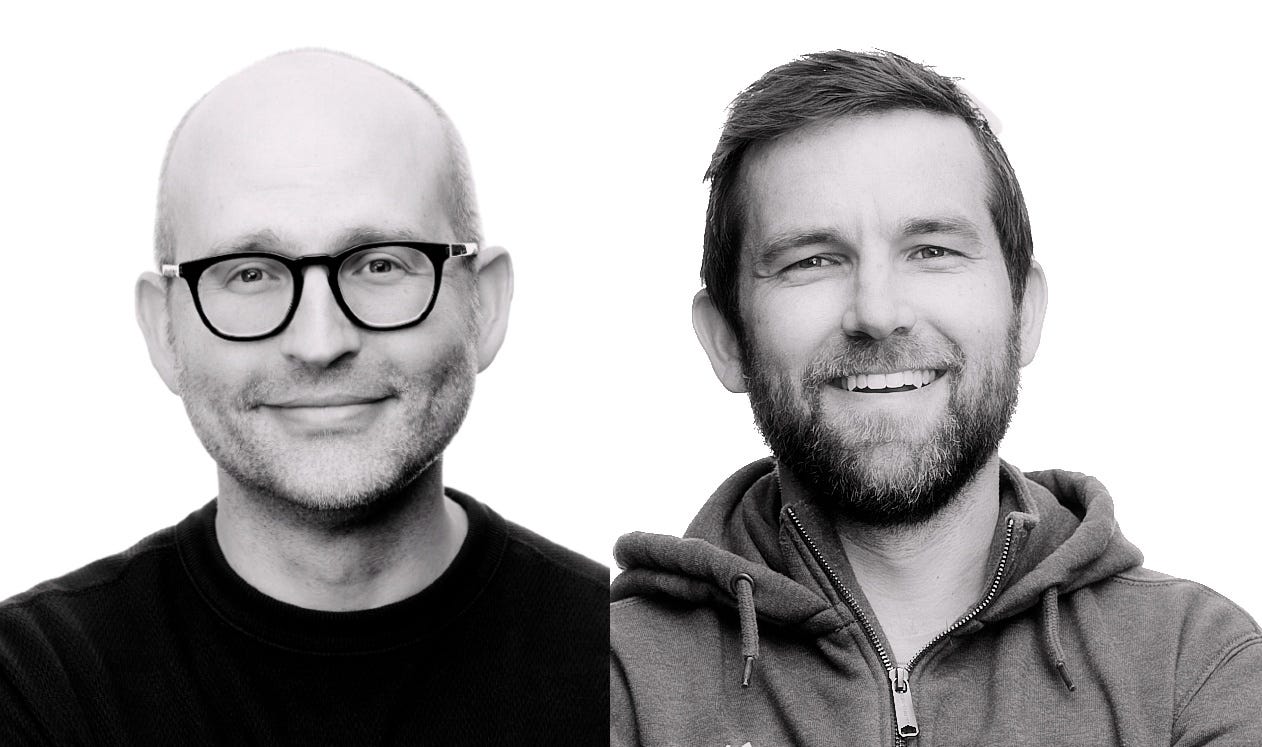
A company called Zanskar is making a different bet. Its founders, Carl Hoiland and Joel Edwards, argue that the USGS numbers rest on old, crude data from an industry that stopped seriously exploring in the 1980s. They think there are roughly ten times more undiscovered sites than USGS estimates, and that each one can produce roughly ten times more energy than it estimates. If that’s true, we’re longer talking about tens of gigawatts, we’re talking terawatts — enough to supply all US electricity demand — all of it reachable with old-fashioned, easy-to-finance conventional geothermal drilling techniques.
Hoiland and Edwards say their AI tools can find that undiscovered geothermal. Last year they found a “blind” resource in Nevada with no surface signs and no prior drilling, repowered a written-off plant in New Mexico, and signed a 100-megawatt power purchase agreement with Nevada’s utility to help power Amazon data centers. So the question is no longer whether they can find heat. It’s whether there are really terawatts of it to be found. I can’t wait to drill down on it with them.
Chapters
00:00 – Introduction
03:29 – Heat, permeability, and how resources have been found
04:49 – Why conventional geothermal stalled, and why the estimate is stale
09:22 – Applying AI to old exploration data
11:10 – The data Zanskar works with
13:09 – Models, field testing, and the feedback loop
15:02 – How much more resource is really out there
20:22 – Lightning Dock: reviving a written-off field
22:14 – What has changed in drilling technology
28:37 – Pumpernickel and the permeability question
31:08 – Natural permeability vs. enhanced geothermal
34:21 – Big Blind, the first blind discovery in 30 years
37:09 – Improving the models to keep getting better
40:51 – Financing exploration: the development capital facility
44:38 – The NV Energy PPA and data center demand
47:42 – The skeptical case and geographic limits
54:20 – Policy dependence and public lands
58:11 – What's next for Zanskar
Resources
People & Organizations
Company & Industry News
Zanskar Inks 100 MW Power Purchase Agreement to Provide Carbon-Free, Firm Power to NV Energy
A startup discovered a hidden source of abundant, clean energy
Books & Articles Discussed
Related Volts Episodes
Transcript
David Roberts: All right. So with that wretched pun, Carl Hoiland and Joel Edwards welcome to Volts. Thank you so much for coming.
Carl Hoiland: Thank you. It’s great to be here.
Joel Edwards: Yeah, thanks, David.
David Roberts: I should have perhaps mentioned in the intro Carl you’re the CEO, Joel you are now the CTO of Zanskar. So maybe Joel let’s start with you this is the easiest technical question in history but I think maybe it will help orient new listeners who are new to geothermal. So just briefly when you’re looking for geothermal resources, what are you looking for? What are the qualities, features that you’re trying to find that make something a good geothermal resource?
Joel Edwards: There’s really just two ingredients. You need exceptionally hot rocks that have open pathways for fluids to flow. And so actually we found that these two ingredients exist fairly commonly in the Western United States, Iceland, these other places that lots of people are familiar about. These systems themselves are sort of on the smaller scale in those broader regions, so you kinda have to find these sort of chocolate chips in the chocolate chip cookie, so to speak. So it does take some exploration, it takes lots of data collection, and you’re looking for these little chocolate chips where you have exceptionally hot rocks and you have rocks that are... Basically they have large open pathways in them, and you get these little active convection cells where you have hot water that’s sort of circulating through that system.
David Roberts: Right. Heat and permeability is what you’re looking for. So my second question is: how have they traditionally been found? I did a pod a few years ago with a company called KoBold Metals, I don’t know if you’ve heard of them, but they have a strikingly similar pitch to yours except they’re going after metals rather than geothermal resources. But it’s the same thing. They’re using AI to find metals, and one of the things they described to me on that pod is the way traditional metals deposits have been found just amounts to a dude walking around on the surface looking for sort of visible manifestations of metals. Sort of astonishingly analog. So I’m sort of curious, is that the same way that geothermal resources have traditionally been found? Like, how have they traditionally been located?
Joel Edwards: Yeah, that’s right. There is a lot of geologic, like walking along the surface, looking at different sort of relationships across rocks to try to find systems. That’s historically how they used to do it. In particular, the early explorers, they figured out, hey, we need, you know, those open pathways, we need permeability. So in theory, if we find, you know, in the Western US fault zones, which fault zones in the western US are pretty common across Utah, Nevada, California and so forth, particularly if we were look for young fault zones, we think that there would probably be geothermal systems there.
So in the early days, they would sort of drill just sort of sequentially along these mapped fault zones thinking that there was gonna be geothermal systems along those. And unfortunately, they found that the geothermal systems were a little bit rare, and they were not very predictable along those faults zone. So in other words, the vast majority of fault zones, they don’t have geothermal systems necessarily in a pattern along those, that these geothermal systems, they kind of crop up in sort of non-unique or non-obvious places. So it gave the perception from the 1970s and ‘80s, that exploration work, that these systems were rare. That perception has fed all the subsequent modeling.
David Roberts: Ah, I see. Yeah, it was a similar thing with the metals, just like that traditional way of finding them had an astonishingly low hit rate, and thus an astonishingly high sort of like per deposit discovery cost. ‘Cause there’s just a lot of missed, a lot of dry wells, a lot of wells that are… mines that didn’t find anything. So Carl, there are about 36 operating geothermal fields in the US, roughly 4 gigawatts total. That is only up about a gigawatt in the last decade. So explain to us why this technology has been- conventional geothermal has been kind of stuck in place for so long. Why has it been so moribund?
Carl Hoiland: You know, maybe the simplest answer I’d have to that is that we stopped looking. That idea that it was so hard, so challenging, that we had so many failures led to a belief that there weren’t that many out there left to find, and as a result, investment really shifted into other areas, into other ways of maybe engineering these systems, et cetera. And maybe on that last point, I like to point out you’re right, it’s an analog industry in many ways, the way that exploration has been done.
But it’s not unsophisticated, it’s not unscientific, it’s not deeply technical. It’s an industry that Joel and I think have been passionate about since we were kids, really. Humans have been exploring for natural resources for thousands of years. And it turns out it’s actually just really hard to apply some of these modern data science or statistical methods to it because it’s a sparse data problem, it’s a messy data problem. There’s conceptual understanding that needs to go into it. And so really the timing of the work that we’re doing is driven a lot by some of the changes in modern neural networks and the ability to apply much bigger models to the problem. And so when we went back and looked at some of these early estimates, you mentioned the ones that are almost 20 years old now-
David Roberts: And based on data that’s even older than that, I think. Like the estimate is 20 years old, but the data the estimates are using, I think dates back to like the ‘70s and ‘80s.
Carl Hoiland: Exactly right. And so as we started looking at the underlying datasets and the assumptions being made, assumptions about how many undiscovered systems there were, assumptions about how deep you could drill into them, assumptions about how productive each system could be, we started to realize that technology had come a long ways in those 20 years, and we were probably significantly underestimating the resource potential, maybe by orders of magnitude.
David Roberts: Yeah. This is again a parallel to KoBold, one of the things that KoBold boasts is using AI. Everybody’s using AI for everything these days. You guys are boasting you’re using AI. But one of the things that they were doing, KoBold is doing with AI, is just taking all these old records which turn out to be just this wildly kind of disparate data, like old field records and just notes from explorers and different databases, and using AI to sort of rationalize and systematize that information. Is that the same thing you’re doing? Is that your main use of AI?
Carl Hoiland: There’s a few different uses. One of them, yes, is that, taking all this existing legacy information and pre-training these models. But maybe ours is a little bit different. The geothermal industry is much smaller than the minerals industry, and as a result, we have much less data. You mentioned those 36 operating fields, and we often like to point out that half of them were almost found by accident. Right, the initial indication that there was an exceptional heat resource-
David Roberts: Mm, right
Carl Hoiland: was maybe a farmer drilling for water or gold company drilling for gold. And the other half of those sites had some seeping hot water at the surface, you know, boiling mud pots, fumaroles, et cetera. And so when you sort of hear this message of, “Oh, it’s all tapped out and there’s only a little bit left,” it reminded us of messages that were communicated in the late 1800s about oil and gas.
David Roberts: [laughs] Right.
Carl Hoiland: They sort of declared peak oil, get ready Pennsylvania, it’s all ending.
David Roberts: They were doing peak oil stuff right up until the early 2000s. I mean-
Carl Hoiland: Right. And so we’ve seen this pattern before of underestimating how much is actually beneath us. And I think the fact that the entire industry globally is still mostly at sites that were either found by accident or had hot water seeping out of the surface gave us a lot more confidence also to follow the statistics, follow the datasets towards this possibility of much larger undiscovered potential.
David Roberts: What is the information, like what is the data that you do have? You say it’s scarcer than in the mining industry, but what is there?
Joel Edwards: Yeah. On the data side, there are a few prior waves of exploration, so the ‘70s and ‘80s wave. There was a handful of oil and gas groups that got into the geothermal game, and they spent billions of dollars, exploration dollars, you know, adjusted to today, inflation-adjusted during that timeframe. And then in the 2008, 2012, the DOE funded a bunch of exploration campaigns, so there’s a few small datasets. And those datasets generally cover single digit percentages of total prospective land in the Western US, so a very small sample size. And then, of course, there’s adjacent datasets like people drilling for water wells.
There’s data in those, people drilling for oil and gas or mineral wells. Those are kinda harder to access, but there’s data about the subsurface there. The data is mostly well field. That’s sort of your direct indicator if a geothermal system’s at that location or not. And then there’s indirect datasets that come mostly from public sources like the USGS or from universities or national labs, and these are folks that go out and they do geologic mapping or they collect different types of geophysical or geochemical data, and they’re usually doing that in the context of scientific studies, right? And those are sort of indirect type datasets.
There’s data coming from now satellites that are circling the Earth, and they have instruments on the belly of those satellites that are recording. There’s a broad mix of datasets that basically they’re measuring some property of the earth at that location over some region, and none of those properties in isolation will tell you if a geothermal systems is there, but potentially combinations of those datasets can tell you if they’re there, if there are training datasets from wells that you can train models on top of. Carl said earlier, like, there’s a lot of sort of messy historical or sort of adjacent, not directly related type data as part of this sort of treasure hunt problem of finding systems.
David Roberts: But your secret sauce, the secret sauce of your company is that you feed all that existing data into the AI, and then the AI basically produces models that have probabilities, basically. It’s not deterministic since you have not done the actual exploration but you can produce models that say based on the data we do have it’s likely there’s something here right?
Joel Edwards: Yeah.
David Roberts: Is that the basic idea?
Joel Edwards: And producing models probabilistic models is not a unique thing to Zanskar right. There’s national labs and universities that do this and there’s even other companies that do this anybody can build a model right. You could go into Claude right now and probably build a probabilistic model of your own. The hard part is pairing that model with the field piece of it like you build a model it makes predictions. That’s great. Now you need to go out and you need to test those predictions. And then you need to feed all of that data back in and you need to make a new set of predictions. So you need this iterative loop between model building teams and field data collection teams.
David Roberts: And when you say collect field data one of the reasons people got scared off this in the first place is that it’s quite expensive to drill a deep well to find out if there’s something down there. Are there cheaper ways of doing that in the field to gather data in the field that are short of actual full-on deep drilling?
Joel Edwards: What you said is true. But there’s a lot of variance in that truth so whether you drill to 1,000 meters or whether you drill to 10,000 meters there’s a huge difference in cost.
David Roberts: Right.
Joel Edwards: So if you can figure out a way to basically test your prediction it might require drilling but not all drilling costs the same. So basically you want to find the cheapest cost of drilling you can to test that prediction at that location. And that’s where Zanskar spent a ton of time is figuring out how to drive down those drilling costs over the last five to six years.
David Roberts: So I think anyone would find it just intuitively plausible that if they haven’t explored since the ‘70s and ‘80s in earnest and they had these old techniques. They didn’t have AI back then. They couldn’t crunch these sort of numbers...that there’s more than they thought, that there’s more than the USGS thought. You’re not just saying that there’s more than they thought. You’re saying that they have underestimated by something like a factor of 30. You are saying they are off by an enormous amount. Like you’re claiming terawatts where they have tens of thousands of megawatts. They have a few dozen gigawatts. So that is I think an extraordinary claim. What is the evidentiary basis for that claim? Not just that there’s more than we thought but that there’s that much more.
Joel Edwards: Yeah. I might have a slightly different answer than Carl, but we’ve gone out and we’ve tested over 5 million acres over the last five years, so we have a large… very large sampling data set. So based on that hit rate across that 5 million acres, right, we’ve come up with the updated numbers. But there’s also, if you look at those prior estimates, their models, they had a really hard time predicting for different geographic provinces.
So for example, in the state of Idaho, there, you know, is something called the Snake River Plain, and it’s this large historical volcanic province. And basically, the old models had a really hard time understanding if there were geothermal systems there. Up in the northwest, there’s this large history of volcanism up there as well, and those models had a really hard time understanding if there were systems there. So there’s like geographic diversity across the Western US that the models were having a hard time accounting for. And then also just that frequently in this like five years of exploration, we keep finding systems in spots that surprise us, and we’re the people building the models. It sort of... We have a gap in our conceptual understanding of where these systems form, how long they live there, and how they die in the sense that’s just impacting our total model estimates.
Carl Hoiland: Yeah. And maybe the one thing I’d add to that is in addition to just more undiscovered sites than previously estimated, we’ve also come to realize that each one of those sites can produce much more power than our previous estimates were attributing to them.
An example of this is actually the work we did in New Mexico, where we acquired really a failing geothermal field called the Lightning Dock Geothermal Field, and it had been underproducing for years, had run into economic challenges, and we were able to acquire it because our models were looking at the same datasets that everybody else was looking at, but were coming to a very different conclusion about how much power potential it had. And when we came within a year of acquiring it and drilled into a deeper resource on the site, just that first well that we drilled was enough to bring the plant back to its full nameplate capacity, make it profitable as a facility, but it also proved out a much larger potential that could be as much as 10 to 40 times more than the initial industry estimates were for that site. And we’ve been finding that applies across many other fields as well.
David Roberts: It’s not just the Lightning Dock site then. There’s other sites where you found that there’s way more power potential in the site than had been previously assessed. That’s why you’re generalizing it out.
Carl Hoiland: And we’re finding that both in the drilling that we do, and then also as our models have gotten more sophisticated and more aware of what these systems are capable of, you also start to realize that how you design the well field has a big impact on power production, how you optimize the flow pathways in ways that we weren’t necessarily thinking about as rigorously in the past without these models.
David Roberts: Mm-hmm. Yeah, I wanna get into that in just a second, but one more question about the USGS survey. They are updating, as I understand it, that hydrothermal assessment of the Great Basin as we speak. Do you have any expectations about what the new assessment will say, or are you working at all with the people doing it? Are you in touch at all with the people doing that new assessment? Do you have any sense of whether they are going to come around to your way of seeing things in the new assessment?
Joel Edwards: Yeah. We’ve met with those folks and are familiar with their approach that they’re taking to the problem. The hard part for the updated assessment is that you’re still working with the same legacy data set functionally that you worked with in 2008. You do have new tools, right? Obviously.
David Roberts: Right.
Joel Edwards: You have improved modeling frameworks, and you have some improvement in the conceptual understanding of the system since then. But fundamentally, your benchmark data sets are more or less still the same. The industry hasn’t grown that much. It still will be a challenge for them to make predictions that are outside of the benchmark or the, you know, what they call the prior space.
David Roberts: Right.
Joel Edwards: We’ll see where it lands, and unfortunately... I wish we could, you know, share with them all our data, and then they could build a much more robust, updated model and go from there. But obviously, like, they have a mandate that whatever data they have in the model space, it needs to be published. So if we were to share, you know, then that would make all our sites public.
David Roberts: Are you gonna share your data at some point?
Joel Edwards: Of course, as we- You know, the tricky part is we make a discovery, we go through a process where we lease the geothermal rights for that discovery. And so the leasing program sort of dictates when we can make things public, obviously. There’s sort of a sequence to it. But yeah, hopefully over time, we would love to publish, you know, as much as we can.
David Roberts: All right. So let’s then talk about Lightning Dock. This is this existing geothermal well. It had, as drilled, the extant well had been really declining rapidly, more rapidly than the people who drilled it thought it would, and was not even keeping up enough to power the plant, more or less dead. You assessed it and decided there’s more on that site. There is more power in that site than they’re getting out in that well. Is that just through your standard testing and modeling that you... Like, why did you identify this particular site?
Carl Hoiland: This is not necessarily standard modeling, but this is sort of core to what we do at Zanskar. Going back to sort of this idea of how AI helps to solve these problems, one of the founding insights for the company was seeing how quickly neural networks were evolving, the ability... Joel and I think were in graduate programs in the 2010s when AlexNet came out in 2012, Transformer architecture in 2017, and obviously models just kept getting better and better. But what really impressed us was their ability to deal with massive unstructured data sets, at the time it was mostly images and image classification, and then to be able to interpret something about it.
And so kind of a really simplistic dummy concept I hold in my own head is if you think of a geothermal system like a cat or a dog underground, and all you’re seeing are the ears of that system at the top, do you know enough just based off of what you’re seeing in the ears to give a sense of how big is that cat? Where might his tail be today?
David Roberts: It’s like a CAPTCHA. It’s like one of those stupid online CAPTCHA things. Which of these images has a bicycle in it? Right.
Carl Hoiland: Right. And so even though you only have a little bit of the data, it’s actually powerfully predictive about what might be down there. And so we were looking at the same data sets as others, but getting a lot more visibility and fidelity into how the true potential of that system might be and where we might need to drill within it.
David Roberts: And so, as you mentioned, you also… Like the drilling technology used in that extant well, a lot of new drilling technologies come along since then, you know, a lot of it borrowed from oil and gas. Could you just briefly sort of give us a sense of what are the advances? What are the new things that you brought to that well? Is it like new kinds of drill bits? Is it new diggers? I don’t... As you can see, I know nothing about drilling technology. But like, what are the new bits?
Carl Hoiland: Yeah, quite a bit here. And some of this you’re hearing from across the geothermal industry is how exciting it is to be able to pull modern oil and gas drilling tech into our space and see cost declines come from that. So we used PDC bits, directional drilling assemblies, mud motors. A lot of the same technology you’re hearing that’s driving down the cost curves in EGS are also helping us in conventional geothermal to drive down cost. And so, Joel, maybe you could speak to how good those results were.
Joel Edwards: Oh, yeah. Relative you know, we bought a legacy site, so there was legacy wells that had been drilled there over the last, you know, 10 to 15 years.
David Roberts: Right. So you did have some data. You had more data. You had more than none.
Joel Edwards: We certainly had more than none. That’s right. Yeah, and relative, we generally know the rigs that were used and the tooling and so forth that was used on the prior wells that were drilled at the site. We just had a lot more success with this new well. Part of that is, you know, the fleet of drilling rigs that the oil and gas industry continuously funds, that fleet today is so much better than the fleets that geothermal have u- has used historically. Like, so much of that drilling rig floor is automated today in a way that it wasn’t. So that making connections, you know. As you go deeper, you have to connect in new rods. All the connections are faster, so tripping in and out of the hole.
David Roberts: Mm.
Joel Edwards: Obviously, as Carl mentioned, the downhole drilling assemblies, how they steer these bits and hit targets at depth is unreal. It’s a taxi service underground. And my head, you know, even has a hard time understanding how they’re communicating with the bit at that depth telling it where to go. And then obviously the drilling speed improvements and the drilling bit length, the run length improvements by using PDC bits had a huge impact, right? We didn’t have to trip in and out of the hole as much because the bits lasted longer and so forth.
David Roberts: Right. This is a big thing where you’re like, you drill down with the bit, your bit gives out, and you have to drag the whole rig up out of the hole, change the bit, put the whole rig back down. That has a been a big cost center previously.
Joel Edwards: Exactly, yeah. If you’re chewing through a bit every couple hundred feet, you’re tripping every couple hundred feet, and you basically lose a half day to a day-
David Roberts: Mm...
Joel Edwards: replacing that bit. And so you add that up, that’s how you’d end up with well fields. You know, a well would take 40, 50, 60 plus days to drill in geothermal, and now those timelines are collapsing down to, you know, weeks. That’s just like standard oil and gas. Oil and gas has been funding this technology development for especially the last 15 years with all the shale gas development. That’s coming into EGS. It’s also coming into conventional well fields.
David Roberts: And you just went deeper, did you not? I mean, just another of my question is like, one of the things I’ve heard is that as you go deeper, the costs do not rise linearly. It gets a lot more expensive quickly the deeper you get. So I’m wondering how you make that bet, that calculation, how deep to go, how much of that expense is justified. How do you make those calculations?
Joel Edwards: It’s a mix of a few things. There’s rig time, right? So you have basically a small city that’s on site, and every day that that city operates, there’s a cost, so there’s that burn rate. You have to construct a well, right? It’s not just making a hole in the ground. You have to put cement and steel, and you have to construct it.
So those are fixed costs that go into a well. The deeper you go, the more you have to construct, so it’s both the time of the rig that you have, that city that you have to operate, and then it’s also all the materials. And yes, at Lightning Dock we did go deeper. That new production well is roughly four times deeper than the first set of production wells. But we also… you can’t just drill deeper anywhere, right? You have to have the right targets. You have to hit the system in the right locations, otherwise, you know, you’ll have a, you know, maybe a tight hot well or a tight cold well. So it was the combination of going deeper into the system and also targeting that system at that depth.
David Roberts: I mean it’s worth saying there’s a lot of places where there’s hot rock but no permeability, and there are places where there’s lots of permeability but no heat, so it’s a fine target. And so now this new well you’ve dug here on this site, you claim is the most productive pumped geothermal well in the US. Is that based on this brief flow test you did, or is that an actual measured claim at this point?
Carl Hoiland: It’s actually a very well-measured claim at this point. We’ve been operating that well at full capacity powering the power plant for over 12 months now.
David Roberts: Hmm.
Carl Hoiland: And we saw no temperature decline in that period of time, which is very exciting. And we’re really measuring it by both the total amount of thermal energy that that well delivers, which is over 100 megawatts of thermal energy at the wellhead. And I mean, if you think about it, this is a well you can wrap your arms around. It’s not that big, and that’s as much heat as a small modular nuclear reactor would create. And then you’re pulling that into the power plant where you’re going to extract that heat and drive a power cycle, where we’re also generating more electricity for that well than Joel, I think still to this day, than any other well of its type in the country.
Joel Edwards: Yeah. So that metric David, the benchmark data set in the state of Nevada, they actually publish all the operating production wells in the state, so there’s over 200 wells, and most of those wells are pumped. So between that data set and then the other pumped wells in the country that we know about, we’re able to compare this New Mexico well, production well to that existing fleet of operating pumped wells. And this well in New Mexico delivers more thermal energy to the power plant than any other pumped well in the country.
David Roberts: Interesting. And so is the existence of that excellent resource that you found de facto evidence that there’s other excellent resources in that area? In other words, are you done with that site or are you drilling more wells on that site?
Carl Hoiland: I think the short answer is it sort of does the opposite. It strongly confirms that there is additional upside there regionally, and really at any other field that looks somewhat similar to it, which is not just in New Mexico where we find these types of fields all over the Western United States.
David Roberts: Let’s talk about Pumpernickel then. Just a fun word to say. This Pumpernickel site, the first well you drilled there was dry, was… did not turn out well, and then you drilled a second and got a big hit. I’m curious, what is your hit rate? A big problem in the early exploration was this low hit rate, and it’s very expensive to drill these wells. What is your hit rate? Is that measurable? Is that a metric that you can report?
Joel Edwards: Yeah, there’s ... Carl, you could jump in here as well … there’s many ways to measure hit rate. One way we measure it is we make model predictions, and those model predictions have a range of probabilities. And those model predictions, they’re predicting temperatures and permeability as a function of depth for your planned target. And so one thing we track is for every deep well we drill, did the outcome of that well fit within the range of probabilities, and how close were we to the median probability? So that’s one way. Another way is to drill the well and then obviously measure the performance of that well.
So for certain types of wells, this is a fun thing about geothermal that you can’t do in oil and gas, is after you drill a well, if it’s a certain type of well, you can open it up and you can let it rip and do what’s called a flow test, where you let that brine come to surface and you flash it into a pond, a retention pond, and you can measure the flow, the heat content, and the amount of volume coming out per time, and that’ll tell you the performance of the well. Those are two quick ways to assess your sort of hit rate. At the Pumpernickel site, the first well, it wasn’t a targeting failure.
We couldn’t complete the well to the target plan, to target depth because the drilling conditions were so difficult. So when you drill into really sort of productive geothermal resources, you have actually really difficult drilling conditions. It’s actually sort of fairly correlated that the better the resource, the harder the drilling.
David Roberts: Is that because the rocks are hot? Because they have gaps in them? Like, what makes it so hard?
Joel Edwards: Yeah, exactly. You have gaps. So you have a plumbing network. You can imagine like pipes under your house where you have this convecting hot resource that’s moving through the subsurface, and when you drill into gaps with a drilling rig, it makes it really challenging for the drilling rig. And of course, the irony is that that’s our resource. In this case, we ended up hitting shallower resource that made the drilling harder to get to our deeper target, so we ended up moving to the second site where we were able to get to the targeted depth and show basically, yeah, this has commercial conditions. It has the permeability, you know, the open space that we want, it has the temperature that we want.
David Roberts: Speaking of permeability, I was reading about the Pumpernickel site, and one of the things you really emphasize on your Substack about that is that permeability is the main thing, that in some sense heat is kind of easy to find, and it’s permeability, it’s good permeability that makes all the difference ‘cause that’s where you get your flow rate. And in the course of that discussion, you expressed some skepticism about enhanced geothermal because, of course, the thing about enhanced geothermal is that it is creating its own permeability through fracturing. I’m curious, do you have generalized skepticism towards enhanced geothermal for that reason? Tell us a little bit about how you think about permeability.
Carl Hoiland: Yeah, I can maybe comment on that a little bit. I think it’s less of a skepticism of whether EGS works and in what scale or places. It’s really just where will it fit on the cost curve relative to conventional geothermal-
David Roberts: Mm.
Carl Hoiland: Because so far, the type of permeability that we’ve been able to create artificially in engineered systems is an order of magnitude, and sometimes multiple orders of magnitude less than the type of natural permeability that we find in the Earth.
David Roberts: Just smaller gaps basically for people if people are trying to imagine this like if you’re doing the fracturing they do in fracking, you’re just creating hairline cracks as opposed to, I’m guessing bigger natural gaps you find in these areas.
Carl Hoiland: Right. And maybe you’re injecting, you know, some silica beads or things in there that will hold it open, but those are rarely, actually, so far never have they been as large as some of the natural spaces that you find in the earth which you can imagine can be cavern size.
And so when you have these cavernous openings, large aperture, we call them faults with permeability, you end up just getting flow rates and prices, really the cost of producing that type of resource is much cheaper. That’s what we get really excited about is finding out that that type of natural permeability exists in many more places than we previously thought, and in some cases the temperature is a leading indicator of it sort of a proxy for “oh, you’re getting close to permeability”. But in other cases it’s really hard to identify it without the data or the models leading you there.
David Roberts: So if I could summarize that and tell me if you would endorse this. A really good natural geothermal resource is gonna be cheaper to produce from than any conceivable enhanced geothermal site that creates its own permeability. Do you think that’s true?
Carl Hoiland: Definitely true today, and we think probably indefinitely into the future. There’s a similar comparison or analog here when you look at the oil and gas industry, that we are decades into the shale revolution. And the conventional fields, like the Ghawar oil field in Saudi Arabia, still produce oil at a significantly lower cost per barrel than even our best unconventional shale fields.
David Roberts: Same thing there with natural permeability versus induced permeability basically. The natural permeability is still better.
Carl Hoiland: In another kind of visual example of this, Joel mentioned the well that we drilled at Lightning Dock, it is actually still pump limited. If we had a stronger pump that could pull more fluid out of that, the permeability is sufficient that we could flow it at much higher rates than it is today.
David Roberts: Oh interesting.
Carl Hoiland: And that’s really just giving you a sense of how exceptional the permeability is down there.
David Roberts: And so then let’s talk about this third discovery. This is called Big Blind in Nevada and this is sort of I think the news that made everybody really sit up and pay attention because this was unlike the previous two we’ve discussed. This was genuinely new. There were no prior wells on this site to give you any data. There were no surface manifestations of activity on the surface. This was a genuine blind site. So how did you find it? In a nutshell how did you find it?
Carl Hoiland: Yeah, this is really our bread and butter. So Joel, I’ll let you kinda talk through how greenfield perspective exploration works.
Joel Edwards: Yeah, it’s that concept we talked about at the beginning David, that you build models. Everybody can build models, Zanskar builds models. But you have to pair your model predictions with tests in the field of those predictions. And so this is one of those cases where we had made a set of predictions in… across this part of the state, and we were out testing those predictions and ran into this system at this location. And this is a system that’s west of Tonopah, Nevada, so pretty remote. And like you said, there was no prior data at the site and if you or me or anybody were to walk across the site, there would be nothing at the surface that would clue you into that there’s a massive system below. That initial discovery was made at the end of 2023, and then we went through the permitting processes and we came back with a larger rig and drilled into that resource in...
What year is it now? It’s 2026. I think we drilled into it in 2025, and we encountered commercial reservoir conditions at around 2,000 to 3,000 feet. The thing that’s really exciting about this system in particular is how big it is. This system by the surface footprint of the heat flow anomaly is much bigger than Pumpernickel and much bigger than Lightning Dock.
David Roberts: Oh interesting. I guess you’ve just kind of started exploiting it right? I mean is it commercially operational? Where’s the state of play there?
Joel Edwards: No, we’re in the well field stage of the project. So we’re permitting additional exploration wells right now to go back to the site. So we’re still early stages and yes.
David Roberts: Still trying to figure out how big the site itself is, how big the resource itself is?
Joel Edwards: Exactly. We have a sense of sort of the surface area, how big it is. That’s why I can make that claim relative to some of the other projects. But we do not yet know at depth how big and hot the system is. It seems quite spicy. To think that this thing was sitting out there. There’s lots of exploration across the West for minerals and other things, and to just think that this had been missed for so long, you know, gets us really excited about the future.
David Roberts: So you had your models, and they gave you a sort of probabilistic sense, and then you go out and do some exploration in those probabilistic areas, and you just got lucky on this one. Or I guess not lucky, the model… The probabilities paid off in this spot.
Joel Edwards: Yeah, I know. Maybe the models got lucky. Maybe we got lucky. There’s luck in all this, and there’s also bad luck when we miss. And to be clear, we’ve missed way more than we’ve hit. Like, to make this sound like this thing has been working better, you know, than the legacy explorers. In the early days, our models were frankly much worse than expert explorers. And we do benchmark against expert predictions in our modeling space, and it’s really only… Our models really only in the last year or two have started to outperform. And, you know, every model that you build, sometimes your models get worse.
So it’s not like it’s up into the right. It’s like there’s a wobble. It’s sort of like the climate, right? Like some years it’s wobbling hotter and cooler, but you’re generally up into the right, and that’s very true for our modeling space.
David Roberts: So you think from now on over time, the more exploration you do, the more data you feed into the models, the better the models get. Over time, you think you’re gonna get better and better at finding these things?
Carl Hoiland: And that’s actually quite clear already from the data we’ve collected. Like Joel said, they started out much worse than humans. They caught up, and they’re performing better in many locations and areas. And we’ve seen it improve in two ways. As you put more data into the models, the same architecture ends up yielding higher precision, you know, better performance. But in other cases, actual changes to the architecture, the way we’ve designed the model itself with the same data yields an improvement in prediction. And so the teams are constantly driving improvements on both of those fronts.
David Roberts: Interesting. So maybe not up and to the right for every increment, but over time, in the fullness of time, you’re going up and to the right with your models.
Carl Hoiland: Yeah. And really those sort of side steps that Joel’s talking about are what might feel like even a step back is often in a certain type of metric, like precision or accuracy. But it usually reflects that we weren’t realizing that there was something less generalizable about the prior model. And so this step back is getting you to a more accurate representation of the uncertainty. So it’s still a better model, you’re just being more correct in your estimation of uncertainty for it.
David Roberts: Right. Interesting. Interesting.
Joel Edwards: You know, this manifests... It’s funny, you would expect our sort of hit rate, like when we find a system, to be like consistent and linear. But what I’ve found is that our hit rate is like, you know, like in sports, you get into like a streaky zone, like home run after home run or whatever, you’re hitting the threes like back to back to back. That’s the same thing in our models. Like, we go through periods where bang, bang, bang, like survey after survey after survey, we’re hitting, hitting, hitting, and then we go through like a cold slump for a period of time, and then we push out a new one. So it’s been a very like non-linear sort of spikiness to the discovery rate.
David Roberts: Is there any way to bring down the cost of drilling those exploratory wells, or is it just is what it is? Like exploring is expensive and it’s gonna be expensive. Is there a cost curve there anywhere?
Carl Hoiland: Yeah. We’ve been focused on a couple sides of that. One is just drilling fewer wells, and so as the models get more predictive, more powerful, I mean it just means we have to drill fewer of them.
David Roberts: Right.
Carl Hoiland: But the other side of it is really focusing on what are the most powerful data types or wells to drill that really vector you into the site faster, and driving down the cost of those data types or those wells. And so as Joel mentioned, we’ve brought a lot of data collection and drilling in-house primarily so that we could start to focus on how do we make this more efficient, how do we make this safer, how do we make this faster so that we can really drive down the cost of data collection during exploration? And in some areas, that we’ve seen significant cost declines, 50 to sometimes 90% cost declines.
David Roberts: Let’s pivot a bit. I’m behind schedule here as always. This stuff is too interesting. Let’s pivot a bit to financing. Financing has always been a tricky aspect of geothermal because by definition, if you’re trying to finance your exploration, you don’t have a resource to finance yet. You’re sort of financing the possibility of finding resources, and this has always been kind of a problem. So you guys have worked out this development capital facility, which is this sort of rotating fund. I’m gonna stop talking there before I say something stupid and wrong about it. Why don’t you just describe what the structure of that is? ‘Cause as I understand it, this is something that might benefit the industry generally, and not just you guys. But maybe Carl, you can tell us like how that’s built.
Carl Hoiland: To your point, historically, geothermal was seen as so risky that it was sort of like wildcatters out there just taking total random shots, and therefore anyone who was going to finance a project wanted you to have completed not only all the exploration, but really the well field and come with a basically ready-to-go project. There should be no risk left before we can bring in traditional project finance to build the power plant.
David Roberts: Which means exploration had to fund itself, which is obviously highly limiting.
Carl Hoiland: Had to fund itself, and when you combine that high cost of capital for exploration dollars plus the long timelines in certain geographies for exploration, it ends up adding a lot of soft costs to the final levelized cost of electricity, which also made the whole industry struggle to compete. One of the things that I think we were able to uniquely do is by drilling, as Joel said, so many sites and testing so much acreage, we could build out robust statistics around what our success rates were and how they were improving. And we found that for many financiers, they care more about just can you actually quantify the uncertainty to a robust degree more so than what the actual accuracy is.
David Roberts: Right.
Carl Hoiland: And so as long as you can quantify the risk profile, then we can price the capital. And that was something the industry just couldn’t do before. And so this facility that we announced, it’s a development capital facility. It comes in prior to the traditional bank style of project finance when you’re still developing the resource and proving out its full size.
David Roberts: Right. ‘Cause there are no projects yet.
Carl Hoiland: There’s no projects. But the way we can mitigate the risk there is by pursuing a portfolio of projects together where some failures will be made up for by great successes across the portfolio, and you have the statistics to know how to size and diversify that portfolio.
David Roberts: So you somewhat reduce the cost of capital than for exploration.
Carl Hoiland: Meaningfully reduce the cost of capital.
David Roberts: And it’s a rotating fund too. Talk about that a little bit. It’s not just a set amount of money that people have dumped into this.
Carl Hoiland: Yeah. So ideally, you use that capital to really prove out, get the projects ready for bankable finance, right? Complete the well field and the tests that need to be done. And at that point, you don’t need that development capital facility anymore for that project. You can bring in much lower cost debt financing and tax equity financing. And so then that capital can go back towards earlier stage projects to prove them out. And so you’re constantly recycling capital in the facility. And as the value of the assets in the facility grow, you can also draw more and more in an accordion-like manner.
David Roberts: And do you think this tool is gonna help other geothermal developers, or is it in some sense contingent on your specific track record and your specific tools?
Carl Hoiland: Our hope is the former, right? Our hope is that by quantifying not just our performance, but really the industry even with legacy tools’ performance, that you make this a more investable asset class. And I think many of the learnings that we’re taking about the resource sizes, their potential, their cost structures are helping investors get more comfortable with geothermal because at first glance it has looked scary to them until they really spend the time to understand it and it starts to look like a very attractive opportunity to diversify their investments. So our hope is that yes, this will spread beyond Zanskar.
David Roberts: Interesting. Okay. You guys have signed a 100-megawatt PPA with NV Energy in Nevada. Why with a utility rather than a private off-taker, and is that 100 megawatt PPA for a particular well or set of wells, or is that one of these sort of like probabilistic things, like we will be able to find 100 megawatts eventually with a set amount of risk? Tell us a little bit about the deal with NV Energy.
Carl Hoiland: Yeah. So NV Energy is a regulated utility in the state of Nevada, and really the benefit of working with and selling to them is that you’re now delivering power onto the grid. In addition to energy, you’re providing all the other ancillary services that geothermal can provide, spinning reserves, voltage support, and et cetera.
David Roberts: Firm. It’s firm, firm, firm.
Carl Hoiland: It’s firm power. But it is important to have customers on the other side who are asking for carbon free, who are asking for geothermal. And so it often ends up being more of a network of commercial drivers that are making this possible. In terms of how we deliver it, I’ll let Joel kinda speak to that portfolio approach of ensuring that we reach the 100 megawatts.
Joel Edwards: Yeah. Like you said, this is I guess a probabilistic framework. I hadn’t heard it put that way, but this is what they call a portfolio PPA. So that means there’s a small basket of sites that we’ve already sort of discovered or characterized and that we have lease positions at, and that we can deliver the 100 megawatts from any of those sites or from a combination of any of those sites.
David Roberts: I see. So it’s not like we promise we’re going to find new things that will be able to deliver this, it’s we have found things that are capable of delivering this. And you also have other geothermal developers, I think signing PPAs with NV Energy as well, Ormat, I think, signed up for 150 megawatts. To what extent is the data center pull behind people’s willingness to pursue geothermal in a more concerted way? Like is that a big driver for your success?
Carl Hoiland: In those two instances that you just mentioned, it’s actually a very large driver, and one of the primary reasons NV Energy was seeking out geothermal power is because of new hyperscaler demand in their geography, looking for carbon-free baseload to be able to offset the environmental impacts of what they’re building. More broadly though, we’re really seeing demand grow well beyond just data centers. We’re seeing it from manufacturing facilities, we’re seeing it from utilities themselves that are looking to decarbonize or just to provide more resilience to the grid.
And so really in each market it’s a different type of customer. In Nevada, the hyperscalers are a big driver of demand, but we’re also selling from our Lightning Dock Power Plant to PNM, a regulated utility in the state of New Mexico, and that’s very much just to meet their own needs.
David Roberts: Well, everybody’s gonna need more firm power. That’s practically the premise of this entire podcast. We’re electrifying everything, and you need some firm power if you’re gonna do that. So I expect there’s no worry about like exhausting demand here.
Carl Hoiland: No, not, certainly not anytime in the near future.
David Roberts: So I guess the skeptical case here against Zanskar would be something like the big obvious fields have been discovered, so what remains to be discovered is these little pockets here and there, which might amount to a successful company, but will not be sort of game changing, will not be amounts that substantially matter. So what is your pitch to those skeptics? I’m sure you’ve made a lot of pitches to a lot of skeptical investors who have asked exactly that question like, “What is the pitch?” That this is not just we can gather a few more small sites that other people have missed and cobble together a successful company but this is like something big and fundamental.
Carl Hoiland: Yeah. I mean, I often point to one of the most valuable companies in all of history as a company that was made by an oil discovery 100 years after the first peak oil declaration. And that’s the Ghawar field in Saudi Arabia, right? Aramco today is still massively valuable. And so the idea that ugh, the best stuff is tapped, we just don’t see that precedent in other natural resource industries. It’s more likely that the best resources are still ahead of us.
David Roberts: And even if it all plays out the way you say, even if it’s true, is it not still ultimately kind of a basin-and-range story here because in the West you have this unique, unique geography geology. You have these plates that are pulling apart, it’s letting… it’s making that permeability, it’s letting heat closer to the surface. So even if you end up producing hundreds of gigawatts, even if you reach the terawatt someday, it’s still coming out of the US west, right? I mean, still in some sense geographically limited. Is that not right?
Carl Hoiland: For the next decade or potentially two, that’s true primarily driven by drilling costs. But as drilling costs get cheaper you will be able to push into other geographies.
David Roberts: Hmm.
Carl Hoiland: And even in the near term if you end up having a terawatt of the most cost-advantaged power source on the planet we also believe demand will come to where you are.
David Roberts: [laughs] Yes, yes.
Carl Hoiland: So the ability to deliver carbon free baseload power at the lowest price point possible makes the Western United States exceptional, but that’s not to say we won’t see geothermal expand far beyond that as the cost of power generation and the cost of drilling continue to come down.
David Roberts: Well talk a little bit about that Joel what other types of geographies? Just… You just mean like on the edges of this basin and range area or like fundamentally different geographies? Like could you find conventional geothermal resources in the East or like in the South where they’ve never been found before? Like how geographically independent is it possible to get if things get way better?
Joel Edwards: This is a great arm waving question.
David Roberts: [laughs]
Joel Edwards: Maybe the data point I would point to is that across these different geographies that you mentioned, I’m from Iowa, generally there’s a certain depth at which people just haven’t drilled below and so the conditions below those drillable depths today are totally unknown. So for example everybody knows it gets deep, it gets hotter as you go deeper, what they don’t know is how their rocks respond to all that heat at depth. We think that rocks go through like phase transformations, you know the minerals change and things like that.
But I will say for the few wells that we have drilled that are deep, so think deep scientific wells like the one in Germany that went to 10 or 11 kilometers, the one in Russia that went a little bit deeper, In all of those cases where they went deep they all ran into conditions that they didn’t expect particularly those wells ran into water, they ran into well stability issues they did not expect to run into. So how can there be water, how can there be open pathways, open cracks at 10 kilometers down? Like intuitively it just doesn’t make sense.
David Roberts: Right ‘cause we know there’s heat, I mean it’s just logical that there’s heat down there. We know that through basic geography. It’s the permeability that is the question right? Is whether there’s enough permeability down in those depths and we just don’t know.
Joel Edwards: Exactly. Yeah will the well flow? But I will say in all those deep wells, the two I’m thinking off the top of my head and I think the others are true too as well, but they ran into water. Like water in the well bore when their teams thought that the wells would be dry.
David Roberts: If you find water that means you’ve found permeability.
Joel Edwards: Exactly. You’ve drilled a hole and there’s water seeping through the wellbore walls into your hole and it’s creating drilling stability issues. There’s permeability down there. We see this also true sort of in the western US where the climate today is very dry, we obviously live in a desert, but geothermal well fields or when you build underground mines or when your open pits get deep enough you run into, like massive volumes of brackish water. That brackish water is very old, but they have to install these huge pumping systems to de-water mines so that they can mine at those depths, right? So there’s a lot about, like fluid circulation in the deeper crust that we have very few data on and that we poorly understand.
And so it’s very hard for me or anybody to sit here and say, “We will never find a geothermal system in Iowa,” right? Because we’ve only drilled down to a certain depth in Iowa, and we just don’t know the rocks below that depth.
David Roberts: So theoretically go deep enough you could find stuff that we don’t know about yet. You could even say it’s likely to find stuff we don’t know about, likely to find some permeability at some depth. How deep can conventional geothermal wells go? I mean this is a whole premise for Quaise that we discussed is that once you get deep enough traditional oil and gas drilling equipment has never really needed to go that deep and hasn’t been designed to go that deep. Just the conventional tools you’re using how deep can they get?
Joel Edwards: Yeah I maybe Carl would have a little bit of a different answer, but I think the oil and gas well fields are a good analog. There’s oil and gas well fields down to 20,000 feet right now and those are conventional well fields like using conventional drilling technologies. I know those scientific wells that they drill down to 30,000, 35,000 feet, those wells took forever. They took like years of drilling in the same hole to get to those depths and it’s because, you know, like you said you’d get down to 35,000 feet, you would drill a couple hundred feet or less your bit would die. You’d have to come back out of the hole like just huge issues and the hole would be collapsing, right?
And so I’m real excited about what Quaise is doing ‘cause I agree with that thesis that there are certain depths where it’s hard to imagine conventional technologies working, I guess, unless there’s new stuff coming down the pipe that I’m not aware of.
David Roberts: Interesting. Okay, Carl, right now in our current political circumstances wind and solar are kind of getting hammered not treated well, but geothermal has kind of remained a bipartisan love child. Everyone seems to love it still. In one sense that’s great, still getting the tax credits, there’s… the DOE is engaged, et cetera, et cetera. Does that on the flip side ever make you a little nervous though? Like how policy dependent are you at this stage in your development, and how confident are you in ongoing policy support?
Carl Hoiland: You’re exactly right that there’s very strong bipartisan support, which is very exciting to see, especially at a time when it feels like very few things manage to secure that. It is partly because, like we said at the beginning, geothermal kinda has everything you want in an energy source, the small footprint, its base load, it’s carbon free, it’s domestic, doesn’t rely on foreign supply chains that are at risk and on and on and on.
Our goal really while we’re sort of in this infancy as an industry proving out these new technologies, is to come down the cost curve as fast as possible so that it no longer requires any sort of factor other than just a simple cost comparison of you’re the cheapest source of power, period. And we know that’s possible for geothermal because even with current off-the-shelf technologies and even our own cost of capital, if you just knew exactly where to drill every time and you never missed, it would already be cheaper than all of those other power sources on an unsubsidized basis. So we see the prize, and that’s what we’re driving towards. I’ll maybe let Joel comment a little bit on what are the risks in the meantime of getting from here to there?
Joel Edwards: Yeah, in terms of driving down the costs?
Carl Hoiland: If policy support shifts. Is there a risk that we’re getting too much attention? I mean, these are internal conversations we’re having.
Joel Edwards: Yeah. Geothermal has both the risk and the opportunity in the sense that it has one very, very, very large landowner called the federal government.
David Roberts: Yeah. I meant to say that 90% of identified geothermal resources are on public land, so in some sense there’s no way around policy.
Joel Edwards: Yeah. For geothermal to scale, it needs access to public lands, and the majority of those public lands are not national parks, right? These are Bureau of Land Management lands. So these were lands that you could have homesteaded but people didn’t wanna homestead, and so they were the sort of... The federal government came in and took ownership and management. It’s a risk and an opportunity. The opportunity is you have one landowner, you have one counterparty to negotiate with and to operate with, and that one landowner, if they’re sort of in agreement and they want you to scale, like you could scale. The risk is the inverse of that obviously.
And so we’ve seen, like the Biden administration, they put out, you know, improvements to the permitting stuff right towards the tail end of their administration, and then the Trump administration has done the same thing in the early days. So right now we’ve got tailwinds. If we can… The frustrating part for us is we’ve kinda been ignored or a nobody for so long that the way in which our landlord regulates us has been kind of slow and outdated and frustrating, and if we can get that streamlined, the industry will boom. It will take off because there’s plenty of hot rocks, there’s plenty of projects to go after right now.
David Roberts: So the, like the permitting, the soft costs, all the same things that all the other energy sources are struggling with, you guys have that problem too.
Joel Edwards: Yeah, that’s right.
David Roberts: I guess it’s hard for me to envision a circumstance in which the US is not going to need and want more firm carbon-free electricity. But I’ve not seen a lot of political things coming in the last decade, so yeah, that’s right. I wouldn’t wanna make any categorical statements about that. I’m sure you guys have some level of nervousness about it too. All right, final question. What is next? You’ve got a well that is commercially producing. You’ve got a couple of other wells that are in sort of the well development stage. Is it just steady as she goes, more exploration, more wells? Like what is the next big step here, and how fast do you think you’ll be able to scale up?
Carl Hoiland: We might have different sides of this to speak to. For mine, it’s a yes and all those things you mentioned, but also it’s been about 10 years since anybody has turned on a greenfield geothermal power plant in the United States, right? It just hasn’t been growing, especially in greenfield settings. And so our real goal now is to drive forward as many greenfield projects as possible and get them to commissioning.
We plan to do that in the next few years with half a dozen and to grow from there quickly, and I think that is really where you get to that point of this is a real industry, it can really scale, and the costs are what we think they are. And I think it really hits that runaway inflection point. Joel, from your side?
Joel Edwards: I’m really excited. The projects you mentioned, David, Big Blind, Pumpernickel, and Lightning Dock are really great exciting projects. Those are the only projects we’ve made publicly, you know, known.
Carl Hoiland: Mm-hmm.
Joel Edwards: We obviously have many projects behind that we’ve been working on for years. Maybe we discovered them in... Some… Our first discoveries were back in 2021.
David Roberts: I mean, I’m assuming that when you make a discovery, you don’t go out and wave a flag about it. You wanna get it per… you want to get it permitted and whatever locked down and-
Joel Edwards: Exactly...
David Roberts: whatever else before you announce it.
Joel Edwards: Exactly. Yeah. That’s the biggest sort of bottleneck to the process of publicly announcing it because many of the discoveries, they’ve got federal lands, they’ve got state lands, they’ve got maybe a little bit of private lands, and so it takes a little bit of land work to put together, you know, the position and so forth. So our first discovery was back towards the tail end of 2021. We’re still finding system, I…There was a system we found this weekend. I’m really excited to be more public about these things in the future and get people excited about this huge - We’ve been talking about this for a few years, that there are a lot of sites out there to discover.
There’s a lot of systems out there, and we’ve only announced, you know, one true greenfield blind. I’m excited to start announcing these and really getting everybody excited about geothermal because there’s other groups doing really exciting stuff. The EGS stuff is super exciting, and I think this discovery piece is equally as exciting if not more.
David Roberts: So you’ve announced one true greenfield blind discovery, but you’ve made others.
Joel Edwards: Yes.
Carl Hoiland: Yes. And I wish you could see internally the excitement is real and tangible every time. Like it just doesn’t get old every time a new discovery comes through the pipeline.
David Roberts: And in terms of the cost coming down over time, this is my actual final question. This is the cost of exploration getting cheaper with better models, better data, et cetera? Is it the cost of drilling itself getting cheaper? Where are the real opportunities for cost declines as you sort of attempt to outrun the need for subsidies? You know, this is what every new technology is doing, trying as best they can to escape that need as fast as they can. Where are the areas where you’re looking for real cost declines?
Carl Hoiland: Ooh, and some of these we’ve already seen. So finding better and bigger and lower-cost resources. You’re just starting with a better resource. Finding those where they’re closer to infrastructure, closer to the grid, which reduces your development costs. Drilling faster and cheaper, both with these technologies from oil and gas, but also applying our own AI and data science to the datasets to improve operations. And then also deploying software and AI throughout development and throughout operations of those assets. We’re sort of seeing opportunities to lower cost across that entire spectrum.
David Roberts: Hmm. Interesting. Well, what an exciting time for geothermal, I will say. I wrote a introductory article about geothermal, 2017-
Carl Hoiland: Wow...
David Roberts: 2018. Yeah, not to pat myself on the back, but like I nobody was talking about it then, and I went through all the conventional stuff, the advanced stuff, and everything. I think a lot of people sorta clued into geothermal from that. But man, even in those articles, I had underestimated the flood of interest and how fast it would all take off. So really exciting stuff. Thanks guys for coming on and, walking us through it.
Joel Edwards: Thanks David.
Carl Hoiland: Thanks so much David. Great to be here.
Joel Edwards: Appreciate it.


