


Ramón Méndez Galain helped Uruguay decarbonize its grid (today it’s 98% fossil-free) while keeping the utility public and letting private capital foot the bill. Now he’s trying to export the same playbook across the global South. We talk through how Uruguay pulled it off — the hydro “battery” for wind & solar “baseload,” the cross-party political deal, the market redesign — and what actually transfers to countries without the same advantages. We also discuss why, seven years on, no other country has followed Uruguay’s path.

In the early 2000s, Ramón Méndez Galain was a particle physicist teaching at the Universidad de la República in Montevideo, Uruguay. At the time, the country was in a bit of an energy crisis — its plentiful hydropower was plagued by droughts, imported oil was $150 a barrel, and there were rolling blackouts — so it was considering building a nuclear power plant.
Galain took a look at the proposal and concluded it was the wrong way to go — that renewables were a better option for the country. He wrote a proposal to that effect. The country’s president, Tabaré Vázquez, heard about the proposal and called him to offer him the job of energy secretary.
Galain took the job, and over the next seven years, Uruguay became one of the first countries in the world to almost completely decarbonize its power system, regularly running on 98 or 99% clean electricity. What’s more, the country retained public ownership of its power utility and its grid, while private capital funded the changes — something the big institutions like IMF and the World Bank predicted could not be done.
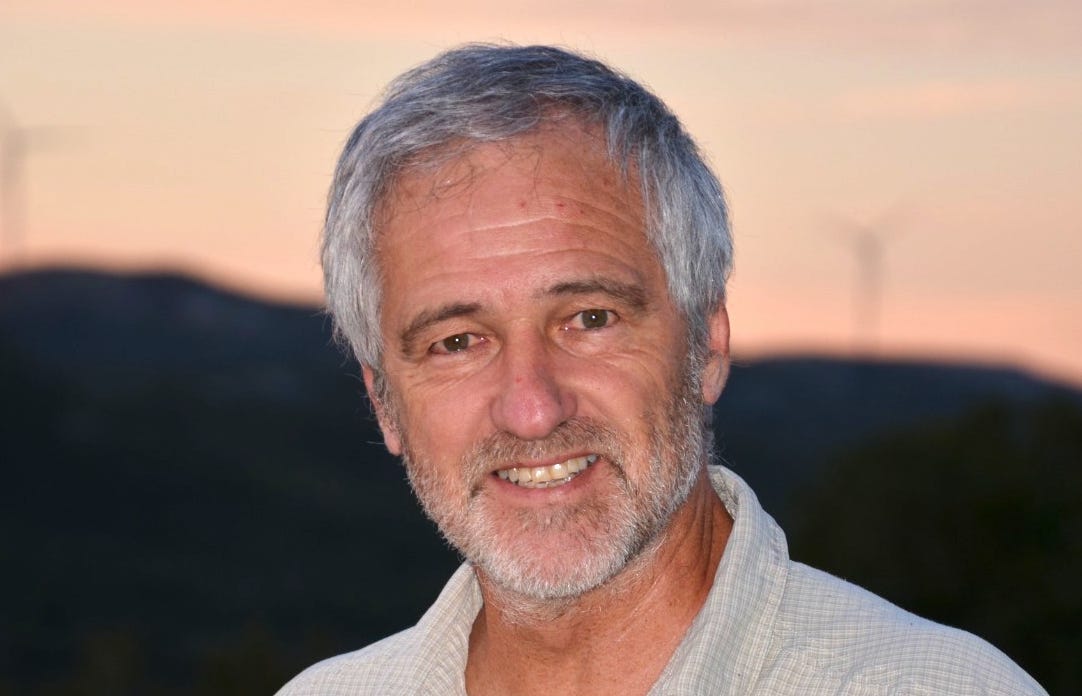
Galain went on to become Uruguay’s national director of climate change and its chief negotiator for the Paris Agreement before founding Asociación Ivy, a nonprofit that advises governments in the global south on how to redesign their electricity systems. Until recently, Ivy was working with one country at a time on a project-by-project basis, but in September 2025, Galain won a $4 million Climate Breakthrough award, which will allow Ivy to spread out and work with many countries simultaneously. His stated ambition is to reach at least 50 countries by 2035 and avoid on the order of two gigatons of emissions.
It’s difficult to find another single individual who has had a greater influence on the spread of clean energy in the global south, so, I can’t wait to talk to him about Uruguay’s experience, what does and doesn’t transfer to other countries, how he tries to frame and sell decarbonization to other governments, and the role the global south plays in the larger decarbonization fight.
Chapters
00:00 – Introduction
03:09 – From particle physics to a nuclear proposal
05:46 – Taking the job as energy secretary
07:00 – The 2008 crisis: drought, expensive oil, blackouts
09:26 – Getting every party to sign the same plan
12:51 – Why climate was not the lead argument
15:42 – Attracting private capital without privatizing
20:22 – What a public utility made possible
23:06 – Planning a grid where wind and solar are the base load
29:26 – Thermal plants as insurance, and the last 2 percent
32:36 – EVs, smart meters, and building an electrostate
37:33 – Why bills fell less than generation costs
39:46 – What transfers to other countries
44:15 – Optimum curtailment, Colombia, and Haiti
50:51 – The political work, and the argument against the dominant narrative
56:36 – The Global South and the NDC as development catalyst
Resources
People & Organizations
David Roberts (Substack - Bluesky)
Volts (Website - Podcast - Apple Podcasts - Spotify - YouTube)
Ramón Méndez Galain (Ivy profile - Climate Breakthrough)
Ivy (Website)
Company & Industry News
Related Volts Episodes
Text Transcript
David Roberts: All right then. With no further ado, Ramón Méndez Galain, welcome to Volts. Thank you so much for coming.
Ramon Galain: Thank you so much for inviting me, David. It’s a big pleasure to be with you and with your audience.
David Roberts: Awesome. So let’s start with a story I’m sure at this point you’ve told a million times, but I thought, I’m guessing most of my listeners are not familiar with it. You were a professor teaching back in 2008. Tell us the story of how this sort of proposal for a nuclear plant came across your desk and kind of what happened next, how you ended up where you ended up.
Ramon Galain: Hmm. It’s a fantastic story, in fact, that yes, I told it many times, but every time I remember that and I’m really excited about what happened. I never imagined, you know, 20 years ago that I was going to be in the position I am right now. I never imagined that in life. Yes, I was just a university professor, a researcher, in fact, working in particle physics, working in subject that are far, far away from real world, people life.
David Roberts: Mm-hmm.
Ramon Galain: Because I work in trying to understand what happened in the first microsecond of the universe after the Big Bang.
David Roberts: Yeah. Right.
Ramon Galain: So because at that time, at the early time, universe was completely different than the one we know today. So I was really trying to understand the physics with many other colleagues all over the world. And yes, as you were saying in the introduction, I was perhaps the closest thing as a nuclear engineer and something like that because we don’t have nuclear engineers in Uruguay. We don’t because we didn’t and we don’t have nuclear power plants. But at that time, this was the first years of this century, and it was a kind of reborning of the nuclear industry because-
David Roberts: Mm...
Ramon Galain: more than 20 years passed after Chernobyl, and a global understanding that in principle we have learned from the Chernobyl lessons. Now we were ready in order to increase the participation of nuclear power all over the world. So yes, it was many people in my country, the president himself, were thinking about the possibility of going to nuclear. And so as a university professor and somewhere close to the subject- I understand that I can have to contribute to the discussion.
So I began to study the issue, to bring into my country experts from abroad, expert from nuclear countries. And then I rapidly understood that it was not that simple, that there is just one solution that solves all problems that you can have in a power sector, in the energy sector.
David Roberts: Mm-hmm.
Ramon Galain: So that’s why I began a journey in trying to understand all the issues in which are involved in a power sector, in energy business. And so in a way, I concluded I make up with different conclusions
David Roberts: And so I wonder, I mean, you drew those different conclusions, and then the president responded by offering you the job of energy secretary, which I’m sure must have come as somewhat of a surprise. Were you-
Ramon Galain: Big surprise...
David Roberts: scared, nervous to make that leap?
Ramon Galain: Yeah. I did something that no one has the right to do, that I took 2 weeks thinking what the answer should be, but they waited for me. And after these 2 weeks, I understood that, yes, it was possible for me to leave the... You know, these, when you’re in the academy sector, everything is very simple. I mean, in the sense that-
David Roberts: Yes.
Ramon Galain: you can dress whatever you, which way you want, you have a lot of freedom, you can think whatever you want to think, you can mistake, and this is the role of a scientist, to mistake and to think that, to try to find where different options exist. But if I was going to enter into the policy framework and the political sector, that things were going to change a lot of, for me. But in fact, I believed in the proposal I have written, and I had this tremendous appetite, you know, to try- what could happen, and I eventually accepted.
David Roberts: Okay, so at the time, just to give listeners kind of a little bit of context, at the time, Uruguay had a bunch of hydropower, which, as I understand it, depending on sort of the weather and the year, could swing anywhere from something like 40% to, like, 60 or 70% of the year’s electricity.
And then the balance was provided by imported oil, oil-fired electricity, which is just about the most expensive kind you can have. And so you had this combination of a drought, which had your hydro very low, and then historically expensive oil at the time. People might remember back then there was a little bit of an oil crisis. And so this was a crisis situation, and I’m wondering did that sense of crisis, is that part of why you were successful? Why you were able to do the dramatic things you were doing? Like, what was the sort of level of kind of panic at the time?
Ramon Galain: Yeah, absolutely. We’re living at the perfect storm because as you were saying, you were historically believing in our hydropower plant, but it was delivering less and less, and we are very sensitive to what is called the El Niño phenomenon. And when we have dry years, I mean, the hydropower generation can be less than half of the usual years. And yes, we are using oil because we’re trying to depend on gas, but we just had one single provider, which was Argentina. Argentina was having tremendous difficulty to supply their own-
David Roberts: Mm...
Ramon Galain: domestic demand, so it was not possible for them to sell us gas. And so we didn’t have that much options. We’re importing more oil, which was becoming more and more expensive. And so we were experiencing not only tremendous instabilities in the system, but also we’re experiencing lack of electricity at some moment and more and more expensive electricity.
David Roberts: Mm.
Ramon Galain: So it was really the perfect storm. And at the top of that, you know, the country economy was growing very rapidly. We’re growing at that time at 6, 7, even 8 percent per year.
David Roberts: Oh, wow.
Ramon Galain: And there was a very successful governments where the poverty was decreasing very sharply. Also, we were ended with not more than 8 percent of poverty in the country. The energy demand was growing and growing-
David Roberts: Mm...
Ramon Galain: with a very difficult energy mix.
David Roberts: Well, one of the most sort of fascinating, at least from where I’m standing here in the United States, sort of baffling aspects of all this is you came in a majority government. You had a political majority, but the president pushed you to basically generate political unity on this, to create a plan that every political party would sign off on, basically, so that these changes would be enduring and steady over time. And of course, I’m sure any country would love to have political unity to make their plans enduring over time. But how in the world did you get everyone from every side of politics to sign off on these very ambitious plans?
Ramon Galain: Well, this was one of the two or three most important issues that allows us to make this transition, because, yes, what is happening for the last 20 years in our Western democracies is that we’re going from one government to another government, and things change dramatically.
David Roberts: Yes.
Ramon Galain: And even, it’s even worse because the energy sector is, in a way, politicized and ideologized, which means that you put the ideology in that which is a technical and economical environmental discussion-
David Roberts: Mm...
Ramon Galain: which in fact has no meaning at all. So what I did is when the president asked me to lead a technical and political committee trying to figure out a long-term solution or long-term transition or a new framework for the energy sector in the country, my proposal was, let’s try to discuss what the benefits are for our constituencies, no matter if they vote right or left or center or whatever. I mean, what are the benefits of going to one direction or the other? And the crucial point was, let us not begin discussing about what we should do today, not even next year, not even during this government. Let’s try to imagine how we can think the country should be in 30 years from now.
David Roberts: Mm.
Ramon Galain: So we are thinking about 30 years in the future, everything becomes much more simple when we’re discussing. Because if you’re asking about what we should do now or next year, the o- your first thoughts are, and what am I gaining or losing in this direction? Should I have more and less power? Should I have more and less votes? Should I have more and less money?
But if you’re discussing about the future, the real future, you don’t imagine yourself 30 years in the future. I mean, it’s simple to discuss how you can imagine the country if you’re not in this imagination. So it was not that difficult to imagine the country that we would like to have 30 years in the future concerning the power sector, and then we make a kind of reverse engineering. So if we have to be in 30, you have to be in this point, where should we be in 25 years?
And when in 20, and when in 15? And then when we’re going back and back, it was becoming a little bit more difficult. But at the end of the day, if we have bo- want to face on this imagined future, then we have to take decision now. And this was the way that we built an overall agreement. But once again, the most important thing was that we build it according to the benefits of the new system we bring to our citizens, and this was the crucial issue.
David Roberts: Well, speaking of that, I’m curious what role, if any, climate change played in that discussion. Was that a big part of the puzzle, or were you focused more on just basic financial and security benefits. What was the sort of discussion like?
Ramon Galain: It was one of the most important point, but not the most important one.
David Roberts: Mm.
Ramon Galain: The point at that time, and now it’s much, much simpler, but at that time the point is that for any country, but particularly for a country, oil imported country, a gas import country, the most important was try to have the basis of our system based on our own national resources. Because if you have your own national resources, you don’t have to depend on fluctuation of energy commodity prices-
David Roberts: Right.
Ramon Galain: on decision of wars or whatever decision that you cannot take, but other takes for you, and you have to pay for the consequences of that. And renewables for us was for sure the best option, because renewables, you are not dependent on an energy commodity price. You are much less vulnerable to these geopolitical events all over the world and are your own national resources. So you are much more sovereign and much more independent, much more stabilized as an energy system. So when we build this agreement, in fact, we put together a lot of ingredients. One of them was climate, one of them, yes, was environment in general, but it was also economical issues, geopolitical issues, social issues-
David Roberts: Mm.
Ramon Galain: ethical issues even, and technological one. What we’re understanding in that moment, that renewables were ready to have their part in their share. We ended up with a much larger share than we’re expecting at the beginning. But in fact, we were based in a optimization of the power system according to our national characteristics. We had to prove, first of all, that renewables are the cheapest option. Today is very simple because today there’s no cheaper option than producing electricity with wind and solar. But at that time it was not that simple. It was not that clear at all. And of course we have to prove that it was possible to manage a system with a high share of variability, of variable sources like wind and solar.
David Roberts: Right.
Ramon Galain: Once again, today it’s absolutely proved that yes, we can do it, and we are the real proof because we have been doing this for the last 10 year. But at that time it was not that simple. So we had a lot of economical challenges, very difficult technical challenges, but also regulatory challenges and market design challenges. How to build a market which is appropriate for the characteristics of these new technologies that were emerging at that time, and now they are absolutely mature.
David Roberts: It gets into my next question, which is another fascinating aspect of all this, is how you financed this. Obviously, any big plan like this requires a lot of financing, a lot of money. And as I understand it, there was a lot of pressure from this, you know, s- international institutions, your IMF, your World Bank, privatized. You had one state utility, publicly owned utility, that ran the country’s grid, and as I understand it, there was quite a bit of pressure to privatize that utility and privatize the whole thing. You did not do that, and I think you had to push back to not do that. So talk about how you structured things so that you could attract private capital without privatizing.
Ramon Galain: Well, in fact, it was, we have a lot of challenges, of course. We were designing from the scratch. We had no experience to copy or to try to adapt, to try to understand from them. We were really, really invited. I mean, making a function that didn’t exist in the world, and in fact, we make a kind of agreement, and this was crucial. I mean, the agreement was not only in the political sector, it was also with the private sector, and the governance of the whole process was absolutely crucial because we share our vision, we share our benefits with the private sector, and we invited to have a public partnership with our public utility and bring in not only capitals, but bring in also knowledge, and bring in experiences, and bring in international contacts.
And we build a ecosystem, a transformative ecosystem where everybody was gaining, and it was crucial. It was kind of adaptive governance in the way we were all the time discussing, all the time having interaction, learning from each other, mistaken both from the public and private sector, and doing learning curves and trying to correct mistakes, and trying to discuss… because we built an option that was, in principle, the best for all of us.
And so we had all this overall national commitment in order to make this as a possible solution. And yes, I mean, we created something that was very interesting because something that you didn’t say so far, David, is that in fact, yes, we invested a lot of money. Yes, it was a lot of private and public investment, but the final cost was negative.
What do I mean by the final cost negative? I mean that the cost of electricity in Uruguay decreased by a factor of two after the transition. So it was real business, not a single subsidy in order to make it possible, not a single subsidy. Just created the appropriate investment conditions that were the most adequate in order to introduce the new renewable sources, which those conditions are completely different than the traditional one from the traditional that exist in all over the world power system.
And if you create these conditions, we made the proof that wind and solar are the cheapest option that we have today. And so the final cost of the electricity for the consumers decreased, and there were real option for investor to come. We received in total something like $6 billion investment in only 4 years, and 6 billion for Uruguay, which is one of the smaller economy in South America-
David Roberts: Yeah.
Ramon Galain: was 12% of the GDP. Now imagine-
David Roberts: Wow...
Ramon Galain: how much is the 12% of the GDP of United States. It has a lot of zeros, believe me. And so this was the amount of money that we got just proposing real business, no subsidized business, just making win-win solutions, and we proved it was possible. So that’s why this was a clue in order to attract a lot of investment.
Real business, real benefits, and talk, talk, talk, and talk, discussing and discussing, understanding each other, understanding how to build win-win-win-win solution for all the stakeholders, and having open ears, but at the same time, leadership. Because at the end of the day, we have to understand what everybody’s saying, we understand what everybody needs, but then you have to take decision.
And for that, public policies are crucial. The present power systems are not the ones we need in order to go through a transition, in order to take profit for the benefits, real benefits of renewables today. But if you make the appropriate changes, then there is an absolute explosion for the benefits for this new system that we can build today.
David Roberts: Do you think having the public utility was an important part? Do you think that was crucial to being able to succeed at making everyone succeed, everyone benefit? You think having the public utility in your hands was a crucial part?
Ramon Galain: It’s not mandatory. I mean, you can do the same with it in Uruguay in a system which is absolute and totally privatized. This is possible. But when you have a public utility, it’s much simpler because once there is a political decision that this is the direction to take, I mean, just discussing with the authorities of the public utility and making them to understand that it was the best for the country, it was just strategic decision.
It was not a competition of different stakeholders, each of them looking at their own pocket if there were more and less benefits. It was just at the end of the day, a political decision. And so, yes, it was simpler because we had new way of planning a system with high share of renewables. It’s much more complicated and much different than the traditional ones, and we needed long-term contracts. We tr- to transform completely the market design. The basis is that the public utility has long-term contracts with independent energy providers, and those contracts are coming from bids processes, very open bid processes with very open information.
David Roberts: Hmm.
Ramon Galain: So in this public to private partnership, in fact, private partners is competed to be in the market. They’re not competed in the market all the time, but they compete for the market. So they compete in order to have long-term contracts with the public utility, and this sharply decrease the risk perception by investors, so the cost of the money was sharply reduced. At the end of the day, this was the most important thing in order to decrease the cost because, you know, renewables, they don’t have as traditional energy production, they don’t have a fuel behind.
So the cost of electricity is just the cost of the money. The operation and maintaining costs are very low. There’s no fuel, so you just have to pay back the investment. And you have to pay back investment and practice a financial business, nothing more than that, then the most important is the risk perception for the capital cost.
And as we sharply decrease risk perception, having these long-term contracts with very clear understanding, very clear framework, very clear political agreement, long-term agreement, so this was the panacea for investors. And so that’s why they came a lot with a lot of money, but also they came with very low capital costs, and this was the most important key in order to decrease the cost of electricity.
David Roberts: Interesting. So my audience is full of grid geeks. We love the grid. We love talking about how the grid works. So as you say, a grid with a bunch of variable renewables looks and operates very different than one with traditional fueled power plants. But you did have, I mean, if you’re going to implement a bunch of renewables, I think it is very useful to have a giant amount of hydropower, right, to basically firm up that renewable energy. So I’m curious how you thought about structuring the grid from a technical perspective, and I’m curious how close the mix you ended up with was to the mix you imagined when you started out.
Ramon Galain: It was quite the one we imagined, but in fact, we didn’t know be- we were expected to be successful because we have to prove a lot of things that were not proven so far when we began on that.
Today, it’s very simple because today there are a lot of things that have already been proved. We have to prove that it was possible to manage not only the stability, the variability of wind and solar, but also the dynamic stability of the grid, which means some technical issues like maintaining the control of the frequency, of the tension. There were a lot of technical issues that wasn’t unsolved at that time. Today, they are solved, but at that time they were unsolved. So we have to imagine the thing we wanted, but we didn’t know if we were able to do it. So it was not a surprise, but it was something that we didn’t know from the beginning it was really possible to achieve.
So yes, the way you plan the system when you have this new technology, this new cheaper and more mature technology, which are wind and solar, the way we plan the system, the way you understand the system is completely different than the traditional one. In the traditional one, you have thermal power plants that you can put on and off as you will. I mean, perhaps not a nuclear power plant, perhaps not a coal plant. That has to be there for days or months because they have no flexibility, just a small flexibility. But the rest, you can put it on and off according to the demand. If the demand peaks, then you have to put more power plants, which are more and more expensive.
When the demand goes down, then you take out those power plant, but it’s just a human decision. It’s simpler. And if you have hydro, it’s fantastic. But then when there’s water, instead of using- paying for fuels, you just use water, which is free. Then it’s a perfect mix of hydro power with thermal power, what are called hydrothermal systems, as are beast that complicated, but they’re easy to manage in a way.
But when you have the variability of wind and solar, and if they are the cheapest one as they are today, then you have to rethink everything. In our case, our base load in Uruguay is that… is not hydro, is not thermal. Base load in Uruguay is wind and solar. And when I say that-
David Roberts: Hmm...
Ramon Galain: the base load is wind and solar, what I mean is that the total installed capacity of wind plus solar equal the peak demand of the country. So this means that when there is enough wind and enough sun in the country, and this is a nature decision, it’s not our decision, but when this happens, then 100% of electricity is just wind and sun, nothing more than that. And on that time, of course, we don’t use thermal power plant, but we don’t even use hydro because hydro, the role is not as base load, the role is not as peaker, the role of hydro is to follow the variability of wind and solar.
David Roberts: Mm.
Ramon Galain: So it’s a completely different role that the way we use hydro power plants all over the world. So hydro are there to provide a big storage, a big battery in the system-
David Roberts: Mm...
Ramon Galain: and to follow the variability of wind and solar. So this is a completely different issue. And what happened about thermal power plant, do have thermal power plant? And the answer is yes, we do have thermal power plant, but we have them in the way that you have the insurance for your car. When you have a car-
David Roberts: Mm...
Ramon Galain: you pay for the insurance, but you pay the insurance in order not to use it. You just pray not to have to use the insurance, but you know that you have to pay it just in case.
So this is exactly the role of thermal power plant in our system. We pay for them to be ready all the time just in case, but we pray for not use them. So and when I say pray, in fact it’s just one of the most important words in this new kind of system, which is planning. Planning is crucial. We have developed a new planning, completely new power planning platform in which not only we plan the expansion according to the lowest CapEx and OpEx of the new technologies within the- in order to decrease the cost, but at the same time that we expand or- and we found the optimum complementation of technologies, we also at the same time make a simulation of the operation.
At this time step of the evolution of the system, we make a s- uh, simulation of the operation of the system. So there is some technology which is missing for some reason, then we prove to add this technology and once again to simulate the operation of the system in order to understand if we need more grid forming or compensator or more spinning reserve or whatever. So at the same time, we are building the lowest cost system which is operable. You can operate at any kind of weather conditions or water condition or rain condition. So it’s a pure stochastic model, which is based on the probability of occurrence of different probabilistic scenarios for the future of your system.
And then you define which is the best complementarity of this technology. And so this planning is the one which is defined. You know what is the best solution today? The best solution is let’s try to put as much as wind and solar as possible because they are the cheapest option. And all the rest of the system, beginning with hydropower, if you have the chance to have them, or batteries or as the last resource thermal power plant, all the rest which are more expensive, their role is just to follow the variability of wind and solar. They are the queen-
David Roberts: Well, as you say, you have these thermal plants that are sort of mostly insurance, but when you have a low hydro year, say, or low wind and solar year, those thermal plants do ramp up a bit. Really, so like the clean energy percentage on some years is down to, you know, 93% or 92%. Sometimes it’s up to 99%. I’m curious, 2 questions about that. One is, have you replaced all your oil-fired plants with gas plants at this point? And two, is there any prospect or plan to eliminate that last bit of fossil? Is there anything else that you can imagine playing that role that won’t produce greenhouse gases? Is there any way to eliminate that last bit?
Ramon Galain: Absolutely. So the 2 questions are absolutely fantastic, David. First of all, when you are using 1% or 2% of electricity produced by some kind of fuel, it doesn’t matter what the fuel is, because-
David Roberts: Yeah...
Ramon Galain: at the end of the day, it’s only 2%, or 2% not only of the emissions, but only 2% of the cost.
David Roberts: Mm.
Ramon Galain: So yes, we are still having now the 2 possibility because we have diversified our providers. So we have gas, we have oil. But no matter what we use, I mean, it’s just a very small amount of the total cost of electricity. So the goal is just to use fuels as less as possible. If you use fuel as less as possible, no matter what the fuels are.
And so if you’re talking about emissions, what I can tell you is that in fact, our per capita emission, our per kilowatt hour emissions are something like 40 times smaller than the world average. I mean, I can give you 2 answers to your question. The first answer would be when the rest of the world is going to be 40 times smaller, then let’s talk about our last 1, 2%. But this-
David Roberts: Yeah, it’s a good problem to have.
Ramon Galain: Yes, of course. But in fact, this is one possible answer to your question. The other possible answer is that in fact today, what we are having in Uruguay is the less cost system. This means that could we be 100% renewable? The answer is immediately yes.
David Roberts: Hmm.
Ramon Galain: We could be 100% renewable, for example, adding batteries. But adding batteries, instead of having this last chance of having the last 1, 2, 3% of thermal power in the system would be more expensive.
David Roberts: Hmm.
Ramon Galain: So it is better just to have the old thermal power plant because we never had to build more power plants. In fact, we have decommissioned thermal power plants because we didn’t need them anymore.
David Roberts: Hmm.
Ramon Galain: So we have a few of them just there as this last insurance recourse. And so in fact, we could replace them by batteries, but as we have already paid back all this investment of thermal power plants-
David Roberts: Oh, right, right.
Ramon Galain: it’s better just to use them, you know? So yes, perhaps our plans shows that in 5 years from now we could be 100% renewable. But once again, it’s a kind of combination of different measures of emissions, of geopolitics, of different visions, and one of them is also cost
David Roberts: Right. Well, speaking of that, speaking of batteries, Uruguay is also, I think, setting itself apart from the Global South for the speed of its adoption of EVs.
Ramon Galain: Yeah.
David Roberts: It’s frequently being called the Norway of the South because it’s ramping up EVs really quickly, and I’m wondering if one of the opportunities posed by EVs is an EV fleet is a giant distributed battery, among other things. If you can hook it up to the grid and manage it correctly, I wonder if that might help you squeeze out some of those last bits of fossil fuel.
Ramon Galain: It will. No sure that it will. I mean, when you are an fossil fuel importer, as we are in Uruguay, and you have a 98, 99, 97% grid in your system based just on your own autochthonous resources, then you have all the benefits in order to go to EVs because-
David Roberts: Yeah...
Ramon Galain: this is the best for your sovereignty, for your economy. I made a calculation once, and I put that to my student university, which is a very simple calculation. What if, magically, 100% of our fleet would go from combustion engines to EVs? What if? And if this would happen, then we would decrease by a factor of 8 the cost of the energy to everything in the country because we will go, yes, about a factor of 8 if we replace imported derivatives oil with nationally produced green electricity.
So it is a huge amount of possibility that you’re having and huge impact in your economy. In our case, it will be a decrease of about 3 points of the GDP if we were able to go magically from 100% of our fleet from combustion engine to EVs. Yes. That’s why, for example, last month, we sold more EVs than gasoline cars.
David Roberts: Huh.
Ramon Galain: Yes. EVs were something like 43%, more or less, in total in the last month, and gasoline was about 41 or something like that. The rest being the diesel and other things. So there’s an exponential growth. So this is the new sold car, but in the total fleet we’re still not less than 4 to 5%, which is increasing very rapidly, but we are still at 4 to 5%. So yes, if we are able to have more than 15 to 20% of EVs in the fleet, then things will change dramatically. Because another interesting thing in Uruguay is that 100% of our consumer have intelligent meters.
David Roberts: Ah.
Ramon Galain: With intelligent meters, we invested heavily because when you have- trying to build an electrostate. There are many petrostate, but we are trying to build an electrostate. An electrostate means that you have a lot of other possibilities. One of them is the one that you are saying, is that yes, for example, I can give a very, very quick example. I have an EV for the last 3 years now, and I charge it during night because during night there is much more wind-
David Roberts: Mm...
Ramon Galain: than during day. And of course, during night there is less consumption. So during night, the electricity cost is much lower than during the rest of the day. So I charge my car from midnight to 7:00 AM, and so the cost in order to charge fully my car is only $4. And with $4 I made 500 kilometers, 300 miles. Okay? So this is what you can do when you take profit of fully renewable power system.
And so the future I could do it now, but it’s not ready yet in the country, that I can charge my car during the night, during the mid- during the whole night. Then I go to work, whatever I want to do, and when I go back at my place at 6:00 PM, 7:00 PM, which is the peak on demand in many m- with the high air conditioners and different things, then I plug the car in order to sell electricity to the grid.
This is absolutely perfect, and this is the kind of things that you can do if we have these intelligent meters. There are much other things that you can do when you have intelligent meters. Just to give you an example, if you have to irrigate a field, if you are a food producer and have to irrigate a field, you have to bring your plants a certain amount of water in a week, let’s say.
But you can-
David Roberts: Right...
Ramon Galain: irrigate and you need to irrigate, let’s say 40 hours during a week. But which 40 hours-
David Roberts: Right...
Ramon Galain: you have to irrigate? So let the utility to decide which are the, those 40 hours that you’re going to irrigate, and let’s connect automatically, and that’s when utility are having excess of renewable electricity, of uncontrolled electricity, and with less demand. So this is the moment that you are going to irrigate your field. And this you can do it automatically using intelligent grids and intelligent meters. So this is the kind of things that you can begin doing when you have such kind of new systems.
David Roberts: Okay. I have one more question about Uruguay, and then I wanna talk about your work with other countries. But final question, which is, as you say, you cut the electricity generation costs by 50%, over 50% at this point, which is remarkable, but electricity bills to consumers only fell by about 20%. So what’s happening to that money? Where’s that money going?
Ramon Galain: What happened in Uruguay is that in fact, differently what happened in other countries, is that the government and the finance minister uses the power grid and the power utility as an ATM. This means that there is indirect subsidy going from the electricity consumer to the rest of the economy.
David Roberts: Ah.
Ramon Galain: Because the minister used these efficiency increase of the corporate of the utility in order to have more money for public policy. At the end of the day, you know, it’s a public utility, so the owner is the government at the end.
David Roberts: Right.
Ramon Galain: The shareholders are the citizens. So the owner of utility uses this as source of incomes for public policy. So in fact, this has nothing to do with energy decision. It has to do with a economy decision in the country, and we need a redefinition of the fiscal platform, the fiscal structure of the country, and this is a decision that’s...
I used to say that one of the worst, my worst day, I’ve been Secretary of Energy for 2 consecutive presidents during 8 years, and one of my worst day was when I was about to finish the job and my colleague, the Minister of Finance, will say, “Fantastic job, you, Ramon, you did a fantastic job. Thank you so much. But then we need to leave you only part of the win you got.” “I’m going to take 80% of that.” So this was a very bad day for me. Then I understood that at the end of the day, what, this was the best for the country because at the end of the day, the most important point is the cost decrease.
What the country makes, the economy makes with this money is just as soon as it begins in the national economy, well, that’s good. There’s nothing to bury.
David Roberts: Right, right, right, right. You’re, have been pivoting recently to trying to basically help other countries in the Global South follow this path. And I know you’ve had this question a million times too, but in a lot of ways, Uruguay was just perfectly set up to make this transition.
It had a lot of hydro to use as that big battery, and the competitor to renewables was $150 a barrel imported oil, which is about the best enemy you could pick. You know, a lot of other countries that I know you’re talking to might not necessarily have that much hydro or any hydro to serve as that battery, and they might be- the competitor might be cheap gas rather than expensive oil.
So a lot of other countries are not gonna have those sort of natural advantages starting out. So I’m sort of curious, like, what parts of the Uruguay model transfer to other countries? What is it exactly you’re trying to encourage other countries to do? It can’t be exactly what Uruguay did. So what is it that you’re trying to sell them on?
Ramon Galain: Thank you so, so much for that question because, in fact, one important thing is that you have new technologies. Thanks to climate change, we have developed new technology. But then the new technology are there. We cannot avoid the fact that we have now wind and solar which are much cheaper than all the rest in all markets, not just in Uruguay, but in all markets. They’re the cheapest option today all over the world, and that they have the matur- technology maturities in order to make it possible. So this is worldwide. It’s not just for one single country.
And now let me, in a way, correct you if you allow me to say that, one thing that you say. When I’m saying that we decrease by a factor of 2 the cost of electricity, it’s not compared to 150-dollar barrels. It’s compared to 80-dollar barrel, and even compared to a much cheaper gas. If we, if I compare to the 150-dollar barrel, then I decrease the cost by a factor of 5.
Perhaps the most interesting point is the absolute point and not the comparison. The absolute point is that today we produce electricity by only 5 dollar cents per kilowatt hour. This is the cost, the average cost of all of the electricity we produce in the country. Not the bill, the cost to produce electricity.
David Roberts: Mm-hmm.
Ramon Galain: And this is a very low cost no matter where you are all over the world.
David Roberts: Mm-hmm.
Ramon Galain: So this is just one specific position I wanted to make. But yes, if we compare a country with hydro with a country with no hydro, some things are different, but not the most important point.
And precisely not now that we have batteries. The battery cost has decreased by a factor of 10 in only 12 years. This is a dramatic change, and you c- have seen, for example, what is having many, many system today in many power system that including batteries even with cost of last year or 2024 cost are already cost, make sense from the cost point of view.
So today the point is that we have different options, and I can tell you what we’re doing today. I created a nonprofit which is just financed by philanthropic funds, nothing more than that. We don’t have any hidden agenda or whatever. We are just financed by philanthropic funds that understand that is the Uruguayan experience is very interesting for the rest of the world, so we’re trying to share this experience. It’s a very competitive team which has a lot of technical knowledge, but also-
David Roberts: Yes...
Ramon Galain: the political expertise on how to deal with these kind of changes.
David Roberts: Mm-hmm.
Ramon Galain: And all of this based on a success story, which is Uruguayan case. So it’s a small team. We are not more than 30, but we are working now very heavily bringing, first of all, information to decision-makers and to the private sector in many countries in the Global South, trying first of all to simulate for them what will be the consequences for them if they go to the optimum definition of the system, not just based on political climate decision or goals, just on the optimal cost of the country using in a wide way, in a smart way, what the present technologies are right now.
David Roberts: ‘Cause as you said in Uruguay, the basis is to use wind and solar, the cheapest sources, as kind of the base load, and then everything else is about how to compensate for the rest.
Ramon Galain: And one of most important thing is that we’re trying to show in other countries that everything depends on a very heavy planning technology or planning definition, then in Uruguay is that we have the optimum curtailment.
Yes, there is curtailment because it’s better sometimes we have more wind and solar than we need because in order not to have less in other moments, and in order not to have to turn on a thermal power plant, which are more expensive. So there is that trade-off between having more and less curtailment, and what we have is the optimum curtailment. So the man pays for this curtailment because they know that this is the optimum to optimize or to minimize the total cost of the system. So with this in mind, we optimize system, and in large majority of the system, we are obtaining more than 80% of renewables in the mix as the optimum definition.
And if we made long-term intel of what is going to be the decrease of the cost of the technologies, and then we can go for much beyond 90%, even in a country without hydro. But many countries have at least 20% of hydro. And just a small hydro without a small battery, I mean, without a small dam, without a small power, water reserve, even this is just enough because the ramps that you have to manage are not month ramps. You don’t have to storage water for months, not even for days. You have to store water for hours. Because if you want to follow the variability of wind and solar, you just need to storage water for hours, for 12 hours, nothing more than that. And so it’s not that big hydropower plants neither. It’s just simple hydropower plants, and that-
David Roberts: Mm-hmm.
Ramon Galain: you have in many countries. For example, now we have worked heavily in Colombia. For Colombia, the optimum system, it was 95 to 96% of renewables in the mix because they have hydro. If you go to other countries, perhaps it’s not 95, 96, or 99, it’s perhaps 80%. But everything rests in the way you use the system.
So even if just one country is going to have its unique way of going, not to the transition, but just to optimizing the system according to the new technologies that are available in the market, though even if every country is going to have a different solution, a different optimum, there is a recipe which is the Uruguayan recipe, if you allow me to put it in this way, which can be repeated in any country all over the world. And the most important thing is how you plan the system, how you operate the system, how you remunerate the system. So this is the big difference with the traditional power system. So what the first thing to do is the planning. When you have a plan, you define which is the optimum combination of each technology needed in order to decrease cost and to have resource adequacy.
So you bid, no matter if it’s a public utility, a private utility, it’s a pool of utilities, it will no matter how the offtaker organize themself, but the offtaker, they bid not to have a short-term energy market, but they bid long-term contract. So the recipe is going from short-term energy market to a long-term capacity market. And so with that, you have long-term contracts, and this is the way to decrease risk perception by investors. And if you decrease risk perception in this system, which are mainly based in paying back money because there is no fuel behind, so this is the recipe in order to decrease cost. And this recipe, you can share it in any country, no matter if they have hydro, no matter of anything else, so.
David Roberts: And you’ve said that, I just wanna underline it, you think that any of these countries you’re dealing with, any country in the Global South can get to at least 80% renewables with proper planning and long-term commitment?
Ramon Galain: I say that any country in the world if they have today more or less reasonable wind and solar, and in the future with the advancement of the technology, any country in the world, if they make the appropriate system, can be, yes, at least 80% renewable.
David Roberts: I know you’re still relatively early in this work, but do you have another success story, another country that’s sort of taken you up on this that’s-
Ramon Galain: No. I can tell you 2 very completely different markets. Colombia is one of them, which they have hydro, so in there is, I would say is simpler. And I can tell you another example where we made a simulation, which is Haiti.
Haiti, it’s a very poor country, but they have wind. Mostly they have sun. They have a fantastic sun, and for them thermal power is expensive because they have to import everything, and so this is expensive. And for them, with the present cost of batteries, it’s better for them to have as much solar as possible with batteries, and with that, they have the lowest cost today. With that, they can have even 90% of renewables in the mix, and this is the optimum cost for them. So this is an example of a country with a very interesting sun, with very solar radiation. And so yes, present cost of technology, if you put them, if you combine them in the appropriate way, then it worked.
This is the most important. And once again, it’s not only the fact of cost, it’s the cost stability. It’s the economy stability.
David Roberts: Yes.
Ramon Galain: Remember what happened in your country when there was the Ukrainian war, the beginning of the Ukrainian war, 10% of inflation. So in Uruguay, I can tell you which is the cost of electricity today, tomorrow, in a year, in 10 years from now, because we don’t depend on any kind of wars or invasion or whatever. Just paying back an investment. So I can tell you from day zero, which is going to be the cost, because I just have to pay back an investment. Nothing more than that.
David Roberts: As you say, you can do these simulations for other countries, and you can advise other countries technically on their optimum systems.
Ramon Galain: And politically.
David Roberts: Well, this is my question. Like, I’m guessing in many cases, the reason there hasn’t been more progress in other countries is not technical doubt, it’s politics. In a sense, the political unity you generated in Uruguay is kind of the magic sauce here that’s missing in other places. Are you also advising on that? I mean, I don’t even know what that would look like, but how do you try to generate political unanimity in another country?
Ramon Galain: Absolutely. Absolutely. Because the first point is that just to simulate which is the optimum, and then to show that not only to the authority, but also to the private sector and to stakeholders, et cetera. But then the real work begins. Then-
David Roberts: Yeah...
Ramon Galain: the question is, and what can we do with this? And now we have this information, so what are you going to do? And so the second point is that your regulatory framework, your market design is not the most appropriate in order to take advantage of this new possibility of the new technology. Because of course, the old power system all over the world has been built according to the characteristic of thermal power plant.
David Roberts: Yeah.
Ramon Galain: And that’s fine, because till a few years ago, they were the best solution we have. So I’m not at all against thermal power plants or fossil fuels, but the point is that now we have new technologies.
So what can we do? We have to face it. So after bringing information, we help them understand what are the regulatory and the market design change they need to make. And after that, we help them in order to make this change possible. Of course, we have to deal with different stakeholders, and we have the incumbents, and we have to show the incumbents that there are national interests that are perhaps greater than theirs, and we have to create coalitions in order to make it possible. And then at the end of the day, the most important is for decision makers to make the political and social cost of doing nothing becoming unacceptable. And so this is the point. And so this is the way that you create, when the political system understand that this is the will for the constituencies, that’s it.
David Roberts: If you had to identify one country that you think is most likely to follow Uruguay’s example, the soonest, what country do you have most hope for at the moment?
Ramon Galain: We are just beginning. I mean, the first stages, I can tell you that there are at least 20 countries that want to work with us. We are just beginning the work in many of them.
And so I still cannot tell you, for example, that yes, Colombia could be the next Uruguay for sure. I can tell you that a small state island could also be crucial. For example, Jamaica, we’re beginning to work in Jamaica because in a s- for an island country, I mean, the cost of thermal power plants is so heavy for them because they have to import everything that that’s... Well, not Trinidad and Tobago, they’re safe. But the regular state island where they don’t have fossil fuels, the cost of fuels are very expensive. So there are now with the present cost of renewables and batteries and the new technologies, they are perfect example to be at least 90% renewables, and this will be the best for them.
But the point, of course, is that we still have a dominant narrative denying the truth, denying, saying, “Oh, is that possible to deal with the variability of wind and solar? Oh, but if you put batteries, it’s more expensive. Oh, but what happened with the spinning reserve and what happened with the stability of the dynamic stability of the system? We don’t have to manage that.” And what I used to say is that the human engineering has put a man in the moon. You, America, has put a man in the moon 50 years ago, and you are trying to convince that this human engineering is not capable to dealing with variability of wind and solar. I mean, we’re crazy.
But this is the point. The point is that we have a dominant narrative, and we are living in an era of different truth. And to separate what is the truth or is not the truth, this is something which is different even for decision makers.
And one last point, I’m not at all against the oil and gas industry at all, but we have to accept something which is very important, is that subsidies to fuel oil and gas industry is as high as $1.4 trillion per year. And this is not me which is saying that, is not the International Renewable Energy Agency is not Greenpeace. This is the International Monetary Fund, which year after year sending a report saying which is the amount of the subsidy, direct and indirect subsidy to the fossil fuel industry. And so this is something we have to take into account, that we have built an economy which is more and more based in subsidies to the incumbent system.
If you want to take profit of the new possibility, of the new technologies, of the new costs, of the new maturity of the new technologies, then you have to make changes. And this is on the profit of all of us because we are going to avoid all the heavy subsidies that we’re having today for the old fossil fuel industry.
And this is something that we have to understand also. We have to change many variables in the system. We have to change powers in the system, in the old system, I mean. And this, of course, takes some time. It’s a cultural change at the end of the day. But well, at the end of the day, as you were saying in America, it’s the economy, stupid. So at some time the economy will win. And now, once again, the driver for the transition, even if I’m a climate guy, the driver for the transition is no longer climate. It’s the economy. That’s it.
David Roberts: As a final question, this sets me up well for my very final question, which is sort of how you think about the role of the Global South in all this. I mean, in some sense, if you’re just look at it through a climate change lens, the total climate emissions from the Global South is still relatively small. I mean, it’s a rounding error compared to what you get from the US and China. So in a purely climate way, if you wanna just reduce emissions, it makes sense to go after the US and China.
But I wonder it seems like what you’re also offering these countries in the Global South is not just reduced emissions, but something like greater sovereignty and energy independence, and a kind of resistance, resilience against an energy colonialism, something like greater independence. Is that what’s most motivating you here? I’m curious about your mix of motives in working with the Global South specifically.
Ramon Galain: It’s exactly my claim. This is exactly my claim. My claim is that for Global South country today, except for a few big oil producers, but even Colombia produce oil, gas, and coal, but even for them it’s better to go to renewable because they increasingly shifting to a new economy that doesn’t exist in their country.
Look, in Uruguay, we created 50,000 new jobs. 50,000 new job for a country with only 3 million people is something like 3% of the total labor force of the country. So once again, you know, which is the labor force of the United States? So imagine what is 3%, it’s more than a million people. Okay? So this is the size of the impact for your economy of take- giving a place for this new economy. So yes, today this new power system are not just because of climate change. Climate change is the consequence of that mitigating climate change is the consequences of using the benefits of having lower energy, more independence, more human natural resources, more labor force, more work developing the country, more development.
When we voted, when we created those NDCs, nation determined contribution, was the base of the Paris Agreement, the C was commitment. 11 years ago, we have to commit, it was an obligation in order to avoid fossil fuels, in order to go to renewables. Today, to be NDC means national development catalyst. Making an NDC is making a catalyst for the development of your country. I mean, at the end of the day, we used to talk about developed and developing countries. Today we are all developing countries. We have to, all have to develop a new economy. The new economy is there, but we have to develop it, and there are huge opportunities in this renewable-based economy.
But you have to understand that. And yes, of course, I work in the Global South because I understand that there are a lot of much more improvement that we have to some way, quote, “suffer” decision taken in the Global North. So yes, for us, it’s having much more independence, has much more sovereignty, much more possibilities of developing.
David Roberts: Awesome. Awesome. Well, that sounds like a great place to wrap up. This was exactly as fascinating as I expected, Ramon. Thank you so much for coming on and walking us through it.
Ramon Galain: It was really a big, big pleasure, and please keep in touch, keep in contact.


