


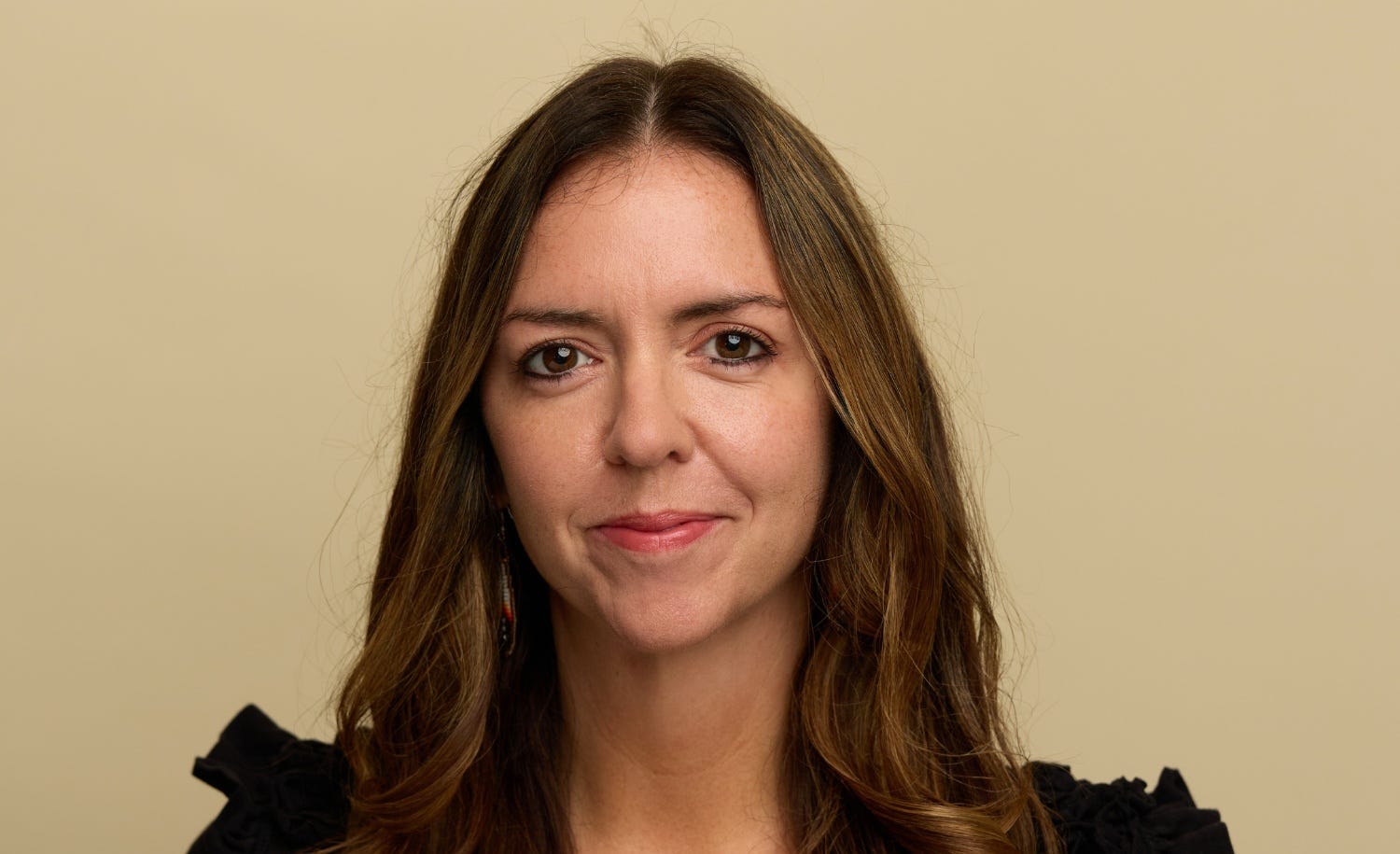
Disinformation about clean energy is showing up everywhere — online after every blackout, at county commission meetings about siting new projects, in regulatory dockets stuffed with fake comments. GoodPower, which combines a C3 education arm with a C4 advocacy arm, is trying to fight back with a network of thousands of content creators, rapid-response campaigns around storms and grid failures, and an AI tool that detects manufactured public comments. I talk with CEO Leah Qusba about what they've tried, what they've measured, and what actually works.

Climate campaigners are extremely familiar with large-scale, organized misinformation campaigns. But in recent years, misinformation about climate solutions, specifically about clean energy, has grown almost as ubiquitous. Any time there’s a blackout or a grid failure, clean energy gets blamed. Any time electricity rates go up, clean energy gets blamed. Any time a clean energy project is proposed, community meetings and regulatory dockets are flooded with misleading health and safety claims.
An organization called GoodPower is attempting to push back against this tide of slop. It runs message testing and polling, maintains a network of several thousand content creators it can deploy quickly to respond to events, works to get ahead of anticipated fighting before the opposition hardens, and is building a tool to identify manufactured comments in permitting proceedings.
I have been extremely skeptical about messaging professionals throughout my career. I can’t tell you how many pitches I’ve turned down from people and organizations claiming to have found the magic message that changes minds. My objection has always been the same: messaging itself — stringing the right words together — is only half the battle. The reason the right wing so often wins is not that it has particularly clever messages, but that it has an wide array of channels through which to distribute them, an army of people willing to repeat them endlessly, and above all, money behind them.
The reason I’m excited to talk with GoodPower CEO Leah Qusba is that her organization doesn’t just test messages in isolation — it deploys them in real-world situations and has gathered data on what works and what doesn’t. We’re going to talk about the kinds of messages that work, the right timing for those messages, and the best ways for local leaders to discern true public opinion from astroturf campaigns.
Chapter
00:00 – Introduction
03:06 – What the disinformation claims, and who spreads it
05:57 – From Action for the Climate Emergency to GoodPower
08:38 – Building a creator network in non-political verticals
14:17 – Competing with talk radio and Fox News
18:26 – Winter Storm Fern and the rapid response system
23:26 – Measuring whether a deployment actually worked
27:24 – Pre-bunking and the 80-county experiment
33:18 – Getting people off the couch and into the room
38:10 – AI agents and where human judgment sits
42:05 – Keeping the C3 and the C4 distinct
47:13 – Battery fires, Moss Landing, and talking to fire chiefs
50:54 – TrueVoice and manufactured public comment
56:13 – Whether AI will overwhelm the comment process
58:11 – The best messages that actually land
1:04:22 – Super PACs, budgets, and what comes next
Resources
People & Organizations
David Roberts (Substack - Bluesky)
Volts (Apple Podcasts - Spotify - YouTube)
Sander van der Linden (Cambridge Social Decision-Making Lab)
Company & Industry News
Ohio blocks big solar farm, despite apparently fake public comments
Super PAC targeting conservatives against clean energy touts fifth Republican primary win
Books & Articles Discussed
Related Volts Episodes
The right-wing groups behind renewable energy misinformation
The high-stakes battle over energy affordability in New York
Transcript
David Roberts: All right then. With no further ado, Leah Qusba, welcome to Volts. Thank you so much for coming.
Leah Qusba: Dave, thanks for having me. Happy to be here.
David Roberts: I’m excited to get into this. Let’s start here. This is all about disinformation, misinformation, disinformation. Maybe just talk a little bit about that. What do we mean when we talk about that? What kinds of disinformation are we talking about? From whom? In what venues? Maybe give us a few examples of the kinds of things you’re going after.
Leah Qusba: Yeah, absolutely. I mean, I think there’s a pretty big body of peer-reviewed research now that shows that there’s a lot of false and exaggerated claims about wind, about solar, increasingly about battery energy storage, and there’s actually even new experimental evidence as recent as 2026 actually showing, like, the behavioral impacts, right? It’s one thing to get people to not like something. It’s another for them actually to be informed so much and inspired so much that they would wanna join opposition based on that information. So we focus on the dirty dozen. I think the Sabin Center says there’s 33 different meta-narratives out there attacking renewables that are false. We focus on about a dozen of the most pervasive ones out there.
David Roberts: Narratives specifically. Like, give me a couple of examples.
Leah Qusba: Yeah, you’ve heard these. Probably the one as old as time is it’s not reliable, right? When the sun stops shining, the wind stops blowing, you don’t have power, therefore the technology is not good.
David Roberts: Mm.
Leah Qusba: China makes solar panels and wind turbines, therefore we’ll be reliant on China. The most pervasive one right now is that solar, wind, and batteries threaten prime US farmland, that farming and renewables can’t go together, therefore we should all be freaked out.
David Roberts: And not to jump ahead a little bit, but I’m curious, who is disseminating those messages? To what extent, I guess I’m asking, is that stuff peer-to-peer, you know, sort of Fox tells it to the right-wing audience, and then the right-wing audience tells it to one another, versus more sort of coordinated, deliberate campaigns, funded campaigns deliberately spreading this stuff? Do you know what I mean?
Leah Qusba: Yeah, I mean, I think the best piece of research I’ve seen is from Robert Brulle, and he has a paper where he talks about this highly organized movement. It’s called the “US Countermovement Opposing Climate Action,” the “Climate Change Countermovement,” and it’s really both of those things simultaneously. It’s networks of conservative foundations and think tanks and corporations and trade associations, and then all these advocacy groups that are in the field. They’re all intricately networked together-
David Roberts: Mm-hmm…
Leah Qusba: and really work together as a unit, and it’s well-funded, and, you know, the money is really hard to follow ‘cause it’s a lot of dark money passed through these entities, but essentially fossil fuel interests.
David Roberts: So then let’s talk about GoodPower. Last year, you’ve been involved in this organization for what? 16 years now, for a while. Been through a couple of rebrands, couple of reorgs. Last year, you renamed yourself from Action for the Climate Emergency to GoodPower. I’m curious, two questions. One, what was behind that rebrand? What was the thinking behind this pivot? And then two, like, what does GoodPower consist in now? I’ve read your decks. There’s a lot of pieces of this puzzle. There’s research and the influencers and this and that. So maybe just tell us why the rebrand, and then what all are you doing now? What are the main divisions?
Leah Qusba: Yeah. So GoodPower, I’ve been at the organization, I just had my 17-year anniversary, and I mean, historically, when we were ACE and now GoodPower, we’ve worked with audiences across the ideological spectrum for a long time, and there was really two big reasons for the rebrand. One, we wanted a bigger messaging tent. It turns out the words action and climate and emergency can be polarizing in some places.
And then second, there was, like, really a pragmatic or, like, logistical reason. We serve a lot of media. We do a lot of strategic communications, about 300 million impressions we served just last year. You know, the algorithms, right, play this goalie where they only will serve content based on, you know, they wanna keep people on their platform, so they wanna keep people happy and scrolling, and it’s really difficult to sort of trick those algorithms with words like climate and action and emergency in your name.
So how do we create a bigger tent for more people to get under across the ideological spectrum? And then also, how do we be able to reach audiences with trusted messengers, whether they’re farmers and landowners or neighbors of projects, et cetera. So essentially, our mission is all around accelerating decarbonization. Like, how do we get to that end more quickly? And if time is our greatest enemy, we wanna get there more quickly. Well, what’s standing in our way, and how do we remove those roadblocks and have a more frictionless pathway to that goal?
David Roberts: This mirrors, I think, a larger pivot in a lot of climate groups, a lot of the climate movement, this sort of pivot to pro-clean energy rather than scary messages about climate. What are the pieces now? What are the main divisions of GoodPower? You’ve got a message polling and testing lab. What else?
Leah Qusba: Yeah. We’re basically a specialized content studio and marketing agency for clean energy and climate solutions. We’re a political and policy campaigning shop, and we’re an empirical research lab, sort of all in one.
David Roberts: And you have this network of creators. It says, “Across non-political verticals.” That is the piece that is most fascinating to me. Who are these people? Are these, like, YouTubers, TikTokers? Are they farmers that you go out and find? Like, who are the influencers? Who are the people who are ultimately carrying the message at the end of the pipeline?
Leah Qusba: Yeah, absolutely. I think part of the rebrand, right, it’s not about GoodPower’s brand or what we wanna say, and I think one of the plagues of either climate, clean energy communications is like we wanna say what we wanna say and what we think will work, and how about we just think about this differently and get out of the way and get the people in the places dealing with the thing and deciding if they want utility-scale solar or battery storage in their town. Why don’t we just go talk to those people who already have these technologies?
So I think part of our investment in sort of credible messenger networks, whether they’re influencers or subjects of our many mini documentary films that we make, is just going into communities and talking to people. And I think the second thing is people don’t go to the internet to be bored to death by all of these groups that care about decarbonization and clean energy and climate, right? They go to the internet to be entertained.
They go for food, fashion, culture, cars, gaming, right? How do we go where they already are, and how do we sort of inject our messages into culture? It’s really about getting into the cultural spaces where you’re gonna find audiences that are unreachable in other parts of the internet.
David Roberts: Yeah, but how do you do that? So you find someone who’s got an audience who maybe is talking about cars or sports or whatever, and you would like them to maybe sprinkle a little pro-clean energy messaging in there amidst that. How do you do that? Are you paying these people? Are you approaching them? Are you signing contracts with them? Are you just trying to convince them? What does the relationship look like?
Leah Qusba: We have all sorts of models. So let’s say we have a… This is one of my favorite stories. I live in the state of Wisconsin, and we do a lot of storytelling all over the country around communities that are quite satisfied with utility-scale renewable energy infrastructure, and there’s this farmer named Shelly. She’s in her 70s, she lives in southwestern Wisconsin. She’s had wind on her land for about 20 years. She agreed to have us on her farm and to film her over a three-day period and tell her story how these turbines put her kids through college, how it’s just part of the natural landscape. She farms all of the other acres around these turbines, so she’s still a farmer.
We don’t have to pay people like Shelly, right? Just like you don’t have to pay people to go on Reddit and talk about how fun it is to drive their Ford Lightning or whatever EV they’re driving, right? So that’s unpaid documentary style filmmaking that we do. And then on the other side of the spectrum, we work with influencers that are monetizing their social media handles. So we might work with a car bro, right?
And gosh, oil prices go through the roof because of a far off war in Iran and people are like, “Wow, I’m having to pay $5, $6 gas.” So we partner with a car bro who has a huge car audience, and we’re like, “Yo, I’m really sick of paying these prices. What relief is there?” “Oh, have you heard about electric vehicles? Actually over a five-year period, they’re cheaper now to maintain and to drive than a gas-powered vehicle. Maybe you should include this for your household in sort of your future purchasing plans for your next vehicle.”
David Roberts: So when we think about these influencers, they’re specifically not clean energy influencers. To the extent such a thing even exists, I don’t even know if, I don’t even know if there are such things in the world, but like these are influencers in other areas that you are approaching and making deals with, and you’re sort of getting some of your messaging in their channels.
Leah Qusba: The way you can think about that, I would have no interest in spending a penny on an audience that follows a clean energy influencer, right? That’s preaching to the choir. I wanna find the people who are really resistant. I wanna find conservative audiences who see EVs as a lefty lib thing to do and not as like pragmatic cost savings thing. So how do I find these audiences that don’t have the right information? I don’t wanna serve any media to people who are adopting EVs just fine or are already big supporters of clean energy.
David Roberts: So curious about this, like how open is that door that you’re pushing on? Do you find a lot of people willing to do this? Is this a fertile thing? Is it easy to find people and get these messages out into these channels? I mean, I imagine a lot of these influencers kind of have opinions of their own or thoughts of their own or, you know, what they call audience capture. “My audience wouldn’t like that. Like if I get political, my audience wouldn’t like it.” Just like how much resistance are you finding or how easy is it to do this work?
Leah Qusba: Yeah, we essentially have an internal creator marketing agency. About six years ago, we got sort of exhausted working with all these influencer agencies and having to basically just teach them all the messaging, and it was just really difficult. So we said, “You know what? We can do this ourselves. Why don’t we just slide into a bunch of people’s DMs and see if they wanna work with us?” And it turned out that worked, and it was really scalable, and then we built a really world-class team around that vertical.
And now, you know, it’s really, it’s a mutual relationship, so there’s some alignment there on our worldview around the energy transition or electric vehicles or other decarbonized technologies at whatever level of scale. And so it’s a mutual agreement that we wanna work together, and we basically create campaigns together. We brief things together, and some of our creators have been working with us for five-plus years, so there’s a real trusted relationship there.
David Roberts: Interesting. And one thing I’m curious about is I know media is shifting and changing, obviously, and, like, to a great extent, especially among young people, the big networks, the big sort of media channels that their parents and grandparents went to are not as big of a deal for them. But they’re still a pretty big deal. Like, you’re going up against, in a lot of these cases, talk radio, Fox News, like big organized, established, wealthy media channels, and you’re kind of doing it with this ragtag army of influencers. How do you not just get drowned out? Like, do you feel you can make yourself heard if, you know, the Eye of Sauron really turns to, like, an Ohio battle over a proposed solar field or whatever?
Like, if the right-wing media machine really turns its attention to that, do you have enough power to be heard amidst that kind of torrent of slop that’s coming from those channels?
Leah Qusba: I mean, let’s be real, though. We’re not just using creator marketing, right? That’s one possible tactic of, like, a layered campaign, and it depends on the goal of the campaign and the media diet of where we’re running that campaign. So if we’re running a campaign, let’s say, in rural northeast Oklahoma around a utility-scale wind project-
David Roberts: Mm-hmm…
Leah Qusba: so what do the people in that community consume in terms of their media? There may be transit or out of home advertising, AKA billboards. We do a ton of phone banking. We’re organizers and campaigners at heart at GoodPower, so we’re gonna call people and understand what people think about these technologies. They’re very favorable of wind in this part of Oklahoma because it dots the landscape and it’s invested tons in schools.
And then we do storytelling and find subjects. We filmed a Republican school superintendent that talked about the benefits to schools, and we talked to a county commissioner, and we talked to neighbors of these projects and landowners leasing their land. So it’s much more than just finding credible messengers. I think the point of credible messengers, though, to your opening statement, is the message is absolutely worthless … actually, the message is the messenger.
David Roberts: Mmm.
Leah Qusba: And we just need to evangelize that to anybody working on any campaign anywhere. Nobody trusts the internet. Nobody cares what brands have to say. Empower people to speak for themselves. You know, talk to the farmers, talk to the school superintendents, talk to the local community.
David Roberts: And I would imagine part of your goal, one of the ways that the right wing pulls off its messaging victories, is that they get people talking to one another about it. You know what I mean? They sort of end up deputizing these end users as kind of messengers, and there’s this enormous peer-to-peer effect. Is that something you’re trying to get going and tracking at all? Like, you can’t do all the messaging yourself. Ultimately, you need to convince some people that are gonna go out and carry your message for you. Is that a big piece of the puzzle?
Leah Qusba: Yeah, I would say in our campaign work, we call these amplifiers, but people who maybe don’t have a huge social following of their own, but they’re huge supporters of the work and, you know, the particular goal of the campaign, so they wanna weigh in. So maybe they’ll comment, maybe they’ll re-share, maybe they’ll amplify the content in some way. Every time we do that, algorithmically, the content becomes more viable.
David Roberts: Mm.
Leah Qusba: It becomes more exciting to the social platform ‘cause they see engagement. So the algorithm will help serve that content up to more people, reach new audiences, make it more, quote-unquote, “viral.” So there’s really a way of doing that, and I would say lots of campaigners have really understood the power of amplification networks. At GoodPower, we have about 1.2 million people in the GoodPower Action Network, so this is an opted-in list of mobile and email subscribers that we often send opportunities to amplify out to them. So yes, that is something we use.
David Roberts: Interesting. Well, let’s talk about, like, a test case. Let’s talk about, there’s this winter storm, Fern, in January, and this was a sort of, one of your sort of arms or divisions is you look for events that happen, and then go respond. We all know, we’ve all seen at this point, like, anytime something happens, something pops up, a big heat wave or a blackout or something, like, the anti-clean energy messaging swarms instantly around that. And so you are trying to send a counter-swarm, I guess you would say. Just walk us through, like, what that looked like around Winter Storm Fern. You heard about the storm. What did that trigger? What series of sort of actions did that trigger?
Leah Qusba: Okay, full disclosure, we are huge tech nerds over here at GoodPower. So we build original products that don’t exist, and we use AI-enabled tools increasingly to solve problems humans just can’t or are too big, right? We need agents and bots to do it. So this is one of those great examples. We have a rapid response program. So in order to do rapid response, first of all, understanding why, right? Whoever gets there first, people are scrolling, they ingest the headline, sometimes they don’t even click on the headline, and then they move on.
So there really is a premium on can you get your message out first before the public understanding hardens around the fake news or the disinformation, right? So premium on speed. How could we possibly do that? Well, we built, it’s called an agentic orchestration, but a bunch of agents that we trained every single night, they do this at 4:00 AM when we’re sleeping, and deliver this to our inbox in the morning. They’re looking at the news cycle. They’re looking at what disinformation clusters around renewables and energy are moving that day. They’re looking at the biggest social media posts out there that are relevant to that, and they’re also looking at the biggest news stories.
We get that served up at 6:00 AM. By the time we’re at our desks in the morning, we have a rapid response team that looks at that, and they say, “Okay, whoa, Winter Storm Fern, it’s in the forecast. This is gonna be huge.” Now, that’s a great example ‘cause it actually, we don’t have to do something that day. It’s in the forecast, so it’s coming up.
You know, there’s a lead time with extreme weather often, which is awesome, so it gives us more time. But we do have the capability to get lots of creators a brief, like that day, and get content online immediately, and that’s important because over the last roughly 20 years I’ve been doing this work, we have, like, never gotten better at rapid response.
David Roberts: Yeah.
Leah Qusba: We’re like a day late and a dollar short.
It’s all analog. We’re just not good at it, so we need to use these new 21st century technology tools to do it. So essentially with Fern, it was awesome because it was a pre-bunking campaign. We actually got out before the storm hit and, you know, power went out in 21 states or something like that, and people were upset, and immediately you saw the scapegoating of renewables.
David Roberts: Mm-hmm.
Leah Qusba: Our campaign, we basically had a bunch of creators brief. We had a few dozen go live. We generated millions of views on that content, basically saying, “Hey, if your power goes out” Don’t believe what you’re saying. It’s not renewables, it’s all these other things. Literally frozen coal and gas supply. It’s interregional transmission. It’s the broken grid. Even FERC says that that is the case, our own government. So in case you see disinformation, now you know, and that’s sort of a methodology we use that’s pretty empirically founded, where you can pre-bunk things before disinformation reaches someone. You basically inoculate them or make them impervious to it.
David Roberts: Yeah. We’re gonna get back to that in a minute, the pre-bunking stuff. So, you know, you have this system that alerts you to events. You got a rapid response team that says, “Okay, this event is coming up. Let’s send messages to our influencers. Let’s record some documentary content. Let’s do all the various things. Get that in front of the people who are gonna be affected by the storm.” And then when the storm hits, to some extent, you have a counterplay already on the ground. That’s the idea?
Leah Qusba: That’s right. And like since Winter Storm Fern, that was the last weekend in January. I remember it was my birthday and I was in Upstate New York, and it was very snowy. And since then we’ve gotten over 20 sort of rapid response, we call them reps, but different times we’ve mobilized this rapid response community, and we’ve served like almost 70 million impressions at this point in these high attention moments that have risen to the level. Like another example, Trump was on stage at Davos and said it costs $1,000 every time a wind turbine turns.
We deployed around that. Oil prices, record high, the Iran War. We’ve done a lot of stuff around volatility in that, you know, Americans are sick of importing that volatility into their energy bills and to the gas pump. So there’s been a lot of stuff since then, and we’re starting to get better and better at this and reach more and more scale each time we deploy.
David Roberts: Well, this is one of then my core questions, which is, you know, you have these deployments. How do you test their effectiveness? How do you measure your own effectiveness? ‘Cause in a sense, I know that the big number of impressions is, in a sense, the number that sounds biggest and it’s kind of the easiest to measure, but we don’t really know whether impressions matter or do anything. You know what I mean? Like that’s a middle point in the causal chain. What we wanna know is at the end of the causal chain, are people behaving differently or doing different things or believing different things at the end of all this? So how do you measure the effectiveness of a campaign? What is the methodology?
Leah Qusba: Yeah. So we have an in-house research lab called the Good Data Lab. It’s run by Dr. Sonia Sachdeva. She has her PhD in computational research, and she has a team of PhD level social scientists that study this stuff all day, every day. And we started this lab four years ago. We’ve completed 130 empirical studies, everything from, like, deep focus groups with county commissioners to tons of, like, message tests and randomized control trials. So we study the effects. What are the persuasion effects? I’m much less concerned or interested in how people feel and think, ‘cause we have, like, the feeling and thinking gap to action.
David Roberts: Yes.
Leah Qusba: I’m much more interested lower down into the funnel, like, how does this change behavior? Are there proxies that say, “Oh, wait, I wasn’t supportive, but if I were in a real-life environment, I would be”? And then actually going all the way down the funnel and seeing if that person actually did the thing they said they wanted to do. So we study all levels of the funnel, from just education and awareness to changing someone’s mind, to proxies for action, and then actual action.
David Roberts: Like, for instance, I would imagine that there are, you call these spark events, these things that come up that you didn’t respond to.
Leah Qusba: Right.
David Roberts: I would imagine that there are lots and lots of spark events, probably more than you can respond to. So do you ever use one that you don’t respond to as kind of a control group? You need control groups in these experiments to truly get a sense of your effectiveness. Like, what would…
You need to counterfactual what it would have been like had we not responded. Are you able to do that? And I’ve wondered the same thing about your ads. You know, you serve a lot of ads. Do you ever just sort of leave a zip code out and make it a control group so that you can compare what happened where there were ads with what happened where there weren’t.
Leah Qusba: Yeah. So we do that all the time. One of my favorite studies from Rapid Response that we did, and this was no affiliation with Senator Schatz, but what we did is we saw that Senator Brian Schatz gave a speech on the Senate floor. He was talking about energy bills and reliability, and we pick that up in this daily signal that we get in our inbox that I was describing to you.
And we said, “Hey, this is really interesting. Here we have, you know, a prominent elected official talking about this all-of-government approach of the Trump administration to stop renewables and connecting that to rising bills for Americans. This is really interesting. It’s a big news story. How do we get this out to people?” So we had our creators clip it up. We held out a control group that didn’t see the intervention.
I think they saw an Airbnb ad or a Morton Salt ad or something. But we had a statistically significant result that showed a huge decrease in favorability for Republicans and how they handle energy bills. It was an 11-point decrease, and we saw a 4% increase for Democrats for talking about these issues and acknowledging that we need every electron. We need, you know, the cheapest, fastest to power electron right now is solar and storage and wind.
So, you know, tests like that I think we do pretty routinely just to know, okay, well, what would happen if we didn’t do anything versus this treatment universe that does get exposure to the content, and how does this change how they think and how they act?
David Roberts: Interesting. Yeah, so you mentioned earlier this work on inoculations. Sander van der Linden, I think, is the guy who’s sort of become famous with work on this, sometimes called pre-butting. The idea is that if you can get to people before the misinformation reaches them and get good info in their heads, that is more… tends to be more effective than coming in afterward and trying to change their mind. I’m sort of curious how this plays out for you, though, because most of these, I mean, most of these things are almost by definition, you’re responding. These spark response things are responses to things that have already happened. So what’s an example of somewhere where you’re using this inoculation idea, you’re using this inoculation effect?
Leah Qusba: Yeah. Another term for that is basically just getting there first before the disinformation even is on the radar of the audience, right? So we call this ground softening. Any good campaigner listening will understand what that means. It’s like before you go knock on a door and talk to somebody, you should probably put a door hanger. You should probably give them a phone call or a text, maybe send them a mailer.
We gotta soften the field before we go have a conversation and make an ask to a voter to do something, right? So in the context of a community considering a huge new proposal for utility-scale solar paired with storage, let’s say, what if we went out a year before that project was announced, we started a low level of showing stories of other nearby counties or states that already have this infrastructure and are really happy with it, the economic benefits they got, right?
And we’re not just guessing here. We know this works ‘cause we did a longitudinal experiment for three months where we exposed 80 counties and held out another 80 counties in a control, and we looked at things like what are the perceptions around building more solar and wind and batteries? What was the baseline of support before this exposure, and after three months, what was it? Are people raising their hand saying, “Wait, now that I know, I would support and host-
David Roberts: Mm-hmm.
Leah Qusba: utility-scale renewables in my town?” We saw an 11-point gain over that three-month exposure. We exposed them to 22 different pieces of content, stories, real stories from real rural conservative people who already have these technologies in their towns. And then the coolest thing we did is we wanted to show the world, like, hey, marketing 101, when you turn off the ads, it decays. Just like when Coca-Cola turns off their ads, people go buy Pepsi and Gatorade or whatever else, right?
You gotta stay in people’s feeds, otherwise the other noise of the internet, the disinformation, et cetera, seeps in and it gets undone. I mean, that’s something every marketer understands. So we really need to have an always on low level, and we know just the precise amount of impressions that we need to sprinkle to make sure people really understand they’re hearing from people they trust that are in their affinity group.
David Roberts: Yeah.
Leah Qusba: You know, not what GoodPower’s saying, not what some other brand is saying. What is my neighbor saying about this that already has it, right? It’s just like TripAdvisor. Have you ever booked a hotel without looking at the Google reviews? No. You wanna hear from people that have lived it. It’s the best thing in our experience that has worked, and we have a lot of empirical evidence that shows that it works.
David Roberts: Interesting. Yeah. You really anticipated my next question, which is one of the sort of uncomfortable results of the research on inoculation is that the effects fade pretty quickly. Like, once you stop, the effects fade. I think this has been true of all… It’s been one of my real complaints about a lot of work and hype on messaging that I’ve been exposed to over the last 20-some years, which is like if you get people in a little conference room and expose them to messages and then ask them right afterward, they’ll be like, “Yeah, yeah” you know, like you change their minds.
But how long does that last? Does it change their mind in an enduring way? My big question is, if you need to keep it up to maintain that level of support, doesn’t that mean that, like, every campaign you launch ends up being a quasi-permanent campaign? Like, how can you afford to do that? You know what I mean? Like, to be sort of always on in these communities. Do you have to be sort of always on everywhere you go, or if you stop, do things just fade and go back to normal?
Leah Qusba: Yeah, I think it’s a really important question, and I think for us, right, we do a lot of campaigning where all the cheap, viable land is for wind, solar, and storage.
David Roberts: Mhm, yeah.
Leah Qusba: Those are very rural places. They’re conservative. They’re not population dense. So that longitudinal experiment in those 80 counties, right, that’s not actually a ton of people. So when you look at, we currently have about 300 local siting campaigns running at the project level, and what these are, I mean, when you look at the population density, sometimes it’s a few thousand people, right? You’re hard-pressed to spend, what, five grand on media? These are not expensive places, at least from our perspective in the local siting place.
Now, you multiply that by every month, every year, times the amount of counties. I mean, it can add up, but for our campaign work, this isn’t something that is necessarily, you know, hundreds of millions of dollars.
David Roberts: Right.
Leah Qusba: It’s not cheap, but we think it’s worth it. And the earlier you can start, you know, before the disinformation or the Facebook group, right, that is often housing a lot of opposition locally, before that forms, your best bet is early intervention. A win isn’t just who’s supporting and calling the county commission or submitting a public comment or showing up. It’s who stays home. It’s about flattening-
David Roberts: Yeah.
Leah Qusba: the curve, you know, to quote Fauci. How do we flatten the curve of opposition? I mean, that’s really, like, 75% of the battle.
David Roberts: Yeah. Draining some of the intensity of the opposition is really an underrepresented… So, well, let’s talk about the, you know, talk about the action at the end of this. So you’re not just trying to change minds, you’re trying to change people’s behavior. There’s a Kansas case study where you talk about sort of the action that resulted at the end of your intervention. Talk us through that a little bit.
Leah Qusba: Yeah, definitely. So we run, hundreds of these local project-level siting campaigns, and generally, they have a few different phases. First, research. What does the community feel and, you know, when’s the last time they elected a Republican or a Democrat, right? What’s the sentiment? Oftentimes these are tied to party lines, so we wanna know how the community feels. Second, we do our ground softening. So all of the stories, hundreds at this point, all of the credible messengers that already have these technologies, how do we expose communities thinking about these technologies and hosting these projects? How do we expose them to credible messengers?
And then finally, like the bottom of the funnel…How do we get them to submit public comments on an official open docket? How do we get them to show up in person either at a community meeting or an official hearing to give testimony, right? How do we get them to bring friends and reach out to loved ones, family, neighbors?
David Roberts: Yes. And I think people who are not involved in this stuff underestimate the difficulty of getting people off the couch to do anything on anything about anything, or talk to any, like anybody on Madison Avenue, you know, advertising products or anything. Like, getting people to go from positive sentiment to action is a huge push.
Leah Qusba: Yeah, and let’s just talk about that funnel. I mean, ‘cause you said, “Okay, well, is that really a reflection?” The total impressions we’ve served lifetime across our 300 siting campaigns in 40 states, about 40 million impressions. There’s about 53 gigawatts of clean energy tied up in these campaigns, but how many comments from those impressions? We’ve gotten 2,500 positive public comments. So now you know, you can do the math, how many impressions does it take, top of the funnel, to bring people through, right?
We did 76,000 phone calls to people. We got 2,500 comments, and we got about 600 people in person to mobilize and show up and RSVP and show up for hearings to give official testimony. So the marketing funnel is clear.
David Roberts: Yeah.
Leah Qusba: We know how many people we have to reach, and there’s a math problem here that we can do to really understand the ongoing cost. These campaigns also, it doesn’t end when a final permit is issued and that project goes to construction, right? People will forget.
Well, then they have to look at the thing. I’m from a, you know, I grew up around a lot of farmland. It’s a very intense wind area where I grew up in northeastern Wisconsin. Lots of farms, and essentially, I mean, your landscape changes. You gotta look at this stuff when you wake up and when you’re driving down the road. So you have to continue after the project is operational and remind the community, “Oh yes, but wait. The trade-off here is we got a new school, we doubled our tax base, we have long-term leases, they sponsored our Little League team. Like, we’re actually getting a pretty sweet deal here.” And every community has to sort of evaluate that trade-off for themselves.
David Roberts: Yeah, and I would just say sort of the other half of the comment I just made before, how difficult it is to get people to take action, those numbers of actual people taking action might look small, but they’re like, the other side of this is that it doesn’t take that many people to make a pretty big impact, because almost no one does anything, if you can get a few people to do something, it can make a very big impression. Like, if you’re having one of these small town siting meetings or permitting meetings or whatever, you can get two or three people to show up, that makes a big difference at a meeting like that, but-
Leah Qusba: It’s massive. It’s massive. These are tiny counties. And I will just say, too, the internet is really good at making a vocal minority feel like the majority. So actually being in person and seeing people show up that are in the community, these are tiny places where people know each other. And a county commission, a lot of the states we work in permit at the county level, some at the state level, you know, through the PSC or the PUC.
You know, they’re overwhelmed when they see 500 comments and some negative ones, and how do we make sense of this, and who’s showing up in the room, and it’s all quite confusing. Generally, if you’re a county commissioner and you’re like a full-time farmer and you’re maybe doing this off the side of your desk as a part-time thing, it’s incredibly difficult to make that decision, and everybody’s looking at you because you live in a tiny town.
David Roberts: Yeah, I would say if there’s one thing over my career that I’ve noticed that the whole right-wing media messaging machine is good at, it is precisely that. It is creating the impression of a lot of people, right? And you don’t need very many real people to create that impression. They are-
Leah Qusba: Exactly.
David Roberts: masters of creating that impression. It’s very effective. I wanna talk a little bit about, you have these AI agents sort of developing and testing messages, and they’re seeing the response, and then they’re revising and testing again, seeing the response again. And I see the value in some sense in automating a lot of this and getting AI to do this ‘cause you can do a lot very quickly. You can do a lot of testing and revising and retesting and revising very quickly. Maybe this is a cynical thing to say, but I’m not sure that the messages that are going to be the most efficacious are necessarily the messages that are the most strictly accurate.
Leah Qusba: I see what you’re saying, yes.
David Roberts: So, you know, like if you just put AI on it, and they’re running and testing and their goal is efficacy. You can see how you can stray into messages that might not seem strictly accurate, or, you know, there’s the line between accurate and inaccurate is very fuzzy. Like, does exaggeration count? You know, like-
Leah Qusba: Hallucination.
David Roberts: what metaphorical-
Leah Qusba: Right.
David Roberts: like metaphors, are they accurate? So I guess I’m just wondering, like, where is the human being in there making those judgment calls about what is too far or what is too much, or like what has gone beyond the bounds of accuracy? How do you police that?
Leah Qusba: This is so important, and just, you know, to clarify for the audience, we don’t actually use AI-enabled tools to generate content. I know some organizations do and have found efficacy with that strategy. We use AI-enabled tools in a different way, really around helping aware us of disinformation, big news stories, helping us categorize lots of content or making sense of large amounts of data, detecting AI manipulation sometimes in local dockets.
So we don’t use it for content. I think the problem we face, right, with the AI slop and all of the stuff on the internet, people just don’t trust it. They don’t trust what they see. It’s not good content, but who do they still trust? They trust each other. They trust their neighbor. So really, our entire organizational strategy, we work outside the US as well, in Brazil, South Africa, the UK, Canada. It’s really the same method though.
It’s the same playbook. Just empower the people, right? Rural speaks rural.
David Roberts: Mm.
Leah Qusba: Conservative speaks rural. We don’t need to say anything. We don’t need to manufacture anything. We don’t need AI agents to say anything. Just go talk to the person that already lives next to the utility-scale, battery energy storage system. How do they feel about it? What did they get?
David Roberts: Right.
Leah Qusba: You know, oh, people are saying BESS is flammable and starts on fire. Go talk to a firefighter and see what they have to say, right? They live and die about safety, so go see how they feel, and they have battery energy storage in their town. So I think we need to get out of the way as brands. I think that the age of the internet is over, where brands were important. I don’t think they are.
I think we’re in the user-generated era of the internet, and we as sort of practitioners and campaigners, we really just need to empower the people. And the message won’t be perfect, to your point, David. It’s gonna be unscripted. It’s gonna be raw. It’s gonna be authentic. It’s gonna be emotional. It’s not gonna be perfectly wrapped up in a bow like some high production $300,000 ad we created somewhere in a studio.
That’s not what the internet likes anymore. It’s not what people wanna see. They want authenticity, and they want somebody they trust. So it’s either in their own affinity group, like mom speaking to mom, or there’s universally credible messengers, like a firefighter or a nurse or, you know, somebody who everyone trusts and looks to for credible information. So our strategy is really about that. We are like a storytelling juggernaut in that respect, where we just try to get out of the way and empower people to talk to each other.
David Roberts: Here’s another question I was wondering about. You have under your umbrella a C3 and a C4, i.e., an educational branch that’s about countering misinformation and giving good information, and a sort of policy advocacy branch. I don’t know how good faith these complaints always are, but one of the things since people have criticized climate groups for in the past is you come in and say, “Science says blah blah blah.” Like, science says temperatures will go up by X amount if we increase emissions by X amount.
And then you stray beyond that and you’re like, “Well, then science says we should impose a carbon tax.” And a lot of people, I think rightly, are like, “Well, no, science didn’t say that.” Like, that’s a judgment call. That is policy advocacy you’re doing there. That is your judgment about what we should do about the facts. So I’m curious, like, how you walk that line between what is sort of your C3, just correcting information and what gets into policy advocacy. Like it’s information that like battery fires are rare these days.
That’s factual, it’s empirical. You should permit this particular battery proposal in your backyard. That’s not science, that’s not facts, that’s advocacy. How do you think about keeping those distinct?
Leah Qusba: I think it’s a really great question. I mean, I would say for us, if we don’t have the right development environment to build, then no amount of public support or social permission is gonna make that project succeed, and I think the US clean energy development pipeline, right, we have like a really significant attrition problem. I think it’s like 13% of generation and storage capacity that enters the queue actually reaches commercial operation.
So that’s unbelievable. There’s lots of things broken, and I think increasingly we’re in a new moment around social permission. It’s not just is the technology viable and is it affordable, it’s will people let us build it? So I think we’ve really focused on that. Where policy really comes into play is let’s say we’re in a community, say it’s a rural community that doesn’t yet host utility-scale renewables, so we have to make a blueprint, right?
So that’s called an ordinance, and then the ordinance, right, it can either be development friendly or it can be prohibitive like or it could even act as an outright ban, like something like, “Oh, we need three to five mile setbacks from any home,” which is basically an outright ban, you know, for wind, for example, that I’ve seen. And so right now in the US, we’re banning land faster than we’re permitting and building projects, and there’s a lot of people really concerned about this.
So the nexus of that, that’s really policy, right? How do we overturn short-term bans and moratoria? I mentioned how county commissioners, right? It’s a nerve-wracking thing, and I empathize deeply being from, you know, a community surrounded by a lot of farmland. Everybody knew everybody in the town I grew up in. Here you are being faced with all of this polarizing, you know, mixed feedback from your constituents.
David Roberts: Yes, people yelling at you, people getting really-
Leah Qusba: Right.
David Roberts: really mad. Your community members, who you know, getting very mad at you about things they’ve heard online. I hear stories like that all the time.
Leah Qusba: And so I empathize, and we’re also seeing legislative sort of model bills or model ordinances travel from state to state right now that are pretty scary when we think about outright bans on these technologies, and we’re losing land, I would just say, faster than we’re building the projects.
David Roberts: But this gets back to how do you just operationally and legally keep your C3 and your C4 distinct. I mean, ‘cause they’re both in some sense using some of the same tools, right? I mean, in terms of gathering sentiment, in terms of finding messengers, et cetera, et cetera. Do you worry about the chocolate and the peanut butter getting mixed up?
Leah Qusba: That’s a good question. We pretty much stick to education and awareness on the C3 side, and the C4 is where we have unrestricted lobbying or policy engagement that we can do. So we have a pretty strict separation between the two. Of course, education and awareness and changing somebody’s mind about how they think about these technologies certainly creates a readiness.
David Roberts: Mm.
Leah Qusba: It creates, you know, the conditions for a policy to succeed or not succeed, and I think increasingly we see that connection. You can have the most beautifully drafted policy at the state level, the federal level, locally, and it’s just destined to fail because you haven’t done the work of educating people, and these issues are quite dense.
David Roberts: Yeah.
Leah Qusba: You know, you start saying things like interregional transmission and you’ve lost your audience immediately, so.
David Roberts: Cost allocation.
Leah Qusba: Correct. “Offtake!” I mean, all of these things, how do we bring communities along? So, you know, we really prioritize both, but essentially the C4, the policy advocacy, sort of builds on the education and awareness that we’re doing on the C3 side.
David Roberts: Well, it’s another question, another sensitive question about the education side, which you teed up well here, which is there are some negative sentiments about clean energy that have a germ of truth. Like there have been battery fires. That is a thing that happened, you know, the Moss Landing thing did happen. It is true that mining for some of the materials for these technologies has pretty negative impacts on the communities where the mines are. Like, you know what I mean? It would be easier in some sense if these were just completely made up, but there is a germ of truth in some of these. How do you navigate around that? Do you find that it’s helpful to sort of acknowledge that there’s a germ of legitimate concern and then work around it? How do you think about that?
Leah Qusba: I’m so glad you asked this. I mean, this is one of the most important, I think, disconnects or maybe disagreements that communicators have across the field around how to deal with this, and I can give you our approach and sort of why we take this approach. But what is so cunning and brilliant about the disinformation machine is that there is always a kernel of truth, right? Wind and solar are unreliable, so they can’t power a modern grid.
Well, yeah, but now there’s this amazing invention called the battery. But, like, you have to kind of acknowledge, and then you’re down a rabbit hole, and you’ve lost the argument, and you’ve lost the audience ‘cause you have to acknowledge, right? So how do we deal with this? And there’s lots of different ways that people think about it. For us, we never wanna reinforce disinformation, so repeating the disinformation is not something we typically do as an organization.
And there’s different schools of thought and empirical research on this method, but essentially not reinforcing the disinformation by repeating it. How about you just tell the story you wanna tell? And then the disinformation, you know, it rolls off the audience because they’re like, “But no, this is meaningless to me because I just talked to my neighbor or saw somebody who looks just like me on TikTok driving an EV, and they’re loving it and having tons of fun, and they’re charging it for, like, less than $2 in their garage overnight.” I mean, I think for us it’s really, the approach is how do we fully supplant these narratives with credible messengers?
You mentioned the BESS and fires. This is actually a really good one, a good example. Yes, Moss Landing happened. That was a horrible tragedy, terrible fire, but those events are rare, right? So instead of talking about Moss Landing and reinforcing that narrative, we decided in all of our BESS intense hotspots around the country, you know, we went to Taos, New Mexico, all of the places where we’re advocating or that are big battery energy hotspots. We went and found the fire chiefs and fire marshals in all those places. They agreed to sit down with us.
David Roberts: Well, I was curious about this, ‘cause they’re often the ones, I often hear about them being the ones raising the fire concerns and lobbying against the batteries. Like, I often hear of fire people being on the wrong side of this.
Leah Qusba: We’ve encountered that, too. So we went into communities and we said, “Hey, we’re not manufacturing a story.” We said, “What do you feel about these technologies? Have you ever had a fire incident? Do you wanna go on camera with us and talk about it?” My favorite story is this one in Taos, New Mexico, the fire chief there, and he’s like, “You know the thing about battery energy storage and fires? We never had one.“ ”This technology is totally safe. We have tons of it in our community. It’s been a huge economic boon for us. You know, I am the voice of safety. I’m telling you, these technologies are really safe.” So instead of addressing Moss Landing, addressing fires, we just tell our own story delivered through the most credible messenger you could possibly have, which is a fire chief or a fire marshal.
David Roberts: Interesting. I got a bunch of other things I wanna ask you, and we’re running short on time, so let’s go. Let’s talk about TrueVoice, which is this really interesting, I think, AI tool you’ve built. So you know, anybody who’s been in a regulatory proceeding or any of these proceedings that involve public comment, I think people will understand intuitively it has become very cheap and easy to generate the appearance of a bunch of comments, basically. Like, this has become a very gameable system, and so you’ve built this tool called TrueVoice that is supposed to go through these comments and be able to tell the legitimate ones from the illegitimate ones or something like that. So what, just briefly, what is that tool? What’s it for?
Leah Qusba: So, like, imagine you’re a regulator, and all of a sudden 500 comments, you know, opposing a project. What do those 500 comments mean? You’re like, “Whoa, huge volume.” Are they 500 independent people independently reaching the same conclusion? Did one organization mobilize 500 of their people? Did 20 people submit repeatedly over and over? You know, are they all identical out of the box comments from a form letter? Like, you don’t really know, and the human eye can’t detect that.
So what TrueVoice does, it’s an AI-enabled product that we built in-house, and it essentially can make sense of these based on a number of indicators. Just because there’s a lot of comments or because some of them are from a form letter doesn’t mean they’re fake, right? But we can look at things like automation signals. Did they all come in at the exact same second?
David Roberts: Hmm.
Leah Qusba: Can we look in the voter file and see if these are real human beings, or are they Mickey Mouse and Donald Duck, right? How do we look at all sorts of different signals and make sense? And so we’ve got a bunch of case studies now where we’ve looked at various projects that we’ve worked on that are on our radar, both, you know, a fossil fuel example, a new gas plant, and also a lot of utility-scale renewable projects to just make sense for either the public service commission or, you know, whatever the jurisdiction is that’s considering this project, be able to help them make a more informed decision. Is the support real? Who is it from? Is it local? Is it from inside the county, or is it a bunch of people from outside the county that are weighing in that would be an indicator of astroturfing? So it’s just having more informed decision-making.
David Roberts: I found it somewhat darkly ironic that one of the case studies here is this Ohio Power Siting Board. This story got written up in Canary. I think you were involved in sort of… They found a bunch of comments that appeared bogus, and then Canary went and called everyone and could only find one of the people involved in the comments. So it was very clearly exposed that a lot, if not the majority of these comments were fake, and that was demonstrated, written about in the media, and then the Ohio Power Siting Board went ahead and denied the project anyway.
So, I’m wondering like how big an influence are these comments, or to what extent are these boards, regulatory boards, are these local boards kind of like coming in with their minds made up already? Like that story doesn’t really end the way you would like it to.
Leah Qusba: It does not end the way we would like it to, but now it’s a great accountability moment of like, okay, well why didn’t you sort of, you know, trust the voice of the people, and do you belong in this office? So it can turn into an accountability moment. I would say in the vast majority of case studies, the local public voices are determinative-
David Roberts: Mm.
Leah Qusba: on if something moves forward or doesn’t, or the lack thereof, right? If it’s a ton of opposition and no support, I would say it is determinative in these decisions, and increasingly, you know, one in three projects dies just in permitting right now. It’s highly expensive to the industry, all these delays and cancellations, and, you know, increasingly, LBNL has a great survey, but all the developers that we’re in touch with say the social permission and the opposition, the public support, it’s consequential.
David Roberts: Mm.
Leah Qusba: So unfortunately, yeah, Crossroads Solar, the findings we got through TrueVoice corroborated the Canary Media investigation, and we dug a little bit deeper. It actually quantified at automation at the docket level. It geolocated manufactured opposition, where it came from, to the host townships. It distinguished cleanly from sort of legitimate duplicate submissions, sort of accidental people pressing submit twice-
David Roberts: Right.
Leah Qusba: versus actual duplicate submissions from made-up people. And, you know, essentially this is the type of information we wanna surface and we wanna provide it to every stakeholder involved. The public should get to see-
David Roberts: Mm.
Leah Qusba: the TrueVoice report, the decision-makers, the media, the developer of course. Everybody should get to know the true story. Is there really local support? Is there really local opposition? What’s really at play here? And we saw, you know, increasingly, we do this work in the UK as well, and we first noticed this last year, all this, you know, this 5,000 AI-generated comments dropped on a local council in the UK, and now we see it everywhere. And so we feel like we’re answering this problem, of course, for ourselves in the work we do, but it’s essentially so much bigger than us, and if we can solve it, maybe we can solve it for everybody.
David Roberts: Yeah. I wonder if you worry at all, I mean, this is a very familiar question about AI in many different contexts, but in some sense, like… The AI that wants to fake the comments is going to learn also from-
Leah Qusba: Ah, yes…
David Roberts: from TrueVoice, and then you’re gonna get in this sort of arms race where the AI faking the comments gets better and more sophisticated at fakery, and then you have to get better and better. You know what I mean? Are you worried about this arms race?
Leah Qusba: I’m so worried about it in all the ways. Like, I actually think if you ask me, I have a pretty radical view. I just think the internet is unrecognizable, and like, new systems will emerge.
David Roberts: Mmm.
Leah Qusba: Like, I just don’t think people are gonna enjoy going there. Like, five years from now, we’re gonna see a very different set of systems sort of arise. So yes, I’m really worried about it.
I think in the context of TrueVoice, we have no illusions. We are very pragmatic. We understand their models are gonna get smarter. We’re gonna have to get smarter. But the point here is, can we run interference on this type of AI-driven manipulation or opposition manipulation? Can we, you know, open the eyes of decision-makers? Maybe the system changes. Maybe you have to show up in person to give testimony. Maybe the online comments, right, are weighted differently.
So how do we actually change the system within the system? I don’t know what will happen. I think it’s a really important question. And yeah, our models are gonna have to scale and become better and more relevant as theirs do, and hopefully we can just make it more expensive, slow it down.
David Roberts: Yeah.
Leah Qusba: Will we fully solve it? I don’t know, but maybe the system will respond.
David Roberts: Yeah, it’s tough, you know, because if you make everybody show up in person, that’s a different kind of filter. You know, it’s gonna filter out. I can tell you from local NIMBY meetings, it’s gonna filter basically for like old retired people who don’t wanna build anything, that’s, who have time to go to these meetings.
Leah Qusba: Right.
David Roberts: I guess there’s just no answer to that question. It’s a very difficult question.
Leah Qusba: Very difficult. Very difficult. We wanna slow them down, make it more expensive, run interference, and ultimately just give people more information.
David Roberts: Yeah. I meant to ask this earlier, but you made the very good point, I think, which a lot of people make and I think is starting to sink in broadly, which is that it’s messengers that matter more than messages. But nonetheless, you have done a lot of message testing, and I’m just curious like what you found. What messages land? I was sort of interested to see, one of the things that jumped out at me is that the whole competition with China frame, which just dominates among political nerds and among politicians and in DC just falls flat with the public. No one on either side cares about that. I’m curious what else you have found just in your message testing.
I mean, Is it just all the intuitive stuff like cost and convenience or what matter, you know, that kind of thing? Like, what have you found about messages themselves?
Leah Qusba: Yeah, definitely. I think messages, right, we have to get away from, and I think our biggest failure is sort of our own egos and wanting people to care about climate or wanting them to care about… And really essentially what it boils down to, we got almost 70% of Americans that live paycheck to paycheck right now. So we’re thinking, “Am I gonna keep my job? Everything’s more expensive. What about my health care? What about filling my car up with gas?”
We do this great series, it’s on our GoodPower YouTube channel, called What We Pay. And we’re telling these stories. There’s a story on there from Pennsylvania 10, this is Scott Perry’s district. He’s a House Republican, and we just talked to this family. They have an $859 utility bill. They pull it up on their screen.
We did, like, a mini documentary. They’re like, “Yeah, we have other bills due tomorrow, so we’re gonna have to choose which ones to pay.” So essentially, yeah, economic security, Republicans and Democrats all have to fill their gas up, their car up with gas. They all have to pay an energy bill. So I would say election cycle after election cycle, having economic security and feeling like one is getting ahead, I would say really helps. How do we tie that to the energy transition? Oh, well, how about we stop the tyranny of far off wars-
David Roberts: Mm.
Leah Qusba: and just break our dependence on this stuff, and just, you know what, charge your car in your garage for a couple bucks? That sounds pretty great, and if you look at Australia and if you look at Europe, EV sales are through the roof right now. I mean, the trends are everywhere globally, so I’m hoping to see that in the US. But I think the values argument around some of these technologies and how ideological they are and how polarizing they are across political lines is really holding us back. So I think what is working, definitely economic security. I think second, when we look at audiences in rural conservative places where most of the utility-scale renewables are being built-
David Roberts: Mm-hmm.
Leah Qusba: energy security, grid reliability, like keeping the power on around extreme weather, American competitiveness with the rest of the world, and keeping us ahead and making sure that, you know, we can build these technologies here. I would say, you know, the jobs message, while I feel like we’ve, some practitioners have kind of turned away from that, we still see a lot of potential and influence when you show really cool people in clean energy jobs that love their jobs, and they’re showing beautiful vistas from the top of turbines or women in solar or people on battery energy storage sites. There’s a ton of stuff on our YouTube channel about that. So I would say it depends on the audience. Sometimes a climate message really works for, like, a young audience under 30.
David Roberts: This is what I wanted to ask about. One of the big fights right now is I think, like, everybody, almost everybody has come around basically to thinking yes, obviously, like, cheaper energy, more reliable, better for your personal immediate life is the best thing, is the top thing, is the best thing to lead with. But now there’s this argument about, like, some people wanna say, but, like, yes, bolstering that with climate-will boost you a few points. And then other people will say, “No, if you throw climate in fact you polarize a bunch of people away. Even if you’ve got them on your side from that, then they’ll polarize them away with climate.” Like, I wonder specifically about climate, what you’ve found.
Leah Qusba: Can I just start by saying something maybe very polarizing? But I think this is just the most ridiculous false debate that is so dangerously distracting from the bigger issues. I’ll just say that. I mean, we-
David Roberts: They love it on social media though, Leah. They’ve-
Leah Qusba: They love it. They love it, and they, I’ve been reading all the blogs, and news stories, and Substacks, and everything about it. I mean, how we think about it is maybe a little different, but I think we can have our cake and eat it too. And to continue with the dessert analogy right, we think about it like a pie. So there’s some people right now, like 8% of young people under 35 rated climate as their top voting issue in 2024, right?
That’s a lot of people. So we wanna use a climate first message for them. And, you know, it’d be great if people who are kind of could be predisposed to being really driven around a climate message to get more of them, to increase the size of that slice of the pie. But then there’s other people who will never be driven by a climate message. I will reference my dad who is a staunch conservative Trump supporter, but he now loves solar because his HVAC guy has a side hustle doing rooftop solar, not because his daughter works at GoodPower, but because his HVAC guy convinced him, you know, he could save money.
So I mean, it really depends on the audience, and this sort of crude segmentation between should we say climate, shouldn’t we? When you look under the hood and really look at the nuances of how we communicate the audience segmentation, how we market, the answer is just not black and white like that.
David Roberts: Right. Yeah.
Leah Qusba: It’s, you know what? Use it if it’s advantageous. In most cases, it’s not incredibly polarizing.
It’s also, what I said, a logistical issue. When you say climate, how do the algorithms respond?
David Roberts: Right.
Leah Qusba: On TikTok, there’s evidence that your content is suppressed.
David Roberts: Yeah.
Leah Qusba: So it could be a logistical reason. It’s not even a polarizing thing. I’m less worried about the polarization of saying climate. I actually don’t think it’s that big of a deal for most people right now. We’re seeing it. We’re living it. It’s really a logistical thing with certain platforms deciding to suppress or serve your content to different audiences, and how do we get by the goalie?
David Roberts: Interesting. Okay, couple final questions. One is, there is this pro-solar super PAC out there, you’ve probably heard about them, who have taken a different tack on this. They are just finding politicians who have badmouthed clean energy and voted against clean energy, and they’re just taking them out. And in taking them out, they’re not necessarily saying anything about climate or clean energy. They’re just taking them out however they can take them out.
But then once they’re taken out, they’re like, “That’s what you get when you mess with clean energy.” Just a sort of like an 800-pound gorilla tactic here. Like, “We are a big enough industry now that you should not mess with us or we will hurt you.” And that just in a sense kind of bypasses the entire public persuasion, the entire messaging piece of it, all that stuff. It just goes straight to the sort of immediate interests of politicians, which are above all getting reelected.
And they have a budget similar to yours, and I’m just wondering, like, how do you weigh that strategy versus yours? Do you see them as a choice? Do you see them as complementary? How do you think about that?
Leah Qusba: Yeah. So I know the folks over there doing that work, and I think what they’re doing is really interesting. I think it’s really valuable. I think it is creating moments, both, you know, real impact electorally, but also media moments that are really important and sort of penetrating various spaces in a way that I haven’t really seen. So I think it’s really innovative and exciting. I don’t think it’s a choice.
I mean, we do, through our C4 some political activity as well, depending on the level of the ballot. I don’t think it’s a choice. I think it’s complementary. I think we can take these stories and understand how the community feels about them. We can tell those stories. So I think it’s creating this sort of viral media moment. It’s being picked up in the news. I think there’s a lot of exciting conversations that are happening that needed to happen and haven’t happened before.
David Roberts: Okay. By way of wrapping up, what would you do if you could 10X your budget?
Leah Qusba: Ooh, 10X our budget. Okay. Well, I’m gonna draw… Here’s what’s really funny about that. So we did 10X our budget in the last seven years. So that’s exactly what we did. We were $2 million back in 2019, and we’re now about $20 million this year. I would draw listeners to our 2030 strategic plan. It’s on our website at GoodPower.org. We have a roadmap to grow to 100 million, so I’m just gonna cheat a little and say we’re gonna 5X our budget by the end of the decade, and there’s a roadmap for how we would do that and where we would grow, and we’re making really good progress so far this fiscal year.
So I’m feeling a lot of momentum organizationally. I hope we achieve our goal. We have a time-limited mission here. Like, we wanna work ourselves out of a job and reach a decarbonized economy as quickly as humanly possible. And so I hope listeners will go there and check it out.
David Roberts: What’s up next then? Is the new money that’s coming in that you’re gonna raise just expanding current efforts, these influencer army, the TrueVoice thing? Are there other pieces, other programs that you’re gonna start soon? Is there other stuff coming up soon?
Leah Qusba: Yeah, we have a couple things in the pipes right now. So our 2026 midterm strategy-
David Roberts: Oh, yeah…
Leah Qusba: How do we get out the vote for these technologies on the messages and via the people who are gonna move, you know, disillusioned, disenfranchised voters to the ballot box to vote on these issues? And then the legislative session, right? Congress. What will happen in November? Nobody really knows, but we can plan, and how will we look at places where we’re gonna see zombie anti-renewable bills come back in places like Texas?
David Roberts: Well, all these governor… As you well know, there are, like, two dozen governor races happening, especially, like, energy bills are very implicated in all those races. I’m curious what your approach to those races are.
Leah Qusba: Yeah. And we’ve been involved in a lot of those places: Virginia, New Jersey, Georgia PSC again this fall, Montana PSC in ’24. So in these state level, and also, you know, the Arizona Salt River Project election, we ran a large program there around voter education. What is this strange election, one acre, one vote? So I think for us, it’s really growing incrementally. A lot of the work we do, over half of our budget is around marginal, right? How do we reach more people? It’s marginal expenses, working with more creators-
David Roberts: Mm-hmm.
Leah Qusba: telling more stories. It’s a function of paid media and breaking through these difficult, impenetrable narratives, right? Narratives. How do we trick the algorithm? So essentially, more does equal more for us, and a lot of the work we do is empirically proven. So it’s really a function of marginal resources that we have at our disposal to be able to grow and reach our impact, both in the US and a bunch of the global markets we work in.
David Roberts: Awesome. Well, thank you for coming on. It’s so exciting to me that something like this is underway, and I just know you’re gonna learn, if nothing else, learn an immense amount in coming years about what works and what doesn’t, and this, a lot of this is long overdue. So thank you for coming on and walking us through it.
Leah Qusba: Thanks for having me on, David. I really appreciate it.


