


Denmark gets a large share of its power from wind and other renewables and has cut its emissions roughly in half since 1990, but independent analysts doubt it will hit its 70 percent target for 2030. Kristian Jensen, CEO of Green Power Denmark and a former Danish minister of taxation, foreign affairs, and finance, argues the next stage is electrifying how Denmark uses energy: heat, transport, and industry. I talk with him about district heating and heat pumps, EVs and vehicle-to-grid, municipally owned grid companies and hourly power prices, biomass, carbon capture, power-to-X, solar’s “fields of iron” backlash, a grid oversubscribed with data center requests (an October 1 agreement has since put most data centers at the back of the queue), and whether the country’s political consensus will hold.

As mentioned in my newsletter, I spent the last week of September in Denmark. I was on an “industrial symbiosis” tour, sponsored by the Center for Sustainable Infrastructure. (My own participation came thanks to support from the Scan Design Foundation — much gratitude to them.)
Industrial symbioses refers to processes wherein the waste products from one industry (say, heat) serve as the inputs to another. If you’re thoughtful about this you can harness some incredible efficiencies, and the Danish are extremely thoughtful about it. I highly recommend one of these tours if you ever get a chance.
I have lots of thoughts about Denmark, which I’ll mostly save for the newsletter. This is not the place to gush about riding an ebike around Copenhagen, which is probably one of the top five peak experiences available to a human being on Earth. Instead, on to today’s podcast!
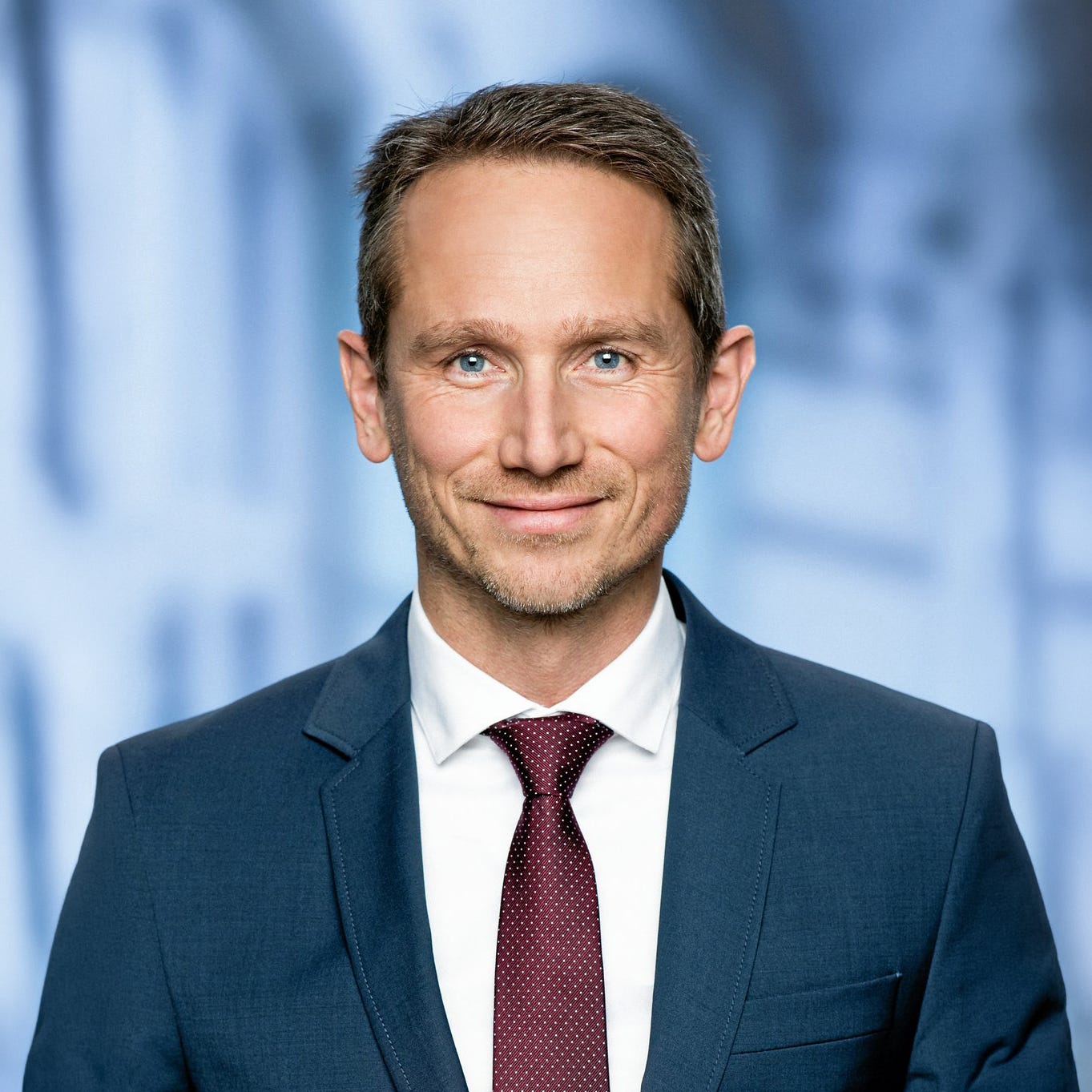
While I was in Denmark, I got a chance to interview Kristian Jensen about the Danish energy system. Jensen had a pretty remarkable two-decade stretch in Danish politics, serving at various points as Minister for Foreign Affairs, Minister of Finance, and Minister for Taxation. He now serves as the CEO for Green Power Denmark, the trade association for the country’s big clean-energy industries. (Imagine, my fellow Americans, having a powerful clean-energy trade association. Sigh.)
Jensen is on the center-right, but as you’ll hear, in Denmark that means something dramatically different than it does in the US — he’s a champion of the transition on both environmental and pragmatic grounds. Over the course of an hour we discussed just about every aspect of the country’s energy system, from its district heating systems to the rapid rise of EVs to the widespread use of biomass to the backlash against solar fields. Every time I dig into another country’s energy system and politics I find it more fascinating than I expected, and Denmark was certainly no exception. Enjoy.
Chapters
00:00 – Introduction: Denmark and industrial symbiosis
02:44 – Is the 70% target for 2030 out of reach?
06:24 – Carbon capture and storage, and the peatlands lag
09:57 – Why electrification has lagged: biomass and wood pellets
14:45 – Few batteries, many interconnectors
16:48 – Data centers and the grid-connection prioritization bill
21:34 – Municipally owned grid companies
24:32 – Smart meters, hourly prices, and thermal batteries
28:40 – The solar backlash and local ownership
35:04 – Agrivoltaics and biodiversity
37:24 – District heating: heat pumps, geothermal, and finance
43:24 – The EV transition and vehicle-to-grid
47:45 – Road pricing and fiscal room
50:07 – Power-to-X and eSAF
54:21 – Can Denmark build enough clean power?
57:12 – Will the political consensus hold?
Resources
People & Organizations
David Roberts (Substack - Bluesky)
Volts (Apple Podcasts - Spotify - YouTube - Instagram - LinkedIn)
Kristian Jensen (LinkedIn)
Energinet (Website)
Company & Industry News
Danish Ministry of Climate, Energy and Utilities - Aftale om akutplan for elnettet
CINEA - Greensand Future inaugurates Europe’s first commercial offshore CO₂ storage facility
Uniper - Uniper and Arcadia eFuels sign long-term agreement to accelerate aviation decarbonization
The Copenhagen Post - Think tank: Under 1% chance of reaching climate goals
Books & Articles Discussed
European Energy - Kassø e-methanol facility officially inaugurated
ThinkGeoEnergy - Geothermal district heating in Aarhus officially starts operations
Danish Government - Kilometerbaseret vejafgift for lastbiler
Related Volts Episodes
Making data centers flexible so they can serve the grid rather than stress it out
Getting local communities on board with renewable energy, Australia edition
Related Volts Posts
Transcript
David Roberts: I wanted to start with the big picture, the target. Denmark has cut its emissions by around 50% since 1990. It’s a very big deal, very incredible accomplishment, but the target is 70% by 2030.
Kristian Jensen: Yeah.
David Roberts: And the watchdog group, the Independent Climate Council, recently came out and said, basically, “We don’t see the path there. We don’t see that the government has a path there.” The Concito think tank ran a bunch of sort of probabilistic projections recently and put the percentage of hitting that target at about 1%. So I guess the first question is just do you think that target is out of reach?
Kristian Jensen: No, it is not out of reach. It is out of reach if politicians don’t do anything else. So if you have a frozen policy, we should be super optimistic and super lucky if we get to the 70. But the target is not out of reach if you change a few things. For instance, to cut emissions from natural gas powered heat in housing in Denmark and turn that into heat pumps, turn off the gas pipelines to private housing would definitely change something. If we added some more power to the industry and a little less natural gas, a little less oil, we could do something more in these areas.
But if you just have frozen policy from now to 2030, it’s a very slim chance that we’ll get there. When it’s a chance, it’s because Denmark are so focused on wind and solar, that all depends on how the weather will be.
David Roberts: Right.
Kristian Jensen: Will it be a cold winter, a warm winter? Will it be a windy day or a quiet day? So there is an opportunity, but really not a very big one.
David Roberts: Well, you have this new government that’s put together this new coalition that is proposing to raise the target for 2035, so it must be confident. Do you see those policies in the works from the new government?
Kristian Jensen: Perhaps to clarify, when we’re not on target to 2030, it’s a target of a 70% reduction since 1990. And we’re now going for a 82 or even higher per- reduction when we get to 2035. So it’s really an ambitious and we have picked all the low-hanging fruits, so we really have to reach out far up to get the next fruits picked down to reduce even more.
But of course, we should do it because we have an ambition of being climate neutral by 2045, so we should also take the hard decisions, the difficult decisions. But coming from the political sector and being a former political myself, I do know that it is difficult to take the hard decisions because you have to ask citizens to change the way they’re living today. They can’t drive their regular ICE car. They have to go to an EV. They can’t continue to heat their houses as they’ve done.
They need to go to other district heating or heat pump, and you need to tell the industry to change the way they’re using energy today. So we need to change, but boy, have we seen with the war in Ukraine, the conflict in the Hormuz, how difficult it is to be dependent on imported fossil fuels. So if not now, then when?
David Roberts: Yes. Trump and Putin have been quite the promoters of green technology.
Kristian Jensen: Yeah, in a very backwards way, they have been the biggest help we could ask for.
David Roberts: A big part of the government’s target was carbon capture and sequestration, and then, you know, they put out this tender, there was a bunch of projects that sort of popped up, and then one by one, those projects have kind of fallen away.
As I understand it, there’s one left, big concrete plant, which may or may not actually be online and actually burying carbon by 2030. Do you think the government put too much hope into carbon capture and sequestration? Do you think they overestimated and are continuing to overestimate the role of that technology?
Kristian Jensen: Our problem is that we need to take some chances on this area. My organization do not work with CCS. We work with CCU. We utilize the carbon for green fuels for shipping and aviation. But when we are working with CCS as a sidekick to what we’re doing, we still think it’s important because there will be areas where it’ll be very difficult to decarbonize directly.
So CCS should be a success, and the government has to take a chance, but they’re taking a really, really big chance here, and they’ve invested a huge sum on CCS where they could have used that on other areas that are giving them more decarbonization for the same funds. They went down this way because it was an area where companies, the industry didn’t have to change that much, but it’s still a very complicated game, and that’s also why with the Danish regulations on top of it, you run a pretty big risk of not getting to where you promised.
Some of the projects just had to say, “This is too complicated for us.” And we haven’t seen at that time when they had to put in the final bid, we haven’t seen large-scale CCS in action in Denmark. Now, actually, a week ago, we saw the first deployment of carbon to the North Sea, where the Danish minister and the King of Denmark pushed the red button and started to inject carbon into the North Sea.
David Roberts: In a spent oil field?
Kristian Jensen: Yeah, in an oil field where we pulled out all the gas, natural gas, we can put down the carbon instead.
David Roberts: And I heard also that agriculture was supposed to be a big part of the sequestration too, taking peatlands out of circulation, but that also has only gotten about a third of the way where it was supposed to get by 2030. Yeah. I know agriculture is a whole thing.
Kristian Jensen: Agriculture is a big thing in Denmark, and right now because we have been so focused on producing more and more and more, we’re also using wetlands and peatlands that are not fit for agriculture, and to turn them back into nature reserves would be very good for decarbonization. But it’s a complex game because you have to convey farmers to leave the land untouched. You have to be able to speak to other farmers that perhaps they should put in some land and change to the better land somewhere else. So it’s very complicated, and the idea is great, but it’s very complicated to get to an actual project. So we’re lagging behind there, which again, we have to look into the very core areas, which is the energy sector and how we’re actually using energy in Denmark.
David Roberts: Well, you’re speaking my language, so let’s talk about electrification. Denmark gets a very high percentage of the power it uses from renewables at this point. It’s got a ton of wind. Growing amount of solar. We can talk about biomass later, but electrification is not substantially more of the economy than it was in 1990, or in a very small amount. And you’ve said before, I think your quote was, “We’re 40% of the way to 1930, and we’re 2% of the way to the electrification we need.” Why has electrification moved so slowly? How do you accelerate it?
Kristian Jensen: Well, one of the reasons why electrification hasn’t taken off in Denmark yet is that we are still using a lot of biomass and biogas. We’re producing biogas, which is much more climate-friendly than natural gas. So in that way, we can actually get to where we want in other ways. But we need electrification, and there are two easy ways of electrifying in Denmark. One is our transport sector, and the other one is the heating sector. That has really been lagging behind because the upfront investments are quite big, and then the year-to-year costs are quite low. But the upfront investment has been a stopping point.
Since the full-scale invasion of Ukraine, we’re really seeing that take off in the heating sector. Heat pumps, both in private homes, but more often heat pumps and electrical boilers in our district heating has grown tremendously. So my view, my prediction is when we, in two weeks’ time from now, will see the new calculation of the electrification rate for 2025, it will have a increase, a jump up, that will be significant in Danish terms.
But you’re right, we have been lagging behind because we’ve been so focused on continue to live on biomass. Being an agricultural country, we are collecting a lot of straws from the fields that we’re burning in ovens. We’re using biogas, either in Denmark or exporting it to Germany, but we should do direct electrification much, much more.
David Roberts: You’re importing a lot of wood pellets too, aren’t you?
Kristian Jensen: Yeah, we are. Not the finest moment in Denmark. But we’re using wood pellet as well, and we try to put higher and higher standards on that the wood pellets should only come from sustainable-driven forests where you also replant so that there will be a natural turnover of the forestification there.
David Roberts: How much do you trust those certifications and calculations? They are taking place in faraway countries. You don’t have any sort of direct control over them. I know there’s a lot of controversy about how and whether those wood pellets are sustainable. Are you... If you had your druthers, would you rather get off that source entirely?
Kristian Jensen: What we can see is that we are turning more and more away from it. Our calculation is that the production of the electricity coming from biomass will drop approximately one-third of what it is today during the next 10 years because there will be less and less biomass. There will be more and more wind and solar coming into the system. The amount of power production will reduce dramatically. When we still have that, it’s because at some point when you’re so dependent on wind and solar, and the wind’s not blowing and at nighttime, you need something else to be there. So you need to have that backup mechanism.
David Roberts: Mm-hmm.
Kristian Jensen: Of course, you could dream of having a lot of battery capacity or a lot of hydro, but since you’ve been in Denmark, you know that Denmark is a very flat country.
David Roberts: Yes.
Kristian Jensen: Perhaps it doesn’t feel that when you’re on a bike, but it is really a flat country. So we don’t have that much hydro. We actually have next to zero hydropower in Denmark. So we need something else to be that backup. So I do believe that we should kind of save the biomass and save the biogas for those hours when we don’t have wind and solar.
David Roberts: Mm-hmm. Mm-hmm. Meaning get out of using it for heating and cooling, use it for the more high impact-
Kristian Jensen: Yeah, exactly, yeah.
David Roberts: back, backup electricity.
Kristian Jensen: And it’s much easier to save biogas than it is to save sunshine. It’s much easier to save biomass. We have lots of forestation, and we’re using a lot of woods for furnitures or for construction in Denmark, but there will always, always be some surplus material that we can utilize in that area when we don’t have wind and solar.
David Roberts: Why aren’t there more batteries? Everything I hear about your situation seems to cry out for batteries. And yet the penetration, as I understand it, penetration of grid-scale batteries or even sort of home, you know, sized batteries is very low. Is that, what explains that?
Kristian Jensen: Well, first of all, the amount of time when you have power in the socket in Denmark is 99.995% of the time.
David Roberts: Oh, so you don’t really need backup.
Kristian Jensen: I don’t need backup at home normally. It’s so rare that I have a power outage in my home. Now, the question is, will it be an issue because the price is very fluctuating in Denmark. Midday when the sun is shining, the price is really low, and in the nighttime it can be really high. So perhaps I could do some power arbitrage. I can buy it when it’s cheap. I can use it when it’s expensive. So more and more Danes are actually looking into that, but that’s really in recent years-
David Roberts: Mm.
Kristian Jensen: that we’re looking into that. The other reason is that we have actually used our interconnectors to Sweden-
David Roberts: Yeah.
Kristian Jensen: to Germany, UK, Belgium, and Norway to get power into Denmark when we don’t produce it ourself. Because the wind is perhaps blowing in Scotland but not in Denmark, or the hydropower has been working in Norway when the sun is not shining in Denmark. So that very interlinked position we have give us an advantage.
David Roberts: It is kind of like a giant battery, more or less. It is backup. Other countries are your battery.
Kristian Jensen: Yeah, but it goes both ways because when we really have a wind day in Denmark, we are sending tons of power to Norway so they can shut down the hydro plants and save the water for-
David Roberts: Mm.
Kristian Jensen: for later. So we are each other’s battery. It’s not a one-way street, it’s a two-way street.
David Roberts: Yeah.
Kristian Jensen: And we will be able to provide Norway with a lot of power in the coming years, and they will have to provide us back when the wind’s not blowing in Denmark.
David Roberts: Well, to get back to the electricity system, electrification is just getting going again, but grid demand all of a sudden is oversubscribed-
Kristian Jensen: Mm-hmm.
David Roberts: due to data centers.
Kristian Jensen: Yeah.
David Roberts: I was just in New York City all last week at Climate Week, and anybody can talk about data centers. Every five seconds it comes up. I heard you have about 70 gigawatts of requests to hook up to a grid that has about a seven gigawatt peak-
Kristian Jensen: Yeah.
David Roberts: capacity, and your central utility has just cut off all connections for a while, a moratorium on new connections. I’m just curious how you think about data centers. Are they helpful? Are they hurting? Are they something you want to work around? Would you rather just keep them out? What’s your mood towards data center?
Kristian Jensen: Well, data centers are necessary. Our computer systems work in a cloud. My bank is in the cloud. My pictures from my families are in the cloud. There’s so many things in the cloud, so we need data centers. The health system in Denmark also works via data centers, so we need them. And of course, we should have some in Denmark as well, but we can’t have all the data centers in the world.
And right now, data centers are just firing at the grid like they’re throwing darts at a board, wanting to go wherever they can, hoping to get a connection, and perhaps asking for three or four locations, but only want to use one. The 70 gigawatts of demand that’s out there is not real demand.
David Roberts: Right.
Kristian Jensen: Because some of them are data centers asking for more sites or batteries hoping to get online, but at some point, batteries will also be filled up in Denmark, not needing more on the market. So I think the realistic target in Denmark should be around 20, 25 gigawatts coming 10 years from now, but that’s also a huge increase.
David Roberts: Still a lot.
Kristian Jensen: A lot of increase, but we can manage this.
David Roberts: You don’t worry about that crowding out electrification of other sectors-
Kristian Jensen: Yes.
David Roberts: that sort of soaking up all the electricity and making it that much harder for-
Kristian Jensen: Yeah.
David Roberts: heating and cars and everything?
Kristian Jensen: Of course, we worry about that. That’s also why the government actually, in these days, this week, are discussing a bill-
David Roberts: I was gonna ask you about that. Very fascinating...
Kristian Jensen: that’s gonna prioritize. First, you prioritize health, defense, very essential things, and the natural growth of you and I having an EV and that kind of things. Next comes industry, district heating, hydrogen, eSAF, and that area. And then comes, you could say, batteries. And in the end, with the lowest priority, data centers. But still, I think we in Denmark need to have data centers. And there are also a lot of data centers that actually have a great connection today that is not using it enough. Perhaps they have one gigawatt connection, but only using 200 megawatts. So there could be a growth in Denmark still, even though they’re prioritized last.
But we could also see that if Denmark opened up for all the data centers wanting to come here, and all data centers in Europe chose Denmark because we have excellent connections to internet, we have a fairly low power price right now, it could be difficult for us to manage all of that. Of course, we need to also discuss how many data centers should be in Denmark going forward. And that’s why the government put forward this prioritization bill to see what are the highest priorities and what are the lowest.
David Roberts: And that would be Energinet, your central transmission operator, your central utility that would implement that, that would be doing that prioritization?
Kristian Jensen: They would do it in combination with the local grid companies. They have to work together because if you are a customer in Denmark, whether you are a district heating or an industry or a private consumer, you go to your local grid operator, and they collect all the requests for grid connections and then talk to our TSO in Energinet about how to manage all of this. So it is a dialogue between the local grid and the national grid operator on how to manage all these requests. And hopefully, we’ll have a system up and running where we can begin to add new customers onto the grid in a few weeks’ time.
David Roberts: Yeah, I wanted to ask about that utility model. It’s very fascinating to me as an American, where our utility model is a mess and a barrier to many of the things we wanna do. You have one central TSO transmission operator, and then every local utility, every distribution system operator is, as I understand it, municipally owned. Not out to make a profit-
Kristian Jensen: Mm-hmm.
David Roberts: responsive to its customers only. Are there any drawbacks to that system? Because it just looks great to me. What are the sort of strengths and weaknesses do you think of that system?
Kristian Jensen: The strength is totally that they are a very long-term investor.
David Roberts: Right.
Kristian Jensen: They don’t look at what are the next quarterly budget period. They’re looking on how to invest in next generation all the time, and they’re very responsible investors looking at what is needed, and also going into areas where you say that perhaps you can’t get a return on your investment right now-
David Roberts: Right.
Kristian Jensen: but you get a return on investment because you raise the value of the areas where you invest in. A lot of the local grid operators has invested in fiber optics to all houses in the area. So you’re not only getting your power, but also your fiber-optic internet connection through that local investments. And if you have looked at that commercially, 20 years ago when they started, no one would have said that was a good business idea. And I can assure you that politicians and others said, “It’s a very bad idea. You’re just digging money into the ground. It will never come back.” And now with the internet change that has been, how much we’re streaming-
David Roberts: Yeah.
Kristian Jensen: it’s a fantastic investment.
David Roberts: So they have some autonomy-
Kristian Jensen: Yeah.
David Roberts: from government even. They have… They’re making their own decision.
Kristian Jensen: They’re making their own decision. Since they are a monopoly, you only have one grid connection to your house, there are a regulation to how much they can take in revenue. But how they spend that revenue, how they put it back to society is totally up to them to decide. That is clearly the best you can say about it. They have the long-term vision at hand. The challenge they have is that you’re getting more and more multi-billion companies that are run by people who perhaps just be a school teacher or a nurse or having their own private company, and don’t have the insight. So therefore, more and more of the boards are having not only the local owners, but also external specialists and council to sit on the board because this is a very complex structure-
David Roberts: Yeah.
Kristian Jensen: you have right now.
David Roberts: Yeah. Yeah, it’s not- Some of those decisions have national reverberations, I would-
Kristian Jensen: Yeah.
David Roberts: I would imagine. I wonder if you’re moving toward a system, and maybe this is something that the local utilities decide, but moving toward more granular time-of-use tariffs and location-based tariffs just to encourage more of that behavior you want, more of the time shifting and load shifting. Is that on the radar?
Kristian Jensen: Approximately 15 years ago, the government took the decision that all Danes should have smart meters.
David Roberts: Yeah.
Kristian Jensen: So most of the Danes right now has system where you pay by the hour of how much power you do, and the price is set by exactly that hour. So when we can see that there’s a peak hour in the morning, I get up at half past 6:00, I get my morning coffee, everything gets going, and the power consumption rises. That’s more expensive than at 10 o’clock-
David Roberts: Right.
Kristian Jensen: when consumption is low. And the same in the evening from 5:00 PM to 8:00 PM, the prices is higher. And that has reduced peak hours significantly in Denmark. So-
David Roberts: And that’s just from people making choices about when to-
Kristian Jensen: Yeah.
David Roberts: run their dishwasher or when to-
Kristian Jensen: Yesterday was a Sunday. It was a sunny Sunday in Denmark. All the solar panels produced a lot of sun power. I was washing and dry tumbling like crazy from from 10:00 AM to 5:00 PM because it was so cheap. I charged my EV at the same time, and so on and so on. So we have actually looked into what can I change of my consumption so that I use the cheap hours.
And of course, I eat my dinner at the same time I always eat my dinner. So I need to cook my potatoes, and I need to fry a chicken when that is due. But there’s so many other things that can change. And by doing that, I’m working with the system, and we have reduced peak hours significantly in Denmark.
David Roberts: Are you seeing a rise or a spread of technologies that can automate some of those decisions, automate, like, when your hot water heater runs, or automate when your HVAC system dials back? Is there, like, smart appliances, are they starting to come online?
Kristian Jensen: Yeah. They’re coming tremendously online right now. So I don’t have to think about it, I just have to tell my system when do I want to use it, what prices would there be. You see systems right now that can communicate with the power price, so it can draw in when the price is low and then self-determine how to do it. For instance, if you take the heating system, that can automatically have a communication with what are the price levels. But to be frank, what I’m doing in my private home is rather a small issue.
David Roberts: Mm-hmm.
Kristian Jensen: So if we can take this to industrial scale-
David Roberts: Right.
Kristian Jensen: so we can take it into district heating, if you could take it into companies that are using a lot of heat and they can actually contain that heat in a system, it’s much more efficient. And what we see in Denmark with district heating are huge, is that this is actually what we’re gonna see. Thermal batteries-
David Roberts: Yes.
Kristian Jensen: you produce a lot of heat when prices are low, and saving that heat in thermal batteries and using that for later.
David Roberts: And that’s starting to happen already then? And that’s just a tanks of water, right? I mean, it’s not complicated. Yeah. It’s the simplest form of battery, I guess.
Kristian Jensen: It is the simple form of battery you have. If you have electric boiler in your kitchen, when you heat that up and it turns off, the water continue to be hot for some hours and at least for some, a long time, and that’s the same principle. You just have better isolated heat tanks.
David Roberts: Right.
Kristian Jensen: So thermal batteries right now are really gonna spread all over Denmark in the coming years because district heating can reduce the cost of the customers by using the low-price hours.
David Roberts: Right, right, right. I wanna get back to district heat in a minute, but let’s talk for a minute about solar. So my understanding is that onshore wind spread in Denmark like crazy, was very popular in part because a lot of it was owned by locals, basically. Owned by co-ops. There’s a lot of sort of tangible local benefits. Solar, as I understand it, is mostly not that way. Mostly investors and companies own it, and consequently, or maybe not consequently, but there is a backlash to solar spreading. The head of the populist right party coined this new word, which I’m not going to attempt to pronounce. Maybe you will.
Kristian Jensen: It’s called jernmarker.
David Roberts: Yes.
Kristian Jensen: Which means Field fields of iron
David Roberts: fields of iron. Yes. Yeah. It was the Danish word of the year last year. So clearly there’s some popular backlash to it. How worried are you about that, and what do you think overcomes that? You think it’s primarily trying to shift solar to a similar co-op model, more local benefits? What’s the approach, what’s the right approach to solar?
Kristian Jensen: This will be quite a lengthy answer. I’m sorry. But we began in the ’70s and the ’80s with these co-op models, and my dad was one of those buying a part share of local wind turbines being put up in the local area because we wanted to get rid of the import of oil. We saw the very high prices in the ’70s in Denmark, and there was a tax benefit if you go into a local wind farm. At that time, the request for technology, the request for environmental protection was very low because we didn’t look into what would the impact be on birds and bats and the flowers and so on if you create a wind farm.
If you need to create a wind farm today, you have to make an assessment. How would the impact be on birds, on bats, on animals, all the things around? Meaning that it’s much more expensive to do today.
David Roberts: Yes. It’s kind of ground to a halt a little bit, onshore wind, at least.
Kristian Jensen: Yeah, and that also means that if you are a group of locals wanting to go together and create a wind farm, it’s much more difficult-
David Roberts: Mm.
Kristian Jensen: because it has technical requirements today that we didn’t saw in the ’80s. That’s also one of the reasons why most of the development has been taken over by professionals. Mm. But some of those professionals are still saying, “We want a local ownership.” So if I create five wind turbines, I own four of them, and the fifth I sell out to the locals, meaning there’s still a local ownership.
So you look at the five wind turbines and say, “I own a part of that.” You want to see the wind blow. You want to see the turbines spin so you know that this is also money coming into your account as well. And that is one of the ways we’re overcoming the local worries about having a wind farm as a neighbor or having a solar farm.
A wind farm, you can see that from miles away, but actually it takes up very small part of the land because you can use the rest for agriculture or for recreational purposes. A solar farm takes up a lot of land. And the reason it takes up a lot of land is that the investment on creating the connection to grid are high, but it’s only high regardless of whether the solar farm are large or small. So if you want to lower your cost per produced kilowatt hour-
David Roberts: Right.
Kristian Jensen: you make it bigger and bigger and bigger. And that’s one of the reasons why the solar farm has become so big. Also because they have to take into account that they should also do an assessment on the impact on the environment, and that costs a lot of money. So in order to be profitable, the demands created by politician has actually pushed the solar farms to become larger. And we’ve created the demand that around a solar farm you should do a green belt of plants. So when you walk by the solar farm, you don’t see the solar farm.
David Roberts: Right, right.
Kristian Jensen: You see the trees, the bushes, there’s shrubbery and so on. But in the beginning it’s very low-
David Roberts: Right.
Kristian Jensen: and is gradually growing and gradually covering it. So that has created this backlash. And we are concerned about how to do wind and solar going forward onshore in Denmark. I still don’t think that you’ll see the big solar farms being cut into small pieces because then the economy is not there. You’ll see a lot of on rooftop solar farms, solar panels going forward. You’ll see a much more municipality industries with solar panels on roof.
David Roberts: Mm-hmm.
Kristian Jensen: But not all roofs are made for solar panels. Some could be placed in shadow, some could be-
David Roberts: Yeah.
Kristian Jensen: not strong enough. So you’ll still see a lot of land-based solar farms going forward in Denmark.
David Roberts: Are any of those developers trying to do a similar sort of municipal benefit the way you were talking about with wind? Is that model at all extending to solar?
Kristian Jensen: You see some in the western part. Actually, just a few kilometers from where I grew up, you had a farm, a solar farm where the local counties were giving the opportunities to buy a part of the solar farm.
David Roberts: Mm.
Kristian Jensen: And that has been quite successful in terms of how many wanted to buy. And of course, when you buy a part of that solar farm, you can’t oppose it in the same way because you actually say, “Yes, I want that solar farm.”
David Roberts: Right.
Kristian Jensen: So I think you’ll see much more of these mixtures with a large-scale developer with the knowledge and the experience to do the very difficult technical and commercial areas, but still a local community buying in.
David Roberts: Right.
Kristian Jensen: If you take the largest onshore wind turbine in Denmark, it’s actually an offshore wind turbine that’s been put onshore. It is owned by 2,800 families in the municipality, and it was created with zero complaints. No one was complaining. They were all a part of it.
David Roberts: And one other thing about solar land use, is there any agrivoltaics-
Kristian Jensen: Yeah.
David Roberts: taking off? This is a subject of a lot of discussion and hype in the US. Is that... It does seem like that could do something about the land, at least the land use part of the-
Kristian Jensen: Yeah.
David Roberts: objections. Is that happening anywhere?
Kristian Jensen: It is happening. There are a lot of companies trying to see what can actually grow. Should it be some kind of grass?
David Roberts: Right.
Kristian Jensen: Should it be some kind of other crops that could actually give a add-on, but also perhaps more importantly, adding to the local acceptance-
David Roberts: Right.
Kristian Jensen: of having a solar farm. I can’t say right now what we will choose to have in Denmark, but I think it has to be some kind of crop that are fixed with the climate and with the soil that will be there. So it can’t be just one size fits all.
David Roberts: Right. A lot of agrivoltaics in the US, I think, are being built around grazing.
Kristian Jensen: Yeah.
David Roberts: But as I understand it, most of the livestock in Denmark is pigs.
Kristian Jensen: Yeah.
David Roberts: I don’t know if it works as...
Kristian Jensen: No, no.
David Roberts: I don’t think it’ll work as well around pigs. I don’t think they’re as friendly to.
Kristian Jensen: I think we see in the beginning a lot try to have sheeps together with the solar farm. And what we’re seeing right now is some kind of planted crop being used. There are crops that are actually working best in some kind of semi-shadow areas. So it could be under the solar panels, but it need to be taking into account from the beginning.
And it’s still early days in exactly how to do that moving forward. We are looking into that, and we try to also look into how to create biodiversity around the solar farm so that you can actually add to biodiversity. I come from a rural area. Going back, my family has always been farmers, so some of them might not like what I’m saying right now. But there are more biodiversity in a solar farm in a traditional corn field.
David Roberts: Yes.
Kristian Jensen: Because the field, the corn or wheat or barley or whatever you have-
David Roberts: It’s a monocrop, right?
Kristian Jensen: It’s a monocrop. It’s one thing. And all you’re doing is trying to keep any other crop away. Just what you planted and want to harvest. But on a solar farm, you have much more biodiversity.
David Roberts: Yeah, yeah, interesting. So back to district heating. So we talked a little bit about its use as a giant heat battery. So 70% of Danish families are hooked up to district heating, which is just amazing. I think probably one of the highest rates in the world. And they’re municipally owned again, which I think is also maybe unique in the world. Replacing that biomass, a lot of them run on biomass, replacing that, is the main replacement heat pumps? How are you gonna replace the biomass? What’s the strategy?
Kristian Jensen: Well, the primary strategy is to go for heat pumps and electrical boilers, because those two in combination could really give a more efficient use of energy and a cheaper cost for the consumers. There are a few areas in Denmark where you can do geothermal.
David Roberts: Yeah, I was gonna ask shallow geothermal
Kristian Jensen: Yeah. In one of our cities in Denmark, they’re using geothermal right now in Aarhus, the second largest city. Just a few kilometers from there, they also try geothermal, and they just drilled a very expensive hole in the ground. Geothermal is not for all places, but where it’s possible, I think that will be a huge part of what we see in Denmark going forward.
David Roberts: And how do you incentivize the switch to heat pumps? Are you raising taxes on biomass? Are you subsidizing heat pumps? How are you trying to make heat pumps cheaper? What’s the right policy lever? I know you’re a finance minister and you’re probably some tax.
Kristian Jensen: Yeah. Yeah.
David Roberts: Something involved there.
Kristian Jensen: Yeah, I’ve been both Minister of Taxation, Minister of Foreign Affairs, and Minister of Finance-
David Roberts: Wow.
Kristian Jensen: before I came to Green Power Denmark.
David Roberts: All of that is wrapped up in heat pumps and district heating systems.
Kristian Jensen: Yeah, but taxes in Denmark, they’re a big part of our policy. We tax things we want to have less of.
David Roberts: Right.
Kristian Jensen: So therefore, we’re taxing the fossil fuels. We’re not taxing biomass, but we’re actually giving support for individuals that wants to have a heat pump. There are areas in Denmark where it’s very difficult to reach with district heating because the rural areas-
David Roberts: Right, right.
Kristian Jensen: remote areas and where prices of housing is not that high. So to invest in a heat pump is a very big chunk-
David Roberts: Right.
Kristian Jensen: of the value of your house. So we’re actually giving a state grant to take the decision to get rid of your oil or your natural gas heating system and put in a heat pump as well. If you take for district heating, there’s not a grant or subsidy, and they don’t need that because heat pumps today are so much more efficient than when we had-
David Roberts: Are we talking about individual heat pumps in those contexts too?
Kristian Jensen: Yeah.
David Roberts: Are we talking about a bigger centralized... You know, ’cause they are making these industrial-scale heat pumps now.
Kristian Jensen: If you do district heating, you have the industrial size and they actually want to change and they’re, the only thing holding them back right now is their access to credit because the business case are so clearly that you can do cost cuts if you do heat pumps in district heating instead of doing natural gas or biogas.
David Roberts: So you’ll save money now without any subsidies either way.
Kristian Jensen: Yes. It will do that. It’s when you get to the individual where the investment, upfront investment-
David Roberts: Right.
Kristian Jensen: on an individual heat pump-
David Roberts: Well, do, but do districts not also need some access to finance, too? I mean, are they all able to raise the upfront money for a heat pump, or is there some instrument to help them get credit, too?
Kristian Jensen: If you need to take up a loan, there is a municipality guarantee that are lowering your cost to take that loan. You can have a lower interest rate because in the end, the municipality is the bank, the guarantee for you.
David Roberts: Right, right, right.
Kristian Jensen: So you have that incentivized. But actually shifting from a gas to a heat pump is so much of a benefit that they don’t need additional incentives.
David Roberts: Huh. Huh, that’s really interesting.
Kristian Jensen: You can actually see that if you have a heat pump and you also own your own power production, like some wind turbines or a solar farm, when you can do that via direct line, you get even cheaper. So the cheapest heat system we have in Denmark is a district heating with their own production of the power.
David Roberts: So their own power, their own big heat pump.
Kristian Jensen: Yeah.
David Roberts: That’s the sweet spot.
Kristian Jensen: Yeah. I’d love to, my district heating to have that. I live in an area where that’s difficult.
David Roberts: And to make that change, this is, I guess, a municipal council or-
Kristian Jensen: Well, actually, the government said right after the full-scale invasion of Ukraine, the government at that time said, “We need to stop all use of natural gas in Denmark. We need to shut it off, and all district heating should go into heat pumps and electrical boilers.” That was in the spur of the moment. Now you need to take political decision, and perhaps some of the district heating just invested in a new gas boiler-
David Roberts: Right.
Kristian Jensen: six years ago.
David Roberts: Right, right.
Kristian Jensen: And they haven’t paid that back yet. And perhaps they calculated that it should take 20 years to pay that back because that’s long-term decision, and for them to take a decision to cut off that investment is difficult-
David Roberts: Right.
Kristian Jensen: unless you get another incentivize to do the shift right now. So therefore, you don’t just do that. When you invest in energy sector, you invest for decades, and that’s why it takes so long-
David Roberts: Mm.
Kristian Jensen: to make a change. Even though if you do a greenfield discussion right now, what would be the best way going forward? You would do heat pumps-
David Roberts: Right.
Kristian Jensen: and boilers, no doubt about it.
David Roberts: Right, right, right. The EV transition, I guess I didn’t know this before I came here, but it appears to be just going gangbusters.
Kristian Jensen: Yeah.
David Roberts: I heard that something like 96% of private new vehicle sales are EVs.
Kristian Jensen: Yeah.
David Roberts: Mind-blowing. Something like 80, 85% of total, ’cause the fleets, I guess, are a little slower. So is that the result of policy? Like, what drove that, or is that just economics, or what’s the main policy lever that’s produced that?
Kristian Jensen: Well, at the beginning, it was clearly a tax benefit for EVs, in contrast to traditional combustion cars. So the tax was much lower. We took away the taxes on cars that were EVs, which created a market. But if you look at it now, you can see that the new models coming in are almost the same price.
David Roberts: Hmm.
Kristian Jensen: And the day-to-day use for an EV are so much cheaper that I think that for many cars right now, even without the tax break, it would be a better lifetime total cost of ownership to take the EV over the traditional cars. And you see a lot of the things you can have in an EV you can’t have in a traditional car. It’s much more sophisticated vehicle to drive. And to say that as a converted driver, it’s much more fun-
David Roberts: Yes.
Kristian Jensen: to drive an EV. So of course, taxes created this, but taxes were not enough. There’s also a culture change-
David Roberts: Right.
Kristian Jensen: that had to come. When I started driving EV four and a half years ago, my friend said to me, “How dare you take that? Are you afraid to run out of power? And what will you do, and can you actually drive that all the way from Copenhagen to Jutland? And how do you do that? And can you take it abroad?” And now, if someone don’t buy an EV, then we’ll say, “How dare you?” “Don’t do that.” No one will buy a used diesel or-
David Roberts: Right.
Kristian Jensen: a petrol car in Denmark. How come you don’t buy an EV? The culture change is big.
David Roberts: And presumably, you built out charging infrastructure too.
Kristian Jensen: Yeah.
David Roberts: It’s a lot of piece of the puzzle.
Kristian Jensen: I think the one piece of the puzzle are the tax break. Other piece of the puzzle is we build out the charging structure. So when I’m going anywhere in Denmark today, I don’t speculate, can I go there and charge?
David Roberts: Right.
Kristian Jensen: I know I can charge wherever I’m going in Denmark. Within a 10 miles radius, there will be a fast charger, so, and slow charging will be even more normal. So there will always be a charging system. And that gives me the calmness. I don’t have to plan. I can just go.
David Roberts: Right, right, right.
Kristian Jensen: When you look at countries where users of EV are not happy and satisfied with that, it’s primarily because charging is difficult.
David Roberts: Right. Speaking of batteries, an EV fleet is a giant distributed battery. Is there a move towards vehicle-to-grid connection, a move towards attempting to use those batteries to support the grid?
Kristian Jensen: Yeah. From next year, all cars should be vehicle-to-grid ready in Denmark.
David Roberts: Hmm.
Kristian Jensen: So we’re actually demanding cars to be vehicle-to-grid ready. What we need right now is actually to the household part of it to be ready to take from the vehicle-
David Roberts: Right.
Kristian Jensen: back into the grid.
David Roberts: You have to have the technology.
Kristian Jensen: We have to invent that technology. So what we are doing right now, we are, we’re doing some large-scale testing to see how this will work. We have people within the energy sector actually working with this, testing in their own homes to get some experience on how to do vehicle-to-grid. And I think you’ll see next year that this will actually take off quite tremendously.
David Roberts: Interesting.
Kristian Jensen: Because this is the biggest battery you have in Denmark is what actually is parked right down here in the parking lot.
David Roberts: Yes, and customers bought it for you, so you don’t even have to, you don’t have to buy it.
Kristian Jensen: No one has to buy it. We just need to utilize it.
David Roberts: Yeah. Presumably, you lost some revenue when as gas cars decline, the revenue you’re getting from gas cars decline. Is a per mile sort of driving tax on the table? I know some think tanks are pushing it. Is that a viable politically?
Kristian Jensen: Almost 20 years ago, I was Minister of Taxation at that time. I served as Minister of Taxation from 2004 to ’10. We had this discussion of changing the Danish tax to a per mileage-
David Roberts: Right.
Kristian Jensen: payment instead of an upfront payment, and doing it in a way so that rural areas pay less, and inner city areas where you have an alternative-
David Roberts: Right.
Kristian Jensen: with the subway and the metro should pay more. And we’re still having that discussion.
David Roberts: Trucks are paying it, aren’t they, today?
Kristian Jensen: Yes. Trucks are paying it today because it’s a much smaller fleet-
David Roberts: Right.
Kristian Jensen: and it’s much easier to implement. But technology is actually getting there. And I think that we’ll get to that point within some years where you can actually do a per mileage payment, and you could have different rates, so you can charge more in cities with an alternative-
David Roberts: Right.
Kristian Jensen: pay less in rural areas. And we are always looking on how to do that in the smart way, and the ways we have done it so far has been too blunt-
David Roberts: Mm.
Kristian Jensen: too unintelligent-
David Roberts: Mm-hmm.
Kristian Jensen: and they have been cast away before they’ve been implemented. But we can see now that as EVs are taking over from fossil cars, we need to find something else than fossil fuel taxes-
David Roberts: Right.
Kristian Jensen: to bring in our revenue.
David Roberts: That’s a difficult decision, or a difficult-
Kristian Jensen: Yeah.
David Roberts: discussion everywhere, I think.
Kristian Jensen: But I think what has given us the fiscal substance is that we are changing the pensioning in Denmark, so as we go older and older, our pension age become increasingly higher and higher. So we don’t have the fiscal constraint that other countries have. If you look, for instance, for Germany, their pension’s just wearing out the fiscal maneuver room.
David Roberts: Mm-hmm.
Kristian Jensen: I don’t even wanna talk about US and fiscal maneuver room, because you have none whatsoever. The retirement age reforms in Denmark are giving us room and time to get that into place.
David Roberts: Interesting. Power-to-fuel, or power-to-X, I guess, is what they call it now. This is the thing I think you’re involved in. As you know, there are people who say that direct use of electricity is always going to be more efficient, and until you’ve sort of electrified what you need to electrify directly-
Kristian Jensen: Mm-hmm.
David Roberts: that power-to-fuel is sort of a drain on the momentum of that electrification. Just curious what role power-to-fuel plays currently, and sort of what you envision doing, and on sort of, like, what timescale?
Kristian Jensen: Well, you would also say that looking back at where EVs were 15 years ago, that was not very good use of power. You should use power for something else. But EVs came along, and became better and better, and more and more efficient, and now it’s a great use of power. And we need to find something that is also changing the hard-to-abate sectors. And aviation, yes, there are battery planes that can fly short distances with few passengers. Okay. You could also look at battery ferries for smaller distance and change the way trains are running. But you can’t do a London or Birmingham to New York-
David Roberts: Right.
Kristian Jensen: shipping on batteries. You can’t do long ha- a whole flight on batteries. You need to look into that. And perhaps we’re not there yet, but we need to begin, and every transition start with something that is not fully baked there. But if we don’t start, nothing will happen. 20% of the world’s population has tried to been inside a plane.
80% has not. Do you think they would like to fly it sometime? Yeah. I do. And as income is rising, they will fly more and more. And if we don’t have an answer to that, if we don’t have some kind of eSAF to put into the planes, you’ll see that becoming a greater and greater problem. So the aerospace industry, the long-haul shipping industry, the steel, the chemical industry need green hydrogen and green fuels.
We need to start on that, and from that we’ll be more and more efficient. And I agree with those people saying that direct electrification is the best way of using power, so we should do both. We should both direct electrify, but also looking into how to learn to do indirect electrification much more efficient.
David Roberts: Is that happening yet anywhere? Are you, there hydrogen being produced here or eSAF being produced in Denmark yet?
Kristian Jensen: Green hydrogen is being produced in Denmark, going into refineries. We have green e-methanol being taken into the Maersk container ships-
David Roberts: Yeah.
Kristian Jensen: being sold to Lego, who are trying to do green plastic. We have e-ammonia going into the fertilizer industry, so we are actually doing that, and we’re also doing green hydrogen that are being used for e-methane to create chains for natural gas. So we’re actually doing a lot of things, and we’ve just been announced last week that a German company are placing an order, multi-billion crown order in Denmark for eSAF.
So we’re now getting closer and closer to that production. And we are perfectly located to produce green hydrogen for the German steel manufacturers and chemical manufacturers. We have a lot of seabed in Denmark we can use for offshore wind to create the power. Germany has not that much seabed compared to the land size they have.
David Roberts: Hmm.
Kristian Jensen: So just the geographically facts about Denmark make it possible for us to produce more power than we can consume ourself. And since the grids are connected and congested through Europe, to change that into eSAF, e-methanol, hydrogen is a better way of using it.
David Roberts: It does sound though like almost everything we’ve talked about you’re gonna lots more electricity and heating, lots more electricity in transport, lots more electricity for data centers, lots more electricity for eSAF. That’s a lot of electricity, and with solar slowing down, onshore wind slowing down, offshore wind, I think, hit bumps lately. It does sound like just simply producing more clean electricity is the thing, is the-
Kristian Jensen: Yeah.
David Roberts: is the lever to pull that’s gonna make everything else work. Are you confident that you’ll be able to do that?
Kristian Jensen: Well, end of this year, we’ll have a new wind farm that will provide power for 1 million Danish homes coming online. Offshore wind farm coming online. We can see that onshore wind and solar has had local acceptance and allowance to go forward with grid connections that could double the production onshore. So the opportunities are there if the market for the green power is there. So we’ve been so focused over the last years of producing more power that we now need to focus on changing the energy consumption from fossil energy to electricity. So we’re coming back to what you said in the beginning. The electrification in Denmark has been under average in EU.
David Roberts: Mm.
Kristian Jensen: And we need to increase that going forward. I think last year proved to be a game changer, and I think when we get the statistics of last year in place, you’ll see that the increase has begun, and that will continue to grow. I have no friends, no family, no relative I know of that has gone to an EV and changed back to a fossil car.
I have no one who has installed a heat pump that has said, “Sorry, I want to go back to oil or gas.” So what we see is add-on to add-on to add-on, and it has really taken off over the last years. What we need to see is the large-scale industry coming on, and if we take the world-class dairy company of Denmark called Arla, they want to change all the dairy production sites into heat pumps going forward. And they can actually say right now that this is not just a policy matter. This is a business case matter for them.
David Roberts: Mm.
Kristian Jensen: Because heat pump is so efficient right now that they have a return payment that are comparable to all the other investments going forward.
David Roberts: It does sound like agricultural will be the kind of the tricky leftover electrification-wise.
Kristian Jensen: Yeah.
David Roberts: I’ve kept you a long time, but final question. Mostly I’ve been talking about business and technology, but I will ask one political question. Another thing that was extraordinary to me when I found out about it, especially from a US perspective, is that when you passed your big climate law a few years ago-
Kristian Jensen: Mm.
David Roberts: it was close to unanimous. Not just political parties, but agriculture, labor, industry.
Kristian Jensen: Mm.
David Roberts: Just a level of unity that is unfathomable from a US perspective. But I wonder, as you say, as the low-hanging fruit has been picked and you move into the more difficult decisions, trying to have to make tough priority decisions, you know, not everybody’s gonna be happy. Are you worried at all about that hanging together? Obviously, as we said, the, there’s a little bit of a solar backlash. There’s signs of tensions, agriculture, I think. There are signs of fracture. How confident are you in that unity holding together as you move into the harder parts?
Kristian Jensen: I think you’ll see that the basic scope of political parties in Denmark will continue to back the road that we’ve chosen. We’ve chosen this not only because it’s a climate issue, but also because we can now see that this is a business case. It is cheaper and better for our economy and our businesses to run on Danish-produced power than on imported fuels. We can see that in order to look at the geopolitics and the security policy, it is much better to have homegrown energy than to have imported energy.
So there is a consensus from the center right that we need to have independence and the business case in order. There’s a consensus from the center left that we need to do this for environmental and climate reasons, and that agreement from both sides of the aisle has actually brought us forward since the ’70s in Denmark.
David Roberts: Yeah.
Kristian Jensen: And you could say that one of the reasons is that we have also grown an industry in Denmark. The wind turbine industry are a huge part of our export and a huge part of our labor movement in Denmark. So whether you are center left or center right, there’s always been a business argument and a political argument that coexist together in moving forward.
Now I’m in charge of green power in Denmark, which perhaps in American eyes sounds like a very far leftish kind of a thing. But I actually come from the center right of the political party. I have no problem in arguing why this is a very good business case for Denmark, for our businesses, for our consumers, and especially taking into account how geopolitics is playing out right now.
David Roberts: So you’re confident?
Kristian Jensen: I’m confident, but remember that even though we have had large political agreements and voting in favor of the legislation, underneath there’s been pulls back and forward, how ambitious should you be? And when we decided that we’d go for a 70% reduction of our CO2 emissions, that was a big political fight.
David Roberts: Huh.
Kristian Jensen: But in the end, almost all parties said, “Yes, we wanna go there,” because we want to be part of not only setting the ambitions but also taking the concrete steps going forward.
David Roberts: All right. Well, I’m quite envious of all of this.
Kristian Jensen: Yeah. I almost said you ought to be. Because Denmark has actually showcased for many years that you can go in a greener direction, and you can still increase your GDP. You can still create good jobs, have a society that is just getting better and better paid jobs going forward as you’re reducing your CO2 emission and transforming into green energy.
David Roberts: Yeah. I saw the chart today with the three lines. The GDP, energy use, and emissions. It’s all very impressive. Well, thank you so much for doing this. I really appreciate it.
Kristian Jensen: You’re welcome.
David Roberts: It’s fascinating.


