


Clean energy is the cheapest, fastest-growing source of power in the country, yet politically it barely registers. Republicans gutted its tax credits last year without fearing any consequences. The Invest in Tomorrow Coalition, a super PAC backed by clean energy investors, is trying to change that the old-fashioned way: by punishing the industry’s enemies. It went six for six in this year’s primaries; it’s now spending at least $15 million against seven Republican House candidates in the midterms. Its chair, Tom Matzzie, makes the case for fear as a political asset, explains why the industry has been so slow to throw elbows, and describes what it would take for clean energy to become a lion instead of a gazelle.

For years now I have been grousing to anyone who will listen that the clean electricity industry is politically feeble. It represents the cheapest, fastest-growing source of new power in the country, but it commands very little respect and inspires absolutely no fear. Last year’s Republican budget bill illustrated the point: Congress gutted the wind and solar tax credits and nobody who voted for it seemed to worry for even a moment that they would face any consequences.
It’s a truism: politicians respond less to reasoned arguments about costs and jobs than they do to threats to their own reelection. The oil industry, the NRA, and lately crypto have all figured this out, while clean energy has mostly stuck with whitepapers and persuasion.
This year, a new super PAC called the Invest in Tomorrow Coalition set out to change that, or at least begin to. So far its campaign spending has helped deliver primary defeats to three Republican US reps who led the charge to wipe out renewable tax credits — Chip Roy, Andy Ogles, and Ralph Norman (twice) — and to a Democratic governor who blamed clean energy for rising electricity costs, Dan McKee of Rhode Island. Most of its ads never mention energy; they attack candidates’ other weak spots. The PAC is now putting another $15 million into seven House races this fall, with more to come.
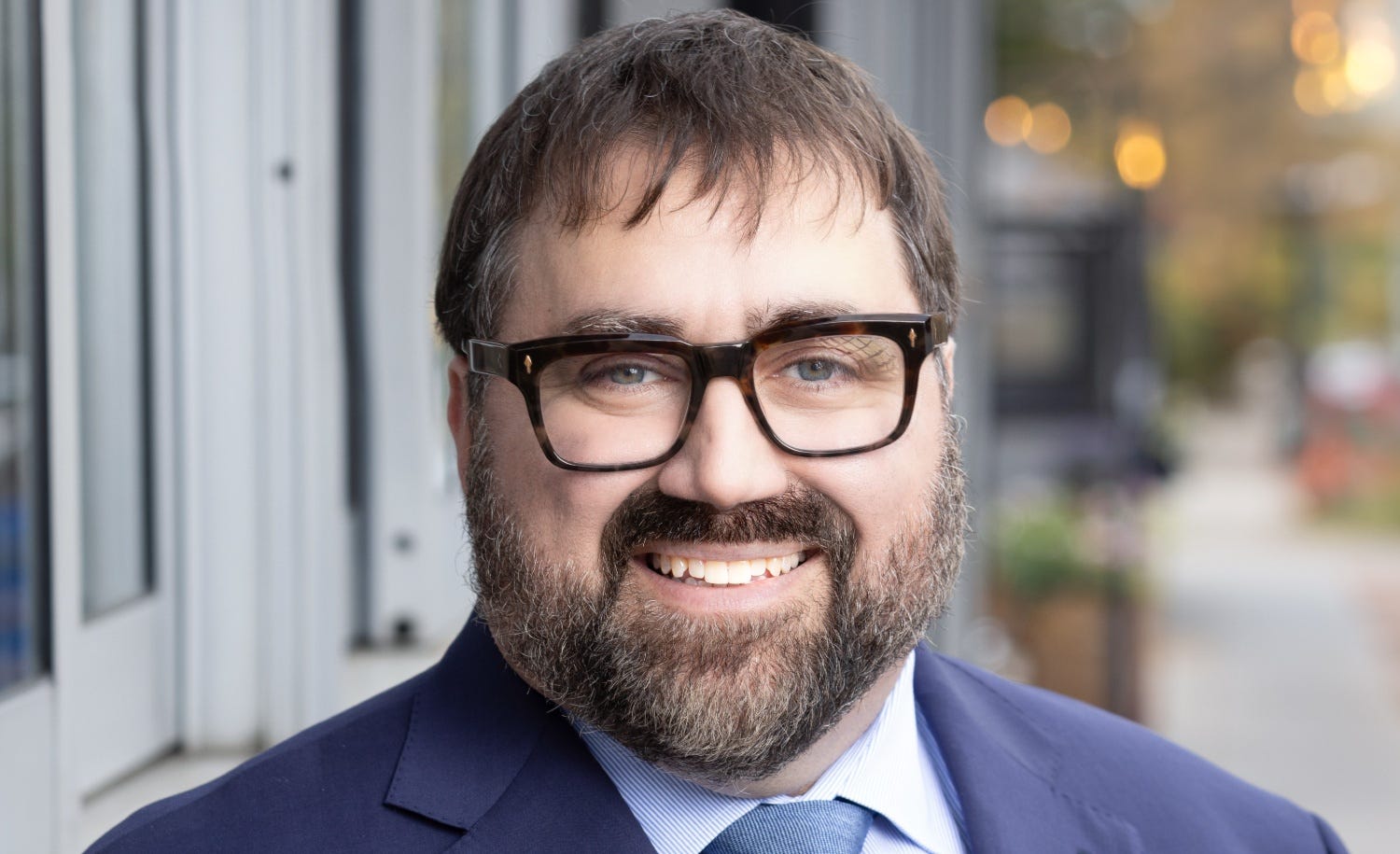
The chair of the ITC, Tom Matzzie, is a familiar figure in my world. He came up through MoveOn and organized labor before founding the clean energy supplier CleanChoice in 2011. I want to ask him whether the ITC PAC represents a real shift in industry strategy or just one billionaire’s money, whether a PAC that targets Republicans can avoid being seen as a Democratic PAC, and what comes after November’s midterms, among other things. Let’s get into it.
Chapters
00:00 – Introduction
03:01 – How the Invest in Tomorrow Coalition got started
06:19 – Why a super PAC, and why it wants to be feared
09:50 – Punishing opponents to warn the rest of Congress
12:55 – Can the PAC prove it changed anything?
17:13 – How the PAC picks its general election races
21:41 – Could beating extremists make Republicans stronger?
24:53 – Why clean energy companies stay out of politics
28:58 – Who funds the PAC, and why the industry gives so little
32:44 – Why the industry keeps playing nice
38:28 – Did the Inflation Reduction Act win over Republicans?
40:35 – Is the industry afraid of Trump?
45:05 – Is this a Democratic PAC?
49:30 – Organizing clean energy voters in presidential primaries
53:20 – Why clean power trade groups include gas companies
58:37 – What the PAC wants after November
Resources
People & Organizations
David Roberts (Substack - Bluesky - X)
Volts (Apple Podcasts - Spotify - YouTube - Instagram - LinkedIn)
Tom Matzzie (LinkedIn)
Invest in Tomorrow Coalition (FEC Filings)
Solar Energy Industries Association (Tim Pawlenty Named President and CEO)
Company & Industry News
Canary Media - Clean Energy Super PAC Names Its Target List for General Elections
E&E News - How Solar Donors Helped Take Down a Trump-Backed Republican
NPR - Offshore Wind Developer Prevails in Court as Trump Calls Wind Farms Losers
Books & Articles Discussed
Related Volts Episodes
Transcript
David Roberts: All right. With no further ado, Tom Matzzie, welcome to Volts. Thank you so much for coming.
Tom Matzzie: Thanks, David. Happy to be here.
David Roberts: This is juicy, Tom. We have so much to talk about, but why don’t we start here with ITC’s... Because I know at least some listeners will be wondering, the initials ITC-
Tom Matzzie: It’s a little pun.
David Roberts: Which is a little pun. Also, the initials of the investment tax credit, which was killed in the aforementioned bill. That’s a little Easter egg, a delightful little Easter egg. Tell me quickly the origin story of the ITC PAC. You were not a founder. It came to you-
Tom Matzzie: Mm-hmm...
David Roberts: already extant, so tell us how it started.
Tom Matzzie: Yeah. I mean, I was one of the first funders of it, but really Peter Davidson and Brendan Bell at Aligned Climate Capital started phone banking some of us last fall, being like, “What are we gonna do? The super PAC effort, what’s our super PAC effort? What’s our response? We just got our butts kicked. How do we hold these people accountable?” And Peter really gets credit for, you know, calling a bunch of us and, you know, he called me because he knows my political background. You know, I ran independent expenditures in the 2006, 2008 election, pretty good years for Democrats.
And he’s like, “What do we do, Tom?” I’m like, “I’m busy, Peter.” But like, here’s what you should think about doing. You need to like find someone who’s got a soft spot who you could attack and maybe inflict some damage. Make them… You know, choose somebody who’s noisy as hell and make a big splash with it. And so to Peter’s credit, he went and talked a bunch of us into writing checks.
Initially connected with Chris Larsen, the investor. He’s also a big crypto investor, also a clean energy investor, who’s been one of our largest funders. And then we got off the ground and started going. And I also, you know, we hired a great team out of Tusk Strategies in New York who are interesting combination of political strategists and public relations impresarios.
Because it’s… what we’re doing is we’re narrating a story about the industry’s power using these elections as the kind of protagonists in the play. And so we sat down in the spring, some point during the middle of the Chip Roy stuff, I think after the first- after he made it to the runoff, Peter asked me to be more involved.
You know, we looked at the whole calendar through the year and said, “Let’s choose races so that we are filling the, quote-unquote, ‘news hole’ with some story or some news about our work every week or two for several months.” Because what we wanted at the end of the year was a bunch of reporters to remember that we had done this, and we wanted chiefs of staff in the Congress to remember that we had done this, members of Congress to remember that we’d done this.
And, you know, too often, there have been political investments made by the industry in the past, but often it’s been quiet, whispering. And my theory of change is you need people to be perceive you as powerful. The perception actually matters more than anything. The metaphor I use is you have to be a lion and not a gazelle.
Plenty of gazelles out there, and they have a wonderful, you know, life as gazelles, but no one Fs with the lions. You know, that’s really the plan we put together in the spring was to identify a bunch of races that would help us narrate a story of our ability to invest and defeat members of Congress.
David Roberts: I mean, usually when people come to this, I mean, I’ve seen a million of these in my lifetime. Usually people are like, “We need to tell our story better.” They come up with some public relations campaign or some sort of campaign, some sort of lobbying group, some sort of, you know, “Let’s tell our story.” You specifically went PAC-
Tom Matzzie: Yeah...
David Roberts: instead of those, and that is explicitly so that you could do measurable damage to these people.
Tom Matzzie: Here’s what to think about is often people are telling… They wanna tell a story about their issue. We’re telling a story about us-
David Roberts: Mm...
Tom Matzzie: as an industry, a group of investors, a group of entrepreneurs, about us as people. Are we safe or dangerous, right? Are we strong or weak? That is the kind of fundamentals of building blocks of political power, is how you’re perceived.
David Roberts: I heard on, you were on SunCast and you referred to mythic power.
Tom Matzzie: Mythic power. Yeah, that’s actually an, a term from my time as an organizer. We often talked about what are the story elements that we’re using to build our mythic power, right? And this was, you know, back in the day when I was at MoveOn, for example, right? We would take on fights all the time just for the point of demonstrating our power. And I think you very much see, you know, that’s what we’ve done here, is to try to illustrate a story about our power. And I would note, we’ve done it without having $200 million.
David Roberts: Yeah.
Tom Matzzie: And I don’t think it’s a tragedy, actually. The unpredictability of it is part of the myth, and the fact that we can inflict damage without having $200 million. ’Cause also, once you show up with $200 million, you look like partisans, potentially, unless you don’t spend it, unless you’re really just, like, using it strategically at different moments. But you mentioned the three Republican members. I mean, we intervened in six elections, and were successful in all six so far during the primaries, and now we’re looking... The general election will be much harder, I should note.
David Roberts: Yeah, we’ll talk about that later, but just to stay on this point. Like, you want to be seen not as part of a giant army, but as kind of like a guerrilla force that emerges unpredictably from the desert and, like, blows something up and then fades back into the desert, and you never know when it’s coming, right? Like…
Tom Matzzie: Yes, the you never know when it’s coming is a very important part of this. And that unpredictability is key. And the way I think about this is we are curating cloakroom conversation amongst members of Congress. And what we want is the next time a member of Congress circulates a sign-on letter asking people to, you know, oppose the clean energy industry in some way, their chief of staff sits down with them and says, “Hey, just remember, there might be somebody who drops $2 million into your next election if you do this.” And that unpredictability is, like, the name of the game.
David Roberts: Yeah. And you know, as a veteran of Washington, that once you create that mythos-
Tom Matzzie: Mm-hmm...
David Roberts: that narrative, those things are so durable. Those things last so long, even outside the sort of empirical details. Like, once you have a reputation, it really sticks.
Tom Matzzie: Well, yeah. When was the last time the NRA defeated somebody in an election? It was the 1990s.
David Roberts: Yes.
Tom Matzzie: So-
David Roberts: Yes. But they’re still feared.
Tom Matzzie: They’re still feared. I think that you’re exactly right if we’re able to make that durable, and it’s gonna take consistent investment for that to be true. But it is definitely the goal here, is to build that perception of power.
David Roberts: And also, I think on this same theme, like, it’s worth noting, I think several people have noted, that in the elections you have intervened in so far, the alternative to the person you are defeating is not a clean energy champion.
Tom Matzzie: Right.
David Roberts: In other words, these are not interventions meant to advance clean energy champions. These are specific-
Tom Matzzie: Well, we’ll be doing some of that this fall. We’ll be doing some of that in the general election.
David Roberts: Yeah, but so far it’s been specifically to punish opponents, even if the alternative to the opponent is someone else who is probably also not gonna be all that great on clean energy.
Tom Matzzie: Right.
David Roberts: And I think there’s an element of, you know, I think like a technocrat might look at that and be like, “Well, you’re just trading a bad person for a bad person. Doesn’t make sense to me,” but this gets back to the mythic thing.
Tom Matzzie: Right.
David Roberts: Like you want to be seen maybe as irrationally angry at opponents to the point that you’ll go after them even if it doesn’t help you measurably on your goals. Do you know what I mean?
Tom Matzzie: Well, actually, but it very much does help us on our goals because what we want is the other members of Congress to see it happen, right? And they are our audience here. You know, because I would much rather trade our impact on 435 members of Congress, you know, and lose one person.
David Roberts: Right.
Tom Matzzie: And so like that’s the math. Machiavelli had this line. Yes, I’m gonna quote Machiavelli. “You don’t need to hang all of your enemies, just one of them in the public square.”
David Roberts: Right.
Tom Matzzie: You know, the prince must be feared, right? So like that is the name of the game of what we’re trying to build here. You know, and look, that’s our theory of change. There’s other people who think like we need to bring in hundreds of millions and become like somehow an adjunct of the Democratic Party or something like that. That’s not what we’re doing.
David Roberts: The message is specifically to lawmakers because, like I mentioned, like the ads you’re running, from the perspective of a voter in one of these districts-
Tom Matzzie: They have no idea who we are.
David Roberts: they don’t necessarily see clean energy coming in and stomping around about clean energy. You know, unless they are reading, following political news, they’re not necessarily gonna know that you did this. But you are taking steps to make sure that the people in question and other lawmakers know, hear about it.
Tom Matzzie: That’s right. We have a whole effort to talk to the political media in Washington so that they repeat this and it’s covered by the people we want to see it. We run advertising. We have this Don’t Mess With Solar campaign that’s advertising we run in like the Washington, D.C., airport, in the, you know, transit system in Washington, D.C., to try to speak to the insiders so that they carry our story. “Oh, I saw the ads. Those are the people that went after Andy Ogles and defeated him, or went after Chip Roy and defeated him.” And so it’s the curation of that chatter amongst members of Congress and their staff that is what we’re focused on.
David Roberts: And this probably has a similar answer, but, you know, you can’t really prove that your intervention is what caused any one of these losses. I mean, I don’t know how-
Tom Matzzie: Well, I feel pretty strongly that in a couple of these cases it was definitely... I mean, for Andy Ogles, I feel like absolutely. We outspent both campaigns and all the other independent folks combined. The person that defeated Andy Ogles had never run for Congress before. We both spent money to raise Charlie Hatcher’s name ID as well as to tear down Andy Ogles.
But you’re right, and I don’t think it matters if we can de- You know, I think we can in some cases demonstrate that, but I don’t think it matters because the, you know, members of Congress still don’t want that extra million or $2 million spent against them. They don’t care, like, if it works or not. They don’t want it spent against them. It is the one thing that all members of Congress have in common is their own self-interest is their number one priority.
David Roberts: Maybe it’s too early and maybe there’s not a good benchmark yet, but have you seen any behavioral change among the political class based on these campaigns you’ve run?
Tom Matzzie: I mentioned Charlie Hatcher, who’s the nominee for the Republican congressional seat in Tennessee fifth. I mean, he was asked about his opinions on clean energy and he didn’t go into the Chinese Communist Party conspiracy Green New Scam rhetoric.
He’s like, “You know, I don’t support subsidies for clean energy, but I don’t support subsidies for farmers either.” You know, that’s kind of very straightforward Republican kind of, you know, point of view. And then he said something about like, people have it on their farms and, you know, it’s like part of, you know, the future of energy, you know, stuff like that.
So I just take that as a little bit of a tea leaf, you know, that he shows different rhetoric. And I mean, this permitting bill happened in the context of this environment. I would give the negotiators, we’ll see if it happens, you know, but I’ll give the negotiators really the credit for all that hard work to try to hash something out. But we’re gonna be part of that environment when the vote comes up during a lame duck.
David Roberts: Yeah, that was my next question is, is there some vote, have you thought about making public saying, “Here’s a test vote. If you go the wrong way on this vote, we will come after you”?
Tom Matzzie: We have not discussed that, to be very honest with you, because we’re so focused on executing for the general election in November. I could imagine that being something we do in the future. I wanna note, we’re not a trade group, right? We are an independent group of entrepreneurs, investors, you know, executives who have come together to do this. We don’t do policy also. That’s really in the hands of the trade groups. And I would note like, you don’t want me doing policy. I’m a political operative and a business person and I couldn’t tell you how to write a bill.
David Roberts: I mean, this is what I was gonna ask about the permitting bill. Like there’s a lot of in- as you know, a lot of internal division about the permitting bill, about whether that’s a good bill or not from various perspectives. So I just wonder like how, you know what I mean? Like-
Tom Matzzie: Internal amongst who? Who are you talking about? I mean, the clean energy industry is pretty unified on this.
David Roberts: On the left and on the right. The clean energy industry, I guess, loves it.
Tom Matzzie: Yes.
David Roberts: The green groups not so much. So maybe it’s not ambiguous from your perspective. I’m just saying like there are tough policy calls and I wonder how close you want to get to sort of making those, publicly saying, “Yes, vote for this.”
Tom Matzzie: We’ll watch the trade groups and, you know, talk to our supporters and look for, you know, what those moments might be. I think if this was derailed, for example, by a group of members of Congress, we would definitely look at the leaders and consider accountability for them. This is a very important measure to the industry. Unless you really understand how difficult it has become to build something, like I personally wear scar tissue from building projects in deep NIMBY territory, you don’t quite understand how important this legislation is.
And, you know, I should note, in my career, I helped stop Shell drilling in the Arctic Refuge. Like, I have my bona fides as an environmentalist, and I think we’re not talking about that right now. Oil and gas has not had any difficulty in building everything they want to build. It is not the case for clean energy.
David Roberts: So let’s look at the general election then. You’re putting 15 million into seven House races, at least that you have announced so far. How do you choose those? Are there specific criteria? Is there a measure of gut involved? What’s the process?
Tom Matzzie: I was… I’d tell some joke about, like, a chimpanzee and a dartboard, but that’s not really true. Look, we have a set of criteria, and you know, one of the most important is can we make an impact?
David Roberts: Right.
Tom Matzzie: And so we’re not looking at races where the incumbent and the challenger are really armored up with millions and millions of dollars already.
David Roberts: Which is quite a few of the big races this year. Like, these are the notoriously some of the highest-spending races in history. I guess that-
Tom Matzzie: Yeah, and I know, having run IEs during a wave election in 2006, for example, the Democrats will underperform in those races.
David Roberts: In which races?
Tom Matzzie: In the ones that everyone has been talking about for a year, and where the candidates have raised a lot, a lot of money on both sides. And the reason is that preparation for an incumbent actually makes a difference, and their ability to get ready for a challenge. And then there’s a set of races that people have been making competitive over the last few months that will be where probably a bulk of the wins come from, and then there’ll be a bunch of races that suddenly are competitive in the final stretch because maybe one demographic group has moved sharply against Republicans or something like that. And there’ll be a bunch of wins that come from that. So we’re looking at those three kinda categories.
Important piece for us is one of the most disruptive forces inside the Congress in our perspective on clean energy has been the House Freedom Caucus. If you look at our investments, we’re actually somewhat shadowing the House Freedom Caucus and their announced investments. These are candidates who will ally with the House Freedom Caucus should they get elected.
David Roberts: So these races you’re entering in the general are not necessarily against people who have voted against something that you like. In some cases, they’re di-
Tom Matzzie: Yeah, a couple of them are open seats.
David Roberts: Yeah, a couple of them are open seats. These are just candidates.
Tom Matzzie: Yes, that’s right. But they’ve allied themselves with, like, the House Freedom Caucus, which is a clear signal where they’re gonna stand should they get elected, or they’re on the campaign trail actively campaigning against clean energy. That’s the other thing we’ll sometimes see.
David Roberts: Mm-hmm.
Tom Matzzie: So on the targeting criteria, is it winnable? Like, is the candidate a good candidate or not? Are there dynamics that are interesting in the race like bombastic comments, a falsified biography, things that make people really lousy candidates? Right? When we went after Andy Ogles, he had only raised $60,000 for his reelect, and we’re like, “Okay, we’re gonna pick his pocket.” We have $2 million. He has 60,000. And so one of my favorite criteria we look at is, are they a whiner? Are they gonna complain about us? We actually really value the help they provide to us in spreading the word about our work.
David Roberts: Oh, that’s interesting. I was actually gonna ask about this, but it’s actually my next question, which is, like, a lot of the people you’ve gone after have used your attacks as a kind of badge of honor. Like, “Look, MAGA constituents, these lefty clean energy people are coming after me,” trying to make it into a positive. So you’re saying that’s not working, and you like it when they do that?
Tom Matzzie: We love it when they do that ’cause they’re telling other members of Congress about us, and maybe they think they’re being brave or courageous or it’s gonna somehow help them. Maybe it does with fundraising, I don’t know. But, like, I don’t know anyone in Congress who wants to run into the equivalent of running into a charging cavalry or something like that, right? And members of Congress would much rather we’re not spending in their race, right? They’re gonna complain about us, but, like...
Look, Ralph Norman, the second time we defeated him… We defeated him, you know, once when he was running for governor and then again in the runoff. His, literally his concession speech, half of it was about all the super PACs that attacked him. And so periodically Chip Roy has taken to, you know, X to complain about us. And I will periodically reply to thank him for spreading the word. Like, this stuff’s all serious, but that is actually, we really do like it when they whine and complain about us and spread the word to other members of Congress.
David Roberts: That’s funny.
Tom Matzzie: Yeah. It’s important that we also show that we’re not afraid of that, right? We’re fearless.
David Roberts: Yeah, yeah. Do you ever worry that by taking out, I mean, in effect, what you’re doing is targeting pretty extreme Republicans, the Freedom Caucus.
Tom Matzzie: Yeah.
David Roberts: Do you ever worry in these primary fights that the effect of your spending is going to be a better and more viable Republican winning the primary, thus having a better chance in the general? Do you know what I mean?
Tom Matzzie: Yeah, sure. Well, I would say like, look, we’re not the Democratic Party, and, you know, this is the criticism we heard a little bit in Tennessee, you know, went after Andy Ogles. I think the DCCC, the Democratic Campaign Committee, was hoping they would be able to run against Andy Ogles ’cause he was such a buffoon.
David Roberts: Right, right, right.
Tom Matzzie: Versus Charlie Hatcher, who’s like this nice, gentlemanly, you know, veterinarian farmer. And I just like, that’s not our job. We’re not the Democratic Party.
David Roberts: But okay, but I know and you know that clean energy is, all things being equal, more likely to get legislative victories if there are just more numbers on the Democratic side. Like, that’s just the evidence for that is everywhere in every state, in every country. I mean, maybe I wish, I wish it were not so. I wish it were more bipartisan, but in reality, like, the more Democrats control things at the state level, the better clean energy does. That’s just sort of like-
Tom Matzzie: But I wanna just note, though, we wanna push past that. And there are examples in certain states where the industry has done that, right? In North Carolina, for example, solar industry is so deeply a part of rural economic development in North Carolina. The North Carolina legislature was able to pass a bipartisan climate bill several years ago that had, like, real targets in it for build-out of solar and clean energy, et cetera. And so there is a model for how you can push past if you become more and more important. But they, also, the industry in North Carolina invested deeply in relationships. They invested in politics-
David Roberts: Hmm...
Tom Matzzie: in be… outside of elections, right? And I think this is one of our biggest gaps as an industry, is we don’t actually invest in the relationship work outside of lobbying crisis at the sort of scale that other industries do.
And I wanna be clear, like, there is a lot of work being done by the trade associations and by companies, but it’s not like the Realtors Association does it. It’s not like the insurance brokers. It’s not like the community bankers. If you’re a member of Congress, when you show up for your first day in office, someone knocks on your door and says, “I’m from the Realtors Association. I live in your district.” Someone from the Pharmacists Association knocks on your door.
“From the pharmacists, I live in your district,” et cetera, et cetera. And we just don’t cover the country at that sort of depth, right? We’re much more likely to have one person that covers, like, the Western US for a company. And that sort of build-out on the ground is those relationships are the fundamental building blocks of organizing and relationships, and they have that in North Carolina. The ind… solar industry has that in North Carolina.
David Roberts: Maybe this is a good opportunity to talk about what you call free riders, which is a problem in the industry. But how do you… So, like, the work that has been done to increase the profile of the industry and to get good policy passed benefits everyone in the industry, but a lot of companies in the industry are not doing investments in that stuff. They’re benefiting from the investments other companies are making.
Tom Matzzie: Sure.
David Roberts: I mean, maybe this isn’t your job and not what you’re about, but how do you persuade or browbeat industry participants, the companies themselves-
Tom Matzzie: Right...
David Roberts: into taking politics more seriously and investing more in it?
Tom Matzzie: Right. And so let me just talk about this a little bit more because it’s not as easy a solution as them just deciding. And the reason is there are actual structural problems and barriers towards clean energy companies that operate in the United States being able to do more politics.
David Roberts: Yes.
Tom Matzzie: The number one being foreign ownership. So some of our biggest operators in the United States are either European, multinational or Canadian or Asian or Australian companies, or they’re owned by the pension funds of the Scandinavians or the Australians or New Zealand or whatever. They actually, because of FARA, are not able to write checks into US politics. If you’re not familiar, this is the kinda law that regulates foreign influence in US public affairs and politics.
David Roberts: And that means election spending or any political persuasion, educational-
Tom Matzzie: It’s a pretty broad law. There is an economic kind of exception to it for things like joining trade groups, but they definitely could not try to, you know, write money to super PACs, for example. You know, there are certain prohibitions on things that you would not be able to do. So that’s one barrier, but I do think overall it’ll take a generation change in the leadership of these companies probably.
David Roberts: Isn’t it also a barrier that a lot of clean energy in the US is kind of through big utilities that also often own gas? In other words, a lot of the entities involved are also invested in fossil fuels.
Tom Matzzie: I’m trying to think if I’ve seen that, like, show up in, like, meetings or... I suspect it is probably true that there’s those sorts of conflicts, but there’s conflicts of other sort too. I mean, there’s c- I guess I’d say there’s general conflicts of interest.
But I do feel like the advocates that work in the industry are not mindful, not slowing down because of that. They care deeply about solar, wind, energy storage, and working to win. I think, you know, there is a somewhat of a talent gap where we don’t actually have a lot of people with political experience inside the industry.
We might have people who have a lot of regulatory experience, or they have some legislative or state legislative experience. I think I can name probably four or five of us who’ve ever worked on campaigns at a really national level that work in the industry. So there’s like a money problem, and there’s maybe a talent and like culture problem. And I think that there’s also just a desire to be everyone’s friend.
David Roberts: Yes. I wanna talk about this.
Tom Matzzie: Well, what people don’t understand is that the really the path towards everyone’s friend, it’s like in hockey, you have to have the fight to get the energy out, and then everyone can skate off together. And I have run elections in the past where we defeated like a US sen… I helped organize against Joe Lieberman in the 2006 Democratic primary where he was defeated by Ned Lamont, now governor of Connecticut.
And we defeated Joe Lieberman in the primary, and the next day had a meeting with the Democratic leadership in the US Senate, and they just go, “Are we still friends?” So like, I don’t think like that sort of that’s how the world works is understood broadly in the industry, which is you actually by being strong and demonstrating your strength, you make it desirable that people want to be your friend.
David Roberts: Yes. I wanna talk about that more in a little bit, but just staying on the point of the industry, the companies themselves, it seems like the fact that most of your money right now is from one person, from Chris Larsen. You know, he’s a clean energy investor, but he’s not really-
Tom Matzzie: He’s not an executive in the space...
David Roberts: not an executive in one of these companies, and so it just seems to me the small size of what you’re doing, I mean, you’ve been sort of advertising yourself for a while now. You’ve been around for a year now. Are people knocking on your door, or are you finding that other companies in this space are nervous, or they don’t like what you’re doing? What’s the vibe?
Tom Matzzie: It’s a little bit of both. I mean, we have dozens of executives who’ve contributed now-
David Roberts: Hmm...
Tom Matzzie: in the, like, 50 to $100,000 range. It’s not them writing million-dollar checks. I think, you know, we actually haven’t produced a lot of billionaires in our industry. We’re not quite as profitable as, like, crypto or oil and gas, or as the tech business or AI. And we definitely have some companies who’ve contributed to the 501(c)(4) companion to our super PAC, which will continue the advocacy work all year to advocate.
So it might be working on the permitting bill, for example, or it might be doing candidate education on the issues during the early presidential primary next year, and it can do some limited spending on politics. But yeah, no, is it dozens of companies writing seven-figure checks? No, not yet. But do we have enough money to make an impact right now? We do if we operate in that kind of guerrilla warfare sort of posture.
David Roberts: Yeah, yeah.
Tom Matzzie: Are we at the sort of scale where we’re desirous that, you know, the leadership and either Speaker Johnson or Leader Jeffries really, really want us on their side? We’re not- We don’t have that sort of money yet. That’s actually a place where the environmental groups fill in a little bit on the Democratic side, at least.
David Roberts: Yeah. And I don’t know how wise that situation is.
Tom Matzzie: Well, they have a lot of money.
David Roberts: You’ve said before that a mature industry spends about 2% of CapEx-
Tom Matzzie: CapEx, yeah...
David Roberts: on public affairs, and as I understand it, clean energy is not there.
Tom Matzzie: Fractions of a tenth of percent.
David Roberts: Yeah. So that seems like it calls out for some explanation. It seems like as industries grow, they sort of naturally move into this.
Tom Matzzie: That is true.
David Roberts: And clean energy has not naturally moved into it, so it seems like it calls for some sort of special explanation. Why don’t they do this?
Tom Matzzie: I will give you the reasons why. They’re mostly excuses. The fundamental reason is we’re in the growing up moment right now, right? And political scientists actually study influence and lobbying, and they will tell you that an industry is typically in its fourth or fifth decade before it matures politically. And we don’t have that sort of time. We have to grow up a little faster ’cause there’s also people trying to hurt our industry.
David Roberts: Yeah.
Tom Matzzie: But I think there are also some structural barriers. I talked about the foreign corporation ownership. The other one is we’re actually just not hugely profitable businesses. We build on 6, 7, 8% returns, and we also use project finance almost exclusively, which means the cash flow off our projects, our assets, our power plants, doesn’t come back to our companies. It goes to pay debt service-
David Roberts: Mm...
Tom Matzzie: and preferred return to tax equity, which means if we need a lot of money in a hurry, we might have to sell something sometimes. So it’s really just, there’s a lot of awkwardness, I would say, in the design of our industry that slows down our ability to invest at scale in public affairs. I do think there are some really interesting efforts going on inside the industry led by some of the companies to try to, you know, change that. You know, we’ll see where that goes.
David Roberts: Let’s talk about the industry generally then, ’cause I don’t know if you have listened to my recent pods on this, but it’s been a frustration to me. You know, I said in the intro, said it a million times now, clean electricity, not just clean energy, but specifically clean electricity, the electrotech, the electric stack-
Tom Matzzie: Yep...
David Roberts: all that comes along with it, is producing miracles-
Tom Matzzie: Right...
David Roberts: around the world. Like, it is a remarkable story when you tune into the details. It ought to be the belle of the ball. It ought to be, it seems to me, based on its trajectory of growth, the costs it can offer, the way it can support all these other things that people say they want, like AI, like drones and defense, like, you know, you name it, like a million things that have nothing to do with carbon. It ought to be the belle of the ball and have people lined up banging on its door, begging it, you know, to become its friend.
Tom Matzzie: Yeah.
David Roberts: And instead, it’s just a wimp. It’s practically a non-entity. Like, most- I don’t think you could pull 100 people off the street, I doubt one out of 100 could even sort of tell you that it is a thing in and of itself, much less give it any credit or, like, ascribe it any power.
Tom Matzzie: Right.
David Roberts: You know, I was reading this story in the Washington Monthly last month. I mean, you probably read it. You were quoted, I was quoted. The quotes from people in the industry made me want to jump out a window. Like, over and over again, you see, like, Tim Pawlenty saying, “Oh, we don’t wanna make enemies. We just wanna make friends.” And then you see even Tom Steyer saying basically like, “We don’t...” Saying some version of, “We don’t need to throw elbows. We have a better product. We’re cheaper. We’re faster. We’re better, and the betterness is just gonna win people over in the end.” And then I kept thinking as I’m reading this, I’m like, why do you think Republicans keep kicking you in the face over and over again?
It seems like you don’t understand why they’re doing that, so, like, why am I trusting you to lead this industry? Like, it just seems to me like the industry does not get it on a deep level. Am I wrong about that? Am I missing something?
Tom Matzzie: First, I would give Tim Pawlenty some time. I’m very excited about him becoming the leader of SEIA, and I think he’s a really strong communicator for the industry. I would note that their rhetoric on that topic has revised in the last 48 hours even. Where now they’re saying there needs to be a stick and a carrot. Not just, like, we wanna be friends with everybody. I don’t think that’s, like, coincidental. They have members. Tom Steyer’s an investor in several large funds related to the clean energy industry, but he’s not part of the industry per se.
And I find it ironic given how much negative advertising he’s probably funded in the last 20 years that he would make that comment. Must be bruising from his primary loss still. So people have all sorts of point of views, but the great thing about, you know, our political system is that entrepreneurs like Peter Davidson, Brendan Bell, myself, the other people involved in helping stand up Invest in Tomorrow Coalition, we can just go do the work. And I don’t need to wait for permission from anybody. Our trade groups are not the Congress of the clean energy industry. So-
David Roberts: You wanna go show that the stick works.
Tom Matzzie: Well, yeah. I mean, I think that’s part of it, for sure. I think the largest thing is that we just cannot let this moment after the OBBB pass without doing the work. You know, what happens in the future, next year, et cetera, is still, like, we’ll see how the fundraising goes, we’ll see how, you know, things evolve. But we certainly cannot let this moment pass without taking our pound of flesh. I didn’t need to wait for anyone’s permission. Peter Davidson didn’t wait for anyone’s permission to make that happen.
David Roberts: Nonetheless, I’m curious what you think about the trade industries in this area, like SEIA and Americans for Clean Power, which is not what the name of that group is, but I get it wrong every time.
Tom Matzzie: American Clean Power Association.
David Roberts: Thank you. American Clean Power Association. Those PACs typically, I think, split their spending pretty evenly between both parties, including, I think, some members who voted to kill the tax credits are getting money from those PACs. Just as an outsider, what’s your take on their effectiveness and their strategy, the trade associations?
Tom Matzzie: On their political strategy, like their PAC, well, I don’t think they have much of one, to be honest. I think they’re trying to start one, you know, in terms of politics. By politics I mean, like, elections-
David Roberts: Yes...
Tom Matzzie: candidate fundraising, soft money, super PACs, stuff like that. They have left that to others, and which is a choice. Like, there’s other industries that do the same thing. That’s not their thing. That’s not what they do.
David Roberts: What if I frame the question this way: if you were running SEIA, what would your approach be? Would you continue that or would you throw more elbows?
Tom Matzzie: I would definitely find money. Oh, well, I would find money to fund an operation like Invest in Tomorrow Coalition. But I would do it from outside of probably SEIA. I would let it operate a little independently. It’s actually important that Mike Johnson can’t call up Tim Pawlenty and say, “Can you get Tom Matzzie off my back?” And so that distance has value, right?
David Roberts: Right.
Tom Matzzie: And it’s part of the strategy intentionally. Obviously, because I’ve been in the industry for 15 years, I have relationships with people inside these trade associations. I’ve never been on the boards of either of them or have much desire to be. I’ll take their phone call, but I’m not gonna take their orders. And I think it’s important to have that distance and deniability as well.
David Roberts: There was a lot of talk, a lot of faith during the formation of IRA and the design of IRA, the Inflation Reduction Act, that prioritizing investments into red areas would dampen red opposition to clean energy. Do you think that was just pure naivete? Do you think there’s anything to that? It didn’t seem to pay dividends.
Tom Matzzie: I think there is something to it. We did not have enough time, and I also think Donald Trump is a moment in time that was a disruptor to, like, that. And had it been under, like, a more normal Republican presidency, I think it would’ve stuck a little more easily. And the reason I say this is ’cause we’ve seen this in some states, right?
I talked about North Carolina earlier. It’s also true in Georgia, where the tremendous investments that have been made in Georgia related to, you know, clean energy, batteries, clean transportation, are something that Georgians value. And I just don’t think it had enough time to take effect. I would also note it’s not geographically diverse sufficiently, right?
You know, we’re talking about dozens of places, maybe hundreds, but it’s not like it, you know, we’re covering all 219, you know, Republican congressional districts or whatever that number is right now. I do think that there’s a possibility for that. However, it’s clearly not what you should rely upon as a strategy.
It’s like deciding you’re gonna grow your own garden for all the food you eat this year, right? You plant the seeds in the spring and what are you gonna starve until the harvest in the fall? That’s just like not how the world works, and so you have to do the political work also, and that means the relationship building, that means the accountability work as well until, you know, your seeds for your beans can grow into a beanstalk, use my, extend my metaphor ’cause that is a slow strategy. That is not a fast strategy.
David Roberts: In terms of trying to persuade companies to get more involved and to give more money and to be more involved in politics, it is the case that Trump is kind of crazy and vindictive, and he has shown a willingness to go after specific people and companies-
Tom Matzzie: Mm-hmm...
David Roberts: if they cross him in specific industries. Like, you know, speaking of like mythic power, like in an entirely irrational way that I think is really uniquely well-designed to produce fear. And so I expect a lot of these companies, you know, and maybe this partially explains the industry’s overall unwillingness to fight more explicitly ’cause they’re just afraid. To some extent, that fear is justified. Do you run into that when you’re talking to people? And I guess-
Tom Matzzie: For sure...
David Roberts: people can donate to your PAC without being disclosed, right? Maybe that’s some shelter.
Tom Matzzie: Well, the PAC is all disclosed, but they can support the 501(c)(4) advocacy work that is not exclusively political and be anonymous. And so there are certainly people who have contributed to the C4’s advocacy work in order to be, and wanted to be anonymous. All right, so let’s just break this down for a second. Donald Trump has been vindictive to the people who have attacked him personally, and I do not think we have seen a lot of evidence of him being vindictive to the people who stood up for themselves in a way that was, like, good faith advocacy. And the one I’d talk about right now is the offshore wind industry has gotten run over.
David Roberts: Yeah.
Tom Matzzie: They mounted a litigation defense through the regional affiliates for regional clean energy kind of trade associations successfully. I think they’ve won, like, five times in court or something like that at this point.
David Roberts: Yeah.
Tom Matzzie: There hasn’t been any retribution. In fact, what we’re seeing is that offshore wind is becoming now a topic in the negotiation around the permitting bill. So I think there’s a, like, Trump respects strength, not weakness. That is something for people to hold onto. It has to be good faith advocacy. It’s not attacking Donald Trump personally, it’s standing up for yourself, and that’s a very different sort of thing.
My impression has been that the people who’ve drawn the fire were the ones who were weaponizing against Trump personally, and that’s not what we’re doing. In the primary elections that we joined this year, and more than one of them, our charge against the incumbent Republicans that they were not loyal enough to Donald Trump, that they were not MAGA enough for Texas.
We did defeat Andy Ogles despite Donald Trump campaigning for him. I think we’re the only outfit to defeat Trump during a primary this cycle. But the next day, Donald Trump disavows Andy Ogles as a terrible candidate. True. He was a terrible candidate. I would say he did not do his part of the deal with the president. He should have done, built himself into a stronger candidate.
David Roberts: Really just a terrible human, if I may go slightly beyond your description.
Tom Matzzie: Yes, a terrible human. And boy, there are some really terrible humans running in the general election too. The things we run into as we prepare, you know, these candidates are just really- I can’t believe this is what Republican Party is attracting as candidates. Anyways, yeah, some people are afraid. Viewpoint discrimination is a real thing in the Trump administration, but it’s also these guys are a moment in time. And yeah, we’ll get past this. Now, along the way, there’s gonna be a lot of wreckage. The offshore wind industry is one example of that.
David Roberts: Yeah. Well, I mean, and permitting is frozen for public lands for solar and wind. It’s- There’s a lot of suffering going on.
Tom Matzzie: Yeah.
David Roberts: Again, it’s not clear to me that, like, if they fought harder and stood up for themselves more, that that would get any worse. I mean, how much worse can it get? He seems to be doing everything he can to kill the-
Tom Matzzie: Well, if it’s vindictive, I think their history has been that they retaliate. If you’re doing good faith advocacy, standing up for yourself, I haven’t seen too much evidence that that draws attack.
David Roberts: So that’s the executive branch. To some extent, that’s beyond your reach, at least based on your current strategy. You’re not really in the business of trying to do anything about that. I don’t know what anybody could do about that.
Tom Matzzie: Well, we’re keeping an eye on the… what might evolve in the presidential primaries.
David Roberts: Right. Right, right. Well, we’ll get to that. So I mean, I did wanna ask about the partisan thing because-
Tom Matzzie: Mm-hmm...
David Roberts: clean energy, I think, has traditionally and is still largely coded as a lib thing. In practice, your strategy, even if you’re purely looking at what do you do to our industry, even if you’re not explicitly using partisanship as a differentiator, in practice, you’re gonna mostly end up supporting Democrats and opposing Republicans. Do you think that ITC specifically being coded as a Democratic-aligned PAC is a risk or a problem or something you think or worry about?
Tom Matzzie: It’s not what I want, and it’s not what I think our supporters want because that does not actually reflect who the industry is. We are all types of political persuasion. You know, we’re every flavor of American. And I think it has been more difficult to find Democratic targets. So, you know, that’s the thing. But there… I think as we look forward, we’ll look into the Democratic primaries and look for opportunities there as well. And there are plenty of places, and I’ve experienced this personally as a solar developer, where the local Democrats were the problem, and it was not the local Republicans were the problem. And we will be looking for those opportunities for sure.
David Roberts: So how are you approaching it? Like the general election, general elections are different than primaries. Primaries are uniquely designed for someone with a decent chunk of money to come in, have a big effect-
Tom Matzzie: Yes...
David Roberts: make a big impression on the lawmakers involved without making huge ripples outside that primary, basically. You know, it’s sort of ideally set up for what you’re trying to do. General elections are a little bit different. There’s more press involved, there’s more scrutiny involved, there’s more money involved, and there’s more, you know, if you’re just in a Republican primary, you’re gonna get a Republican out of that one way or the other. But in these general elections, you have to think about like what’s gonna be the composition of Congress at the end of this, and how is that gonna affect things? So I’m just curious how your general election strategy differs from your primary strategy.
Tom Matzzie: How it doesn’t just look like we’re partisans, you mean?
David Roberts: Yeah, or partly that, and just whether you are behaving any differently given the greater scrutiny, given the greater publicity. Like, if you’re thinking about general elections differently than you think about primaries.
Tom Matzzie: I mean, yes. Certainly, you’re right there. Primaries are designed that a large checkbook can make a big impact, and that’s ’cause people, voters are not in a partisan silo where they’re unmovable. Whereas in general elections, a lot of voters retreat into their, you know, partisan bunker, for lack of a better term, and very few of them are movable. And so the money just doesn’t go as far-
David Roberts: Yeah...
Tom Matzzie: in a general election versus a primary. However, because of our way of targeting, where we look for the opportunity to make an impact as one of our criteria, I think we have chosen races where we can make an impact.
That’s one. The second is the affiliation of these Republicans with the House Freedom Caucus, in our view, is dispositive, you know, of their fitness for office. In some ways, our problem is not with, like, the whole Republican caucus, it’s with these fanatics who wanted to deny the industry a glide path, went and demanded the administrative assault on industry from President Trump.
I mean, Ralph Norman, Chip Roy, Andy Harris, they all marched up to the White House and demanded the president stop the permits. Ralph Norman went on television to brag about how he was getting the president to stop permits. So, that House Freedom Caucus should not grow is one of our perspectives. And some of them we will confront in primaries, and some of them we will confront in general elections, and there’s different paths to victory.
That’s been one of our focuses, has been either the members of Congress who signed the repeal everything, including retroactive repeal letter, or their affiliates who are or will be part of the House Freedom Caucus. So I think that is good faith advocacy. That is not, you know, partisan behavior.
David Roberts: Mm-hmm. And then looking past the midterms, then you’re in presidential election season, basically. I mean, it starts these days, more or less, as soon as the midterms are over, to all of our great distress. How are you thinking about that? There’s a whole nother cycle of congressional elections, obviously, alongside that, but then are you thinking about getting involved at all in the Democratic presidential primary?
Tom Matzzie: Or Republican.
David Roberts: I mean, speaking of, like... Or the Republican presidential primary, which, speaking of, lots of scrutiny, lots of money, lots of deep enmities and lines drawn in various places, like just a more fraught landscape. How are you thinking about presidential primaries?
Tom Matzzie: I think the analog is what the ethanol industry has done over the last 40 years, where they have essentially used one state as a gate that if you wanted to get out of that state intact, you had to adhere to them.
David Roberts: But not everybody can dominate Iowa though, you know.
Tom Matzzie: Well, for the Republicans, Iowa will remain important, and there’s a very big wind and solar industry in Iowa. Michigan has its own clean energy industry, so does South Carolina, so does Nevada. The early presidential primary states and caucus states have very important clean energy industries in them. And I think as an industry, it’s a good organizing moment, right? It’s not necessarily that we’re gonna choose one of these candidates as our horse to get behind. What happens during presidential primaries, this is important to remember, is retail politics in a very real way.
David Roberts: Yeah.
Tom Matzzie: Where candidates go into diners and Kiwanis clubs and like, you know, kiss, you know, babies and take their photo with grandma and all that sort of stuff. Well, they should be met with, you know, “I’m a wind farm family,” “I’m a solar farm family” T-shirts, and Republican voters who have been organized, who are part of our industry to deliver a message to JD Vance or Marco Rubio, or if it’s Kamala Harris or Gavin Newsom or whomever, you know, that these issues are important to us.
What the ethanol industry did is they had organizers on the ground in Iowa, and they also got Iowans to pledge that they would not support someone who did not support the ethanol industry during the Iowa caucuses. So I think that sort of an organizing project is like a important opportunity during the presidential primary season.
And that’s, again, not choosing one horse and getting behind them. That’s really about good faith advocacy on behalf of the industry. And I really use that term deliberately, good faith, because, like, bad faith is if you just act like a partisan or, you know, good faith is if you’re really trying to advocate for your cause and your issues.
David Roberts: Well, let me ask you about this. Like the NRA and similar groups like that, and maybe I bet crypto probably also has something like this going on, which is something like you, presidential primary candidate, have to support Bill X or Policy X. What do they call it, NRA? There’s a term for it, but basically, like, they grade you on these specific policies.
Tom Matzzie: Right, scorecard.
David Roberts: Yeah. Have you thought about something like that? Like again, that starts to flirt with policy decisions. Is there a red line or something that you would tell candidates like, “You must be on this side of this line”?
Tom Matzzie: Yeah. People keep on wanting to drag me into policy discussions. I would really defer, to be honest, to our trade groups for that sort of what should be on the scorecard. And I know, like, if you think they’re feckless, Dave, that’s not satisfactory to you. But, like, that is where actually the industry has its conversation around what sort of policies we wanna support and what we care about. I somewhat have to respect, you know, that process.
David Roberts: Okay. Well, let me ask about that since I meant to ask about this earlier, but this is a bee in my bonnet, so I wanna get your reaction to it. To me, American Clean Power Association, it’s crazy to me that that is, like, half gas, right? That that is half fossil fuel, that the trade group is half fossil fuel. Like, the kinds of things, the kinds of policies I think clean energy should want are the kinds of policies that would have clean energy substituting for natural gas.
Tom Matzzie: Just to be clear so all your listeners understand, you know, what we’re talking about here is many of the companies that are on the board of the trade association are diversified energy companies that have large clean energy investments but also have fossil fuel investments. You know, example might be NextEra that has lots of gas generation and nuclear and, you know, other power technologies, but is, let’s be clear, the largest investor in clean energy in the United States.
David Roberts: Yeah, that’s kinda what I was getting at earlier, like the companies themselves are conflicted, but then, like, where is the trade group that can advocate for policies that would replace gas with clean energy?
Tom Matzzie: Yeah, I think that, I mean… That’s not what the industry is in business to do, right? The industry is in business to build its own technology, to build solar or to build wind or build energy storage. A consequence of that will be that resources, power plants that have fuel costs like gas and coal, will be losers at the end of the day, right?
David Roberts: And in home heating and cooling, if heat pumps replace-
Tom Matzzie: Yes...
David Roberts: furnaces, they’re gonna shut down pipelines. Like, that’s the point of clean energy.
Tom Matzzie: If you’re a solar developer, let’s say you’re not one of these utilities who spun off a clean energy business. Let’s say you’re just, you’re a company, you start your clean energy business, you only do solar, you know, something like that. You didn’t get in business to replace gas. You got in business to build solar. And that’s what I think the climate community, the environmental community needs us to be great at as an industry, is building our technologies.
We need to be the best absolutely at building more solar, at building more wind, at building more energy storage. I think there are moments when there’s a- could be a policy decision that advantages our technologies over gas. I can’t actually say I know how those have been worked out. I have not been in the room when, you know, that’s kind of become an issue.
But I don’t think you’re wrong that there are conflicts there, and I just don’t see... Well, let me put it this way. I haven’t seen our trade associations be less rigorous in their advocacy for solar, wind, and energy storage because of their membership has fossil fuel investments as well. I think the people who work at those organizations are deeply committed to the success of clean energy in a way that’s very competitive sometimes that I’ve enjoyed seeing. And you’re right that sometimes there could be a moment where there’s, like, a policy decision where it’s, you know, this will hurt somebody else to help us.
David Roberts: I mean, anything that, for instance, say you raise efficiency standards or whatever on home heating to the point that-
Tom Matzzie: I’ve never seen our trade groups work on that issue, by the way.
David Roberts: Well, that’s exactly. I mean, are they gonna work on an issue-
Tom Matzzie: They’re not actually thinking about the longitudinal growth of electricity demand in general. Let me put it that way.
David Roberts: Yes, but the clean electricity industry ought to be thinking about that, don’t you think? Like, that’s-
Tom Matzzie: Yes, total addressable market is a very important part of our industry’s long-term success. It’s just not in the cards. It’s just like it’s not happening. Yeah, I mean, it’s an interesting conversation about whether it should. I would say that of these trade groups, SEIA is maybe the best positioned to take that on. They do not have any utility members. It’s part of their charter. They probably do have independent power producer members who have, you know, thermal generation, who have fossil fuel generation as well.
Also, there’s been a lot the industry has had to deal with. We have had the IRA, we’ve had trade issues, we’ve had permitting fights, and the size of the addressable market for electricity, it should actually be something we’re allied with, like the Edison Electric Institute on. It should be something we’re allied with, you know, the utility sector more broadly. But I just haven’t seen that be a thing yet. It’s a good idea. I’ll bring it up in a meeting.
David Roberts: Yes. I mean, and this is just the final thing I’ll say on it. Insofar as the total addressable market for clean electricity grows, it is probably the mathematical flip side of that is that the total market for natural gas is shrinking. That’s kind of the only way this works. So like this weird notion, this weird notion in the industry that we’re gonna all be friends, that we’re all on a clean- that we’re all in this trade association together, that we all rise or fall together is just like crazy to me. It’s just- I mean, maybe like politically, I understand why we’re at that spot right now, but like sooner or later, we’re all gonna have to confront the fact that there’s a choice.
Tom Matzzie: It feels like a moment in time on the permitting bill. And maybe it was the same on the infrastructure, you know, bill a couple of years ago.
David Roberts: Okay, well, I’ve kept you too long. I do want to just ask as a wrap up, like looking past November, where are you trying to get? Do you, as ITC, think that a lot more clean electricity companies ought to be giving you money and that you ought to be a lot bigger? Or are you trying to sort of galvanize other changes in the industry’s behavior and the industry’s political behavior? Like, where do you want ITC to be, say, in five years or 10 years?
Tom Matzzie: Sure. Well, I mean, in my ideal utopian, we’re friends with everybody, we’re just part of the background of America, and we’re neither, you know, the Republicans don’t hate us, the Democrats, you know, like us. That’s my utopia, right? Like-
David Roberts: Where geothermal seems to sit weirdly.
Tom Matzzie: Yeah. We’re not necessary. I think that’s achievable, actually. It- you know, it’s just because the nature of how we are the only people who can deliver what America needs in the next five years. There’s just such an inevitability to us. You know, so I think in my ideal scenario, we don’t exist, but it- I am also a realist.
David Roberts: Because there’s no need because everybody loves you and is supporting you.
Tom Matzzie: Yes. Yes. Or we exist, but we’re like, I don’t know, the American nuclear fleet, we never get used. So, and let’s hope that always the case. That would be one scenario. But I do think what the industry needs to do more broadly is massive, bigger investment in public affairs activity, including relationship building at the state and local level, communications work.
And, you know, for another show, another episode, I actually have a whole vision for what that could be, what that could look like, you know, based upon my experience having built large political apparatus in the past for either the labor movement or at MoveOn. And the reason I think that investment is necessary is we have non-economic barriers to deployment, right? There are things that are in our way that have to do with public affairs, public education, community engagement-
David Roberts: Yes...
Tom Matzzie: and relationships. And so that investment has to happen. It has to be done on an industry-wide level because it is larger than any one company can do by themselves. And that has to be something I hope companies come to realize.
I’ve mentioned NextEra, a company I admire a lot in terms of their investments and how well they’ve done, you know, figuring out how to scale renewables, and some of the technology they’ve developed around deploying renewables internally is really remarkable. It spun- Some of it’s spun off into separate companies. And they have like a very small public affairs footprint across the country. And, you know, I think inside Florida where they have their utility, it’s gigantic, but it’s like, relative to what the competitors, you know, that they face have, it’s much smaller.
David Roberts: It seems like an explicit decision on the part of the industry to sort of keep its head down. You know what I mean? Like, it’s across the industry. Like it’s better for us just to plug away, and you’re saying it needs to speak up.
Tom Matzzie: I think it’s to speak up, but build relationships. And I say that as an organizer, former organizer, like relationships are the fundamental building block of organizing and power building. The, you know, if we have someone who knows all of the state reps and state senators and mayors and county commissioners that level up to a member of Congress, right? That’s a way to have influence over that member of Congress. And we just don’t have that sort of depth of relationships across the country.
David Roberts: All right. A success for you, let’s say, in six months, is-
Tom Matzzie: All right, we would need a list of wins.
David Roberts: You win these, whatever, 15 races?
Tom Matzzie: Maybe in the end we have... Well, yeah, it’ll be-
David Roberts: Or seven. No, seven.
Tom Matzzie: Yeah, there’ll probably be… No, in the end, we’ll do some governor’s races we haven’t announced. It’ll probably be over 15. It’ll be over 15 races, hopefully, and then we’re in the middle of a presidential primary where we’ve organized, you know, people in those states to advocate for solar, wind, and energy storage.
David Roberts: And having won those 15 races, or at least hopefully most of them, you think that will be sufficient to get some of that mythic power you discussed earlier?
Tom Matzzie: If we do a good job telling our story. It’d be much better to have like $100 million in the bank too. But look, I’ve done this on other issues. I led the US campaigns to end the war in Iraq, as you know, Dave, for many years when I was at MoveOn. We didn’t have $100 million, right? But Hillary Clinton didn’t become president in 2008. You know, there’s different ways to get things done.
David Roberts: And if people listening like what you’re doing, who can help you and how?
Tom Matzzie: If you’re a US... Look, if you wanna contribute to the PAC, you’re welcome to at investtomorrow.org.
David Roberts: Anyone can do that or do you have to be-
Tom Matzzie: You need to be a US person or a US corporation. No foreign money. And yeah, I think you have to be 18. It has to be your money. All the things that normally are part of giving to a political campaign. That’s the number one thing.
David Roberts: All right. We’ll wrap it up there. I’ll just say that I was very happy when you guys popped up and started doing this, ’cause as you know, I’ve been pounding the table for years for something like this mythic power, which, you know, involves both fear and attraction, I think.
Tom Matzzie: Right.
David Roberts: As you said, and people have been leaning on the attraction part and betting on the attraction part almost solely for many, many years now, and it’s just not working.
Tom Matzzie: It’s also not sufficiently attractive. Oh, I just wanna note, like, people talk about how much people like solar and wind and energy storage, and all that’s true. You know, there’s a difference between agreement and popularity. And people confuse those two things. What we have is agreement with people. The iPhone is popular. Right?
David Roberts: Right.
Tom Matzzie: We’re not the iPhone. Maybe for you and me, we’re the iPhone. But, like, for most Americans, they want their lights to work, and they want their bill to be, you know, moderate and, you know, they don’t want dirty skies and dirty water. And we can deliver all those things, but we’re still not delivering 3,000 songs in their pocket and social media. Like, we’re not popular. There’s a difference.
David Roberts: Do you think that is an achievable thing for people to care enough about energy period to, you know, normies to care enough about energy period to really get invested in?
Tom Matzzie: Well, it’s an intangible good, right? That’s the thing that’s complicated. It’s not like you can’t touch it, taste it, feel it, smell it, hold it, eat it, you know?
David Roberts: Well, I’ve been wondering, like, with all the smart appliances and the smart home management moving in and the balcony solar and the EVs, like, there are ways now that energy is bumping up against people’s lived experience. I just wonder if that’s gonna amount to anything.
Tom Matzzie: Time will tell. You know, I don’t wanna be a cultural predictor here. I mean, I love my home electrification projects, which are underway and almost not fully complete yet, and I really enjoyed my EV driving tremendously, but like, I think about electricity all day long, Dave.
David Roberts: I know. I know. Same. I have completely lost touch what other people, what normal people think about it or whether they do at all. All right, let’s wrap up there. Thank you for walking us through this, and thank you for what you’re doing.
Tom Matzzie: Thank you for what you do, and happy to be here.


