


There are some circumstances — think disaster recovery zones or forward military bases — that cry out for portable, reliable, resilient power. I talk with Lauren Flanagan about Sesame Solar’s self-contained nanogrids, which use solar PV, batteries, and hydrogen storage to provide energy that works around the clock in remote or inclement environments.

📌 Instructions to add paid episodes to your preferred podcast app via mobile / desktop
(PDF transcript)
(Active transcript)
Text transcript:
David Roberts
Hey. Hi, everyone. This is Volts for April 10, 2026, “Ruggedized solar power for the hard places.” I’m your host, David Roberts.
Way back in 2011, roughly 400 years ago, I wrote a piece for Outside Magazine about Marines in Afghanistan’s Helmand province using portable solar panels in the field. The pitch was simple: fuel convoys are targets, liquid fuels are a liability, and solar panels can make soldiers more mobile, quieter, and harder to kill.
The underlying insight extends beyond the battlefield. There’s a whole category of places — disaster zones, remote clinics, island nations, forward operating bases — where liquid fuels are a cost and logistics nightmare, and where conventional solar systems aren’t quite up to the job. These environments need something more rugged: power systems that can be rapidly deployed, run autonomously for months at a time, and don’t depend on a supply chain that may not show up.
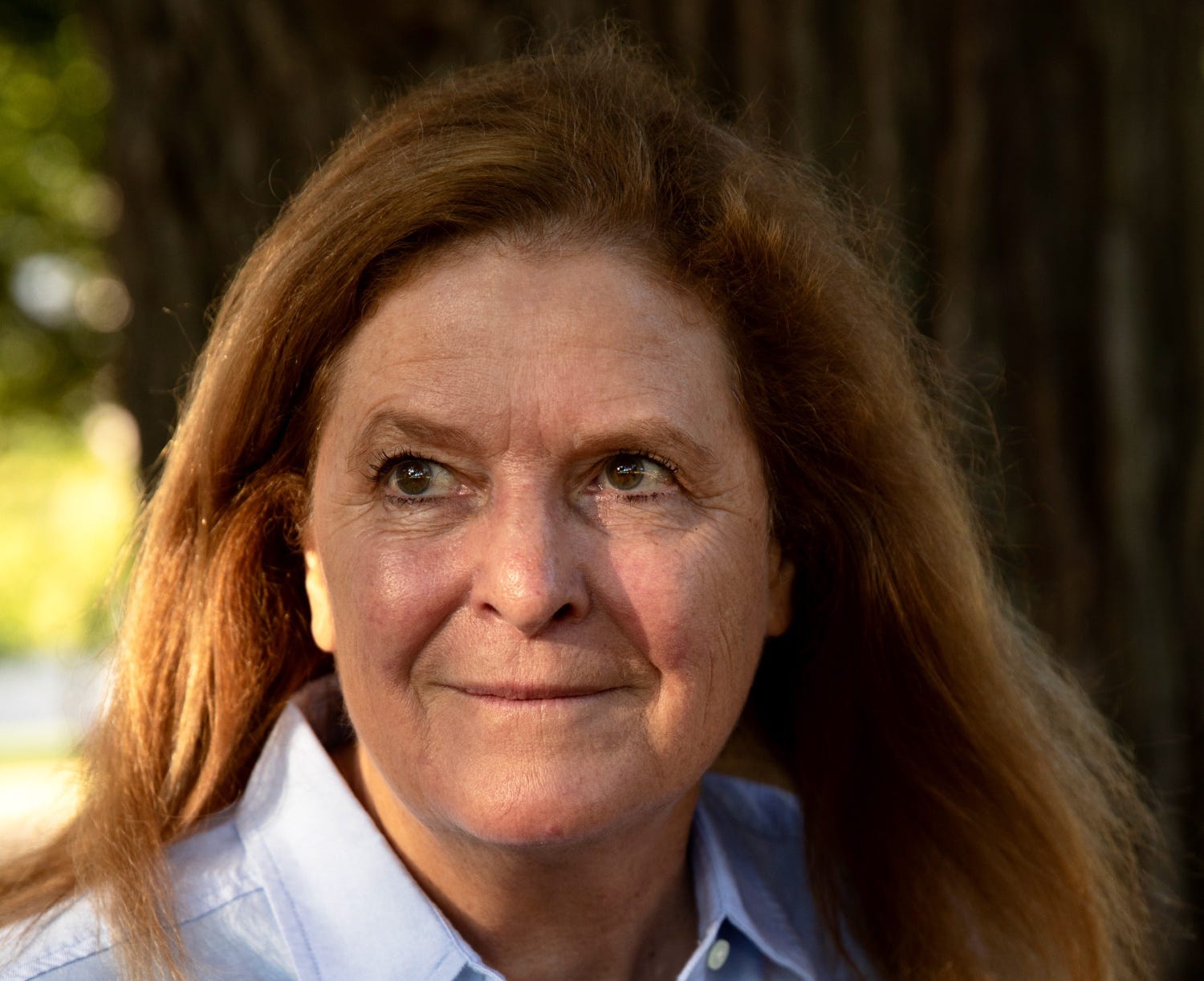
Lauren Flanagan has spent the last decade building something for those times and places. Her company, Sesame Solar, makes mobile nanogrids — self-contained power systems that run on solar, battery storage, and hydrogen — that can be deployed by one person in fifteen minutes and run, with minimal intervention, for months on end. The only fuel supply chain is the sun.
Today we're going to talk about what it actually takes to deliver clean, reliable power to the places the grid doesn't reach — and who, ultimately, gets access to that kind of power.
With no further ado, Lauren Flanagan, welcome to Volts. Thank you so much for coming.
Lauren Flanagan
Thank you, David. I loved that intro. I didn’t know about that 2011 article, but how prescient of you.
David Roberts
I know, it’s funny that it’s coming back now, 15 years later. It made me wonder, what is the state of that program in the Marines? I haven’t checked up on it in a long time. I guess where I’d want to start is trying to get a sense of what business nerds call the total addressable market here. Who exactly are we after? When I threw this out on social media that I would be talking to you about portable, rugged solar systems, a lot of people said, “Oh, rural Africa,” or, “Oh, I want one for my rural home,” or something like that.
I was trying to explain to people, no, for that you just buy normal solar panels and batteries — that would work fine. This thing is designed to be bombproof, bulletproof. This is an extreme bit of engineering designed for extreme circumstances. I want to start with what are those circumstances? What is the market here? What are the kinds of places where this technology would be useful?
Lauren Flanagan
At Sesame, we’re riding two huge tailwinds. The first one is the increasing severity and frequency of extreme weather events — hurricanes, wildfires, floods, atmospheric rivers — which knock out power, communications, water. The second is it’s increasingly a world of robotic warfare where we need UAS, USV surface vessels, ground vehicles, and we need power everywhere.
As we can see in the Middle East, we have oil supply disruption. Having fuel supply disruption, the need for power everywhere, and all of these cataclysmic events happening worldwide, there is a huge need — it’s a $100 billion plus need — for mobile power that is ruggedized, fast to deploy, easy to use, and can run without a fuel supply. That’s the market we’re at. It’s not Jane Doe prepper or your home solar system. This is really solving fundamental life and death Maslowian survival problems.
David Roberts
Which is important to remember later in the conversation when we talk about costs and price and everything else. Just to give people a little background, talk about the cost of liquid fuels in some of these environments you’re talking about. This is one of the things I remember from that 2011 piece — the mind-blowing final cost. Out in Afghanistan, out on the battlefield, they’re using jet fuel. They’re not importing diesel; they all use jet fuel. The all-in cost of jet fuel, once you make it, buy it, transport it, convoy it to the troops, is mind-boggling. I don’t remember the number, but it knocked my mouth open. What price levels are you competing against?
Lauren Flanagan
It’s not only the astronomical price of transport, whether by land, sea, or air — going higher right now with various blockages in the Middle East — but it’s the cost of life, the life of humans in a fuel convoy who, once you track the convoy, you follow them to the target and blow everybody up with the fuel.
David Roberts
Yes.
Lauren Flanagan
There are really two, and then you can’t always get that fuel when you need it. Increasingly, our military is looking at small teams of specialized war fighters that they can drop in a location for a mission of 30 to 60 days and pick up. They don’t want any fuel supply chain; they want it to be able to endure for the mission. You’ve got a wide open world where the issues are in the Indo-Pacific and the Arctic, where they suffer from what we call the tyranny of distance. It’s such a long way to transport it that not only is that cost per gallon high, but that logistics travel from a C-17 or a C-130 or even a ship or a combination and then on a truck is just massive.
David Roberts
I think in one of the stories I read — they’re all blurring together now — but you were talking about, I think maybe it was in one of these Arctic places, but they’re bringing in diesel by helicopter and it’s coming to something like $400 a gallon.
Lauren Flanagan
Absolutely.
David Roberts
Or something along those lines. Which is good to keep in mind when we talk about the cost of this thing later. The alternative is not diesel at the gas station. The alternative is very hard to get.
Lauren Flanagan
Very hard to get fuel, and an increasingly unfriendly world that might not let us stop at their port to get it.
David Roberts
Yes. Nobody’s really enjoying what’s going on in the world right now, but it’s good for resilience businesses, I guess.
Lauren Flanagan
That’s the irony — this administration doesn’t want to talk about climate change. On the other hand, they’re one of the largest users of fossil fuels. If we can make a dent by having renewable energy when and where needed just to solve operational energy needs, the byproduct will be a dent in CO2 emissions and greenhouse gases. But you can’t talk that way. You’ve got to talk about mission endurance and operational efficiency and logistics being streamlined.
David Roberts
Geopolitics too.
Lauren Flanagan
Oh, yeah.
David Roberts
One of the points I keep making to people is, if nothing else, Trump is showing the world the dangers of being reliant on another country for liquid fuels — showing our enemies and our allies at once how bad that is. No one is enjoying being dependent on someone else for liquid fuel these days.
Lauren Flanagan
We just need to keep our war fighters safe and they need the power when and where they need it — however it can be provided. It’s an all-of-the-above strategy. We’re not going to replace it overnight, but we’re a piece of filling in those missing locations and ability to have it when needed. That’s a massive market, as I mentioned, not only our US but our allies. With all these global catastrophes due to extreme weather.
David Roberts
The two markets you describe in that first answer are very different and we are going to return to that in a minute. Before that, for listeners’ sake, let’s just talk about what is — what are we talking about? What is the technology or what is in the box you are selling — basically a big, roughly a tractor trailer-sized box. What’s in it?
Lauren Flanagan
They’re different sized boxes. We call them nanogrids. They can be a standard Conex or shipping container that’s 20 ft by 8 ft, or they can be a tricon, which is a third of that, or they can be a trailer which could be anywhere from 16 to 40 ft. Typically, they’re in the 10 to 28 ft range. This box has everything it needs to be set up by one person in 15 minutes to generate power. It starts with solar — that’s the primary power. It’s stored in batteries.
David Roberts
Before we move on from the solar, there’s a solar panel on top and then there are two or three other, I guess depending on the size of the box, there are two or four others that can flip up from the side of the box to face the sun. Is that so?
Lauren Flanagan
There are deployable solar arrays. “Open sesame” is where our name comes from, if you remember the caves of Alibaba, the treasures inside.
David Roberts
Yes, yes.
Lauren Flanagan
The treasure inside is the solution we have, whether it’s for emergencies or for the military. It’s a complete self-sustaining, self-generating power solution.
David Roberts
You flip out six, eight solar panels, something like that. Then you have these LFP batteries which you’re charging, or supercapacitors.
Lauren Flanagan
We have a variety of storage units that we have.
David Roberts
If I just go with a contractor to put together a solar and storage system for myself for my house, I’m going to pay, what, $20,000, $30,000. Your boxes are between $100,000 and $300,000.
Lauren Flanagan
Or more.
David Roberts
What is that delta?
Lauren Flanagan
First of all, it’s all integrated and mobile and can be set up by one person in 15 minutes. That’s a hard thing to do. If you’re doing your home thing, you’re going to put it on your roof or your house. This is a mobile box that does it and it has everything — all the electronics, inverter, and then we have backup power in the form of stored hydrogen.
We make hydrogen on board. We store it safely as a low-pressure solid and it acts as an extra fuel source — a battery almost — for the fuel cell. If you’re not getting enough solar power or there’s a peak load, you can have the fuel cell kick in and power the batteries. The combination of those can provide a continuous energy loop.
David Roberts
You’re providing solar when it’s sunny, then you shift to the batteries when it’s not sunny, then you go to the hydrogen when the batteries are out. Is that how it works? Is it a hierarchy?
Lauren Flanagan
No, you’re always pulling from the battery. The battery management system through the inverter manages all the power inside and outside the nanogrid, and the battery is the source. You’re always powering the battery with solar. There’s even some when the sun isn’t shining — great metaphor for life, there’s still power coming, but it’s a low basis. If you have backup power in the form of stored hydrogen, then if the voltage isn’t high enough, and this is all pre-programmed, the fuel cell will kick in and power the battery. To the user, it’s seamless. They’re just plugged in and power happens.
David Roberts
The battery is doing the power output, and the input to the battery is either coming from the solar panels or from the hydrogen fuel cell.
Lauren Flanagan
Or it could be another source, because these can be standalone or daisy-chained or in a microgrid. You could have another source — like wind, or even in the military, a fuel generator backing it up. There’s no religion on it. Whatever power you might need to keep the juice on, we keep the juice on.
David Roberts
For the hydrogen people out there, you have an onboard — you’re gathering ambient moisture from the air and you have an electrolyzer on board. You’re splitting that water to make hydrogen and you’re storing hydrogen as a metal. All of that is crazy and interesting. Just start with, why aren’t solar and batteries enough?
Lauren Flanagan
They are in certain locations. If you’re in a lot of places in the Indo-Pacific, you can have a nice big solar array. We typically have 8 or 10 kilowatts on one of the Conex boxes. You give yourself 120 or 150 kilowatt-hours of battery storage. We have some units like that out for the Marines. It just works day and night without any backup hydrogen. We have all the comms integrated and the power systems and software to manage it.
But if you’re in places like Michigan or Ukraine or 45th parallel locations where you don’t have a lot of sunshine in the winter or north in the Arctic, then you cannot rely on solar. Particularly for the Arctic, hydrogen is ideal because you can get some sustained power from it. The real challenge is that the electrolysis of hydrogen is highly energy consuming.
David Roberts
You’re losing a lot of energy in your conversion there.
Lauren Flanagan
But there are other ways to make it and you can also store it. The concept is if it’s movable but semi-stationary — say it’s up in the Yukon — then in the good weather, you store a lot of hydrogen in our solid-state safe low-pressure tanks and you use the sunshine. Then in the winter, when there’s not a lot of sun, you pull on that stored hydrogen and you can create this asynchronous cycle where you’re not having to make it at the low energy times.
David Roberts
Even in the Arctic with its low sunlight, you can be running year-round?
Lauren Flanagan
You can be with a properly sized unit. If the power draw is matched to the weather and we map it by day through the exact geolocation, you can store enough hydrogen and run that in the winter. We’re not talking huge loads, but we’re talking about the kind of loads necessary for local operations or to back up a small cell tower or things like that. You can put a larger ground-mounted system, but if you want it movable, that you could pack it up, there are limits to how much power a single unit can do. It’s typically going to be 5 kW continuous, but that’s a lot. We put one in White Sands Missile Range for the Army Corps of Engineers. That’s in New Mexico desert — wide range of temperatures, close to zero in winter.
David Roberts
Not a ton of ambient moisture in the air, I would think.
Lauren Flanagan
No, very dry. That’s another thing. We store the deionized water in a large tank. You start with stored water. If it’s in a favorable area, you can do the atmospheric water generation or you can filter water from a water source and deionize it, but you’re typically matching it to how long you’re going to be on that location. How many gallons of DI water do you need to store? What capability of making it atmospherically is there by that season or what local water sources could be filtered to do it? You can potentially make the water out of air or filter it out of a water source to then make the hydrogen gas. We carry a lot on board because there’s room.
David Roberts
I think Volts listeners are familiar with the basic hydrogen technologies, and you have to decide if you want to store hydrogen, how to do it. There are different ways. You can pressurize it. You bought this metal hydride storage company. I wonder if you could talk us through the considerations you had when deciding to opt for hydrogen and to opt specifically for low-temperature metal hydride hydrogen. Very specific.
Lauren Flanagan
Low pressure. Solid state. We were their first customer and we had more business than they did, and we ended up buying them. We had vetted it and worked with the technology, and it’s great. You make the hydrogen, you dry it, it’s pure, and you store it. It’s a proprietary formula of a metal hydride powder, which is introduced in canisters that have a proprietary infrastructure of tubing. When you introduce the hydrogen gas, a chemical absorption happens and the gas is formed as a solid and literally hangs on these tubes.
David Roberts
Which means you don’t need ongoing pressure, and it’s stable as long as you want.
Lauren Flanagan
Correct. It’s non-volatile. It’s at less than 300 psi, which is like a spray paint can. It’s safe to put on an airplane, a ship, or any ground vehicle, as opposed to high-pressure hydrogen, which is highly volatile. There’s a lot of consideration about moving it, which is why hydrogen has been so slow to be adopted in a lot of these environments, because the Hazmat side is even worse than batteries and they all have a Hindenburg fear.
But hydrogen is an ideal fuel. It gives a lot of endurance, for example, for drones, and it goes a lot longer and farther on hydrogen. If you can break that — not needing to have hydrogen be brought to the field, but make it in the field and have it stored — that is a big solution.
David Roberts
One of the big knocks always on these things is their expense. Being able to say to an installation in the Arctic, “A solar and battery box will get you a couple of months, a solar and battery and hydrogen box will get you year-round.” That’s a huge value add. You’re adding a lot of value when you add the hydrogen, but are you not also adding a ton of cost? What is the proportion of the total cost that this hydrogen system is representing?
Lauren Flanagan
It adds cost, but compared to what? Compared to prime to bring in fuels. Let’s take a use case. You take one of our hydrogen-powered drones. We partnered with a company called Heven AeroTech and they have a drone that will fly for 10 plus hours on a canister — one canister, about 400 grams of hydrogen. We can show up with 10 kg of hydrogen already stored, giving it 100 or more hours of flight time without ever stopping. You get somewhere and the thing is just running. You can even have two of them going at the same time and swap the canisters. There’s no fuel supply chain needed. This is giving continuous surveillance and maybe there’s not another alternative like that.
David Roberts
What you’re doing for these drone systems is synthesizing hydrogen fuel for them in the field.
Lauren Flanagan
At the edge.
David Roberts
Yeah, at the edge, such that they don’t need any supply chain and they can operate autonomously indefinitely.
Lauren Flanagan
You have to swap the fuel can, but you’ve still got to swap the canisters. That’s not automated yet.
David Roberts
You have to figure they’re going to automate though, if that’s the last thing the human’s doing. You have to figure they’re going to automate that.
Lauren Flanagan
Our vision is we have a little robot that’s doing that. We’re going to ship it with a robot as a service down the road that’s going to provide a lot of those ancillary services. If you’re talking battery-powered drone, for example, if there’s an operator, you can swap batteries, which is fast, but let’s say it’s unmanned, then it can just land on an induction charger, get charged, and take off again.
David Roberts
Yes.
Lauren Flanagan
Go back to that White Sands Missile Range. We were there 13 months, unmanned, 24/7. AI, hardware, software, zero power outages, zero. You could have had battery drones flying everywhere. They didn’t because it’s a missile range, but you could have — let’s say it’s for homeland defense or for infrastructure. We have so much infrastructure that’s vulnerable right now to bad actor drones. You could have drones up, watching everything, running continuously and landing and charging. That’s the kind of thing we power. Hydrogen adds some cost, but compared to what?
David Roberts
I did an article for Vox a few years ago on different methods of charging batteries at a distance, and they are working on some crazy stuff in the labs. One of the use cases that, if I am to believe all these articles, is already technologically possible is they can charge a drone battery with a laser — with a ground-mounted laser, shoot at the drone battery in the sky, which then would enable the drone to be in the sky forever, to never land.
Lauren Flanagan
There’s going to be all kinds of exciting things in space with focused solar from space. I don’t know if you’ve seen Israel’s laser beam that can shoot a plane or drone right out of the sky with a laser. That’s quite something.
David Roberts
Oh, gee.
Lauren Flanagan
The future is going to be very different with a lot of space engagement and focused energy to certain points. You’ll still have to have receptors that can receive it. We’re looking at how we can be playing in that world down the road.
David Roberts
You mentioned at the beginning these two big headwinds, these two big markets. On the one hand you have the military, which is more and more relying on electronics generally, but drones specifically. This is a use case where you need rugged, you need autonomous, etc. And cost is basically no object.
Lauren Flanagan
Not really. To do it in volume, we could be putting these in every C-17 and C-130. That needs to be modular, plug and play. The cost matters. When you get into volumes, you get the economies of scale.
David Roberts
You’ll acknowledge the US military is not as cost-conscious as some other buyers of technology.
Lauren Flanagan
But in volume they are increasingly. They are and they should be. We should be getting the best value and the best products we can for our military.
David Roberts
When I think about the latter market — you talked about disasters, which are unfortunately more and more common all over the place. A disaster-struck, small rural town can’t afford a $100,000 power box, can they? How is that market supposed to access these things, or do you anticipate them getting cheaper?
Lauren Flanagan
They can share them in communities. We’ve had that happen with cities and counties. Ultimately there will be more of this inventory in the power rentals. Today if you have a hurricane in Louisiana and FEMA comes in, they’re not buying it. They’re renting resources from providers to the utilities, from the power rental companies like United Rentals and Sunbelt. The power rental market ultimately is a source. The big future play for the rural environment is pay as you go — energy as a service for these things where you pay by energy consumed.
That’s a high-volume play. That’s the big market opportunity. Right now we’re selling to cities and counties and utilities who can pay for it, and some tribal nations. They’re looking at how to collaborate with their surrounding communities and engage so that the assets are put to use. Just like a horse, you have to ride it. You don’t want it just sitting around. The more you use it, the better.
David Roberts
For any given county, it’d be nice to have one of these around. But almost by definition, the disaster is the exception.
Lauren Flanagan
Right.
David Roberts
You don’t just want it sitting around. It makes more sense to have one that is traveling to disasters. One of the analogies that occurred to me — and maybe you’ll think this is a silly analogy — is solar panels themselves. One of the very first buyers of solar panels was NASA, because they had operational circumstances where nothing else would work and they didn’t care about cost, they just needed it to work. They needed something that would do power in space so they could pay anything. They helped immensely to buy down that initial cost curve, that initial bringing down the cost of things.
Do you think if the military starts buying these things in bulk, do you envision a cost curve? Do you envision the boxes you’re making coming down in cost, or are they just as cheap as they’re going to get and they cost what they cost? How do you think about that?
Lauren Flanagan
That’s why we have what we call the dual-use focus — these two markets — because the volumes feed each other. There are specific use cases for military and sometimes more broad ones for commercial and local government. It’s still the same product. We’re just making slight differences in them for those use cases. The more use cases and the more plug and play it can be, the more Legos it can be, then that’s easier to have one that can meet a budget price point.
David Roberts
You do envision over time these things falling in cost.
Lauren Flanagan
Not only that, but different ways of buying them — either renting them through providers or power-as-a-service type offerings.
David Roberts
Another question I had is, and maybe this is the same question, but when it comes to the evolution of the product itself, you could imagine going even more hyper-rugged, gold-plated, everything you need integrated in one ultimate box. Or you can imagine going the other way, making budget versions, less gold-plated ones, maybe some that have slightly less hydrogen storage or whatever. Budget versions. Those are two different directions of the product evolution. Do you have a sense of which way you’re going to go?
Lauren Flanagan
We go for increasingly complete, moving towards automated, ultimately as autonomous or unmanned as possible with robotics in there. That tends to go premium, but premium in terms of CapEx. It’s lower operating expense if there are fewer people needed to operate it. I think the total cost will ultimately have a lower trajectory. The integration is going to be increasingly sophisticated — even robots as a service or focused energy from space. There are a lot of things going on that are exciting — solar panels floating in space that can be focused.
There are a lot of exciting new technologies that we would want to integrate. We were asked on one RFP and we were scratching our head, “Could we put it in a rocket, shoot it across the Atlantic, have it land and open up and work?” We said, “Really? I think there might be easier ways.” But that was literally an RFP.
David Roberts
Good grief. Why don’t they just manufacture them closer?
Lauren Flanagan
Exactly.
David Roberts
That would be one way to go other than the rocket.
Lauren Flanagan
Yeah. I was like, really? But there will be different uses than we are thinking about today. Highly mobile, highly modular. The more complete, the more autonomous, the more intelligent, the more AI is integrated. That doesn’t initially lower costs. In time and huge volume, it does, but initially no.
David Roberts
Are there specific automation pieces of that that you’re working on right now? Can you give us a sense of what bits and pieces you can envision automating in the future?
Lauren Flanagan
Right now we already have software that allows for a certain amount of remote operations in the case where a customer will let you do it. The military’s not going to let us manage something in a forward expeditionary — but they would have the ability to do it. We’re thinking a lot about all the sensors and mechatronics you need to set it down from a helicopter and open it up and it runs itself. That’s very expensive.
I’m only half kidding when I say I want R2D2. I want my robot to roll out, set it up, be able to stretch itself up like the Amazon ones, and clean the rooftop panels and run all the localized stuff. No people involved. That’s easier. Robots are coming because you have the problem of getting around, logistics, and the instruction set, but it’s really just running some precise recipes and instruction sets. That’s a perfect thing for a robot to do.
David Roberts
I’m just envisioning you at a base firing these things in rockets all around the world with little robots riding on them. Delightful mental image.
Lauren Flanagan
My one that makes me smile is my R2D2, but obviously more sophisticated than that. Remember how handy he was. He could do everything.
David Roberts
As of 2022, I think the article was, you said you raised about $2 million. You were planning a $10 million round. I don’t know how that turned out or where you stand now. Where is your capital structure now and what is the path to scale? Are you going for traditional VC financing? Are you looking more for government grants and contracts? What’s the current financial situation?
Lauren Flanagan
We have revenues, we’ve had revenues. We haven’t needed to raise a lot of money just to get where we are. We’ve raised about $5 million in capital to date. We will do a larger round to scale manufacturing. We’re waiting to hear some of these pending larger orders that we expect to come from some of these big customers. That will have a combination of strategic investors, defense tech investors. I’m not sure how much traditional VC we’ll have.
Then economic development — there’s state monies, there’s debt to finance large transactions. We’ve had a lot of private equity interested, and we are in an enviable position of having had profitable unit economics from sale one. Now the company is hitting profitability, and we’ve done it the good old-fashioned way by making sales.
David Roberts
Not sure I’ve ever talked to a company in this space that is actually making money, much less from the beginning. You started the company — the origin story of the company is in response to climate disasters, as a response to seeing the devastation that follows these hurricanes and stuff, even in the US, even in an extremely rich country. It’s grim how we respond to these things. That’s a basic humanitarian motivation. As you started growing, you found the defense industry as a client. Now that’s about half your business, I think.
Is defense — has your mission itself shifted or do you just view this as a dual mission? How do you view the relationship between those? Do you feel you’ve drifted from your humanitarian origins or do you view it all as of a piece?
Lauren Flanagan
It’s all of a piece. It wasn’t so much humanitarian as how can we solve these power outage problems without making it worse, without compounding the environmental damage after, say, a hurricane or a wildfire, by putting tons of diesel generators that are further polluting the air and water in the ecosystem. How can we find a better way to do it? I picked that particularly because I thought, that’s a very finite problem.
If we can solve that in a way where there is uptake, there are all kinds of adjacent markets where power is being used in construction and military. We did not think of events, but the entertainment industry came to us and said, “We want to stop using...”
David Roberts
I’ve been meaning to do a pod on that. I hear about that more and more. A lot of solar-powered tours or solar-powered concerts with these boxes. I went to a conference last year, DERVOS, where the final event was a concert powered by a big box much like the one you make. It seems a hot area.
Lauren Flanagan
Some of our cities and counties use it. City of Ann Arbor, its original purpose was to back up a particular fire station to be there for emergencies. Fortunately, in Michigan we don’t have too many extreme weather events, but they have it for events. It becomes the office and workspace for the city personnel and they use it for education and community engagement. You can run a concert on it. You could do a lot of different things to keep it busy. That’s good. It’s reducing, from their perspective of sustainability, it’s helping them hit their greenhouse gas reduction goals.
David Roberts
The whole question of dealing with the US military is a little more fraught today than it might have been five or ten years ago. You’re probably following this big conflict between the Department of Defense and Anthropic — Department of Defense saying, “You need to enable your tools to kill autonomously,” and Anthropic saying, “No, we have moral objections to that. We’re not going to create an agent that will do that.” The big ongoing fight, which raises the issue that the technological capacities of the military are getting such that they are at least capable of a lot of scary dystopian things.
Are there military applications of your technology that you wouldn’t support or is there a customer that you wouldn’t sell to?
Lauren Flanagan
We’re not making weapons. We’re providing power and surveillance equipment and empowering the war fighters. We want to help empower, defend, and protect our war fighters. On the whole Anthropic issue, where I end up is that Congress needs to legislate the guardrails because you can’t have a contractor telling the Department of Defense how to use the product to do operations. That doesn’t scale if every contractor has a different vision of what you can and can’t do. That said, I don’t want to see it being used for mass surveillance or lethal actions without a human in the kill chain.
That’s up to Congress to set those guardrails and to approve them, or if they’re going to reject them for some reason, get congressional approval. There are dystopian situations where you might have to do it. You have to have that possibility open. We came into this to have power when and where needed in life and death situations. The military is an extension of that. What we’ve had to do is meet the customer where they are and speak to them in the language that they can hear. It still hits our overall power goal and does less harm to the environment. Those are the same missions we’ve always had, but we now have another place to do good in the world, in the way of helping our war fighters.
David Roberts
Can you talk a little bit about the rhetorical shift that you made when you started dealing more with the defense industry?
Lauren Flanagan
I call it schizophrenia. Even our new website that’s coming out, we have it divided into military and commercial. Normally you’d say government and commercial, but local governments have different goals than our federal government does at present under this administration. For example, city of Ann Arbor or Santa Barbara County, they do care about reducing their carbon footprint and reducing CO2 emissions, and they have metrics about that.
Our government is concerned about strengthening our military, protecting our war fighters, having power when and where we need it, and protecting American interests. The only place where that matches up, though, is because I’ve had a general look at me and say, “I don’t care about this climate stuff, but I need power where I need it, when I need it, and I don’t care where it comes from.” I’m like, “Good, if I can make it in the field, you don’t care if it’s made from sun and air?” “No, as long as it works.” You just have to learn to speak to them in the way they can hear, and then we can have a good dual mission — that’s going to help our country, help our war fighters, bring manufacturing back to the US. I’m all pro all those things and at the same time provide some of the research and volume to help us serve more cities, counties, and rural areas.
David Roberts
One final question on the product evolution. As I said at my very first question, I’ve been struggling with what are the boundaries of this market. I think about diesel gensets. Anybody who follows power and sustainability and all these issues knows that the world is just chock-a-block with diesel gensets. They’re all over the place and they’re incredibly dirty. On a per unit basis they’re some of the dirtiest things you can do. But they’re also super cheap. Backup power — all these things where you need portable, self-contained power — diesel gensets are doing most of that work in the world today. The distance between a $100 to $300 diesel generator and a $100,000 power box is a large distance.
How many of those diesel gensets — you’ve got a confined set you’re displacing. The pool, the total pool of diesel gensets, is huge. When your eyes sparkle and you think about 10 years from now, you think about the possibilities. How much of that pool of diesel gensets do you think can ultimately be displaced by portable clean power?
Lauren Flanagan
There are lots of small portable batteries and solar. That’s not our market, but if oil goes to $200 a barrel and potentially up depending on what happens in the world, it’s the cost of fuel and its availability. You can’t even get it in parts of Africa, which is where it’s most used. If fuel becomes scarce and very expensive, which will happen, it’s just a function of time. Batteries and solar get cheaper, that cost delta will change even for the small user. We’re more at a larger organization user versus an individual.
Ultimately, the cost of the batteries and small solar — there are ones in the military, little portable man-portable batteries and flat panels that fold out. Back to your Afghanistan article. They’re using them. They can power small mission devices, even a small battery drone and set it off. It may not go very far, maybe 45 minutes. Maybe it’s got a small payload, but that’s maybe all they needed to do. It’s in wide use in the military.
David Roberts
And it doesn’t make a roaring sound that you can hear from miles away either.
Lauren Flanagan
That’s the huge advantage of hydrogen — the low audio and thermal signature. It’s much lower detection. For example, the vertical takeoff and landing (VTOL) drone that Heaven Aerotech makes — not only can it fly for 10 hours, but it can fly virtually undetected because you cannot hear the thing.
David Roberts
Because it is quiet and there is no combustion.
Lauren Flanagan
No, it’s using a fuel cell. The hydrogen makes electricity to run the fuel cell. It’s silent.
David Roberts
Is it true that you can’t see drones coming unless you visually — there is no way to detect drones?
Lauren Flanagan
They have lots of ways to detect them —
David Roberts
I don’t know how it all works. It all seems vaguely dystopian to me.
Lauren Flanagan
There are lots of ways to detect. Clearly lower signatures, flying at lower altitudes — those are big wins in terms of survivability. Those are the kinds of things we are powering. We’re not powering the kamikaze killer weapon drones. We’re powering for law enforcement or checking a wildfire afterwards. Instead of a plane or surveillance of infrastructure or military surveillance or counter-UAS, we’re doing things that aren’t weapons.
David Roberts
One of the things I study a lot is transmission lines. In California specifically, they have all these old transmission lines that are strung off through wilderness areas. A lot of them were built so long ago they barely even know where they all are, much less can track the vegetation around them or if they’re sagging, all these things. The best they can do is send a person out every 10 years or whatever to fly around.
I kept thinking about one of these boxes sitting out there and a little drone that just parks on it and charges and then goes and monitors those transmission lines and then comes back and recharges and then — bada bing, bada boom. You have real-time monitoring of hundreds of miles of transmission lines. You’re avoiding blackouts, you’re avoiding fires. That would pay for itself. Have you — I don’t know why I’m thinking of new applications for your business, but I guess...
Lauren Flanagan
Should I hire you, David?
David Roberts
Has anyone come to you with that? That seems like an obvious one.
Lauren Flanagan
We’ve thought about both that and wildfire surveillance. Right now they send big planes up. It’s very expensive, all the fuel and the people to do that. This is a perfect case for hydrogen-powered drones to be able to survey and send back the data from a variety of cameras and sensors. Those are perfect applications not only for wildfires, but any natural disaster. You need to get the aerial view and to get it without the whole aviation requirements, and jet fuel is a definite cost saving.
These are additional new markets. I believe that the hydrogen-fueled UAS is going to be a significant breakthrough as we start waking up to our infrastructure vulnerability here in this country.
David Roberts
Or just monitoring or defending transformers or power stations.
Lauren Flanagan
Dams, bridges. These are all places — power, military bases. We have billions of dollars worth of equipment on the ground. This is all stuff that has to be surveyed.
David Roberts
This is your immediate business focus then? Is this drone market? Are there other — we’re talking about fanciful, all kinds of things you can imagine doing with this box. Is there an approximate next market or are you just focused on the drone thing for now?
Lauren Flanagan
The drone is new. Our core bread and butter business is just power, communications, and water. Whether it’s for war fighters at a base or forward expeditionary, a city, a county, a large corporation. We’ve got telco broadbands using it for backing up cell towers. That’s our bread and butter. These are the normal. The drone adds another layer of surveillance, another thing you can do with that power box. We’re not making the drone. They can buy whatever drone they want and we can power it. That’s just another functionality you add to it.
We’re interested in the entertainment market. They couldn’t cross the chasm. They don’t want to own it. The Disneys and Netflixes, they want to rent it and the rental companies are like, “We’ll buy it, but you have to give us enough business that we’re going to get our money back from that inventory.”
That’s the chicken and the egg problem. I think they’ll cross it.
David Roberts
I bet that’s solvable. There’s a lot of will, there’s a lot of impetus in that industry.
Lauren Flanagan
Absolutely. The PR value of being able to say, “This was a completely sustainably made film, no animals were hurt, no CO2 emissions were put in the air.” That’s going to matter to certain studios, not to others.
David Roberts
This is very interesting. Just wrapping up — what is the limiter on your expansion here? Is cost a barrier or is it logistics? Is it just getting people familiar with what you have to offer? What are your bottlenecks?
Lauren Flanagan
Being able to manufacture faster at lower costs.
David Roberts
Where are these manufactured now?
Lauren Flanagan
We have a factory in Jackson, Michigan, 38,000 square feet. We have room to expand and we’re currently one shift, but we can go to three. Expanding manufacturing. We’ve been broadening our supply chain the last year and a half so that we can be ready for some of the larger orders. We’ve been running the gauntlet through various Department of War branches, getting the necessary approvals and test results.
David Roberts
Are there approvals? A bunch of stuff just came out in the OBBB, the big stupid bill they passed. There are a bunch of domestic sourcing requirements to get various tax breaks. Are you making an effort to source most or all of your materials?
Lauren Flanagan
We always have. We’re proudly made in Michigan, made in the USA.
David Roberts
Where are the solar panels coming from?
Lauren Flanagan
We get them in the US. We get as much of it as we can in the US and as much as we can in the Midwest, particularly Michigan. I’m a foodie. I like to cook farm to table. If you get it from Michigan, it’s sourced to manufacturing like farm to table. That’s what we’re trying to do — to source as much locally and to reduce the time and the logistics expense and to create jobs in the communities where we work. That’s part of American reindustrialization. We’re super committed to that. Very proud of that. That’s an exciting part of our mission.
David Roberts
Very cool. I love seeing solar doing things that people said it couldn’t do, which is a frequent occasion. Thank you so much for coming on. This is a really interesting niche that I had never looked into before. Thanks for walking through it with us.
Lauren Flanagan
Thank you for having me. It was a fun conversation. Going back to your first article in 2011 in Outside for Afghanistan, I love that and it feels like it’s full circle.
David Roberts
Thank you for listening to Volts. It takes a village to make this podcast work. Shout out especially to my super producer, Kyle McDonald, who makes me and my guests sound smart every week. It is all supported entirely by listeners like you. If you value conversations like this, please consider joining our community of paid subscribers at Volts.wtf, leaving a nice review, telling a friend about Volts, or all three.
Thanks so much and I’ll see you next time.


