


Verrus is building data centers designed to address every objection the public has raised: they use batteries instead of diesel generators, which makes them grid assets that help hold down power prices; they use closed-loop cooling, which uses a tiny fraction of the water; their equipment is quieter; and as a bonus, they squeeze more servers into the same grid connection. Yet both of Verrus’s proposed sites, in Michigan and Oregon, are mired in fierce local opposition. In this episode, CEO Nelson Abramson walks through the engineering — and the politics that the engineering hasn’t quite solved.

Data centers, data centers, data centers. It seems like all anyone talks about any more are data centers. State policymakers are grappling with them, the public is furious about them, every tech nerd on the planet is trying to build or serve or improve them. I understand if Volts listeners are getting a little sick of hearing about them, but figuring out how, or where, or whether to build them really is the big question of our historical moment.
One of the most hyped startups attempting to build better data centers is called Verrus. Remember a few weeks ago I talked with Emerald AI, which is attempting to make data centers more flexible by controlling the actual compute load? Verrus is going the other direction: it is making data centers more flexible by using giant batteries for power backup. It’s also using closed-loop cooling. It claims its data centers will be more efficient, more flexible, and quieter, while using dramatically less water.
One problem is that these remain merely claims, since, for all the hype, Verrus has not actually built a data center yet. The two that it has sited and proposed are, despite the company’s promises, facing fierce public backlash. It’s an open question these days whether any data center, no matter its purported improvements, can get around that kind of backlash.
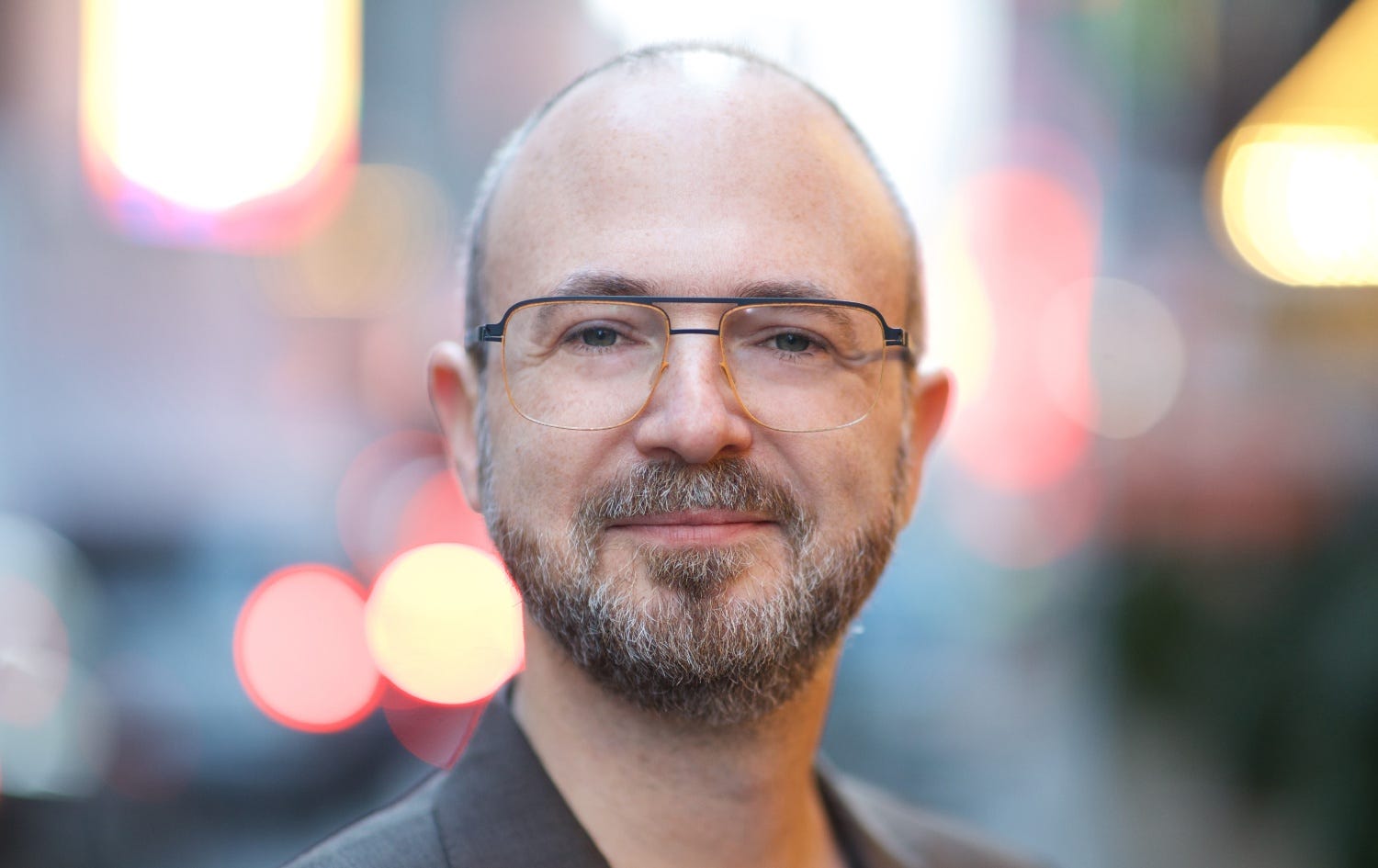
The person attempting to navigate this rocky terrain is CEO Nelson Abramson, a longtime veteran of data center infrastructure at Google and then at X. I’m going to talk with him today about the claims Verrus makes on behalf of its data centers, the technology it is using to back up those claims, and the political minefield he is attempting to traverse to actually get these data centers built.
Chapters
00:00 – Introduction
02:43 – Three decades in data centers
05:05 – What a Verrus data center looks like
07:39 – The medium voltage power plane
12:13 – UPS batteries vs. the big LFP battery
17:27 – Priority aware capping and provisioned utility capacity
22:31 – Why not buy the pieces off the shelf?
25:42 – Duration: what happens when four hours runs out
34:28 – Diesel backup and what customers ask for
37:15 – How flexible is compute, really?
42:37 – Noise, fans, and the sound studies
48:42 – Water use and the 12 million gallon question
52:19 – Industrial land and by-right zoning
56:07 – Public opposition, recall petitions, and community benefits
1:00:07 – Oregon, Salem, and the moratorium
1:03:56 – Ride-through, NERC, and losing the moat
1:07:11 – What V2 looks like
Resources
People & Organizations
Volts (Website - Podcast - Apple Podcasts - Spotify - YouTube)
Nelson Abramson (Verrus bio)
No Data Center Lyon Township (Website)
Company & Industry News
Verrus plans three-building data center campus outside Portland, Oregon
Salem council starts data center moratorium, but the vote may not reach the project that prompted it
Project Flex one year later: residents make their case as Lyon Township faces a pivotal September
Lyon Township residents push back on data center as developer threatens lawsuit
Books & Articles Discussed
Vulcan Test Platform: Demonstrating the Data Center as a Flexible Grid Asset
Verrus demonstrates grid-interactive data center technology at scale, in collaboration with NREL
ON.energy launches medium-voltage UPS built for AI data centers
Related Volts Episodes
Related Volts Posts
Transcript
David Roberts: All right then, with no further ado, Nelson Abramson, welcome to Volts. Thank you so much for coming.
Nelson Abramson: Well, thank you for having me, David. Excited to be here and have this really important conversation.
David Roberts: Yeah, we got so much ground to cover. I’m anxious. Let’s do this. Let’s get into it. So you spent a decade working on data centers in Google, and then you worked on infrastructure at X. What did you see in the conventional data center world that you thought, “That needs improvement. I need to do something better”? What is wrong with the conventional data center approach?
Nelson Abramson: Just to clarify, I spent two decades at Google.
David Roberts: Two decades, goodness.
Nelson Abramson: I’ve been almost three decades in data centers overall. I spent my entire career working in and around, working about data centers.
When I first started, first data center actually I worked in was a converted Hechinger’s, which was a hardware store that no longer exists, but some of your listeners may be familiar with. And it was not a purpose-built data center, it was literally a Hechinger’s, and they had, you know, managed to stuff in some electrical and mechanical systems. And it was less than a megawatt, the whole data center. The next generation NVIDIA racks are gonna be a megawatt plus each per rack. You know, on the one hand, that seems a million years ago, but in reality, it actually wasn’t that long ago that a megawatt sounded like a lot of capacity. And so what’s happened over the last, you know, 30-ish years, data centers have gotten significantly larger. You know what, 50, 100 times larger.
But the core design, the basics of how we’ve been doing it hasn’t changed that much. It’s gotten a lot bigger. They are where there used to be one one-megawatt system, now there’s, you know, 50 one-megawatt systems or 50 two-megawatt systems kind of thinking. But it fundamentally has been the same ’cause it’s scaled. It scaled, it worked, you know, and it seemed like it would keep working.
And I think what brought me to Verrus, what brought the team to Verrus was the recognition that there’s an opportunity to rethink how we design, how we build, how we operate these systems in each of the different domains that data centers operate, ’cause they are, from my perspective, a fascinatingly multidisciplinary problem space.
And when we’re talking about something that’s, you know, 500 megawatts, a gigawatt campus, it really lets you step back and go, “Okay, this is no longer industrial real estate that happens to consume power. It’s really an energy asset that happens to consume real estate.” And so when you think that way, it really opens the innovation space, the thought space of like, hey, there’s all these things we could do once you look at it that way.
David Roberts: All right. So then let’s just start this way. Just walk me through... I mean, there is not yet a Verrus data center, but the data center, the Verrus data center of our imagination, walk me through it. Just tell me like from the outside and from the inside. How does it look different? What am I seeing when I walk through it that would mark it as different from a conventional data center?
Nelson Abramson: Yeah. Maybe we’ll talk specifically about the proposed Detroit project, ’cause I think that’s the one that if people are familiar with us, they’re probably familiar with the Detroit project. So a couple of pretty big things that you would notice when you first get on the Detroit campus. The first would be we don’t have diesel generators, which is a pretty big hallmark feature for conventional, you know, traditional data centers.
Because instead of big diesels, what we have are very large arrays of batteries, the same kinds of batteries that utilities and independent power providers have been building for quite some time to store and provide energy for the grid. We’re using it as our primary backup source in Detroit.
David Roberts: And these are, just to make a note, LFP batteries, correct?
Nelson Abramson: Correct. For Detroit, that’s correct. We’re not particularly ideological about the particular battery chemistry.
David Roberts: Hmm.
Nelson Abramson: There are a lot of people working on really cool options, but right now, the best combination of features and economics are LFP, which also, you know, super safe. There’s a long list of reasons why LFP is actually a great technology platform for batteries right now for stationary storage.
Second big thing you would notice would be instead of big evaporative cooling towers that I think many people associate with data centers, which are the driver of large scale water use, instead what you see are air-cooled chillers. And so these are much more similar to the kind of air conditioning that you get in traditional office buildings, in your own home. And the upside is with advances in the chiller technology, we’re actually able to use, you know, 95, 99% less water than a conventional data center with these air-cooled systems.
Once you start going inside, a lot of the innovation, you know, would be hidden behind walls obviously, but instead of it looking like traditional radial design where the capacity is broken up into small chunks and then you get kind of stuck with how you deploy the racks inside of it, our systems combine a large scale power plane that allows us to move the power across the entire data center to provide capacity for wherever the customer’s racks need it.
David Roberts: We’re gonna get real nerdy. We’re gonna get real nerdy here. We’re gonna dig into all the things you mentioned.
Basically as I understand it, there are three big technology pieces that you are combining that add up to what you’re calling sort of a fundamentally new kind of data center, and I wanna sort of walk through them one by one.
The first is what you just mentioned, it’s called a medium voltage power plane. I’m guessing this means virtually nothing to anyone in the audience, so maybe walk us briefly through how conventional data centers distribute power versus a medium voltage power plane. What is the relevant difference there?
Nelson Abramson: Yeah. So I’d say two big differences... Well, it depends on how nerdy we wanna get here, but assuming we wanna stay sort of medium level, no pun intended there, I think the first is in the name, which is it’s medium voltage, not low voltage. So traditionally in a conventional, traditional data center, you convert from utility voltage down to rack voltage pretty quickly, and you distribute out that way, and that’s just less efficient than it could be.
David Roberts: And involves a lot of copper. The more racks, the more power you have, the more copper you’re dealing with, and you’re also getting heat losses as the power goes through all that copper.
Nelson Abramson: A lot of copper or, and aluminum. Big time. Big time. And in data centers, we actually have to use kinds of connectors and distribution that most normal people would not find familiar.
Busbars and these massive cables, like diesel locomotive cables, what they’re called, ’cause that’s where they were originally invented. All kinds of non-traditional ways of moving, because the amount of power being moved is so big and the voltage oftentimes is quite low.
And so that allows us to gain some efficiencies. It also lets us do the second piece, which is when people think about data centers today, they generally think about these very large megawatt numbers, which is all true, but when you get down to the racks on the floor, that huge megawatt number has been broken down into these tiny little buckets of capacity. And so when you’re a capacity planner, when you’re a customer worrying about how to deploy your racks, you actually end up having to think not in, like, 50 or 100 megawatt chunks.
You end up thinking in, like, 500 kilowatt, two megawatt chunks, like these actually pretty small units of deployment, because that’s how the power has been bucketized.
And as a result of those two elements, as a result of those two changes due to our power plane system, we’re able to get something like a third more racks into the same underlying data center capacity.
David Roberts: But just to be clear for everyone, the servers themselves cannot use medium voltage power, so it has to be stepped down before it goes into the actual server, right? It’s just it stays medium voltage for longer.
Nelson Abramson: Yes. Very good point. So yeah, the sort of, like, quote-unquote, “last mile” is always gonna be low voltage. I mean, in the end, servers don’t even use what we would traditionally call low voltage. They don’t use 120 or 240 volts. They use 12, six, nine — like, the components on the servers themselves are these, you know, these tiny solid state components, and they end up using very, very low voltages ’cause that’s what they’re designed to do. So you wanna convert it to 120, 208, 240, very, very close to the rack, ’cause that’s gonna be your most efficient implementation.
David Roberts: Right. And so the upshot of this, the consequence of this, is that in a conventional data center, once the power is put into that bucket, one of those buckets you talk about, it’s there and cannot be taken back out and shared with the rest of the data center, basically.
In this medium voltage power plane, this allows you to share power from anywhere in the data center to anywhere else in the data center, basically. Is that right?
Nelson Abramson: Exactly. And that means that, again, we have these kind of black box monolithic thinking about how data centers work, but in the end, a data center is composed of thousands, tens of thousands, maybe hundreds of thousands of servers, and not every server is busy at the same time.
Many of the servers are idle, and while many of the other servers are going full blast. And so what the sharing allows you to do is take advantage of the fact that you have these huge domains and you can have more total servers because you know statistically a decent fraction of them at any one moment is, are gonna be idle.
David Roberts: Right, right, right. So that’s the medium voltage power plane.
Second piece is the big battery. So this is like data center 101, but maybe just distinguish between what is a UPS versus what is this big battery, and does the medium voltage power plane allow you to share power among and between them?
Nelson Abramson: Yes. So in a traditional data center, we do have batteries, as you’re bringing up. They’re usually batteries designed for something like five minutes of runtime.
David Roberts: Mm-hmm.
Nelson Abramson: They’re generally, as maybe surprising as it would sound to your audience, they’re usually lead-acid batteries, the exact same kind you would find in a car. Just a lot of them.
David Roberts: And these are down near the servers, right? Like in those buckets you’re, you were discussing earlier.
Nelson Abramson: Yes, exactly. They’re very, very close to the servers. They’re usually battery rooms literally adjacent to the server rooms. And they’re one of the reasons why a traditional data center has to convert to low voltage very early on is because these batteries for the UPS are designed to take load the moment there’s any utility interruption, which means sub-cycle, so sub 1/60 of a second.
David Roberts: Right. The function of these UPS batteries, which by the way stands for what? Something power system?
Nelson Abramson: Uninterruptible power system.
David Roberts: Right, is to just smooth out those very brief fluctuations so that the servers are getting steady, reliable, high-quality power, just kind of smooths at the very end of the line, right?
Nelson Abramson: Exactly. And that means that they have to be in line, which means you have to have converted... You’re converting to low voltage right in front of them, and that’s one of the places in which you have to bucketize the power.
David Roberts: How is the Verrus system different?
Nelson Abramson: So our system uses BESS, and one of the big differences is BESS does not have to maintain-
David Roberts: This is battery energy storage system, yes?
Nelson Abramson: Yes, exactly. Exactly. So the large scale batteries that we’re using are not necessarily designed to take load in less than 1/60 of a second. What they’re designed to do is to give us a long-term runtime when there is a sustained utility outage.
David Roberts: Right.
Nelson Abramson: And for the short term, which is still a real thing, what’s happened in the industry is that most server and racks have moved to local battery storage, because as strange as it sounds, a room full of car batteries is actually less efficient of an implementation than putting a little battery on every server.
David Roberts: Hmm. And what are those little batteries?
Nelson Abramson: They’re mini versions of the car battery, but what happens is, if you think about the circuit diagram of what the system looks like between the two cases, a world where you have a UPS room, you’re taking your utility power, you’re converting it from whatever voltage it’s coming in at, you’re converting it to 12 volt DC, ’cause batteries like DC.
You’re charging the battery. You’re then converting it from 12 volt DC back to AC, you know, 240 volts or whatever it’s gonna be, distributing it to the servers. The servers are then converting it from 240, let’s say, down to 12. Each one of those steps, you’re losing a meaningful fraction of your power just in straight heat loss.
And so when you take the 12 volt battery and you take it out of the room and you put it behind the 12 volt power supply in the server, you’ve taken out two whole steps there. Which more than pays for, like obviously it’s less economically efficient to have 10,000 batteries than 100, right? Like more batteries, more packaging, et cetera. But the energy savings, and particularly it’s every single kilowatt hour that comes through is more efficient, is wildly more efficient overall.
David Roberts: But to be clear, it’s still the UPS batteries that are doing the smoothing of the microsecond fluctuations for the servers. The big LFP battery is just for the power coming into the racks still. Like the LFP battery’s not doing any of that sub-second stuff. Is that right?
Nelson Abramson: Yes. Generally speaking, I think we’re close to a world where it could do both.
David Roberts: Just ’cause batteries are getting better, or the architecture is getting better?
Nelson Abramson: Yeah, batteries are getting better, inverters are getting better, power control systems are getting better.
David Roberts: Is there a world where you can take the UPS out and just use a big battery? Like if battery’s good enough, is that a possible world someday?
Nelson Abramson: It’s definitely possible. I think there would be interesting conversations of whether end server users would want to trust that. Also, given like the density of power distribution, like when you look at the latest and greatest GPU, TPU kind of rack systems, these are so power dense, they end up having like sidecar systems to them. And, you know, I think in that world, I’m not sure it would be expensive enough to not just put the batteries in anyway.
David Roberts: Okay. So you got the big LFP battery basically for large scale. When the grid needs the data center to use less power, that’s what the LFP battery is for. And then the third piece, and don’t worry, long-suffering readers, we’re almost done with the most intensively nerdy part.
The third piece is priority aware capping. And this, as I understand it, is a little bit like what we were discussing with Emerald AI, which is at some point, if the grid is demanding you use less power long enough, you’re gonna run the LFP battery out, and then you need the compute to scale down to use less power.
And priority aware just means that the compute in the building is prioritized into layers, and there are certain layers which can be dialed down and certain layers which can’t, certain layers which have priority and certain layers which don’t. Is that right?
Nelson Abramson: Yeah. So that’s a place where we partner closely with our customers.
David Roberts: Right. That’s the tenant of your building that’s doing that.
Nelson Abramson: Yes, exactly. And so to tie this into maybe your conversation with Emerald AI, that’s a great example of how these kind of thinking, these kinds of systems are additive to each other. And so what we provide is the ability to manage the energy storage, the visibility into the energy consumption, the sort of understanding of the why, what, and how what’s happening when there’s a utility outage, which, to be clear, is incredibly rare at these voltages.
And then the customer needs to take that information and decide how they wanna manage it. And in my experience, everybody has layers of priority because that’s the way they have to manage things day to day to get good utilization out of the systems themselves. Because these servers are so large and have so much capability, so many processors, so much compute capacity, that you have to have all different kinds of uses all getting statistically multiplexed together into these huge clusters to have any hope of having an average utilization that looks reasonable.
David Roberts: Okay. So those are the three big pieces. We’ll return to the question of the tenant later. But I think the sort of upshot of all this, and what you’re sort of boasting for your data centers, is that for a given utility interconnection, you can use more of it, you can better utilize it than conventional data centers.
It’s called provisioned utility capacity. This is like, in other words, the amount of power that the utility’s offering at the interconnection, you can make more use of it than a conventional data center. Is that right?
Nelson Abramson: Yes, exactly. In the end, data centers, one way to look at them... I mean, I usually like to call them information factories, but another way to look at them is they are basically conversion engines from utility capacity to compute capacity. And the whole reason we build data centers is to have compute capacity.
I mean, compute and storage, yada, yada, but like simplistically just compute ’cause it’s less words. And so anything that you can do to get more compute out of a static amount of utility capacity is first order optimization value, right? Like utility can only build so fast. They can only deliver so many watts into each location.
And so the way that you make everything better is get more out of the same thing, right? The most efficient data center is the one you don’t have to build. And so my normal snarky pitch, right, is you lease three Verrus data centers, you get the fourth for free.
David Roberts: Yeah, and just to put numbers on this to give the audience some sense of scale, you advertise... And again, these are all sort of like, you know, this is all sort of modeled data centers versus modeled conventional data centers. But you say you can get up to 77% of that provisioned utility capacity, whereas a conventional design gets about 49%, a not small delta.
Nelson Abramson: Yeah, it’s pretty significant, and, you know, I wanna push back a little bit.
It’s not entirely theoretical. This is based on work that I’ve been doing my whole career, that the team has been doing their whole career. It’s based on technology that is well understood, just implemented and instrumented in novel ways. We have a working pre-production environment in our headquarters in the Bay Area, and we’ve been working now, I think it’s almost 18 months, with the National Lab of the Rockies, along with MISO and Xcel, on a full-scale test bed in their lab, NLR’s lab, modeling the actual utility interactions and, you know, things like the stability of the grid, our ability to ride through the two PJM interruptions that happened over the last three years.
David Roberts: Yeah, we’re gonna get back to those in a minute too. By theoretical, I just meant there’s not yet a data center that you can point to say, “Look, we’re doing it there. We’re doing it in a commercial data center.”
So here’s a question. All of these tech advances that we just discussed, the medium voltage power plane, the battery backup, the priority aware capping of compute load, none of those are brand new. And in some sense, like you can get them individually off the shelf. Like you can go to Emerald and get the compute capping. There’s a company called ON.energy that will go install battery backup at any data center. I think the medium voltage thing like traces back to a 2020 paper that some of your guys wrote at Google, I think has been deployed before.
So why shouldn’t an existing data center just buy these pieces off the shelf? What is the advantage of going to you? What is the advantage of you integrating them?
Nelson Abramson: I think it’s a great question. I think there’s three big elements. The first is, you know, maybe to the previous point we were just debating of like the level of theory, the more you think that there are people out there doing elements of what I’m talking about and selling it, I think the more you should have confidence that what I’m saying is real and will deliver the promise that I’m laying out.
Second piece is, in my experience, you’re almost always better off with a fully integrated solution than bolt-ons. And so I think it’s just sort of true, like one of the big advantages once you have a fully integrated solution, like you can have trade-offs between the different elements, you can have a pooling between the different parts. Like in the end, what you build is a much more integrated whole.
And then the third is, it’s not just about building it, it’s about how do you measure and operate it and optimize it. And so sure, even if you don’t buy my second point that you’re better off with a fully integrated solution, how are you going to then instrument your telemetry, optimize your system, and run it effectively to actually deliver the efficiency improvements and the value that I’m talking about?
David Roberts: Is some of this also about business model, right? Like this is a single contractor signing with Verrus, and Verrus is on the hook and liable for all these promises. I mean, is the business model part of the kind of innovation and integration here?
Nelson Abramson: Yeah, for sure. Oh, well, thank you. That should’ve been my fourth point. In the end, who do you wanna be on the hook for delivering it? You’re gonna have five different vendors that you call and have all of them like point fingers at each other, or you just wanna have me on the hook? And you know, we’re signing up to deliver the outcomes, the efficiencies, the operating points, and the SLA. That’s my job.
David Roberts: What’s SLA?
Nelson Abramson: Service level agreement, sorry. That is the contractual promise of what kind of uptime and the facility will have on the electrical side, what kind of temperature will we maintain, humidity, et cetera. This is pretty meaty part of each one of these data center contracts.
David Roberts: Okay, let’s talk about duration. Well, you know, when I talked with Emerald AI, one of the things they said is the advantage of doing this via compute rather than physical batteries is that you can dial back your compute more or less indefinitely. But like your big battery, your big LFP battery, if, you know, if the grid goes out and you have to switch to the battery to reduce power draw, that’s gonna run out at some point, in four hours, as I understand it, if you’re running the whole data center.
And now, of course, I read the Duke paper that everybody, the Nicholas Institute paper that everybody references. And one of the things that the Duke paper says that the average call from a utility to a data center to reduce power is like two hours, is less than four hours. But then my question is, what if you have like a heat dome that lasts for a week, and so every afternoon you’re called on to reduce, and then you have to recharge the battery after it goes down, but like the heat dome is there the whole time, and then like the second day you’re starting from 60%, the third day you’re starting from 40%. At what point does the battery run out and the tenant have to start cutting back on compute? How much duration can you handle, I guess, is what I’m asking.
Nelson Abramson: There’s a lot in there. So we’ll take a sort of a step at a time. So the baseline design is four hours. That’s not random.
David Roberts: That’s running the whole kit and caboodle.
Nelson Abramson: Yeah. So four hours calculated on a, what’s called a design day from the mechanical side, meaning the hottest day within the last 50 years, hottest, most humid in the last 50 years, while every single server in the facility is operating at 100%, and the facility’s 100% full. And, you know, we have redundancy, we have to take into account like cell life.
So like when we say four hours, you know, it’s a nominal four hours, the reality is it’s actually a fair bit longer, and it’s four hours measured at the worst case of the worst case. It actually has more than it would sound. But the four hours is not random. It is based on the way that utilities plan and the way that demand response and capacity in the utility markets are designed, which is generally two to four-hour strips.
So when a utility is negotiating with on-demand resource, they generally talk about two and four-hour strips. And this is not, you don’t have to take my word for it. You can go look at how the RTOs design these programs. Even in a heat dome scenario like you’re talking about, the utility, the grid is not at a singular utilization for the whole heat dome. The day to night variation in temperature obviously swings a lot. Other uses swing a lot.
So in general, even in the heat dome scenario you’re talking about, the utility actually only has a problem for part of the day. Generally...
So if we talk about California just from a perspective, ’cause it’s an easy one, California from 8:00 AM to 4:00 PM has surplus energy, usually exporting oftentimes solar, because there’s so much solar in the state of California, and for a lot of the state it’s actually quite mild. They’re producing all this solar energy. From 4:00 to 8:00 PM, you have a massive drop-off of solar, and the wind generally doesn’t pick up until something like 8:00 or 9:00 PM at night. And so the peak for California is actually 4:00 to 8:00 PM.
And so when we have a grid emergency, which is a technical term, which is when they call extra resources and when if you have batteries in your home and you are enrolled in a virtual power plant demand response program, when you will be called, it’s from 4:00 to 8:00, generally speaking. That’s when they have a constraint. And the same will be… the same is true, that we don’t have to treat it as theoretical, we can look at the actual data. The same is true when you have heat domes in the Pacific Northwest or in the Midwest. There are these constraints only for relatively short periods of time.
And so, you know, making sure that we have the ability to deliver the demand response as a firm capacity product for those four-hour strips, and then have recharge capacity, so enough spare utility interconnect that is non-firm, you know, the electrical capacity to actually deliver that recharge power to the batteries, that’s one of the things that we have to do, and it’s part of the calculation and part of the conversation with the utility.
But it’s also we would only be recharging when the utility is not otherwise constrained. And then the final piece there is, it is definitely true that you could reduce the compute load indefinitely, theoretically, because that’s a choice that somebody is making versus batteries are a finite resource.
However, the whole reason a data center exists is to run servers. It just doesn’t seem like the best use of the capital in the data center to use the servers as a virtual battery. If we need 12 hours, we can install 12 hours of battery for a lot cheaper than 3X numbers of servers.
David Roberts: What about when you get to, like, 48 hours, though? Is that just never gonna happen? I mean, I’m sure you’ve done a lot of modeling on this. Like, do you think that having a four-hour LFP battery is going to be enough in the vast majority of cases, I guess, is the question?
Nelson Abramson: From what we see, looking at the data, and again, this is not stuff that we have to guess at. We can look at published data from a number of different sources. One of the places that we like the most is NRC data, the Nuclear Regulatory Commission, because they publish very detailed utility data, and as long as you’re close to a nuclear reactor, you actually can take advantage of that data source. Four hours is more than you need from an outage perspective, and it meets all the requirements from a demand response capacity product. And so there is definitely a future where there are lots of cool technologies I’ve seen that are not yet ready for full scale, but I think will be soon, where you could do some kind of non-combustion, very long-term solution.
But also the data suggests you don’t need it. Not just suggests, like strongly says that you don’t need it.
David Roberts: You’re talking about stuff like fuel cells or these Mainspring, these linear engines, all these non-combustion type of generators?
Nelson Abramson: There’s that. I’ve also seen battery chemistry technologies where you can effectively swap the energy storage medium real time.
David Roberts: Mm.
Nelson Abramson: And so you can kinda treat the battery as a consumable resource similar to gas. There’s a lot of cool technologies, but the reality is, I mean, think of what it would mean for the 230 kV system to be down for 48 hours. That is a level of disruption where I think whether your phone is working properly is probably not the top concern.
David Roberts: It is quasi-apocalyptic. But still, like, so these battery you have, like, you’ve got these day-to-day supplementing, moving power around the facility as sort of this oversubscription, this sort of getting more out of the interconnection. You’ve got it being used as backup in an outage or a demand response call.
You’ve got it providing grid services, allegedly. That’s, like, a lot of different claims on the same pool of energy. There’s no scenario where all those demands start piling up and you run out, basically?
Nelson Abramson: That goes back to one of the previous points we were talking about, which is who you wanna be on the hook to run this effectively and optimally for you. And, you know, do you want it to be yourself or do you want it to be us? And I think you want it to be us.
David Roberts: And you said you don’t have diesel backup, but as I understand it, the Michigan, the papers you filed in Michigan do show that there is some diesel backup, and there are some natural gas generator backup in your other plants. Like, you have to have, you do have to have some firm capacity just in case, right? Don’t you?
Nelson Abramson: So for Michigan, we have a, like a very, very small number of diesels that’s required by the fire department for life safety purposes, and this is pretty typical. The pumps for the sprinkler systems, lighting, these kinds of things have to be diesel backed up by code.
David Roberts: Hmm.
Nelson Abramson: But that’s, we’re talking, you know, these are kilowatt scale, or 100 kilowatt scale kind of generators, not the generators people are thinking of, just to be clear. These are generators that are exist on every single large scale development pretty much everywhere, because the fire department rules demand this. I mean, we’re all safer because of it.
David Roberts: So are you saying the only reason you’re gonna have any firm capacity, whether it’s natural gas or diesel, attached to your data centers, is by law? You don’t think in the operation of the data center you’re ever going to need them to run the data center?
Nelson Abramson: Let me be very clear.
For Michigan, the plans that we have submitted only have generators as required by law, by the fire department, by fire code. For the Salem project that we have submitted, there are diesel generators on the plan. This is a conversation with our customers. In the end, we have to get our customers to agree to whatever we deploy. And so my personal perspective is we do not need diesels. We don’t need long-term generation at the site. But in the end, it’s a final conversation due to a lot of different factors, including the customer perspective.
David Roberts: You mean customers, you mean the tenant of the, owner of the compute in the building?
Nelson Abramson: Yes, exactly. And so-
David Roberts: And they need firm backup because they’re anxious basically.
Nelson Abramson: Yeah, I mean, in the end, we’re all making forward-looking predictions on the future. And there are a lot of different people involved, a lot of different perspectives involved, and somebody who’s running generalized cloud kind of users might have a different perspective than somebody who’s running training, who might have a different perspective than somebody who’s running inference, who might have a different perspective than somebody who’s running, say, trading algorithms for markets, right?
And so there’s a lot of different customers, a lot of different perspectives, and a lot of different risk profiles. And so for these projects, oftentimes it’s about optionality, not necessarily what we need.
David Roberts: Right. Well, let’s talk about the tenants then. You know, we talked about the priority-aware capping, which is just a fancy term basically for should the battery run out and we have to do what Emerald’s doing, which is reduce the compute load, you have to have basically some of your compute marked with priorities, basically. Like, here’s what we can dial back, here’s what we can’t. Is that a requirement of a tenant of a Verrus data center, that they have that level of sophistication, that they have some compute prioritized and are able to do this capping if necessary? Like, is that something that they have to have to be a tenant?
Nelson Abramson: It is not a requirement. It is a value add-on, basically. It allows you to fairly finely tune your energy storage, longevity of these systems, et cetera. But in my experience across the industry, everybody has this internally. They have different versions of it. They have different levels of complexity to it.
David Roberts: I had thought that most compute is pretty firm and pretty not movable around, and it’s mostly, like, AI training and stuff that you can really dial back at will. Well, if somebody’s doing a server query for a Google search, they’re not gonna allow that to be capped or delayed. I thought most compute was firm. Is that not right?
Nelson Abramson: So it’s actually far more nuanced than that. So you can break it into a few different categories. So one category that’s easy to talk about, which is very non-firm, are... is usually called some version of batch, which is back-end processes that need to run with some level of regularity, but don’t need to run right this second.
And so, you know, for instance, when you go to process this podcast, it’s gonna do a whole bunch of back-end processing, and you’re like, “I don’t want this to take a week,” but it could take two hours instead of one hour. Right? Or five hours instead of one hour. And it would kinda be transparent to you. And so everyone who has any kind of system has an incredible amount of batch processing behind it. The next category it’s easy to talk about, you actually alluded to, which is, say, live user-facing queries or interact- some kind of live user interaction. So at the highest level, yes. You can kinda think of it as binary in the sense of when I do my Google search or I click a YouTube video, or I go to post something on Instagram or whatever, it needs to happen right now.
But the reality is, inside of that one action is not one monolithic thing. It’s 10,000 different things happening across, you know, 1,000 different services, right? It’s cross-posting, it’s updating indexes, it’s pushing the data to third parties, to other people that said, “Hey, this person just posted.” It’s how deep on the index does your query go?
How much time do you spend looking for long tail content? There’s all of these different levers that can get pulled, and so the lower bound is certainly not zero, but the lower bound is not 100%. There’s actually a pretty large range, and no one runs large scale systems without redundancy. And so you also have the ability to say that data center is currently unreliable or is down for maintenance or whatever, redirect all this demand to another data center. And so maybe it’s 10 milliseconds slower or 20 milliseconds slower and is not ideal.
Maybe you’re not showing as many ads, maybe you’re a little bit slower to update the feed or whatever, but there are tons of gray, and most of the rest of the stack, the services, falls in between these two extremes, where you have knobs.
David Roberts: Right. You’re making it sound like most tenants then will have the sophistication to be able to do this priority-
Nelson Abramson: Yes, for sure.
David Roberts: capping. Which makes me wonder, like, what is Emerald doing then? Like, why are they... You know what I mean? If everybody can do it anyway, if everybody can cap and move around their compute to respond to power needs anyway, why are they claiming to be so fancy? They just do it better, like-
Nelson Abramson: I mean, I think you’d have to ask Emerald. From my perspective, there’s always a lot that can be done to manage schedulers better and to integrate the optimization better. So I wouldn’t be surprised if there is a ton of opportunity, even if the compute users are managing their scheduler with this kind of knowledge, there may still be tons of opportunity to do it better, to make power a scheduling constraint, et cetera.
David Roberts: But the upshot here is the need to have this ability to do this priority-aware capping, as we say, is not a meaningful constraint on the number or type of tenants that can use your data center.
Nelson Abramson: Yes, it’s not a meaningful constraint. It’s also what people would need to leverage Emerald AI.
David Roberts: Right. Okay. Well, I wanna talk about, you know, you’re claiming to these communities in Michigan and Oregon that your data centers are quiet. What makes them quiet? Why are they quieter than normal data centers?
Nelson Abramson: There’s a couple of different elements. So one is the base case of, like, how loud is a normal data center? The noisiest data centers that people oftentimes reference are not the normal case. It does matter what kind of equipment you use.
It matters what kind of landscaping you use. It matters how you place this equipment on the ground. Like, there’s all of these details where it does matter what you’re using and how you’re using it. And so the base case is, I think, better than most people’s... If people who are worried about the noise and the extreme noisy ones, that’s not normal.
But that aside, on top of just doing, you know, proper design implementation, we’re going out of our way to build berms, to build sound walls, to use equipment where fans are larger and running slower.
David Roberts: Sorry to interrupt, but one of my questions is the closed loop cooling that you use uses a lot less water ’cause you’re not spraying stuff for evaporative cooling, but the trade-off is you use fans. You use air to carry the heat away, and fans, of course, make noise.
Nelson Abramson: So the trick is to use fans that are large that run slowly-
David Roberts: Mm...
Nelson Abramson: and that are, I mean, frankly, more expensive than they could be to get quieter ones, and to use what’s called sound baffles. So there are barriers that allow in enough air to make use of the cooling while interrupting the transmission of sound.
David Roberts: So if it gets hot enough, is there a point at which your fans are having to run so hard that they will make noise? Or is this under any conceivable level of operation and you think they’ll be quiet enough to not be bothersome?
Nelson Abramson: We are looking at not the best case, we look at the worst case. For the systems that we are proposing in Salem and in Lyon Township outside Detroit, in both of those cases, we also use a system called adiabatic cooling, which on those worst days actually dramatically improves efficiency and brings down the amount of work the chillers have to do.
David Roberts: That uses water, though.
Nelson Abramson: That uses water, but it uses relatively small amounts of water. It’s the... Anybody who’s been to a restaurant in the summer in Phoenix has experienced it. It’s a mister. So it literally mists the air near the chillers, and it cuts off the hottest part of the day through that misting.
David Roberts: The batteries need cooling too, right? And that’s not silent either.
Nelson Abramson: Yep. All of these these… I mean, every single piece of equipment, whether it’s a transformer or a battery or a chiller, all of these systems are moving heat and have to be cooled and have to be included in the sound calculation, and potentially have sound mitigation built around them.
David Roberts: And so you’re asking these communities to approve your applications based on these sound claims. But as I understand it, the sound study has not been submitted yet in Salem, and you submitted one, I think, in Lyon Township, but it hasn’t passed review yet and there’s some dispute about whether it’s good enough. Have these sound claims been independently tested yet, I guess, verified to the extent that the communities ought to be confident?
Nelson Abramson: So Salem, the sound study has not been done yet, purely for a, I think, very straightforward reason, which is you can’t study the sound until you have progressed the design and done the equipment selections that you know what you’re studying.
David Roberts: Mm-hmm.
Nelson Abramson: We only have done our first site plan submission in Salem, and so until we get a little bit farther with the city and settle sort of the broader site plan questions, the sound study just wouldn’t be robust enough to withstand your scrutiny.
David Roberts: Right. ’Cause it’s site specific in some sense ’cause you get these berms and the walls and everything and-
Nelson Abramson: 100%. To do a sound study, you have to take into account like the actual piece of land and what is the topography of the land and what else is there and where are the various sources of noise coming from, and it is very, very specific. There’s no such thing as like a generic sound study. You can pull up the spec sheets for pieces of equipment, and the vendors will provide you the data, but if the piece of equipment says it has, you know, whatever X numbers of DBs, that doesn’t answer the question you’re actually asking or what any community member would wanna ask, which is, how will this sound when I stand on the street nearby?
David Roberts: Yeah, yeah, yeah. I guess that’s my question. So are you willing to say categorically that the data centers you build in these places and elsewhere will not be obnoxiously loud, even if you are standing as close as you are allowed to stand given the setback?
Nelson Abramson: Categorically, our data centers will be quiet, and we will be operating them with sound in mind, as in we will be monitoring our own sound and making sure that we are holding to limits that we agree to with the local municipality.
For Michigan, we have submitted updated sound studies based on feedback from the township’s sound consultants to our sound consultants. There were very technical disagreements about, like, what kind of study is appropriate under these circumstances, whatever. You get too many experts in the room, everybody has an opinion.
That’s fine. We just agreed to do what the township’s consultants wanted us to do the way they wanted us to do it. It’s fine. There are different ways of doing it. They have one. We’re doing it that way. We’ve done it that way and submitted it. And the data, the modeling that I’ve seen says it’ll be a pro- in the neighborhood of a library level sound at the property line, which is well below what is actually allowed by ordinance.
David Roberts: Okay. What about water? Closed loop cooling uses much less water, I think, as a general matter. But unless I’m sort of misreading things, like there’s a December 2025 presentation to Lyon Township where you said you’re gonna use 15,000 gallons annually, and then there’s some July 2026 materials that say the annual usage will be under 12 million gallons, which are like several orders of magnitude different.
So what am I missing there? Is there a firm number on the amount of water you will use at this data center? And help us sort of like contextualize those amounts relative to, say, other industrial uses or whatever.
Nelson Abramson: Yeah. I’m not sure the 15,000 number you’re talking about, I haven’t heard. I don’t recall that one. It would also surprise me, just the order of magnitude. I think we’ve been pretty consistent with our numbers, although it has refined over time as the details have come into focus. But overall, the number of gallons has been pretty consistent. The, you know, reality is day to day, by design, like this, you don’t have to trust me, you can look at the physics, the design of the system. We have air-cooled chillers, which means on an average day, the water we’re consuming at the site is for bathrooms and landscaping. Like, you can look at what’s on the plan. There’s just nothing else to consume water. It wouldn’t make any sense to run the adiabatic system on a normal day. It would just be wasted money.
On the hottest day of the year, which we’re talking fives to tens of days a year in a worst case year, we will run the adiabatics, and that’s the bulk of our water usage for the whole year. That’s where you get the millions of gallons. In terms of how to compare it to something meaningful, because this is, I think, sound and water are both things that we don’t have particularly good intuition on. People don’t... Maybe you look at your water bill, but people don’t generally actually think how much water they consume on a day-to-day basis.
David Roberts: Yes. It’s very easy to just say, “12 million sounds like a big number.”
Nelson Abramson: Exactly, and 12 million does sound like a big number. Here’s what 12 million gallons is like. It’s like three Cheesecake Factories. Right? And I don’t mean to plug Cheesecake Factories, but, like, it’s just an easy number. And so is it a lot of water? Like, objectively, if you put 12 million gallons of water into a pond, would it look like a lot of water? For sure. How does it compare to other users of water?
It’s like three Cheesecake Factories. Acre for acre, it is dramatically less than agriculture. It’s dramatically less than golf course, although not everybody loves that metaphor, and, you know, it’s 95 to 99% less water than a traditional data center.
David Roberts: As you know, public resistance to these things is quite stiff, and people need quite a bit of reassurance. Would you be open to third-party monitoring of water and noise, and public reporting of those numbers?
Nelson Abramson: Certainly open to it. Our plan is to be monitoring our own noise and water, and controlling, and running our control systems with those as inputs to optimize. We’re happy to talk about opportunities to do third-party monitoring.
I think the water actually is already third-party monitored by the water company. And so, you know, I think that’s pretty straightforward. And then the sound, obviously there’s nuance to it and complexity, but certainly open to the conversation, and I... These are things where, like, if I were a resident of that community, I would want assurances and validation and enforcement as well.
David Roberts: Let’s talk about land. So you have been targeting land that is pre-zoned for industry, the point being that you then don’t have to go through long public approval processes. Your opponents in this Lyon Township case say that their zoning ordinance, that if you build an industrial facility over 100,000 square feet, you do have to go through this public review.
I guess I wonder, like, if you’re positioning yourself as a good neighbor, is that not a funky look that you’re targeting land where you don’t have to get public approval? Why would you not want to go through a public review?
Nelson Abramson: I mean, I think, so I guess maybe context is really helpful here. So I’ve been in this industry for coming up on three decades, and I didn’t invent data centers. They’ve been going on for a long time, and for my whole career, one of the big choice points that I’ve always faced in, during the site selection process, which is what we call the process by identifying and purchasing sites, is do you go for existing industrial land and land that allows you to build data centers by right, which is what the legal term is, meaning the land already has been identified by the community as buildable for this purpose?
Or do you go find agriculture land or some other use and get it rezoned for industrial? You know, each organization chooses different paths. You see a lot of people out there trying to rezone. In my experience, rezoning, when you take agriculture land is oftentimes the thing that’s usually the base zoning in these rural communities. It’s extremely controversial and has always been.
David Roberts: Yes. People get very touchy about using farmland.
Nelson Abramson: Exactly. But also that’s like the, one of the few ways you can find 1,000 contiguous acres is you go buy somebody’s farm. But it tends to be really controversial, and it’s always been controversial. Whether you wanted to build a data center or a factory or homes or a shopping mall, rezoning agriculture land, people get pretty upset about.
And so for my career, mostly focused on land where communities have already said, “We did a master planning exercise, and we decided that this tract of land is where we want industrial to go.” No different than if I was a residential developer and we were targeting places where the local municipality said, “This is where we want housing to go.” Rather than trying to rezone things. And so it’s the reason communities do that is because they want the development, they want economic investments, they want jobs, and some amount of jobs come from commercial, some amount of jobs come from heavy industrial, some amount of jobs come from light industrial, and each community gets to decide how they want their master plan to be structured.
And so the Michigan case, the tract of land that we’re working on has been identified as industrial since at least 1957. It was previously planned to be a Chrysler engine factory. That just never happened. And so this community, for something like 70-plus years, has identified this as a spot that they are looking to have industrial development. And so in my mind, it’s incredibly important and valuable to take that cue from the community and say, “Rather than arguing about changes to your master plan, rather than trying to change ag or forest or whatever, residential into industrial, you tell us where you want industrial to go, and that’s where we’re gonna go.”
David Roberts: And this raises a question which is maybe slightly delicate, and maybe you’re not gonna wanna answer it, but this is true. This was zoned industrial land, and so the city council, like when you applied, it’s by right allowed, and the city council was like, “Yes, this is zoned industrial. Yes, this is fine.” And then immediately, recall petitions were launched for every one of those city council members because people are furious about data centers. [I misspoke here. The Lyon Township Planning Commission granted the approval — the elected Board of Trustees never voted on it, which is central to residents' objection — and the recall petitions were filed against Board members. The township has no city council.]
And you are coming to this township, you’re offering a $10 million community benefits package, $5 million for infrastructure and resiliency, $2 million for public safety, $3 million for education and workforce, 210 permanent jobs on land that was already zoned industrial, and yet still there’s this kind of frenzy of public opposition.
And I just wonder, do you think or worry that the public opposition to data centers has, in some sense, detached from real empirical concrete concerns and taken on a life of its own and become a kind of panic that cannot be dealt with by any sort of concrete concessions or concrete community benefits or concrete zoning, and in some sense it’s released its bounds and become something that is not satisfiable by anybody offering anything? Do you know what I mean? Like, do you worry about this?
Nelson Abramson: So on top of the jobs, on top of the direct community benefits investment of $10 million, there’s also something like $300 million in property taxes that will directly benefit the schools, the township, the county over the next 17 years.
David Roberts: This is not a huge community either. Like, those are meaningful amounts of money.
Nelson Abramson: It’s a community of tens of thousands of people. I think it’s 28,000, give or take. These are big numbers.
David Roberts: Yeah, so there’s like measurably been millions of dollars of tax revenue, like almost per resident almost.
Nelson Abramson: The number that the impact, the positive impact is huge.
Oh, also there’s offsite improvements that benefit everybody. There’s a big conversation about a drain which benefits that whole section of the township that we’re gonna pay to improve. I mean, I think at the base of it, I think the people in Lyon Township and in Salem and across the United States are asking very legitimate questions that I think anybody, any reasonable person would wanna ask about the nature of development in their community, right?
Noise, pollution, resource use, look and feel, all of these things are totally valid, and I think they come up for any kind of development, whether it’s warehouse, factory, housing, roads, whatever it is. And, you know, my hope is to have these kinds of conversations with people who are open-minded and willing to hear the pitch, and we figure it out together. Because I think we don’t wanna say no data centers anywhere, because data centers underpin the technology that we all take advantage of every day. You know, it unlocks all kinds of future technology and future economic development and future capabilities I think we all should be really excited about, right?
We all want our bank app to be fast. We want our streaming services, we want our social media, we want our phone or our computer to work well and work quickly. We want podcasts, right? Like, every time you pick up your phone or touch your computer, it is pinging a data center, and thanks to physics, it has to ping a data center near you. But at the same time, we wanna do that in a responsible way. And I think so long as people keep an open mind on, like, “Hey, how can we make this work in a way that we’re happy with?” Then I think we can actually do some pretty amazing things together. That makes me excited.
David Roberts: Well, briefly, let me touch on the Oregon one. You were gonna buy this land, public land in Oregon, then governor came in and canceled that land sale in July without even having seen your plan submitted or anything else.
And so then the next day, you filed through a subsidiary to buy private land, which you then got the permit going before then the community passed a moratorium on data centers after that, which I think now, like you managed to get grandfathered in, but it sure looks like in Oregon, like you are trying to sneak in a data center in a place where they don’t want one. Is that the wrong read?
Nelson Abramson: I mean, I don’t think I agree. I mean, look, firstly, Salem hasn’t passed a moratorium. There’s a very specific process they have to follow. What they passed was a motion to examine a moratorium to that, to consider it, and something like another 30 days, they might be able to actually pass a moratorium.
So there is no moratorium in Salem. We’ve been similar to Salem, similar to Michigan in Oregon. This is land that has been an industrial park, an official industrial park, and even an enterprise zone, which is a specific economic development area identified by local community for at least 20 years. It’s former prison land. It’s surrounded by a municipal airport, a prison, three warehouses. It’s more or less an open field. It is land that has been identified by the local community for decades as where they want industrial development to go. And we are looking forwards to working with the governor, with the city council, with the local community and stakeholders on showing them what we’re building and why we believe it very much fits the definition of responsible industrial development, why it is gonna be a massive boon for the city of Salem.
It will- at when built, it’ll be roughly one-third increase in the property tax base for the city of Salem. One-third prop, like, that’s an incredible amount, plus hundreds of jobs, plus thousands of construction jobs, which again, are much longer term than I think people tend to think about, plus the jobs that our tenants, our customers will bring along. And so it’s a huge economic opportunity for the city of Salem, and we’re doing it in a way where we’re showing and willing to stand by our promises on being very careful with our resource use, low water, battery as our primary backup mechanism, the quiet, energy efficient, all of these elements. So, you know, we’re excited to let the facts play out and to work with all the local stakeholders.
David Roberts: It’s a little wild. I’m old enough to remember when small communities were competing to bring industry to their towns, precisely to improve the property tax base, competing for industrial uses like factories or smelters or whatever, that are, by any conceivable metric, louder and more polluting than a data center.
This is what I’m sort of getting at, and I understand why you don’t wanna take me up on this, but it does kind of seem like opposition to data centers has detached from these real, rational, concrete concerns and become something that is more about animal spirits. And it’s a real question whether it is possible for any data center developer to overcome that, no matter how polite or quiet or low water use.
Obviously, that’s out of your immediate control. Two final questions. I know I’ve kept you too long. Back to something slightly technical. On this question of ride-through, so I did a pod a while back on the new NERC regulations, ’cause the problem people might remember is that these big data centers, they’re very touchy about power quality, and so any time there are fluctuations in the grid, a lot of data centers will just flip off and flip to backup power, and then the grid would lose, you know, hundreds of megawatts, a gigawatt of demand, basically in the blink of an eye, often multiple sites at once.
This was disrupting grids, causing grid stability problems. And so there’s a lot of talk now about ride-through, which is data centers riding through these fluctuations without just flipping off the grid entirely. Because you have this battery backup and the medium voltage stuff, et cetera, et cetera, can do ride-through, can avoid this problem.
But Texas, I think, just made ride-through mandatory as of October 1st. FERC has NERC drafting some standards which might make this mandatory for everyone, and I wonder if it becomes mandatory for everyone, do you lose some of your moat, some of your competitive advantage? Just curious where you stand on making ride-through mandatory, and if it happens, do you worry about that diminishing some of your competitive advantage? There’s a lot there too.
Nelson Abramson: Yeah, no, on ride-through, we’re strong proponents. We’ve actually been working with NERC for quite a while on defining the ride-through standards because it’s been... I mean, I think it’s been clear to everybody in the industry, it’s certainly been clear to me and our team, and I would be shocked if it wasn’t clear to everybody else, that ride-through is a big thing and we have to do it.
There’s just no world in which you can envision connecting hundreds of megawatts, let alone gigawatts, to the grid without contemplating ride-through because that size of a swing on the grid is just destructive.
David Roberts: As has now happened a couple of times, like this is not a theoretical risk.
Nelson Abramson: As has now happened, and it is clear, you know, large scale data centers have to be planned as though they are extensions of the grid. They really just are. And so strong proponents of ride-through, we have been, and you can go check, we’ve been submitting comments and working with NERC on this question for quite a while. In terms of the moat, I mean, the reality is I’m looking forward to everybody building data centers the way Verrus is. I think that’s where the world goes.
I came on board, the team came on board ’cause we really believe in the vision and that this is the right direction for the broader industry so that we can all benefit from the future technology we wanna build, while making it economically affordable to build the underlying infrastructure. And so, you know, that on one hand I look forward to having no competitive moat ’cause everybody has copied us ’cause it’s amazing. On the other hand, it’s on the team to continue to innovate so that the V2 Verrus data center is even more impressive.
David Roberts: Well, there you’re teeing me up perfectly for my final question, which is from a pro-social point of view, as you say, it’d be better for everybody to be doing data centers this way, and it may be that there are legal requirements coming along that force everybody to do things the way Verrus is doing them.
Less water, quieter battery backup rather than these loud polluting jet engines or whatever the hell Elon’s using in Memphis. Everybody converging on that be great for the world, but would not be great for your competitive advantage. So in terms of ongoing innovation, staying ahead of that, what is next, what does V2 look like? Obviously, maybe you can’t tell us everything, but like what types of things, where do you see areas for substantial non-incremental improvement? Where are the big buckets where you might see further innovation?
Nelson Abramson: Oh, David, you’ll just have to have me back.
David Roberts: Is that a whole separate pod?
Nelson Abramson: That’s a whole separate pod. No, I mean, look, this is the ground floor of innovation that is possible, and I’m really excited about the roadmap that we have and the future that’s possible, and I look forward to future podcast episodes where we can talk about, you know, the V2 and V3 Verrus data centers that we’re building.
David Roberts: Well, give us a tease. What broad types of things are gonna be innovated on?
Nelson Abramson: The underlying technology elements keep evolving. I think every year we’re gonna see new kinds of energy storage and energy generation technology, distribution technologies. I think there’s gonna be a continuing evolution of integration between the data center layer and the utility, and the data center layer and the customer layer.
You know, I think like if you imagine that the data centers really do become an extension of the utility grid, because I don’t know how you could think about 500 megawatt or gigawatt data center campus and not just see it as a continuing component of the grid, you know, you can imagine that there’s a whole universe of technologies possible on the grid that also might be really interesting in the data center.
David Roberts: And these are just power distribution, energy storage?
Nelson Abramson: All of the above. I think there’s so much development happening. I’m seeing very interesting technology innovation across the stack, whether we’re talking batteries, transformers, superconductors, cooling technology. What does energy distribution mean when a single rack wants a megawatt?
Like all kinds of things that don’t make any sense at a 10-megawatt data center or 100-megawatt data center start becoming technologically, operationally, commercially very interesting when we’re talking about gigawatt scale.
David Roberts: And what about more pieces of the puzzle using DC to avoid some of these DC-AC conversions? This is something I might do a full pod on later. Is that something in your line of sight?
Nelson Abramson: You know, I think DC is another very interesting one. You know, as with all large-scale changes, there are complexities and nuance, right? Like DC has other challenges in terms of disconnects and having proper segmentation between the systems ’cause you can’t use transformers.
Like you open up a new bag of challenges that have to be solved, but we’ve been talking about the possibility of DC distribution and in particular like, you know, reasonably high voltage DC distribution for quite a while. There are definitely some interesting opportunities there, and I think it’s like maybe there’s a race between DC and superconductors.
David Roberts: Interesting. And in terms of integration with... Like are you working with the integration of the compute itself? Right now, my sense is like the compute itself and the power part have been sort of separate buckets in the past, the power part, the grid part, et cetera. Closer integration between those, like are you in talks with the owners of the compute, the Googles and the whatever, the people who are doing the computing, to get closer integration between compute and power?
Nelson Abramson: Oh, yeah. I mean, I think there’s two different dimensions to that. One is on the actual power side, so you know, there’s no way to conceptualize half megawatt or megawatt rack without thinking of it as an extension of the data center. And any more than you can think of a gigawatt data center without thinking of it as an extension of the utility grid.
And so that’s one side of it. On the other side of it, which I think is actually more surprising, is the information pathway. And so one of the big challenges that we have as an industry is we don’t have good communication pathways between utility to the data center to the compute user, compute scheduler. And, you know, that is a very active area of investment on our part.
David Roberts: Interesting. Well, I guess we’ll have to have you back when some of this stuff happens. We can talk through all this. Thank you to you, and thank you to stalwart listeners who have made it through this far. Truly hardcore interest in data centers required, I think, but is endlessly fascinating to me. So thanks for coming on. Thanks for walking us through it.
Nelson Abramson: Really appreciate your time, and definitely a plus one, I appreciate your listeners’ time as well. A set of topics I’m incredibly excited to talk about, and yeah, appreciate your time and look forward to chatting with you again.


