


Beth Bafford spent years designing Climate United, a revolving fund meant to push out $7 billion of Greenhouse Gas Reduction Fund money to underserved communities. She had barely begun issuing loans when Trump shut the program down and rescinded all the money. In this episode, I talk with her about that experience, the ongoing legal fight to reclaim some of the money, and the central importance of finance in clean energy policy.

📌 Instructions to add paid episodes to your preferred podcast app via mobile / desktop
(PDF transcript)
(Active transcript)
Text transcript:
David Roberts
Hello, everyone. Greetings. This is Volts for April 17, 2026: “Climate finance, interrupted.” I am your host, David Roberts.
Clean energy has a finance problem. The technologies exist and they are increasingly cheap, but capital still doesn’t flow to the places that need it most — low-income communities, rural areas, projects too small to get on the radar of private lenders. Tax credits don’t help if you don’t have tax liability. And grants can rarely scale enough to cover the gap.
The Biden administration had an ambitious plan to fix that problem: the Greenhouse Gas Reduction Fund, $27 billion seeded into a new ecosystem of revolving funds and community lenders designed to continuously cycle clean energy capital into underserved markets for decades to come. It was one of the most innovative things in the IRA and almost nobody paid attention to it. (If you want the full deep dive, I did an episode back in 2024 with Jahi Wise, the EPA official who designed it.)
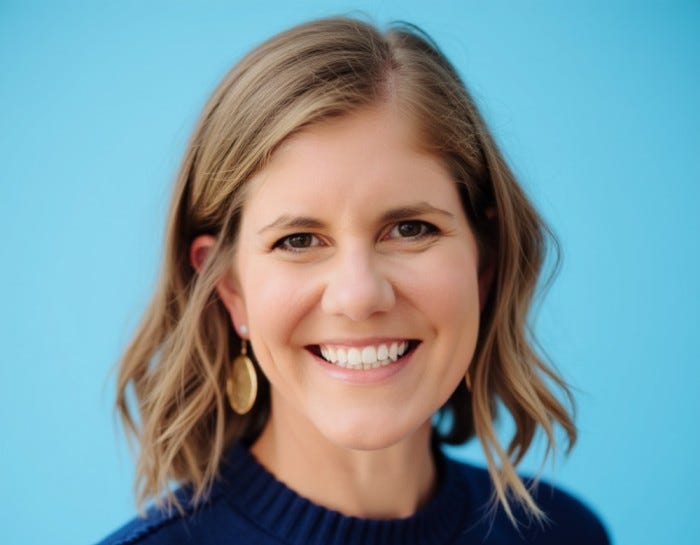
Beth Bafford paid attention. As CEO of Climate United — the coalition that won the largest single chunk of GGRF funding, nearly $7 billion — she spent years designing financial structures, assembling lending partnerships, and generally standing up the organization from scratch.
She got about $400 million out the door before the Trump administration froze the accounts and tried to kill the whole program. She’s been fighting in court ever since.
By the time you hear this, she’ll have left the job — her last day is March 31. So we’re taking the opportunity to talk while she’s still in the thick of it: what Climate United was trying to build, what the freeze felt like from the inside, and what the whole experience taught her about the role of finance in the energy transition.
With no further ado, Beth Bafford, welcome to Volts. Thank you so much for coming.
Beth Bafford
Thank you for having me.
David Roberts
Let’s rewind the tape a little bit and go back. This is not directly germane to our topic at hand, but I was charmed by it. I went back and read this piece of yours, several years old, about you leaving a high-profile Wall Street job to volunteer as an unpaid volunteer for the Obama campaign. You wrote a story about being on the subway going to quit your job, and you hear “Defying Gravity,” the song “Defying Gravity,” on your headphones, and it gives you strength. I have to say that everything about that is literally the most millennial thing I’ve ever encountered in my entire life. I love it.
And it really, I had forgotten because of — waves hands at current events — I had forgotten about that whole thing. There are many people with stories like yours. There’s a whole generation of people who were pulled into public service by Obama. Not just public service, but public service with a smile and some optimism and can-do spirit. That just seems gone now. But there’s a whole generation and I just wonder, who’s pulling the Beths into public service today? Where is that generation now? Do you ever think about that?
Beth Bafford
It’s funny you say that because, yeah, I think about it a lot and I talk about this with friends and colleagues a lot. That’s now my number one criterion for political candidates: their ability to attract and inspire blindly optimistic talent. Because no matter the side of the aisle or your policy preferences or your governance style, it’s really about how you govern, who you surround yourself with, who is interested, excited to come to work every day to solve these problems. And I think of it as what I call the Obama ripple effect. I have so many friends and colleagues from that time.
David Roberts
I interview people every week and they’re everywhere. They’re in state government, they’re running companies now, they’re running NGOs. That Obama diaspora has spread out now and is running things. And it just doesn’t — I don’t see a — maybe I’m wrong, but I don’t know that I see a wave coming in today in the same way.
Beth Bafford
Yeah, hopefully we will be surprised. I do think that training early on in your career — I talk to people about careers all the time — and that experience and training, not in any way that’s overtly political, just the experience of being a part of something, working with really inspired and talented people for a common goal, working your butt off 20 hours a day and existing on — I think I used to get quadruple shot lattes to make it through the day. The bond that we created with my friends and colleagues at that time is one that still exists 15 years later.
David Roberts
Then you worked for Obama for quite a while, ended up in the Obama White House and OMB. Then you went to OMB, then you went to McKinsey, and then you went to this Calvert Fund. This journey has given you this respect for finance — the underappreciated role of finance. Talk a little bit just about your experiences before the GGRF. How you learned and what you came to believe about finance as a tool.
Beth Bafford
Yeah, my eyes were really opened to the importance of finance and credit when I was an organizer on the campaign. Something that really struck me was that no matter where I was in the country, when I went to someone’s doorstep — and we went to thousands of doorsteps, knocking on doors and talking to voters — no matter where they were in the country, urban, rural, suburban, man, woman, race, background, economic status, people all wanted the same thing. They wanted a safe place to live for themselves and their family. They wanted a community around themselves that they felt a part of. They wanted a job with dignity and respect.
Many of the things that underpin those basic desires are things that are enabled or not enabled by access to the credit markets: the ability to buy a home by accessing a mortgage, the ability to buy or own a business by accessing a loan, the ability for businesses to generate and create jobs, the ability for a community to come together and build a community facility or a church or a place to gather or a health clinic. Many of those things — that basic community infrastructure — really rely on access to credit.
David Roberts
You worked in healthcare for most of that time, right? You were focused on healthcare.
Beth Bafford
I was focused on healthcare, yep.
David Roberts
Where finance obviously plays a huge role.
Beth Bafford
Absolutely. With that in mind, I went to business school after working in the White House and used those two years to explore this intersection. I knew that I had this mission in mind and wanted to help people access those basic needs. I knew that I wanted a finance and business toolkit. My mom’s a financial advisor. I’ve always been interested in the markets, and I knew that there was some area that those intersected, but didn’t know where I wanted to be. When I was in business school, I discovered this world of community finance and impact investing and got obsessed with that intersection.
When I landed at Calvert Impact, it was a dream to be in a place that specializes and focuses on understanding and addressing these chronic gaps in the credit markets and works with on-the-ground partners globally to address those gaps in ways that both generate a return, but also importantly, demonstrate that these markets are investable, that these are not things that are only required to be filled by philanthropy. There is a role for the financial markets in building these sectors. We do that across sectors in affordable housing, small business development, education, healthcare, agriculture, sustainability, and clean energy.
It was those building blocks and understanding of the local ecosystem of financial institutions across the country, paired with this centralized infrastructure to really think about market making, that led to our interest in applying for the Greenhouse Gas Reduction Fund.
David Roberts
Tell me a little bit about that. I’d love to hear that story. You’re working at Calvert, doing this work, and you apply for some GGRF money, and you get it. What did it feel like to get $7 billion dropped in your lap? Were you daunted? Did that feel crazy? Did that feel inevitable? Were you just excited? $7 billion blows my mind. I wonder what that felt like when it first landed.
Beth Bafford
Yeah, we were so excited. We were so ready. We had been working on the program specifically for years.
David Roberts
On the GGRF specifically?
Beth Bafford
Yeah, really, since the bill was passed. The IRA was passed in August of 22. We immediately started. We had been following the legislation, and we immediately started looking at partnerships, strategies, pipeline, trying to understand what the EPA was going to do with the program, building coalitions and partnerships and conversations. I probably met with hundreds of organizations that I had known from my job to understand how people were engaging, how people were thinking about leveraging these funds.
David Roberts
Were you leading that effort from the beginning? Did you raise your hand to run this thing from the beginning?
Beth Bafford
No. I was one of hundreds of people that were trying to pick it apart, understand how it was going to be implemented. The legislative text is a page. There was a lot for the EPA to design and interpret, really trying to understand what that was going to look like. We couldn’t interact with the EPA, and it was taking the time to develop our own strategy and said, if we were lucky enough to get access to some of these funds, what would we do with it? How would we put it to good use in a way that optimizes return for taxpayers and really pushes the envelope on the program’s objectives, which were reducing greenhouse gas emissions, providing direct benefits to people’s lives, and activating and transforming the financial markets?
That’s a big mandate. We worked for about a year to put together our strategy even before the applications opened, because once the applications opened, we had only 90 days to put together hundreds and hundreds of pages of an application to throw our hat in the ring.
David Roberts
Let’s talk a little bit then about what Climate United was, because I think one of the things I want to clear up here is I think people have in their heads that it’s just a bucket of money that’s given to you to spend and then when you spend it, it’s gone. That wasn’t quite right. These are supposed to be revolving funds that are set up as institutions, as enduring infrastructure. Talk a little bit about the structure of Climate United. What is it?
Beth Bafford
Yeah, absolutely. That is a common misperception that it was just another one of the IRA grant programs. I think of it as a bridge between a lot of the grant programs that were providing direct assistance to projects and communities and all the tax credits and incentives that were out there for the taking by private actors. We were meant to be the bridge between the two. How do you intentionally create these financial institutions that are going to communities that otherwise would not be benefiting from the tax credits and incentives? Looking at how to braid those resources with access to credit, liquidity, and finance projects and businesses that otherwise would not be financed.
David Roberts
Is a lot of that not just deploying your own capital, but trying to attract private capital too?
Beth Bafford
Absolutely.
David Roberts
Making it safer for private capital.
Beth Bafford
Once we got the requirements from the EPA, that was one of the mandates. Every dollar we invested had to leverage other private capital. These funds really went — and I will just break down for a second — the Greenhouse Gas Reduction Fund had three programs under it: the National Clean Investment Fund, the Clean Communities Investment Accelerator, and the Solar for All program.
The program that we were a part of was the National Clean Investment Fund. That really was the US government seeding three national clean financing entities, including Climate United, by essentially providing the equity on the balance sheet of those institutions that could be leveraged with private capital and do transactions in the market that the market is not doing alone.
David Roberts
But you were — the $7 billion — you weren’t just supposed to spend it down, you were supposed to make it back, like it’s supposed to be renewing itself, right?
Beth Bafford
Absolutely. We took a 30-year time frame with the objective of really trying to drive the US towards its 2050 goals. Those funds in our projections got bigger over time. We invest, we earn income from those.
David Roberts
Your pool you’re working with gets bigger.
Beth Bafford
Exactly.
David Roberts
Interesting. You start with 7 billion. I’m curious, maybe it doesn’t matter now, but at the end of 30 years, what was that 7 billion? How much growth?
Beth Bafford
I don’t remember off the top of my head. It certainly depends on different risks we take in different sectors and expected losses. But even with just the interest earned on the funds right now, it is growing. We did expect to see that grow significantly over the next 30 years.
David Roberts
When I hear about this, I think when ordinary people hear about this, almost everyone has the same question, which is: if there is a project where you could invest some money and have a reasonable expectation of making your money back and a little profit, why aren’t private banks doing it? Why do we need public money? If you are proving that you can make money in these places on these types of projects, why isn’t private money doing it instead?
Beth Bafford
Yeah, it’s a great question and a very common misperception. I will overgeneralize here for a second, but I look at the market for — I’ll say clean tech deployment, adoption of these technologies across sectors — in three main buckets. Bucket one is projects or businesses that require subsidy or they won’t happen. Those are projects or businesses where the math doesn’t work because of things like low cost of electricity, high transaction costs, where there’s significant technical support needed that’s expensive, or very small transaction sizes — solar on churches in a rural community. A lot of those types of deals really don’t pencil unless you have some sort of subsidy, we say “in the stack.”
David Roberts
You did those kinds of deals. You would subsidize. This wasn’t a purely money-making play. You would subsidize some kinds of deals.
Beth Bafford
Yes, but typically in the form of lower cost capital than the market would provide. It’s not subsidy in terms of giving a grant to the project. It is, we are doing a 25-year loan at 4% when the market for that is 12%.
And that’s where some of that is really needed to make the math work in some of these projects. Bucket 2 is projects or businesses that benefit from subsidy but are feasible without it. They’re profit-making but not profit-maximizing. Those tend to be things — reasons because of complex financial structures, high perceived risk, limited amount of data available in that market. People don’t really know what they’re getting.
A good example of that was the trucking program that we were working on where it was a pretty attractive financial profile, if you really understood and got in the weeds of the financial structure. But it was really complex and a lot of people didn’t want to do the brain damage to figure it out. That’s a lot of the market. What I call this bucket two is things that are feasible — they’re just not low-hanging fruit. They’re not on the top of anybody’s list if all you care about is profit maximization.
David Roberts
That’s interesting to think about. In terms of market theory, private markets are supposed to relentlessly exploit all those opportunities. It’s funny to think that there’s a huge tranche at the bottom that’s profitable but ignored because it’s complicated. It’s hard to fit that with my image of market efficiency.
Beth Bafford
It’s why a lot of these specialty green financing organizations have popped up. The trend of the banks and the institutional investors, they have gone so far upmarket because of consolidation and size and transaction costs that it has created this broad opportunity for people to step in who really care about that part of the market and make good money and have strong businesses. But there is a big gap that exists. That is why green banks have stepped in. That is why for-profit specialty finance companies have stepped in.
David Roberts
You go in and absorb the brain damage, and then presumably private money follows after that, correct?
Beth Bafford
That’s right. The private markets really look for standardized structures, things that have worked before and that will work again, or where there is significant data to show what is expected to happen.
David Roberts
And then bucket three?
Beth Bafford
Bucket three is just things that the private markets will do on their own. Utility-scale solar with identified corporate offtake, things that Brookfield or JP Morgan or TPG or any of the large banks or institutions will do.
David Roberts
You aren’t in the business of trying to tip large industrial-scale projects over the threshold into profitability. That’s just a different thing.
Beth Bafford
That was not a part of Climate United’s strategy. Our strategy was how to get bucket one and bucket two done in a way that demonstrated how the market could address these areas, but also in a way that brought some of the — and this is going to sound wonky — but the centralized market infrastructure that’s required to get the large players in, and that is not a small feat. It’s also not something that policy typically allows organizations or grantees to do. It was one of the parts of this program that was unique: it recognized the need for centralized market infrastructure if we are going to get the private markets to engage in this way. That’s things like standardization of lending products that can help with aggregate assets. Mortgage markets exist because we have standardized mortgage products.
David Roberts
Here’s a confusion: you are taking on what a lot of big private banks won’t, which is sifting through a large number of smaller, sometimes marginal projects. There’s a reason the big banks don’t mess with that: there’s a high transaction cost. There’s a lot of thinking and paperwork. Less juice relative to the squeeze, I guess, is how you’d put it. How do you standardize that? You’re specifically in the business of looking for these weird, small, not quite fish — not quite fowl projects that private capital isn’t doing. How do you take these weird bespoke projects and turn them into something fast and standardized?
Beth Bafford
There are two issues at play there: size and the bespoke nature. There are certain things where you could standardize the financial product and then allow for much broader aggregation of those products where you don’t need to do one-off every time.
An example of this: one of our partners in Climate United is Self-Help Credit Union. They do single-family mortgages and have for decades. With the funds from Climate United, they were creating a single-family green mortgage program building off their success in providing first-time home buyers with a low down payment mortgage. They offer a 97% LTV mortgage to first-time home buyers, and they have proven over the last 30 years that those mortgages perform just as well as a typical LTV mortgage.
They were doing the same thing for green mortgages where they were setting certain standards for the home — standards on efficiency, electrification, and on-site generation where possible. If they met those standards, the homeowner would qualify for this green mortgage product. They were using the GGRF funds as a guarantee so that lenders across the country could originate those mortgages, they could purchase and pool them, and they could sell them in the secondary markets backed by this guarantee to prove that these mortgages — offering these affordable mortgages to families to buy into efficient households — would perform even better because of the operational savings of living in a green home.
That’s an example where that’s a small ticket size — individual mortgages for individual homes — a standardized product where when you have that central market maker, you can make a big difference if you are able to bridge between the home buyer and the secondary mortgage markets.
David Roberts
I’m curious, how much of Climate United’s work was directly with projects versus with things like credit unions that were doing the individual project work and you’re just backing the credit union? You’re funding other funders. Is there a split there?
Beth Bafford
Yeah, we were doing all of the above. We were doing some direct projects — like our drayage truck program where we had to do the financial engineering directly ourselves. We were doing a lot of work with other lenders to provide liquidity, so basically loans to other lenders, so they could provide these products in their communities. We were doing some funky stuff, some utilization guarantees for charging infrastructure and various other types of products and programs.
It enabled us to look across all the different market segments that we were trying to serve. Everybody from consumers to small businesses to rural communities, and really figure out what we thought the right mix was based on where there was existing lending infrastructure and where we needed to complement that.
David Roberts
Let’s pretend for a moment that Trump did not come along and steal all your money. Was there a five-year or ten-year vision? Did you have particular plans, particular vision for how this thing was going to evolve?
Beth Bafford
Yes.
David Roberts
Or is it just crank money out the door day by day?
Beth Bafford
No, absolutely. We had an extremely detailed five-year plan that projected out the deployment of the funds. We expected all funds to be deployed in the first five years and then a significant amount of recycling of capital thereafter. Some of the early transactions, we were trying to demonstrate what this was.
That was our initial goal: nobody knows what this program is, nobody knows how it works. Let’s do some deals to show what role we are playing in the market and who benefits from that. We did get some transactions done, but this market transformation goal was always our North Star. How are we looking at the composition of our investments in a way that is bringing the private markets along, that is building the data and infrastructure to get to this overall leverage of private capital which was estimated in the hundreds of billions?
David Roberts
Just underscoring what you just said, because this is a key thing that a lot of people don’t understand. He’s hitting it again and again. But this was meant to be infrastructure. This is not just to spend down the money. You help the projects that get the money, then you’re done. You’re building, you’re paving roads that private capital will then drive down after you. You’re changing things in an enduring way, not just handing out money, you’re bringing private capital into markets and building markets. It’s much more like — I don’t know if people really got that about the GGRF — that it wasn’t just money, it was institution building and infrastructure building, which was so cool about it.
Beth Bafford
It’s certainly why I did the work. I think it is a big issue. I recently wrote a white paper on some of my reflections on how this works —
David Roberts
Yeah, we’re going to get to that in a minute.
Beth Bafford
— and what we need to learn from it. There really was not an understanding of that simple statement that you just made.
David Roberts
February of last year, February 18, word comes down that the whole thing is being frozen. Furthermore, money you had already obligated, money that you had already promised that was just sitting in the bank account getting ready to go out, got seized. I’m curious to hear about that day. What were the hardest phone calls you had to make on that day?
Beth Bafford
There were so many. We first learned about this from a tweet that went out from the EPA.
David Roberts
Oh, my freaking God. Are you serious? You, the CEO of Climate United, learned about this from a tweet?
Beth Bafford
Yes. EPA administrator put out a video that said that he was freezing the program, said that he was investigating issues of fraud, waste, and abuse, and expected criminal activity or criminal structure. I watched that video at about — I think it was about 9 pm — I had just put my kids to bed. I was sitting in bed on my laptop after they went to sleep and watched the video. He named us in the video as the largest recipient.
David Roberts
Really?
Beth Bafford
Needless to say, that was a long night and lots of conversations with my colleagues, our partners, our communications folks, trying to understand what it all meant. First and foremost, like any leader in this scenario, my concern was about the safety of our team.
David Roberts
Apart from the program itself and all the policy merits and everything else, I can only assume when one of these guys says your name in one of these videos, you get a bunch of incoming kooks and threats and stuff. This is a very familiar story at this part. I’m assuming that was part of your experience.
Beth Bafford
That was, unfortunately. It was for many weeks. At that point, this was when all of the DOGE stuff was happening. There was a lot going on, a lot of confusion and fear. That was a big part of the initial response.
David Roberts
At what point are you forced — this is the very first thing I thought of when I heard about all this — at what point were you forced to call these low-income communities, these rural communities, these people who had been celebrating getting some money from the federal government and tell them, “We said we’re giving you money. We said it was a done deal. Now it’s not.” When did you make those phone calls?
Beth Bafford
Those had to happen pretty quickly after we realized that the funds were frozen. Luckily, we have the best community team that is best in the business, managing a lot of those relationships. We just started picking up the phone and calling people and saying, “Here’s what’s happening, here’s what we know, here’s what we don’t know, here’s what we’re expecting to happen.”
We had a program that I haven’t mentioned, but we were doing a pre-development grant program for tribal clean energy projects. We had selected 20 — I think it was 22 — projects to get pre-development grants to help projects do the assessment and feasibility and community engagement work to develop an actual project in their communities. We had told those 22 people that they were receiving grants. We were in the process of finalizing paperwork to get them out the door, and none of those grants got done.
That was and has been the most painful part of this process. Obviously there has been a lot of pain, but the number of organizations across the country that were working with us or one of the other seven awardees who were doing this work — there are hundreds and hundreds of organizations that had done a ton of work to envision what clean technology adoption looked like for them and their communities. Whether it was solar on community health centers or supporting rebuilding of homes after Hurricane Helene, or these amazing tribal sovereignty projects in Alaska. This is work that was underway in every corner of the country with so many community organizations, and they were just as gobsmacked as we were.
David Roberts
It’s hard to describe. It’s a particularly selected group of the most vulnerable, the most hopeful, the most helpless to control what the federal government does. You could not screw a more undeserving class of people. I guess that’s just the story of the last few years.
I have to ask, you put years of your life into building this thing, all this work, trying to do good, trying to spread good in the world. You made all these deals, got all these people’s hopes up, and then it’s yanked out from under you. You are forced to turn around and disappoint all these people now. You’re accused of criminal activity in a video. Having never been contacted, I know you probably don’t have any time, but are you not just pissed off?
Beth Bafford
I will say I’ve had those moments and those days, but obviously, we’ve been out front in a lot of this, but I’m not alone. There are many other leaders and people across organizations that have been going through the same thing, and I found real partnership and solidarity with all of them. What has kept me hopeful is that many of those organizations that you just mentioned, the people in communities across the country doing these projects and planning, they’re forging ahead.
This was a setback. It was a surprise to all of us in terms of its severity. But people aren’t giving up. These technologies we were working on — solar and storage and electric vehicles and building decarbonization — those technologies are better for their health, better for their wallets, better for their communities. In most cases, better customer experience, and people are figuring out how to make it happen.
David Roberts
I can’t tell you how many conversations of exactly this form I’ve had over the past few years. “You took an enormous body blow. Yes, but we’re not dead yet. We’re still limping forward.” I guess that’s glass half full. That’s that Obama optimism coming back out.
Let’s talk a little bit about the legal fight over this. It’s yet another thing that baffles me. This money was obligated, which means it had been granted by the government. It was given to you. You had it in your bank account.
Beth Bafford
We still do.
David Roberts
The federal government coming back and taking back money that it already gave to you is straightforwardly illegal. What is going on here? What is the substance of this case? I tried to do a little digging into the history of the government’s arguments in your case, and it is like trying to pin down a wet bar of soap with your finger. The arguments seem to shift and morph as you’re looking at them. Can you briefly catch us up on the legal fight here?
Beth Bafford
Quickly on the timeline: we went three weeks after the funds were frozen without hearing anything from Citibank, which is where the funds are held, or the EPA.
David Roberts
This video was all you knew or heard about it for three weeks? No one in the government called you or contacted you?
Beth Bafford
Nope.
David Roberts
That is bizarre.
Beth Bafford
All we knew is that we were asking for funds and we were not receiving them. The way the program was structured is that we were only allowed to draw funds for immediate needs in the next 14 business days. We didn’t have reserves that we had drawn out of our accounts that we could use for ongoing operating. After three weeks, we were out of money. We filed suit on March 8 last year and asked the district court to step in. We were successful in that initial —
David Roberts
The first District Court said, yes, this obviously illegal thing is obviously illegal?
Beth Bafford
Yes. That’s a great summary. She initially issued a temporary restraining order to make sure that the funds wouldn’t move. Then she issued a preliminary injunction in April that said this is illegal, the program should be open and the funds should be flowing. The administration immediately appealed that decision and the appeals court put a stay on the preliminary injunction, which meant that the program was not open and the funds could not flow until the appeals court made its decision. The appeals court judges — it was a three-judge panel who was considering the appeal. Two of those judges were Trump appointees, one was an Obama appointee. That appeals court overturned the preliminary injunction. I know I’m getting a lot of legalese here, but overturned —
David Roberts
These are like double, triple negatives at this point.
Beth Bafford
I feel I’ve gotten three law degrees in the last year — but overturned it — not on the basis that the judge was wrong, that it wasn’t an illegal act, but on the basis that the case should be tried in another court.
David Roberts
Why?
Beth Bafford
The very basic legal argument of the government after they realized that there was no legitimate reason to terminate the program was that this was a contractual dispute, not a dispute that deserved to be in the district court.
This is a wonky legal issue. When you are in a contractual dispute with the US government, there is a court that hears those claims called the Court of Federal Claims. It’s contract court for the US government. If you are bringing a pure contractual claim, it is meant to be heard in that court. Our argument is that it was not purely a contractual claim, that there were issues of regulatory — they broke regulation, they broke the law, and they did actions that were against the articles of the Constitution.
David Roberts
They violated a statute. That seems like more than contractual law. What do I know? I’m not a lawyer either.
Beth Bafford
Yes. We argued, and are still arguing, that it violated a statute, it violated the EPA’s own regulations, and it violated the Constitution. Because of that, we do belong in this court, because this is the only court that can hear those claims.
David Roberts
Is that where things are now?
Beth Bafford
We heard from the appeals panel in September. We immediately asked the full appeals court to rehear the case. There is this interesting mechanism where if a panel, a smaller panel of judges, makes a decision that the full court doesn’t agree with, the full court can step in and say, “We don’t agree with what these few judges —”
David Roberts
Is that an —
Beth Bafford
En banc.
David Roberts
En banc. Yes, we are all learning together.
Beth Bafford
I know. Exactly.
David Roberts
The full appeals court — because the small panel made a decision that was obviously crazy — the en banc panel stepped in.
Beth Bafford
Your words, not mine, but yes.
David Roberts
And said what?
Beth Bafford
The panel had said that we did not have jurisdiction in district court, we needed to go to the Court of Federal Claims, and the en banc court — the full court — stepped in and said, “No, we don’t agree.” They are hearing that right now. We heard that they were going to take the case in December. We had a hearing about a month ago.
David Roberts
Wait, they’re going to hear whether to hear the case in their court soon or they’re going to hear the case in their court soon?
Beth Bafford
They are deciding whether or not the district court has jurisdiction to keep this case.
David Roberts
Got it. As I understand it, the argument from the government now has gotten, if anything, more Kafkaesque. The argument now is, as I understand it, every judge who has looked at it says, “Yeah, that was illegal.” It’s not an ambiguous case.
But now the argument is it might have been illegal, but we killed the GGRF by statute with the OBBB. The big beautiful bill killed the GGRF. The argument now is, “Yes, we illegally seized the funds, but because the program is dead now, there’s no remedy, there’s nothing you can do about it. It’s too late, too bad. Suck it up.” Is that basically the government’s argument now?
Beth Bafford
Yes. They’re saying that by terminating the program they broke the law because they’re not running this provision of the IRA. They’re saying, “Now that provision is no longer.” They’re trying to say that the OBBB retroactively repealed that part of the statute, which our lawyers argue is not the case.
David Roberts
Let’s unpack this. If a court says to a political party, “Yeah, you can break the law, as long as you get the law off the books before we hear about it, you’re scot free,” that seems like a terrible precedent. That seems like a terrible thing to say to the government.
Beth Bafford
Yes, there are a lot of tough precedents here and there is a lot of precedent to say that this legislation can and should not be looked at as retroactive. If so, Congress has to explicitly state that. It’s pretty clear from the Congressional Record and all the negotiations that were happening around the passage of the OBBB that that was not the intent — they were trying to rescind the unobligated funds and take the program off the books going forward, but certainly not meant to interfere or interact with the program that was already underway.
David Roberts
Sequence of events: this full en banc is going to hear and decide whether you are going to be heard in district court. If that goes well, then you will be heard in district court. If that goes well, then what is best case scenario here? What amount of money are we talking about? Is this all about the money that was obligated but not yet out the door?
Beth Bafford
It’s all about the money that is currently stuck in our accounts.
David Roberts
How much is that?
Beth Bafford
For us it’s now well over 7 billion because of the interest it’s been earning.
David Roberts
But all that 7 billion wasn’t obligated yet, was it? You had only promised a fraction of it, am I wrong?
Beth Bafford
All of the 7 billion was disbursed into our accounts. Typically, how the government awards grants is that they obligate the funds and then you draw them down as you need them to invest into projects. But because this program was built to capitalize an investment program, we needed those assets to be on our balance sheet so that we could leverage them. We took all the funds out of Treasury, put them in our accounts, and then there were certain rules around how we could use those funds: funds for qualified projects and expenses. The funds were all out of the government, which is why this is even a little bit crazier.
David Roberts
This is the federal government reaching into the bank account of a private non-government organization and stealing money. It’s not theirs anymore. It’s yours now. It just seems like straightforward theft. I’m again baffled. What is even the argument here? I can’t believe this is limping along in the courts, especially since every judge who looks at the merits is like, “Yeah, no, that’s super illegal.” Every one of them.
Beth Bafford
That’s one of my big learnings throughout this process, now that I have a little bit of a benefit of time, is that they did this all very quickly, and we expected that there would be an — as quick of a remedy — we’d be able to break fast, fix fast. What we’re learning, not just in this program, but across —
David Roberts
All of society, you could say.
Beth Bafford
Exactly. That’s not how our system works. It’s not how the system is set up. Unfortunately, you can break things really fast, and it takes significant time to put the pieces back together. I still have hope and a lot of optimism that we will access these funds at some point in the future.
David Roberts
Best case scenario is you get your full 7 billion that’s in your bank account and you get to start doing what you were going to do with it. Best case scenario, you get to run the full planned program that you were planning all along. Is that the best case scenario here?
Beth Bafford
That certainly is the best-case scenario. Although you can’t ignore the fact that this will likely end up in front of the Supreme Court. The Supreme Court is a very uncertain place.
David Roberts
A court where they’re likely to say, “Yeah, it was illegal, but he’s the president, he’s allowed to do illegal things.” You’ll hear district court, maybe they’ll find in your favor. Then it’ll go up to the Supreme Court. We genuinely don’t know. No one really knows what the Supreme Court will do. We don’t have a good sense how they’ll take it one way or the other. Is anybody prognosticating here?
Beth Bafford
If it goes to the Supreme Court, it will still be on this question of jurisdiction. It is not the question of the merit of the case. It is still this question of jurisdiction. There are some inclinations from other cases that have gone through over the last year, some bright spots, some not so bright spots. It really is anyone’s guess at this point.
David Roberts
If you get consigned to the contractual court, what is the best-case scenario there? Could you still win all your money back through that court, or is that a different thing?
Beth Bafford
Yes. If we go to the Court of Federal Claims, which is the contract court, you are suing for damages. At that point, the program itself — you would say the program has been terminated, but we are suing for damages because of contractual breach by the federal government. Depending on which lawyer you ask, we could get access to a significant amount of funds through that process.
David Roberts
Not $7 billion, though, or —
Beth Bafford
Yes, by the pure reading of the contract, we would be owed all 7 billion, plus the accrued interest in what they call expectation damages. There is a case to make that we would be owed all of those funds. That court is not a fast court. That is another — I would say — two to five years.
David Roberts
This is — at the very least, your funds, even best-case scenario, are not going to start getting out the door for years to come.
Beth Bafford
One thing I’ve learned is not to try to predict the twists —
David Roberts
Who knows what video the EPA will put out tomorrow?
Beth Bafford
— of this process. It is a long road. It’s a long road that we as institutions and organizations are committed to walking down. I do think it will be some time before we access funds.
David Roberts
You’re handing off all of this now, presumably to someone else. Where are you going? What is your connection going to be to all this once you are gone?
Beth Bafford
I am leaving Calvert Impact after 12 years, which is bittersweet. The organization has been around for 30-plus years. It will continue to do a lot of amazing work, including shepherding this process alongside our partners at Self-Help and CPC, which are two coalition partners — so that work will continue. I will stay on as a pro bono advisor to the organization to make sure that we get to a good outcome and to ensure continuity in knowledge and experience over the last few years. I had an opportunity that I couldn’t pass up to join my mother as an advisor and support her and her team in the last stage of her career.
David Roberts
Oh, fun.
Beth Bafford
We’ll be going to join her at RBC Wealth Management and trying to get more money invested in the things that we all care about.
David Roberts
Oh, you’re going to go be a rich person whisperer?
Beth Bafford
I’m not sure I’d say that, but I will be —
David Roberts
One of the pods I’ve always wanted to do is have someone in that world, someone who advises wealthy families on what to do with their money, come on the pod anonymously, with a voice disguiser or whatever, and tell me what that world looks like from the inside. So curious.
Beth Bafford
One of the things I’m really excited about is that there is enormous interest among investors and people with wealth in engaging in this world — whatever you want to call it: impact investing, responsible investing, sustainable investing — enormous interest and appetite. There is enormous opportunity on the ground of organizations doing really great work in these spaces, but the infrastructure between the two is still very broken.
The ability to take my last 12 years of understanding how to activate and invest in areas of broken markets, now taking that into a large financial institution and understanding how to pick apart those gaps and how to start to put the pieces together is something I’m really excited about and where I see enormous opportunity. Plus the opportunity to work with my mom is special for me. She has been my professional and personal idol for a long time.
David Roberts
That’s awesome. By way of wrapping up, you made a good case for the important role of finance in this whole world. The federal government is going to be out of that game at least for several years, probably, and who knows, maybe longer. What can cities and states and private institutions do to fill this gap? I always come back to this: the very basic foundational fact that the US federal government can print money, so can spend all it wants and has access to this bottomless well of money, but cities and states don’t. How do non-federal entities step in and try to do some of this work?
Beth Bafford
This is where we learned a lot about the importance of these public-private partnerships and the benefits of what the public sector can and should bring — their unique qualities — and the benefits of what the private sector can and should bring. The public sector, even if they don’t have pure grant dollars, can do a lot in providing liquidity to local financial institutions to do this work.
The ability to create revolving loan fund programs or provide low-cost capital to local — whether it’s a loan fund or a green bank or a credit union — people can take those funds and do amazing things with it to get these projects done that otherwise are not getting done in the traditional markets. They can also help bring convening power and state and local policies that incentivize this activity. They can help provide tax credits and incentives locally.
There are a lot of things that state and local governments can do to activate that financial infrastructure that either existed before the Greenhouse Gas Reduction Fund or has been built since. That’s what we’ve been trying to promote in the ecosystem: there were years and years of planning and pipelines and projects and relationships that have been built.
David Roberts
All that work has created value. Surely a lot of that value is still out there. It’s going to come to something. All these projects that did all this planning, all these communities that did all this planning — surely something is going to come out of all that, even if it’s not federal money.
Beth Bafford
Yes, absolutely. That will be a positive effect that will endure and will get activated once some of these funds are unfrozen or once future policy is set. That is important no matter what. The other thing is really thinking about how to show incremental progress so that people understand what this looks like.
David Roberts
I meant to ask this earlier. One of the critiques of the IRA and the whole Biden administration is that, yes, the legislation was great, but the infrastructure required to implement all of it was rickety and thus didn’t get enough money out the door fast enough to make a big enough impression on the public to make any political difference. From your little corner of the world, do you think you could have gone faster or that the GGRF could have gone faster? Is that a critique that you share or do you think that it was moving as fast as it could have moved?
Beth Bafford
I think it’s a little bit of both. We certainly could have moved faster. The process from the legislation passing to the awards was almost two years. That’s two years lost in terms of showing demonstration of what this is and showing real benefits to people’s lives. The administration needed to take some of that time to make sure they did it right and they did it well. That is not a critique of the administration putting things together.
But every day that funds are not getting out there, that people aren’t seeing the projects, that you don’t see the ribbon cuttings, that you don’t see your lower energy bills because of these investments was a day lost in terms of people really connecting the dots between the policy and their everyday lives. That’s part of the reason why we were building so much while we were waiting for guidance from the administration, because we knew that there was going to be pressure to get things done quickly.
David Roberts
Let’s say Dems take everything in ‘ 28 — the trifecta — and you have a federal government that is eager to get back in the decarbonization game. They came to you and said, “Beth, we want to do something like the GGRF, but bigger. Let’s blow it out this time.” Do you feel you, at this point, with all your work and all your insight, could step in and say, “Yes, I know how to build this thing so it could rock and roll”? Do you feel you would be ready to go at it again?
Beth Bafford
Yes, absolutely. It’s not just me. There are a lot of people who have been involved in building this infrastructure, and we have a lot of lessons learned. We’ve made the mistakes. We’ve learned from them. We’ve figured out where the bodies are buried.
David Roberts
You think you could get it up and running faster this time?
Beth Bafford
Yes.
David Roberts
Interesting. Maybe someday you’ll get the chance. All right. Beth, this is super interesting, super fascinating. I’ve been wondering what it looked like from the inside of that. There are so many things going on these days, so many horrors. Some of the smaller horrors get lost in the news rush. In our world, this is one of the most maddening things, one of the most promising things that was getting built, and one of the most baseless, grossly illegal moves on Trump’s part. I wanted to put a little spotlight on it.
Thank you for coming on and walking us through it, and good luck working with your mom. That sounds fun.
Beth Bafford
Thank you so much, David. I’m a huge fan of the podcast and your work and appreciate the opportunity to talk to you.
David Roberts
Thank you for listening to Volts. It takes a village to make this podcast work. Shout out especially to my super producer Kyle McDonald, who makes me and my guests sound smart every week. It is all supported entirely by listeners like you. If you value conversations like this, please consider joining our community of paid subscribers at volts.wtf, leaving a nice review, telling a friend about Volts, or all three.
Thanks so much, and I’ll see you next time.


