

Seth Cutler is CEO of IONNA, a joint venture of eight automakers building a public EV fast-charging network across the US. Its pitch is reliability plus amenities — a modern take on the gas station. We talk about what went wrong with public charging 1.0, the economics of fast charging in a down market, how utilities and demand charges shape the business, and whether charging can become something drivers don’t have to think about.

Charging an electric vehicle at home is incredibly easy and convenient. Charging an EV almost anywhere else is … less so. If you live in a multi-family building, if you’re in a rental car, if you’re on a longer trip away from home, you’re in a bit of a crapshoot. More public chargers actually work these days than in the dark days of five years ago, but there are still plenty of duds, and even success remains a somewhat grim and dutiful affair. Chargers are often plopped on the edge of big parking lots, exposed to weather. Best case, there’s some kind of strip mall across that parking lot.
If you fuel up a gasoline car, you can, at a minimum expect to find a working pump that is sheltered from the elements and attended by a place to kill a few minutes and get a snack or go to the bathroom.
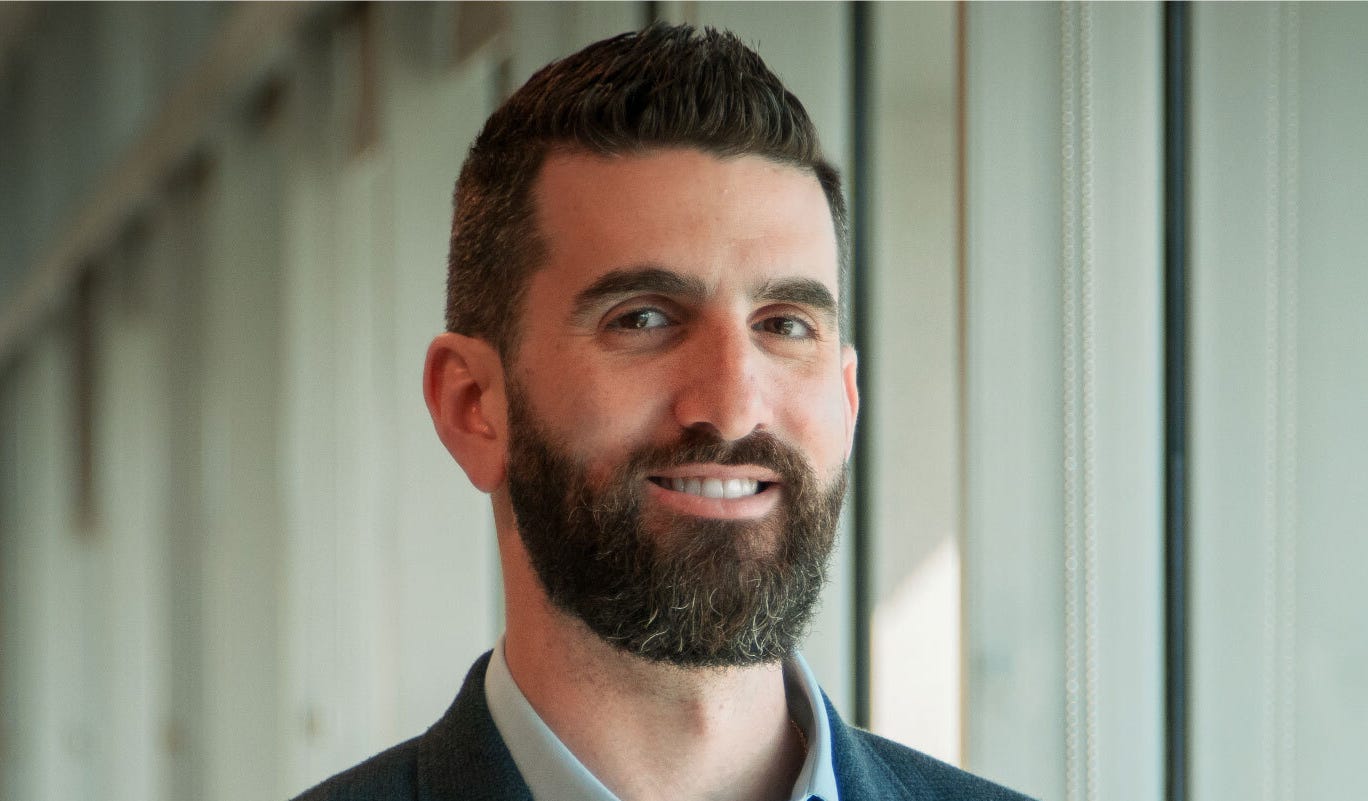
Could EV charging stations be the same? That’s the bet IONNA is making. IONNA is a joint venture owned by eight major automakers — BMW, GM, Honda, Hyundai, Kia, Mercedes-Benz, Stellantis, and Toyota — that builds and operates public DC fast chargers. The idea is to pair high-powered, reliable, accessible chargers with amenities like canopies, restrooms, food, and lounges. At least in aspiration, it’s a modern version of the gas station.
Today I’m going to talk with CEO Seth Cutler about the economics of charging EVs during a market slowdown, in a shaky economy, and what it might mean to actually enjoy charging an EV in public.
Chapters
00:00 – Introduction: can public EV charging be as reliable as a gas station?
02:30 – Public charging’s four phases, and IONNA’s phase-four bet
08:17 – IONNA’s origin story
09:55 – Scale, footprint & site strategy
11:52 – Rechargery @ vs. freestanding: the two site formats
18:45 – Can DC fast charging make money? Unit economics
21:29 – Demand charges & why fast charging is expensive
23:57 – Getting power: permitting, interconnection & utilities
29:18 – Site design, amenities & the monetization question
34:14 – Regional site customization: the gas station turned bakery
36:35 – The charging experience: apps & Plug&Charge
39:03 – Reliability strategy & metrics
42:47 – Headwinds: the EV market downturn & policy risk
46:54 – Business model, profitability & the IONITY comparison
50:09 – Geographic rollout: the chicken-and-egg problem
54:07 – Competitive position vs. Tesla
56:37 – Closing: vision, fears & timeline
Resources
People & Organizations
David Roberts (Substack - Bluesky)
Volts (Podcast - Apple Podcasts - Spotify - YouTube)
Seth Cutler (IONNA Leadership Bio)
Other Orgs & Programs Mentioned
NEVI, the National Electric Vehicle Infrastructure Program (FHWA Fact Sheet)
IONITY (Website)
Electrify America (Website)
PG&E Flex Connect (Program Fact Sheet)
Tesla Supercharger Network (Website)
Company & Industry News
IONNA expands in Florida, brings gas station reliability to EV charging
A new way to fix grid bottlenecks for EV charging: flexible connection
Why grid flexibility is now essential, and how PG&E is delivering it
GM - IONNA opens its first Rechargery in Apex, North Carolina
Related Volts Episodes
Text Transcript
David Roberts: All right then. With no further ado, Seth Cutler, welcome to Volts. Thank you so much for coming.
Seth Cutler: Yeah, thanks for having me. Looking forward to talking with you.
David Roberts: All right. So before we get to what you’re calling public charging 2.0, let’s talk briefly about public charging 1.0. You were the chief engineer for Electrify America, which was Volkswagen’s sort of big bid to build a nationwide network of EV chargers. This was in 2018, 2019. Not to blame you for all this, but I think it’s safe to say when a lot of EV owners think about their negative experiences at public DC chargers, Electrify America is kind of towards the top of that list. A lot of those just ended up not working or working inconsistently or being a pain in the butt.
So maybe just tell us to begin with, what went wrong with public charging 1.0? What are the problems we’re trying to fix here?
Seth Cutler: Yeah, I look at public charging as actually four phases. And so I’ve been in the industry going on quite some time. Started my career with General Electric, ran GE’s charging business back in 2012 to 2017. We were focused on home charging and, and public L2 charging at the time. To your point, I was with Electrify America, I was with EV Connect, and now with IONNA. And if you look at where charging infrastructure started, you know, back in the launch of the Nissan Leaf, there was a need to put out, you know, public DC fast charging back in, you know, 2010 even, to support a vehicle that could only go 70 to 80 miles on a single charge.
David Roberts: Right.
Seth Cutler: And so at that time, it was about how do you just put chargers in the ground, irrespective of where they might go, put a single node in a single parking lot, irrespective of the amenity or whatever might be adjacent to it. So that was what I would define as phase one, was really the advent of public fast charging and just getting them in the ground. Phase two was really around, to your point, the build-out of networks. And I think, you know, Tesla obviously was first to market to go do that.
David Roberts: Mm.
Seth Cutler: EVgo was, you know, heavily focused at the time inside of cities, but we really wasn’t looking at connecting the cities. And Electrify America, which I was a part of early on, was really looking to be the answer to Tesla at the time back in, you know, the 2017 timeline.
And obviously, Electrify America brought, you know, high-powered charging, even higher powered charging than Tesla had done at the time, liquid-cooled cables, 800-volt architecture. So, you know, early technology into the market, which was then followed by what I refer to as phase three. Phase three was really around reliability and uptime. And when you look at, you know, kinda the post-COVID world, people driving again, electric EV adoption rates picking up.
David Roberts: Mm-hmm.
Seth Cutler: All of a sudden, now you had all this infrastructure out there that had been proliferated over, you know, almost 10 years at that point. And people found that at high utilizations, you had a lot of queuing.
A lot of queuing meant that the reliability and uptime that maybe, have been acceptable in 2017, 2018, was no longer acceptable when people needed to charge and a six-bay site became a two-bay site at that time. And folks, you know, either didn’t have the supply chain to support it or had never built out the operational processes in terms of being able to support that level of uptime to meet the needs of drivers.
And I think by and far, I’d say the industry has come a long way in 2026, 2025, than where it was in 2020 and 2022. And that brings us to kind of this current phase that I look at it as phase four of the market, and this is really where IONNA is playing, which is how do you think about the experience beyond just reliability?
You know, and the analogy I always give is… You know, folks typically don’t look to see which restaurants will cause food poisoning. They— It’s kinda taken as a, uh... kinda like the table stakes of, like, if I go here, I’m not gonna get sick.
But what they’re looking for at that point to judge where they eat is what’s on the menu, what’s the price—
David Roberts: Right
Seth Cutler: what’s the ambiance, what’s the experience I’m gonna have at that restaurant? And that’s really what we’re trying to do, is say, “Listen, the chargers have to work every time, all the time, on the first try.” That’s what we’re focused on. But we wanna make sure that the experience that they have beyond that is bar none a really great experience. Canopies, trash cans, squeegees, access to bathrooms, access to amenities, unique experiences. You know, we partner with Amazon in certain locations. So that’s how I look at the last, honestly, 16 years of charging in the United States and where, and where we are, and where IONNA is trying to play.
David Roberts: I’m sort of curious, has anyone, has you, IONNA, or anyone done any kind of sort of systematic polling or surveying of EV owners and asked them what they most want or expect out of these things? Like, I mean, obviously reliability, I think, but I wonder, like, what else do people want or are they asking for or are they complaining about? Do we know with any certainty?
Seth Cutler: Yeah, we’ve done a, we’ve done a lot of market research and market studies early on, and we continue to poll our customers. You know, in fact, we just finished June with, I think, five or six what we call customer clinics, where we went out and interacted with drivers at our sites.
David Roberts: Hmm.
Seth Cutler: ‘cause it’s one thing to interview drivers before you’ve deployed assets and talk to them of what would be interesting.
David Roberts: Right.
Seth Cutler: It’s another thing to do it in a parking lot with your equipment on site. And so, you know, we’ve gotten, we’ve gotten just from that activity alone, you know, I think nearly 1,000 responses from direct interaction with our employees and drivers. But look, I think it’s, there’s a lot of common themes, right? You know, so beyond reliability, it’s gotta be affordable. They’re looking for safety, you know, good lighting at night. They’re looking for canopy coverage where possible. They’re looking for what we refer to as car care, trash cans, squeegees, other things.
David Roberts: Hmm.
Seth Cutler: And they’re looking for amenities. And so, you know, that’s where we’ve been really focused is how do we make sure we can deliver all those things where possible? You can’t always provide a canopy at every site—
David Roberts: Hmm...
Seth Cutler: for lots of different reasons, but right now, 30% of our sites roughly have canopies on them, the ones that are deployed, and there’s more coming, right? We try to have this do loop of deploy, learn, test, deploy, learn, test over and over again with our drivers.
David Roberts: Well, talk about just IONNA a little bit then. Sort of like how did it come about? I guess, like whose idea was it? What’s the idea behind it? And then what’s kind of the vision? What’s the big idea?
Seth Cutler: Yeah, so look, the O- the OEMs founded the company. I think there was, there were talks back in 2015, 2016 about developing a joint venture in the US.
David Roberts: Hmm.
Seth Cutler: Obviously a Volkswagen, launched Electrify America as part of their needs in the market with things that were happening regulatorily, which I think at that time basically took away the need to have a joint venture launch in North America, particularly in the United States.
But you did see a joint venture launch in Europe, which was known as IONITY at the time. Back in, I think 2021, 2022, I think the OEMs recognized that charging was still not fixed in the US and with, you know, I think forward-looking perspective that electrification and eMobility was a real thing that was gonna happen at scale. The biggest issue today in the mar— or even back then was infrastructure, reliability, charging anxiety. Not range anxiety necessarily, but charging anxiety. Will the charger work when I get there? And so—
David Roberts: Mm....
Seth Cutler: the OEMs took it upon themselves to say, “Listen, we need to go do what we did in Europe, but do it here in the US.” In July of 2023, they publicly announced the formation of IONNA. I started in as employee number one in February of 2024 to take the vision and build a team and take that team and make a reality out of that vision, right?
And so what the vision was how do we remove the obstacle of charging being the reason why we can’t seem to move electrification forward from a transportation perspective. And we’ve taken that, the team has taken that into their own in terms of the type of experiences that we put out there, the types of sites that we deploy, and where we deploy these sites.
David Roberts: Well, what’s the sort of concretely, I know you have this 30,000 goal, but as I’ve been reading around, it’s hard to get a bead on 30,000 what exactly because there are, there’s chargers, there’s stalls, there’s sites, there’s, you know, there’s different ways of counting this. What is, what is your short-term goal like by 2030, say?
Seth Cutler: Yeah. So we talk about 30,000 charging bays. I think the industry sometimes call them stalls. We call them bays.
David Roberts: That’s like a parking spot basically. That’s where you park.
Seth Cutler: Exactly. Yeah. Yep, exactly. So like every one of our chargers we deploy today can charge two cars at a time. And so one charger serves two charging bays, and each site is made up of anywhere from, you know, on average roughly 10 bays. That’s how a site breaks out. A Rechargery for us is 10 bays on average. You’ll see some smaller, you’ll see some bigger, but that’s the average.
David Roberts: And how, and where, yeah… like where are you at? Like what’s been, what’s been built?
Seth Cutler: Yeah, it’s a good question. So we just turned on site number 143 last Friday. We’ll be approaching, you know, site 150 by next Friday. And so, you know, that’s roughly, just over 1,300, 1,300 bays that are live to the public right now across, just over 30 states. And so for, you know, for us going back, you know, company started February 24, one employee. We built it from there. Today, we’re just under 100 people, based in Durham, Raleigh, North Carolina, or Raleigh, Durham, North Carolina. And so really 2024 was setting up the company. We built this business essentially from zero, right? There was no—
David Roberts: Mm-hmm.
Seth Cutler: We’re not part of a bigger company. We’re not part of a division.
David Roberts: Mm-hmm.
Seth Cutler: Everything is separate from the OEMs. They’re equal stake owners inside of IONNA. And so ‘24 was go build a company, build an organization, and launch the first sites, the proto- what I call the prototype sites. And so you saw a mix of sites that we built, in different locations, some that were full-scale “Rechargeries” with 24/7 access to bathrooms where we built the amenity. Others where we built them as Sheetz.
David Roberts: Most of them so far are attached to s- are not the full Rechargeries, right? I mean, just by number. Most of them so far are not the full gas station vision yet. They’re attached to something else. Is that right?
Seth Cutler: Yeah, so we, you know, from a product, what we call a product archetype perspective, the majority of what we will build will be attached to an amenity. Over 70% will be attached to what we call a Rechargery. And we have two types of Rechargeries. One is called a Rechargery @. Those are partners with marquee partners such as a Wawa, a Sheetz, a Wally’s, a Hy-Vee, et cetera.
David Roberts: Mmmm.
Seth Cutler: And then the other part of the Rechargeries are ones where we’re building the amenity from the ground up. Now, we’ve got, I think half a dozen of those launched right now, and we have dozens more, dozens more that are working their way through permitting. Those obviously take longer because you can imagine—
David Roberts: Mm-hmm...
Seth Cutler: you know, permitting, et cetera, is a different process when you have to go through zoning to build a building or to operate a building.
David Roberts: So when one is attached, say, to a Wawa, we’re just talking about it would look like a bay, like one of the, like one of the pumps, you know, like a gas station pump. It would just be a version of that attached to a Wawa, you know, convenience store. Is that the kind of the idea there?
Seth Cutler: That is. And, you know, we just, we just launched our first Wawa with a canopy in Indiana. We’ve launched a canopy with Sheetz. We’ve done the same thing at Wally’s. So, what we’re trying to do, to your point, is provide a fueling experience at a location where you can get amenities that make sense for a fueling environment. And so that’s why a lot of what we, what we’ve built are co-located with those types of marquee partners.
David Roberts: Mm-hmm. And that’s gonna be— And the idea is the majority is going to be a bay sort of attached to someone else’s convenience store, and then you say 30%-ish are gonna be your own freestanding Rechargeries.
Seth Cutler: Yeah, so in the 70% of in the Rechargeries, there’s two types of Rechargeries: Rechargery @s, and then Rechargeries, full Rechargeries where we’re building the amenity. The 30% left over will be ones that potentially will be adjacent to a larger shopping complex or other types of amenities that might be nearby.
David Roberts: Mm, I see. I see. But just to be clear about this, you’ve built 1,300 or so far. Your target is 30,000 by 2030. So you’re gonna have to ramp up the pace. Like, the pace is gonna have to be ramped up substantially to get to that target, right?
Seth Cutler: Yeah. No, you’re do- you’re doing the math right. You’re right. Again, for us, it’s about coverage, and so we talked about 30,000 bays. We’ll figure out exactly how many sites that is and what that works out into. But right now, we have just under 600 sites that are contracted across the United States today—
David Roberts: Mm-hmm...
Seth Cutler: of which 200 are in construction or live to customers, which means there’s another 400 sites right now that are essentially in permitting working their way through.
David Roberts: Mmmm.
Seth Cutler: And so, and then we’re growing that pipeline as well. So, you know, in the two and a half years that we’ve been a company, a year and a half that we’ve been operational as a business in terms of sites live to the public, we’ve grown from, you know, zero essentially to, you know, just under 600 sites contracted that are, that are working their way to becoming operational.
David Roberts: And give me some sense of the proportion, I mean, insofar as you know yet, how many of those are gonna be located on, like, a convenience store that’s off the highway for long-distance travelers versus something in a city or something in a suburb? Like, do we know roughly the distribution where they’re gonna be?
Seth Cutler: Yeah, we know, I know a lot ‘cause, ‘cause we’ve got so many contracted. You know, what I can tell you is, going back to the 70%, I think we like the number 70. So 70% of our investment are inside of cities, 30% -
David Roberts: Inside cities? Interesting.
Seth Cutler: Yeah. Now, what I would tell you is what we, what we’ve tried to do, tried to do inside of cities is to build the sites next to interstates even if they’re in a city.
David Roberts: Mm.
Seth Cutler: So, you know, one of our, one of our most popular from a utilization perspective sites is in Houston, Texas.
David Roberts: Mm-hmm.
Seth Cutler: It’s probably, you know, 10 minutes out of downtown. It’s about a quarter mile, I think, off of I-10. That’s a Rechargery, full-scale Rechargery that we’ve built in Houston to serve the Houston market, but it also serves folks that are driving through the Houston market to the next town over.
David Roberts: Mm, got it. Interesting. So, you know, most of people, I think when they hear about this fast recharging, DC fast recharging, they kind of think about road trips, they think about interstates, they think about long distance, but mostly in cities. Like, who’s using in-city? You know, like, what is the customer for the in-city charger? Is it just people who live in apartments, don’t have their own home charging? Is it people who are passing through the cities? Do you have a sense of your sort of average customer to one of these things?
Seth Cutler: Yeah. So there’s four customer groups that we look at. You know, obviously to your point, we’ll start with the one that is probably that makes the most sense to fo- or the most obvious to folks, I would say is, you know, folks that are doing, you know, long distance travel for vacations.
David Roberts: Mm.
Seth Cutler: For sure that is a need. And, you know, right now, again, even in our early days, we already have, you know, national coverage across all of I-70, you know, all the way from California to Raleigh. Folks have already done that trip coast to coast. We’ve got coverage all the way up from, you know, New York City, essentially, down to Florida on I-95.
And then I-5 is being built out right now. We’ve got pretty good density all the way from Seattle all the way down towards LA and filling in. So we’ve got na- we’ve got coverage on all in these interstates. That’s your first customer group. Second customer group are gonna be your daily commuters. And th- and these are folks, to your point, that are gonna charge mainly at home.
But there are times, and I, and I’m in that situation, where you drove more than you thought you would, you didn’t charge at home, you’re gonna need a public charger, and it ha- it happens to the best of us when we try to charge at home. The sec- the second group are gonna be your daily commuters that are folks that live in an apartment building or an older home.
You know, I had a home I remember back in New England that I— there was no way I’d be able to put an L2 charger there, so I had to survive off L1.
David Roberts: Mm.
Seth Cutler: And honestly, it’s gonna be difficult to survive off of L1 or no charging at home. And so that’s where you’re looking for some sort of hub, charging hub inside of a city to serve your needs. And then the last group are really, is really fleet. And fleet breaks out into, you know—
David Roberts: Oh, right
Seth Cutler: into like Uber drivers and rideshare drivers, but also in terms of you know, fleet with a business, whether it’s, you know, some sort of service business, et cetera. So we look at all four of those groups and then figure out how to build sites that where we can, what we call stack use cases for all those customers to use, the same location.
David Roberts: So let’s talk a little bit about the economics just of the charging, just of the charging part itself.
Seth Cutler: Sure.
David Roberts: So I saw, you know, this study that says that a DC fast charging port generally needs about 15 to 25% percent utilization just to cover its costs. And once you fall below that, you get 10 to 15 or below, they’re losing money. And industry-wide utilization is hovering right around 15%.
So barely, basically like does not look like a good business, basically in terms of charging, especially with typical utility rates where they charge these demand charges, which we’ll get back to in a second. You know, the more power you’re running through it, the higher your demand charges and the worse the economics.
So you are both using the highest powered chargers out there, 400 kilo-kilowatts, and also charging a flat 39 cents per kilowatt hour, which is I think lower than the industry average. So how do you expect to make money on the electrons themselves?
Seth Cutler: Yeah, so one I would tell you is we’re building out a network, right? So there’s gonna be, there’s gonna be some sites that outperform other sites and some sites that underperform other sites. But at the end of the day, it’s a full network we’re building to provide customers with, honestly, the network that they can rely on for their everyday travel and vacation travel, right? And cognizant of the fact that it’ll all work out from a network effect perspective. Yes, secondarily, what I would tell you is I think you gotta take a little bit of a longer view on where the market’s at.
You know today there’s a charging gap, but we know vehicle sales are not gonna go to zero. So we know more cars will get sold this year, next year, the year after. We know that the types of cars coming to market are vastly superior to the cars that have been on the market. Longer ranges—
David Roberts: Mm...
Seth Cutler: faster charging, that’s going to lend itself to higher adoption rates. So, you know, if this was a baseball game, we’re probably still in the second inning, honestly, in terms of where the market’s gonna be and—
David Roberts: Mm-hmm
Seth Cutler: adoption is gonna be. And as more cars are sold, there’s more demand. As more demand gets there, obviously that bodes well for the charging world. And then lastly, you know, I think to your point about what the averages are, there’s probably some sites that in general, competitors and folks in the industry that that outperform and/or underperform other locations because again, in this next phase of infrastructure build-out, customers have choice, and with choice they’re looking for what is a great experience and what’s affordable. And that’s really what IONNA is focused on, is to make sure that we’re there for— we’re meeting customers on the road to where they’re trying to go. So that, that’s how we view it.
David Roberts: So let’s talk about the demand charges then. So just for listeners who aren’t familiar with this is sort of like, this is where the utility charges you not a flat fee for every kilowatt hour, but specific charges based on your highest use. And so DC chargers run into these demand charges wherever they go because you get these sort of like fast, intense draws of power. I wonder how you’re thinking about that.
I mean, well, the obvious question here is, the obvious way to avoid this is to have a little solar and battery on site so you’re can, you know, spread out your, spread out your usage, spread out your draw from the utility to avoid those spikes. Are you thinking about that? And otherwise, how are you trying to get around these demand charges?
Seth Cutler: Yeah. I’ll start with, you know, we— when we started the company early on, and part of what’s allowed us to scale so fast has been extreme focus, like this urgency and focus on getting the quality right and getting sites built fast. So we had opportunities to put batteries in place early on, and we made conscious decisions not to go do that because it’s very easy to get distracted and lose out on what the mission was and the mission continues to be, which is put the driver first and deliver the best experience to that driver from a charging perspective. So putting batteries in doesn’t help the driver. It does help IONNA potentially, if you can make the financials pencil—
David Roberts: Mm-hmm...
Seth Cutler: but it doesn’t help the drivers, and that’s where a lot of companies get lost, I think, in terms of what they’re working on. I think as we get into, you know, future years, as the network gets built, as we feel that we’re in a good spot and we think we can add benefit to drivers on the economics, we’ll look to put batteries in or do other things from a demand mitigation standpoint, demand charge mitigation standpoint.
But for right now, it’s not a focus of what we’re trying to do. And what I would tell you also, though, is, you know, a lot of the economics tie back to how well and efficient the company’s run. Because if you have a lot of, you know, G&A costs or, you know, general and administrative costs in terms of, you know, marketing expenses and development expenses and what it costs to run the business, you obviously need to charge more at the charging bay to cover those base costs.
David Roberts: Right.
Seth Cutler: And we have been hyper-focused on how do we remain efficient and agile, to ensure that we can, you know, run the business efficiently while ma- while achieving our goals for our customers and being an affordable option to drivers on the road.
David Roberts: How difficult is just getting the power? I guess maybe if you’re attaching to an existing site, like a Wawa or whatever, I don’t know why I keep coming back to Wawa, I just like saying Wawa. Presumably they have an interconnection agreement and power available. But a new site, like how big of a barrier is interconnection and like u- kind of utility hold ups and just getting a hold of the level of power you need, which is a, you know, a lot of power, especially get to higher utilizations, you know, it’s a lot of electricity. How big of a challenge is that?
Seth Cutler: Yeah, so actually, irrespective of Wawa or whether we build our own site or we build it on a corridor without a gas station nearby, we always get it on meter and transformer from the utility. So it’s the same problem irrespective of where we build. But yeah, I mean, the biggest problem for infrastructure is getting permits and getting power. The actual cycle time to build a site honestly is very fast. You know, we can build a site. We built— we have one site, this is internal to IONNA, legendary Tucumcari, New Mexico. We built the site in six days... um, and energized on the seventh, which I guess sounds funny as I say it, but that’s literally what happened.
David Roberts: Laughing… I’m guessing it takes longer than six days to get a permit for anything to do anything anywhere.
Seth Cutler: Exactly. And so that is the biggest challenge in infrastructure is how fast can you get a permit, how fast can you get power. I think some parts of the country are faster than others. Some parts of the country are slower than others. And so that’s what we’ve been working through, but that’s also why we’ve been growing our site pipeline and site funnel so fast because it allows the ones that move faster to kind of be your short cycle sites that you can build a network out. We got our Kansas sites on first.
It allows the longer, the longer lead sites that might take into the year timelines to measure, time to fill in and be your long cycle sites as we build out the network overall.
David Roberts: Yeah, you mentioned how you need to work with utilities and you view utilities as partners, and I know you probably have to say that, you have to be nice to utilities. But they are... They’re the ones that make the money on these demand charges, you know, and they make more money the more, the higher the demand charges that they charge you. And there are also some utilities that run their own competing charging networks, like in Florida. I guess I just wonder, like, how much of an alignment is there between your interests and the utilities’ interests? What is that relationship like?
Seth Cutler: Yeah, I mean, utilities are in the business of selling electricity to businesses. We’re in the business of selling electricity to consumers and buying electricity from utilities. So it is a very much a symbiotic relationship between IONNA and the utilities. You know, I think, I think like every, you know, large organization, there’s processes that they followed, and so we’ve done a lot of work to, as I’ve said in other podcasts, other interviews, to partner with them to say, “Okay, what is the process, and how do we help in that way?” Right? Yeah.
And so there are some utilities where, you know, we do some of the utility construction, portion. We’ve worked the utilities in terms of you know, we worked— PG&E is a great example of that. We work with them on their Flex Connect program of how do we make sure that we can, you know, mitigate demand during certain peak hours and peak days of the year.
David Roberts: Yeah.
Seth Cutler: There’s other utilities where we’ve undersized transformers and do, you know, whole site, energy management, to be able to meet the, whatever the requirements are for upstream power. So, you know, we’re— IONNA’s born out of partnerships. You know, we have eight OEMs we work for that are, that are staunch competitors but have to work together to drive the business forward. We try to treat it the same way with working with utilities to make sure we’re partnered with them to get these sites turned on as fast as possible.
David Roberts: Yeah. Yeah, I wonder, like, to the extent you can tell us, like, do utilities— do you find generally that utilities want one of these things? Like, you know, I always find utilities’ incentives and desires it’s somewhat mysterious. Like, have you found that they welcome and want one of these things and are trying to work with you, or is this like, “Oh, no, a burden, a big, spiky, unpredictable consumer,” you know, “This is a drag. Let’s make them jump through a bunch of hoops.” Like, what are the utility incentives here to the extent you can explain them?
Seth Cutler: Yeah, I have personally, and I’ve talked to quite a few utilities, not just in the last two and a half years being at IONNA, but, you know, in the course of my career-
David Roberts: Yeah...
Seth Cutler: I’ve never met a utility that has said, “We’ve— we hate EVs, we hate electrification.”
David Roberts: Mm.
Seth Cutler: “We don’t want your charging hubs.” That doesn’t happen, at least not in my experience. What does happen is they might say, “Hey, listen, you’re trying to put a charger on this city block, and the feeder feeding this charging or the block you wanna go do—
David Roberts: Right...
Seth Cutler: doesn’t have the, you know, existing power, so you can’t build it here.” Like, you can build it here, but it’s probably gonna take three to five years. And we’ve walked away from sites because of that.
David Roberts: Mm.
Seth Cutler: We’ve also, we’ve also kept sites. I’ve got a site right now in California where we bought the land, found out after the fact that there’s not enough power. And we’ll build it in 2028, and that’s okay, right? That’s okay because we’re taking a long-term view of how we’re building up the network and we need sites in 2028. It’s not just what we need now. So again, this goes back to, like, how do you make sure that you’re working with the utilities early on in terms of these are sites we’re evaluating, where does it fit with where you’ve got, capacity needs?
David Roberts: Right. This idea of these freestanding sites, I’m sort of vaguely fascinated by this. Like, is there, a template, like, that you’ll be following? Like, will they look the same wherever I encounter them? Are they gonna be, like, customized to different sites? And also, a second question about those is one of the sort of notorious things about gas stations is they don’t make a lot of money on gas. They make most of their money on selling you snacks and whatnot in the gas stations, in the, you know, in the stores. Are you gonna, do you view the sort of sales of amenities and stuff that are attached to your chargers as a serious revenue generator?
Or are they mostly just to lure people to the power and you make money on the power? Like, what’s the sort of revenue balance of selling stuff alongside them?
Seth Cutler: It’s a great question that we don’t know the answer to yet. Um—
David Roberts: Mmm.
Seth Cutler: But I’ll answer it this way, and I’ll give— And I think this is where some of the conversation gets more interesting in terms of what we’re doing and where we’re experimenting. You know, I think a lot of companies forget why they’re, why they’re there, right? And I think as I tell, as we talk internally at IONNA and we tell the team, like, this is a very simple business. We’re in the business of selling electrons. That’s what the business is.
David Roberts: Mm.
Seth Cutler: It doesn’t mean that there might not be other ways to monetize what I call the platform or the network later on, but if we try to get fancy and get cute and think of all the ways we could monetize it right now, we forget that there’s a driver, a mom, a dad, a grandparent, someone’s kid who’s trying to charge their car, who’s looking for a reliable, safe, affordable charging experience. And so we need to be hyper-focused on that.
David Roberts: Y-yes, but while they’re charging, they’re sitting around for 20 minutes. That’s, you know, like, t that’s a... No way you’re not gonna view that as some kind of revenue opportunity, these people sitting around for 20 minutes. I mean, a gas station, you’re sitting around for, like, five minutes, but max, you know. You have people sitting around for longer than at gas stations. They want something to do. What are you know, so what are you gonna give them?
Seth Cutler: Well, so we give them stuff today, right? We give them stuff today with our partners, with Wawa, with Sheetz, with Casey’s, et cetera, or they come to one of our sites where we built out an amenity. Apex, North Carolina, Houston, Texas.
David Roberts: Yeah, like, what does that look like? What does it— give us a, give us a visual.
Seth Cutler: Yes, it’s fair, right? So for those sites, let me answer your first question before, which was, are they gonna all look the same? And the answer is no. And that’s kind of something that’s really unique about how we built this out, and I can tell you why. We go deeper there. And then in terms of what we provide them, you know, typically, it’s driver lounge, 24/7 access, couches, chairs, seating, bathrooms, vending, or really what I would call full c-store with Amazon Just Walk Out technology, where they can go buy snacks, drinks, et cetera.
David Roberts: Mm.
Seth Cutler: And so each of those, each of those full-scale Rechargeries, and I think we’ve got just about six of them open right now with dozens more coming, that’s what it provides, is basically a, an IONNA base experience, 24/7 safe access, clean access to these facilities.
David Roberts: Do you require, I wonder how much human, you know, the charging— The chargers themselves do not require human attendance, but what about the amenities? What about selling the food? What about, you know, security? Like, are there human employees at these things?
Seth Cutler: There are not human employees based here 24/7. We have a lot of security built in terms of how you can access them, so you have to scan a QR code. We have other restrictions that we, that we, that we put in place. We’ve got security cameras built in.
David Roberts: Scan a code to get in the lounge thing.
Seth Cutler: Yeah, correct. A QR code. They scan, they scan a QR code and, you know, in some cases you have to actually be in a charge session before you can scan the QR code so that we’re restricting access to those folks who are charging.
You know, in some ca- depending on, in some cases, you know, we might, we might contract with local security that might, that might, you know, come by every so often. And even for sites, you know, honestly, even for sites where, we don’t have the amenity, you know, we put in certain cases 24/7 cameras and lighting, again, to provide safety and provide, to provide, you know, a field of vision at these locations.
So we’re constantly looking at beyond just the charging, what needs to take place. And, but just, but David, just going back to your other question before about providing someone an experience and how you monetize it are two different things, and that was where I was driving before, which is we’re hyper-focused on experience.
So that’s why we provide all these amenities. But it’s not like I have teams of people running around trying to figure out how to monetize drivers and how to how to make money off of them when they get there. What I’m trying to make sure is when they get there, it’s clean and it works.
David Roberts: Mm. And are the— Final question about the sort of like amenities thing is, are these customized at all regionally or like based on whether it’s in a city or on a highway somewhere? Like, I guess how much work is going into sort of customizing the experience on a location-based way?
Seth Cutler: Yeah, I mean, I think that’s actually the fun part. So, you know early on we said, we said, “Listen, we know we wanna do things differently. We wanna buy land. We wanna build our own amenities.” And in some cases, we went and bought a green field piece of land. It was a, you know, a piece of dirt or grass, right? And we, and we built... And our Houston, our Houston Rechargery is just that, where we built from the ground up an amenity, and we customized it for that location.
What could we fit there? We wanted to build no less than eight charging bays. What could we fit?
David Roberts: Right
Seth Cutler: Well, what could all we could fit was two bathrooms, outdoor seating, vending machines. That’s what we could fit, and we, and it’s a great site, and we know that ‘cause of how much people, how many people come on a daily basis.
But then we went and we found other sites. Hey, this is a, you know, we found in our Apex, North Carolina location, which is just outside Raleigh, the suburb to Raleigh. We cut our first ribbon there. That was a 100-year-old gas station. We thought, “Well, that’d be real, that’d be really cool, right? Let’s take a 100-year-old gas station and make it the service station of the future,” right?
David Roberts: It was closed down?
Seth Cutler: It was, yeah, it was clo— I mean, it was a service station that was opened in the early 1900s, shut down in the ‘60s or ‘70s, and became a I think they were selling kitchen granite top... right, and when we took it over.
So that was, that was unique ‘cause we made, we made that into an experience. That one has a local entrepreneur that sells baked goods out of that site. Right? And the reason for that was because the zoning requirements meant that you couldn’t have a refueling center, but you could have a local restaurant or bakery. So that’s, so it’s classified as just that. And—
David Roberts: Oh, so it’s technically a bakery with chargers attached.
Seth Cutler: Exactly. Yep, 100%, right? So that, so what, we’ve been very flexible as we work with cities and towns, and very flexible with the types of sites that we’re buying or leasing to, again, bring really great charging to customers. And we’ve done that in, you know, there’s like, there’s a list of sites I can give you. Each one has a story of an old gas station of an old natural gas station, of an old car dealership of an old Subway’s restaurant that we’ve taken over, and we’ve converted it to an IONNA Rechargery.
David Roberts: Interesting. The chargers themselves, you’re working with eight automakers. I’m sure they all have their own apps. They all have their own gizmos. How do you make the, like, the literally the plugging in and charging itself, how do you make that consistent across all those apps, across all those different kinds of vehicles, across the two basic kinds of hookups? What does the charger look like, and what does the software look like, and what is the experience like? Am I scanning a card? Am I tapping a card? Am I... You know, is it, is this something where it recognizes the car when I pull up and I don’t have to do anything? What is the experience of charging itself like?
Seth Cutler: Yeah. Well, I’ll start with the one thing you don’t do is download an IONNA app because there is no IONNA app.
David Roberts: Oh, really? There’s no separate app.
Seth Cutler: There’s no app, you know, and there’s, and there’s no intention to make a mobile app. And the reason for that is because, to your point, every OEM, every automaker has an app today. ChargePoint has an app. Presto has an app. EV Connect has... I can go on and on. So we actually have 14 different apps that you can use at IONNA, but none of them are IONNA.
David Roberts: Hmm.
Seth Cutler: And on top of that, every charging station has a credit card reader on it. And we’ve got, you know, Plug&Charge and AutoCharge with, you know, a significant number of OEMs, even beyond just our eight, right? So we have the eight investors that we’ve turned on Plug&Charge for most of them, the rest coming very soon. But we’ve also turned on—
David Roberts: So that means— So just to, just to clarify for listeners, that means I can drive up, grab the charger, stick it in my car, and it recognizes my car and will charge it to my account without my scanning anything or tapping any, or doing anything.
Seth Cutler: Exactly. A frictionless experience for drivers.
David Roberts: And that’s for some OEMs, but not others.
Seth Cutler: Yeah. So on our eight OEMs today, the majority of it has have it activated, and the rest are, the rest are getting ready to launch this year. But we’ve also turned it on for Ford drivers, Rivian drivers, and Volvo drivers as well. So again, we’re looking for ways to reduce friction in the charging world for all drivers that drive EVs.
David Roberts: Do you think that’s gonna... Do you think the sort of momentum is everything’s gonna end up there? Like, just Plug&Charge is gonna be kind of the default within a few years?
Seth Cutler: I think so. I mean, I think it’s a, I think it’s a great experience, right? You’re not, you’re not fumbling with key cards or credit cards, et cetera. So I do think so. I think it just takes time.
David Roberts: And how do you ensure reliability? Like, I’m sure all the other previous makers of chargers wanted reliability as well and probably boasted a lot about it, and then they, you know, still today you show up to a lot of these and they just don’t work. Like, what are you doing to ensure high reliability?
Seth Cutler: I think there’s three, there’s three ingredients that go into making this reliability cake, we’ll call it. Number one is, you know, really around alerting, monitoring and diagnostics, and we’ve built a lot of in-house tools in terms of our ability to monitor and to detect when there’s an issue at a location or on the network as a whole or at a site. And so that then leads to operationally how we’ve built our processes and how we respond to things. So if there’s an issue, how fast can we respond to the detection? Do we have parts on site? Are we storing parts in hubs near sites? And do we have labor nearby?
David Roberts: Right. Yeah, and do you, are you sending an IONNA employee, or do you have, like, contractors? Like, if there is a problem, who are you sending and what— and whose equipment are they using to fix it?
Seth Cutler: It’s both. So we have, we have IONNA employees, and we’re staffing up more in terms of IONNA employees going out to sites, and we have third-party vendors that we also rely on for labor. So it’s, so it’s a combination of both, and it’s dependent upon how fast we can get someone to that site. Which is, which is really that third pillar I was gonna tell you was, is really culturally how we built the organization.
You know, we have this idea of driver first, and it lends itself to how do we get biased towards action of, you know, if we... So I’ll give you an example. If we see an issue or a perceived issue at a site, customer calls in and says they had a problem charging, we do what’s called a health check. We automatically roll a truck within less than 24 hours with some parts on hand. We have a Pelican case of parts that we go to the site with to validate was it a real issue or was it something that happened with that particular customer?
Because what we don’t wanna do is get a call in or see some sort, some sort of feedback on social media and assume it was probably the driver or it was a one-off situation. We wanna get eyes on the site as fast as possible and validate that the next driver won’t have a problem.
David Roberts: Got it. And what are you, and is the promise here. Yeah, like, is there a, is there a percentage reliability? Is there some sort of target or cutoff here? Like, what can you realistically promise? I mean, I assume 100%. I mean, the thing is, like, gas stations, people don’t think about it, but you basically get 100% reliability at gas stations. Like, you know, every gas, every gas pump works to a, you know, maybe with, like, a .001 remainder. Is that kind of what— Is that the goal here? Basically, like, it all, it all works all the time. Like, what is s- is there a metric you’re shooting for?
Seth Cutler: Yeah, we have several metrics that we, that we shoot for internally. You know, it kinda goes back to, like, our utilization. There’s certain things we don’t share externally in terms of the actual statistics and numbers. But what we are looking for is to ensure that drivers can always get a charge on their first try. And, like, things do break. I mean, I think I if you go to a gas, a gas station, there’s lots of data actually on gas station performance that if you looked up, you might be surprised at how low the numbers are in terms of what numbers they hit.
David Roberts: Hmm.
Seth Cutler: But, like, if you go to a gas station, and it’s been a while, but, like, you know, you might see yellow bags... over the handle, right? Because—
David Roberts: Right. Yeah...
Seth Cutler: they are broken but and things do break. These are mechanical devices. They’re electromechanical devices. Things break. So it’s really a question of when they break, how fast can you action it? And the only way you can action it fast is did you detect it? Did you have parts nearby, and did you have labor to go fix it? And that’s where we’re hyper-focused on is all three of those.
David Roberts: Mm-hmm. A broader question, which is, you know, I’d like, I don’t know if you just saw the article that was just out in The New York Times a couple of days ago, basically about the US EV market is not in good shape, you know, unlike EV markets almost everywhere else, which are booming right now for obvious reasons. EV sales are slowing down in the US. The consumer credit is gone as of this month. The credit for building chargers, I think, is going away next year. These NEVI grants from the, from the DOE, from the Department of Energy, have been clawed back or eliminated by the Trump administration. And like, it’s grim. It’s a grim time.
Are you worried at all? I mean, and not only is it a grim time, but some of the automakers are US automakers. I think even some of the ones involved in your, in your consortium there are explicitly pulling back on EVs, canceling EVs, canceling models and such.
So are you worried about launching during this, what is clearly a downturn? And I’m not sure anybody knows exactly how long it will last. Are you worried about launching in this environment?
Seth Cutler: No, actually. And the reason, the reason I say it like that is because— I think, I think EVs are a really great product, in terms of their performance, in terms of their acceleration, in terms of, you know, how quiet it is to drive it. And when you look at, you know, where battery prices are going—
David Roberts: Mm.
Seth Cutler: Charging speeds are going—
David Roberts: Mm.
Seth Cutler: The range that they’re going, it’s a great product. And great products always win out. You know? Like, you know, there’s lots of examples throughout the, you know, course of human history about industries that were never gonna go away until they went away because the new incumbent, device or technology was just a better solution.
And I think that’s honestly where we are with electrification. It’s taking time to get there, but I have no doubt. And I think— look, I think to add to that, I mean, I think, look, right now charging is still a problem in the US. It’s got a lot better.
But we know that we’ve added sites this year, and we see a really great turnout of drivers coming to our sites, and we’re learning from them. And we also know that more EVs are gonna be sold this year and next year, without a doubt.
And so to me, that tells me that there’s a really good market today that’s gonna be even bigger in the future that we’re gonna go serve.
David Roberts: How much is your business or your business plans or your business projections, your revenue projections, et cetera, sensitive to government policy, sensitive to sort of incentives and regulations at the, at the government level? Are you trying to build something that can operate independently of those?
Seth Cutler: I think we went after NEVI for one or two sites, but didn’t actually collect it or spend it. You know, we are not looking to build out a NEVI-funded network. We’re not, we’re not actively going out there and trying to go find grants.
David Roberts: We should say what NEVI is. I didn’t write down what it stands for. What... National-
Seth Cutler: Yeah. National Electric Vehicle Infrastructure.
David Roberts: Yeah. These are grants from the DOE for charging infrastructure.
Seth Cutler: Right, that they push out to the st-ates. And it was a way to, you know, if you think back before IONNA was here, was it was a way to try to get the market moving, to get infrastructure out there, particularly on corridors. And so we’re not looking for federal or state grants to go build out this network. We’re moving at a speed to really unlock electrification in partnership with the OEMs.
David Roberts: So you think that even the OEMs that are pulling back on selling EV vehicles are going to remain committed-
Seth Cutler: Yeah.
David Roberts: To building out charging infrastructure?
Seth Cutler: I think the future is electric. I think there’s probably a debate as to whether it’s 30%, 20%, 50%, but I think the future’s electric, and I think that’s why, that is why IONNA exists today with eight OEMs, because that’s where the future’s going. And it’s not just going that way in the US, it’s going that way globally.
David Roberts: Yeah. And part of this, I guess, you know, and I was trying to get around this with the sort of economics questions, but, like, already this, you know, the DC charging is not a great- business just purely in terms of revenue, and you’re sort of like, in some sense, doing it in the most expensive possible way. You’re owning your own land. You’re building amenities. You’re investing a lot of CapEx.
I wonder to what extent. Is this whole enterprise kind of a loss leader for the OEMs to help them sell more cars, to help them sell more EVs? You know, like, not that there’s anything wrong with that, but, like, is this meant to be a money-making play, or is this meant to be, let’s make it easier to sell more cars, sell more EVs, and that’s where the profit will be made?
Seth Cutler: No, IONNA needs to be- IONNA is financially independent, or financially independent, it’s a separate entity, right? And so we have to be profitable over time. Infrastructure as a whole needs to be profitable over time, because if electric infrastructure charging is not profitable, electrification won’t work.
David Roberts: Hmm.
Seth Cutler: But again, I think you see around the world where it can work. It requires, obviously, a higher density of vehicles being sold, which is where the market is going in the US.
David Roberts: Mm-hmm.
Seth Cutler: But yeah, we are working to become, you know, profitable over time, for sure.
David Roberts: Yeah, and speaking of which, IONITY, you mentioned this earlier, it’s kind of a parallel similar venture in Europe, a bunch of automakers getting together, investing in charging stations. It’s been up and running longer than you. It’s had a lot more investment than you. And IONITY now is reaching to the point where they don’t need to be funded by the automakers anymore. They have reached a point now where they’re getting, like, infrastructure funds, and, like, banks will come finance it because it’s stability and a sort of ubiquity now that they’re getting the access to big institutional capital.
How far away is IONNA from that? ’Cause that’s, you know, IONITY is operating in a market where EV sales are growing at, like, 30-plus percent, whereas they’re shrinking here. So I wonder, how far away are you from being able to access bigger, cheaper capital?
Seth Cutler: Yeah, so right now we are well-capitalized to achieve our goals and the mission that we’re on. So I’m not really worried about, you know, outside capital or about, you know, what that timeline looks like before we go even talk about that.
I think for us, you know, it was always go demonstrate that you can build sites and deliver a different experience. We’ve done that. Demonstrate you could build something across the country that you would start to drive customers to a, from a network approach. We did that last year. This year’s really around giving, scale and density in key geographic markets, which is what we’re currently working on.
So I think we’re well on our way in terms of what our, what the goals are that we laid out, you know, two and a half years ago, and we’ve got what we call this multi-wave strategy that we’re on in terms of how we think about each year and what gate we’re trying to pass as we move at this IONNA speed to get sites live for customers.
David Roberts: And, speaking of the geography, one question here is like the obvious sort of like, I guess, capitalistic incentive is to go with your chargers to where the EVs are, you know. So like go to California or go to, mainly go to cities, you know, like that’s kind of where most EV owners are. How does this, and maybe this just isn’t your business and you don’t care, but, like, how do more rural or sparsely populated or just, like, unsaturated markets where there aren’t a lot of EVs yet, how are they gonna get charging?
There’s always this chicken and egg thing, right? Are you willing to go sort of invest in a place that doesn’t have much EVs yet, assuming they will come if you invest? Or, like, what’s- how do you think about that chicken and egg, problem?
Seth Cutler: Yeah, so I mean, we just opened a site in Gary, Indiana. It’s three days old or four days old, and it’s doing really well. So that is not California, and it’s not the first place-
David Roberts: Yeah...
Seth Cutler: you’d go think to go put chargers. But honestly-
David Roberts: Yeah...
Seth Cutler: it’s outpacing some of our utilization in California sites that have been open six to nine months. And, you know, again, we went out and said from early on, “We’re gonna build a network.” Some of that’ll be California, some of it will be Florida. Today in Florida, I think we’re up to about 20 sites across the state. We’re one of the largest networks now, high-powered charging networks in the state of Florida as a whole. And so, to your point, there’s demand, there’s supply. California has a lot of demand, but also has a lot of supply, and we’re still building there.
David Roberts: Mm.
Seth Cutler: But there’s also places like Gary that have demand but don’t have enough supply, and so we go put a charger there, and all of a sudden you see that demand get sucked, soaked up by a new IONNA Rechargery. So we’re trying to meet the needs of both. I would say we’re trying to meet the needs right now wherever there’s demand, today, and then we have a big pipeline of sites where we think there’ll be increased demand in the future.
David Roberts: Mm. So I’m guessing to some extent, like, the sites that can guarantee high utilization can, at least in some timeframe, help subsidize the sites that do not yet have high utilization. Is that kind of how you’re thinking about it? To get back to the sort of network point.
Seth Cutler: Exactly. It’s a network. It’s a network, right? And I think, like, you think back to, like, the telecom world, you know, if you bought a cell phone back in the early ’90s and I said to you, “You can only use it in this town,” it would be very useless to you if you’re trying to go across the country. But it doesn’t mean that you’d have a ton of activity as you were driving.
So it’s a similar situation with the network effect. There’s some sites right now that are lower than other sites in the network. But as a whole, the network is performing, or is on track to perform to where we want it to be for the year and going forward. So we recognize that.
We also recognize that, you know, we’ve seen this as, you know, if we built one site on a corridor, it may not perform great. But when you start opening the other sites in that same corridor and you can provide a full network to that driver on that interstate-
David Roberts: Mm...
Seth Cutler: you start to see the network effect take place, along all those sites now.
David Roberts: Yeah, I mean, there is gonna be some element of build it and they will come here. You know, like, there is some truth to that. There is, like, people will wait to buy until they are confident that there’s a network around them. I don’t know if that’s, like, measurable or quantifiable, but there is, that dynamic definitely exists.
Seth Cutler: Well, exactly. And, you know, to that point, which we didn’t talk about is, you know, as part of our relationship and partnership with the OEMs, we’ve launched discounts, charging discounts with our OEM partners, right? And so that was kinda step one of this. Step two will be you’ll start to see us, much more prevalent in dealerships now, partnering with the OEM to talk about the benefit of IONNA, which is not just reliable infrastructure, but from an affordability standpoint, there’s now, you know, potential charging packages coming and discounts that we’re offering, et cetera. So this is definitely, a network in partnership with the OEMs in every way possible, including unlocking future sales of EVs.
David Roberts: Right. So you go into a dealership and you s- and part of the benefit of buying this EV versus that one is you get access to a reliable network at a set relatively cheap price for electricity. That’s gonna be, like, a sales incentive at some point. Let me ask briefly, quickly about Tesla. They are the, kind of the 800-pound gorilla here in this space. I think they have something like half the ports in the country. They already have, I think, or at least they boast 99% uptime. They’ve opened their network now where I think everybody can hook up to them, almost everybody. What is your value proposition relative to Tesla?
Seth Cutler: Honestly, Tesla’s done a great job building out their network. They were one of the early ones, and they’ve done a great job in terms of the integration between, you know, the vehicles, and their charging network.
I think IONNA has a real opportunity to deliver the same value, to all eight of our investors, our me- what we call our member OEMs, and beyond. And so we’re hyper-focused on, you know, what is that end-to-end experience that you can have with any one of the OEMs that are invested into IONNA, everything from, you know, navigation and routing and searching and search optimization because, that’s that entire ecosystem and approach. And I think that’s what we can go deliver, not just for one manufacturer, but for all eight and beyond.
David Roberts: So kinda the idea is any EV you buy among these eight OEMs, you’ll have the same ease of experience and uptime that Tesla is now providing to Teslas.
Seth Cutler: Exactly.
David Roberts: And I think they’ve kind of slowed down their investment. I mean, didn’t they pull back on the, on their whole charging network and their whole charging team? Am I making that up? They s- are kind of taking their foot off the accelerator on that part, aren’t they?
Seth Cutler: Yeah, I mean, I can’t really comment on what they’re doing. I’m too hyper-focused on what we’re doing and taking care of drivers. So I... You’d have to ask Tesla what Tesla’s doing on that front. But I mean, they- look, they’ve done a great job, there’s no doubt about it, early on in building out reliable infrastructure and really, I’d say blazing a trail. But yeah, what we’re focused on is really thinking about that entire driver experience beyond just charging, in terms of what happens at that site from, you know, lighting, canopies, trash cans, amenities, et cetera.
David Roberts: All right, final question as we wrap up. So a two-part question. Sort of as you look ahead five years, call it, five years, 10 years, I’d like to hear, A, your sort of fondest hope. Like, what will it look like if you succeed? And then also I’d like to hear, like, what keeps you awake at night? Like, is it access to power? Is it competition from other chargers? Is it getting a return on your CapEx? Like, what is your greatest challenge or fear also?
Seth Cutler: Yeah, those are good questions, David. You know, I think- Look, I think there’s... On the what success looks like, there’s two things I look at for that.
One is people still talk about charging reliability, and I think when people stop talking about it, then I know, like, the industry as a whole has been successful, right? Like you think about the old Verizon commercials, they’d walk around saying, “Can you hear me now?”
David Roberts: Yes. Right, right, right.
Seth Cutler: No one talks about that anymore. Do I have enough coverage?
David Roberts: Right, right, right.
Seth Cutler: Cell phones are so ubiquitous in everything we do in terms of that, right? So that’s number one.
And then I think the other thing too is that we’ve unlocked electrification in this country where charging is not the reason why people don’t buy cars. So that’s, that would be the first pillar.
And then in terms of my biggest fear, you know, look, I think the business, and I’ve seen... It’s been interesting being at IONNA for two and a half years because of how fast we’re moving to build sites and grow the business.
You know, in a typical startup world, you take time to go plan things out and have a product, an idea, and then launch your product and get iterations on it. And we’ve been moving so fast that two and a half years at IONNA, and honestly, in some ways feels like we’ve been here five to seven years in a normal startup venture, right? And so we’ve had to grow up from building a business, hiring people, launching our first site, which is our product, to having, you know, honestly, we’ll have 150 sites open by end of next week.
David Roberts: Yeah, those transitions are notoriously difficult from like the 15-person company to the 100-person company, et cetera. These are sort of notoriously just in terms of execution.
Seth Cutler: Exactly, and so that’s what keeps me up at night is, you know, making sure that we mature, fast enough to make sure that we never compromise on that driver. ’Cause as I was saying, you know, earlier in the podcast with you is like there’s real people tied to the charging at all hours of the night, and I just wanna make sure that we’re never compromising on that. But that takes us making sure that we’re maturing and growing up and scaling to the needs of the drivers out there.
David Roberts: All right. All right. Well, super interesting. Super interesting. And in your success world, this world where people no longer are talking about charging anxiety, where charging anxiety is gone, can- is that by 2030? Is that the idea here, or do you think that’s a longer-term thing? Or is this something that, like, people listening to this pod can anticipate, you know, having in a reasonable timeframe?
Seth Cutler: I’m honestly hoping it’s next year. I mean, I think that’s where I know I wanna be from an IONNA perspective, and I, and I’m hopeful that the whole industry gets there as well.
David Roberts: Well, all right. Your lips to God’s ears, I guess. All right, Seth. Thanks for coming and talking us through this. Super interesting. I’m always, you know, the charging experience is on the minds of every EV owner, so thanks for coming and talking through it with us.
Seth Cutler: Absolutely. Thanks for having me, David. Great conversation.


