


Senator Ruben Gallego (AZ) joins me to discuss his new energy plan, which combines elements of the Inflation Reduction Act with a new focus on permitting reform and small modular nuclear reactors. We get into all of it, from the promise of nuclear energy to the role community consultation.

(PDF transcript)
(Active transcript)
Text transcript:
David Roberts
Hello and greetings, everyone. This is Volts for December 17, 2025, “Senator Ruben Gallego has a new energy plan.” Ruben Gallego was born to working-class immigrants. He was the first child in his family to attend college (Harvard), after which he served in the Marines in heavy combat in Iraq, after which he was elected to the House of Representatives, where he served Arizona for 10 years, establishing a reputation as a committed progressive champion. Last year, he won a fierce contest for a US Senate seat, beating Trump-endorsed Kari Lake — and outperforming Kamala Harris, who lost the state, by several points.
In short, Gallego sounds like a pretty good presidential candidate, which has many party watchers and pundits talking about a possible run in 2028. While he hasn’t confirmed that speculation, he hasn’t shut it down either. In his Senate campaign, and even more since taking office, Gallego’s rhetoric has taken a notably centrist turn. He says the party needs to return to its “economic roots” and build a “big tent.” And he talks much less about climate change and much more about energy affordability.
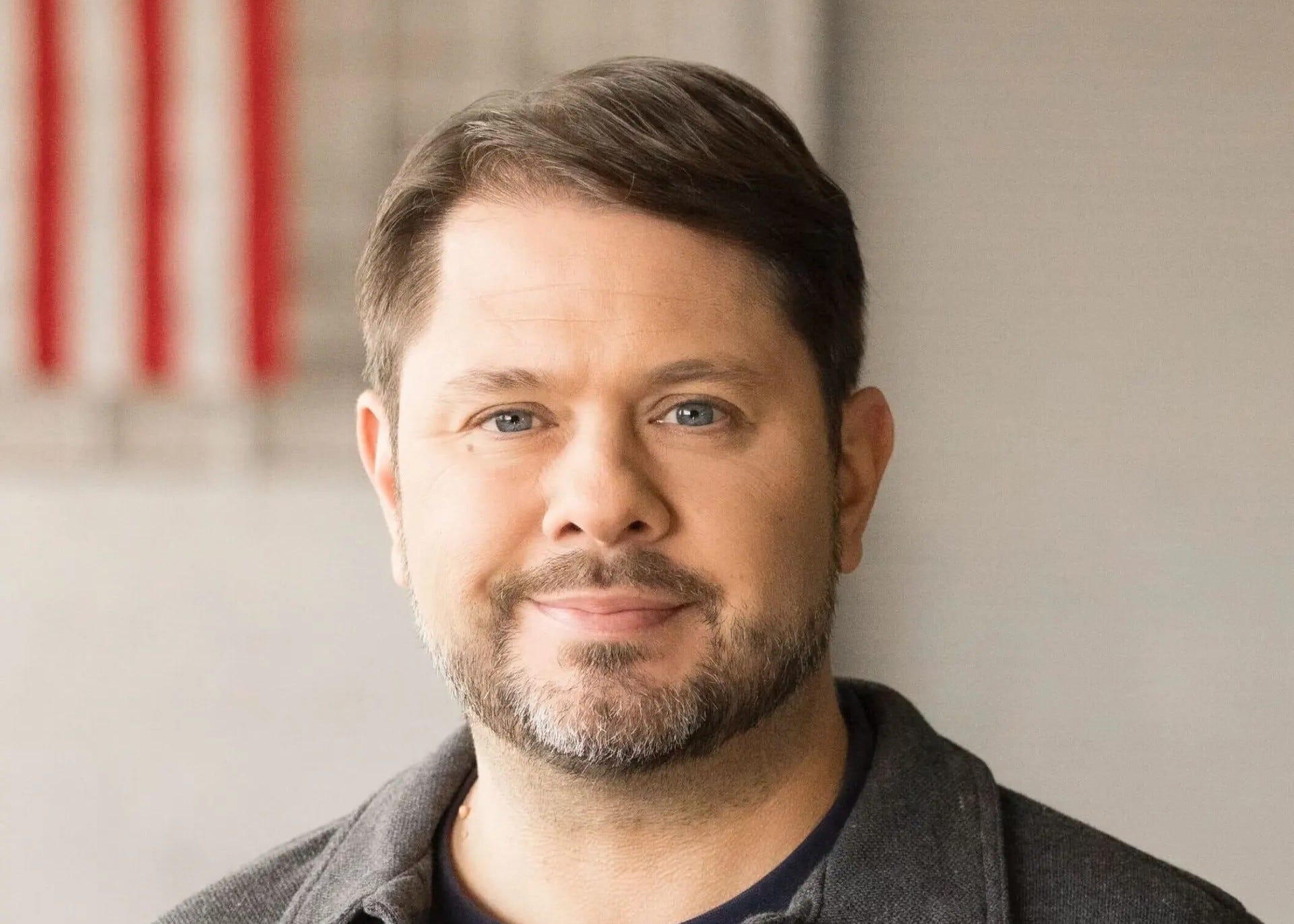
This month, Gallego released a new energy plan focused on “Fostering energy affordability and innovation.” Much of the plan consists of restoring elements of the Inflation Reduction Act that were repealed this year, but it also includes additional measures concerning data centers, gasoline supply chains, and small modular nuclear reactors.
I thought it would be interesting to dig into the plan with him to find out what a self-consciously “pragmatic moderate” strategy looks like and to gauge the general temperature of the Democratic Senate caucus on climate policy these days.
Alright, then with no further ado, Senator Ruben Gallego, welcome to Volts! Thank you so much for coming.
Senator Ruben Gallego
Thanks for having me.
David Roberts
Senator, you have been in office for almost a year now after 10 years in the House.
Senator Ruben Gallego
That’s right.
David Roberts
Now, Democrats don’t have the House, they don’t have the Senate, they don’t have the presidency. They don’t have the power to implement any of the things you’re talking about in your new energy plan.
Senator Ruben Gallego
Way to rub it in.
David Roberts
I’m curious, what is the thinking of releasing an energy plan at this particular moment?
Senator Ruben Gallego
Good question. This is the same thing we have done with releasing an immigration plan and releasing a housing plan eventually. Largely what it is is because we are in the forest right now and we got our asses handed to us this last election. I think we need to have a resetting of what a Democrat means, what a Democratic agenda means. I think there is an open opportunity right now. I am not even saying that I am the guy that has all the correct answers, but I think that we should be able to start sharing ideas so that we start coalescing around what an energy agenda looks like for Democrats, what a housing agenda looks like for Democrats, what an immigration agenda looks like for Democrats.
Now we don’t have a real leader of the party. We don’t have the president or vice president telling us “this is the way we’re gonna go.” We have a lot of well-regarded members of Congress, well-regarded governors and senators, but we also need to have the ideas to get people excited about Democrats.
David Roberts
On that note, a lot of what’s in your plan is reviving Inflation Reduction Act tax credits that were eliminated by Republicans last year. Some of that I wonder, has there been any thought or discussion about just taking IRA back off the shelf and passing it again? It’s not perfect, but you’ve already got the consensus, it’s already been negotiated. Or do you think there are flaws in IRA that you’re trying to correct?
Senator Ruben Gallego
I think the most important thing is bringing back the tax credit to get renewable energies online as fast as possible is a plus. But we also have to match it with quick permitting reform and certainty. One of the reasons we really messed this up was we got the money out there, but we didn’t get building fast enough. Then the next administration just comes down, just starts tearing everything down.
Number two, we did right when it came to allocating the money for those renewables. Again, we didn’t build it fast enough. But then we also need to move it. That’s one area where we just weren’t as strong — when it comes to transmission and the permitting reform around transmission. Yes, we should do IRA again, but we should also add permitting reform to that to make sure we could effectively get this on the grid as fast as possible.
Then let’s add another step to it. For me, I think real research and innovation around small modular reactors, more innovation and investment in battery storage. Again, going back to the certainty to encourage the private sector to be investing in types of energy projects. We don’t have all that coming. We may get the IRA back, but we may have the same result where we’re not building fast enough and the next administration just puffs it away.
David Roberts
Okay, electricity prices are going up. This is a lot of what’s prompting a lot of this discussion —
Senator Ruben Gallego
That’s exactly what is happening.
David Roberts
— Renewed attention to this area of policy. Electricity prices are going up. There’s a big new report from the Lawrence Berkeley National Lab about why electricity prices are going up. It turns out there are a lot of reasons. There are different reasons depending on where you live. It’s complicated, but I think the public is a little confused. The one thing they’ve grasped onto as the villains in this story is data centers. They see prices going up and data centers coming in and make the connection. I would like to hear from you how you think about data centers — how you think the public should think about data centers and how policy should approach data centers.
Senator Ruben Gallego
Easy questions. Number one, data centers are a necessary evil. They are evil in the sense that they take up space. In some areas in Arizona, they take up very valuable space. The legislature gazillion years ago in Arizona passed a law that allows data centers to be treated like residential. They could literally be popping up anywhere in Arizona without any zoning restrictions, which causes a lot of headaches. If we could fix that, that would be extremely helpful.
The other area of concern with data centers is water, especially in a place like Arizona. If we could fix that, that would be fine. But we need data centers no matter what. We need to have some type of détente with data centers to make sure that we have this country. We don’t want to rely on data centers being overseas. It is, I think, a national security imperative.
But there is this fight that is happening between residential small business owners and data centers. Do they suck up all the electricity? I don’t think that is necessarily the case. It depends where. It depends what generation is happening. In Arizona, for example, we have had years and years of growth in terms of the population, but without having to increase our megawatt usage. We have been very good about conservation and things of that nature. That has started to change now.
A lot of that is because it is getting hotter. We air condition a lot. We do have high tech moving in, not just data centers. We also have massive manufacturing companies moving in that will do that. What we ought to be thinking about is, number one, how do we get that to top — between the two areas?
Number two, if data centers are causing a drain on electricity, the resident and the small business owner should not be having to pay the differential caused by these companies. These are very successful companies. They have a lot of money. If they are going to cause a higher increase — and this is something that could be calculated, does not have to be a guessing game — they should be having to pay the higher megawatt or gigawatt than the resident. I think that would create a lot more harmony between the data center companies and their backers as well as the residents.
David Roberts
Following up on that, I’m curious what the federal remedy for that is. The state utilities are mostly a state issue.
Senator Ruben Gallego
Yeah, it’s very hard. Right now we’re looking at — it’s largely a state thing. You’re 100% correct. Something that we are looking at is particular legislation to see if we can help create that regulation that the individual consumer will be held harmless and the consumer that is drawing a lot of energy and properly calculated will pay the difference. I think that’s a proper way to do it. Now, again, it’s going to be hard unless it’s crossing state lines, which sometimes does happen. But this is a state regulation. I do recommend to the utility companies, the data centers, and locals to start coming up with the solutions and local solutions that create a peaceful outcome.
David Roberts
A slight follow-up on that. You are currently the ranking member on the Digital Assets Subcommittee of the Banking Committee and on the Energy Subcommittee of the Energy Committee, which puts you right at the nexus — the point person of all the fun, specifically about cryptocurrency and crypto mining. There’s a broader argument about whether AI is worth it or worth all the water and power usage. I wonder how you think about the intersection of crypto and the energy market. At a time of burgeoning demand, energy scarcity, we don’t have enough grid. Is this a good use of the electricity we have?
Senator Ruben Gallego
Number one, I think AI is going to bring a lot of advancements that end up helping society, even potentially saving energy in the future — helping us think smarter, move energy smarter, conserve more. There are hiccups. We have to accept that there are going to be hiccups. Just because AI is a new technology doesn’t mean that they are allowed to live free — roam free — and not have any consequences. There has to be some give and take. These companies have to either listen to new regulations or we have to work with them to create the regulations.
But they can’t just be a free for all. When it comes to crypto and the energy drain that happens, it is minimal, but it is also energy. For something like that and talking to some of the bigger crypto companies, I’ve always been an advocate of them making sure that they’re planning and supplying for their energy without being a bigger drain on the system. You are seeing a lot of them do that. Some of them are looking at mining near volcanoes, all this other stuff. I hope they do.
Same with some of these data centers and AI companies that I have talked to also. With good innovation there could also be some distributed generation stations where you could be building and creating in your single loop energy. That way you are not pulling off the grid. I hope that with more technological advancement, that is what we are going to see happening — where there will be freestanding data centers largely powered by distributed energy that does not drain from the overall system.
David Roberts
Bring your own energy.
Senator Ruben Gallego
Bring your own energy.
David Roberts
If I could just put this acronym in your ear. “Bring your own new clean energy.”
Senator Ruben Gallego
New clean energy.
David Roberts
B.Y.O.N.C.E
Senator Ruben Gallego
Wait, wait. “Bring your own new clean energy.” Yeah.
David Roberts
It’s close to Beyoncé.
Senator Ruben Gallego
There is some stuff out there. I’ve been trying to advocate for this. Instead of going and trying to start up old coal power plants or gas power plants that are inefficient now, why don’t you go and invest the money, make them SMRs, and then the men and women that are there have an opportunity to go work and keep their skill set. We talk about that in this general plan.
David Roberts
There are trade-offs in policy everywhere you look that everybody’s struggling with. I want to talk about one specifically about domestic manufacturing. You stress the importance of domestic manufacturing of some of the crucial pieces of this electrotech technology that we are advancing toward.
For instance, if you put tariffs on solar panels, you create a more conducive atmosphere for a domestic solar panel manufacturing industry, but you also make solar panels more expensive and thus slow down the spread of solar panels. There’s always a trade-off. How high a premium do you place on domestic manufacturing versus just moving as fast as we can?
Senator Ruben Gallego
Domestic manufacturing of renewables. I think you could have a balance to it. We do want a domestic supplier of renewable technology. Let’s not just focus on solar.
David Roberts
Sure.
Senator Ruben Gallego
Tariffs can be important to do a balance on that. But where the balance is is where we’re trying to make sure, number one, that there is not an uneven advantage that is coming, for example, from China, where they will try to dump panels onto the United States and destroy our domestic market. That’s when tariffs can be used in a very appropriate manner to make sure that it’s not going to gut our market, which we have seen happen in the past. There’s a balance that we want to keep. Americans are able to compete and be better than foreign, especially Chinese, products, because we tend to be the innovators and they tend to be the copiers.
We’re always moving one step ahead of them. Using a tariff regime in a smart way that balances out the need for us to get on the grid as fast as possible, while at the same time encouraging and still protecting the domestic supply, is important. This also goes back to a whole national security aspect. We want to have the renewable technology companies in the United States because at some point, if we get cut off from China for whatever reason, we could also potentially destroy our energy markets here.
David Roberts
I go back and forth on that because on the one hand, it’s one thing to have some domestic manufacturing, and it’s a very different thing to have enough that you could continue going if China cut you off. That would require a full domestic manufacturing suite, and I just wonder where we’re aiming, in the middle there — enough for a buffer.
Senator Ruben Gallego
With advancements of innovation in robotics and AI, I think you can have a company that could scale up fast enough. The way that we do some of our domestic production of the defense industry, one of the things we learned is how to do that. We may not need to have all the weapons on hand, but we know that we can produce them fast. That’s the way that we should figure out how we deal with all of our renewables. Not just solar. We’re talking about blades, we’re talking about batteries, all these things that also matter in the whole ecosystem of the renewable energy world.
David Roberts
May I ask a political question? I’ve asked several members of Congress this, and my impression is that they’re largely as baffled as I am. The political theory of IRA, when it was being put together, as I’m sure you remember, was that a ton of investment is getting funneled to red states, partially by design and partially just because that’s where the manufacturing is going to go, that’s where growth is, etc. The political theory was that would give the law some insulation from political blowback and that just —
Senator Ruben Gallego
Nope.
David Roberts
It was a big nope. Some of them hesitated. There was a press release or two, but by and large, there was no resistance at all. It was washed away almost completely without a second thought. What did people miss politically beforehand? What were they getting wrong beforehand when they thought that this might be some insulation?
Senator Ruben Gallego
The idea that a local Republican would be able to stand up to Trump and his agenda and be able to — not for green reasons, because they are a green person or anything — but because they have to look out for their local agenda, their local constituency. Historically that was true. That is exactly where it came from. The way to factor for that going forward into the future is vote fast, build fast, and move it fast.
When it comes to energy, that is what we need to think about in the future. If we pass something like this in the future, we want to get it out, voted out as fast as possible, get it built as fast as possible, and let it be effective as fast as possible. That way, by the time the next president comes along, they are not just going to turn off the lights, because at that point, that is when you have problems.
David Roberts
I wonder, do you think if everything had gone right and they’d been able to move money out the door faster, build things faster, get a little more steel in the ground, there would have been more resistance? More —
Senator Ruben Gallego
Yes.
David Roberts
— pushback?
Senator Ruben Gallego
Absolutely. It wasn’t just there. We saw the same thing happening with not just energy. The same thing happened, for example, with Internet. We had a broadband funding bill that just passed. We were very proud of it. But we didn’t have the opportunity to get many places to start putting down broadband fiber, especially with design for rural areas. The regulations we put on ourselves, and sometimes they were done by the administration itself that were not caused by government, by us in the House or the Senate, really strangled the movement there.
David Roberts
Let’s talk about that then. Let’s talk about speed. This is on everyone’s mind. Everybody’s been talking about it, everybody talking about permitting reform. Let me ask you a question about permitting reform. The argument for permitting reform — and we had this argument toward the end of Biden’s administration, I think we’re going to have it again — but the argument about permitting reform from Democrats who were for it was, if we make it easier and make a more level playing field, renewables will win. That was the pitch to Democrats: if you just let people build, it’s mostly renewables that want to build and they’ll win, which makes sense on its own.
But then you have this letter just a couple days ago to Congress from over 100 solar companies saying, “It’s not going to be a level playing field because Trump and Burgum are specifically going after us. They’re parachuting in and yanking our permits and specifically writing us out of permitting on public land.” In other words, permitting reform would not under this administration yield a level playing field. That is the key. It would ease things for fossil fuels and you would still have Trump and Burgum specifically trying to stop renewables. How do you talk to renewable companies about that? It seems a legitimate fear on their part.
Senator Ruben Gallego
The way we talk about it is you are talking about a two-year window. These guys are gone and they are starting to wind down starting in 2026 — halfway through 2027, Burgum might not even be there anymore.
David Roberts
You mean just lame duck?
Senator Ruben Gallego
Just lame duck dynamics. Exactly. We know that renewables, if you have a permissive permitting environment, can be put up, moved fast. If we do the same for any type of carbon — gas mainly, that’s what we have now — it’s going to take forever. It takes forever to build the gas power generation plant, takes forever to put down the permitting, the pipe, to get the funding together, everything else. There may be some advantage for the first two years, but after that, within the next administration, which I think will be a friendlier administration, whether it’s a Democrat or Republican, you’re going to see that movement change.
I wouldn’t stop permitting reform right now because you’re cutting yourself off from access to movement later. I am of that camp. I am agnostic about the permitting reform because I think at the end renewables will win. If you look at what’s happening with energy demand and also what’s happening with energy demand overseas, look at what China is doing. China is bringing down, number one, their carbon footprint, but number two, keeping their energy prices steady, because they’re adding renewables onto the grid all the time.
They’re able to keep up with the data center demands, they’re able to do it for the manufacturer demands, and they’re doing it by adding more and more renewables. I think that’s going to end up being the solution in this country. We’re going to have a combination of probably some baseload energy that’s hopefully more nuclear-based in my opinion, with battery-backed renewables. As we incrementally need more wattage going up, you will see that people will be adding more and more renewables to match demand as it grows because it’s the only way you are going to be able to match the movement as it goes.
David Roberts
It looks to me like a contest between two forces. On the one hand, what you’re describing, which is they’re cheap and fast and people need power. The logic of that is difficult to resist. On the other hand, you have a lot of state-level politicians, a lot of utilities, even some of the data center guys who really love gas, they really sound like they love gas and they’re trying hard to bias this toward gas. Utilities are trying to get a bunch of gas plants built. Do you worry about that at all or do you think it’s just going to settle itself or do you think there’s some intervention necessary?
Senator Ruben Gallego
I do worry about it. I think intervention is just not going to happen under this administration. It’s the truth. But the other thing is I think the economics are going to end up penning them in at some point. There’s only so much gas, there’s only so many trippers you could do, there’s only so many generators. You’re competing against a lot of people too. You’re competing against those who still rely on gas for general electricity or anything else. At the end of the day, the states that are going to have a better mix — which I think would be more renewable balance — are going to end up winning the race. The states in the future that have reliable, stable pricing to come to electricity are going to be the states that win the economic prize of the future.
I talk to a lot of businessmen and women about this in Arizona, about how we need to have a very strong energy position. Your income tax rate of 1 to 2% doesn’t really matter compared to other states if nobody wants to build in your state because it’s so expensive to produce any type of energy. We still have a state controlled by Republicans in the state House, state Senate. They’re trying to cut taxes. Instead of us focusing on trying to get that 0.5% tax advantage versus Texas when it comes to income tax, maybe we should make sure that we have a more reliable grid than Texas that is stable, that is meeting demand as growth happens. That’s what’s going to encourage those companies to move to Arizona versus Texas or versus California, Nevada, wherever it is.
David Roberts
I really like that you’re highlighting — I don’t feel this aspect gets enough attention. People focus on the price level, who’s more expensive. But as you note, fossil fuel prices are flying up and down all the time.
Senator Ruben Gallego
All the time.
David Roberts
There’s absolutely nothing you can do about it. It’s a global market in some sense. You’re the tail of the dog — you can’t really control it. Even if the price level were higher, which it’s not, but even if it were, stability matters — is valuable.
Senator Ruben Gallego
Stability matters, is very valuable. You know what you need to invest, you know where you can invest. You know where your growth is going to be and you know what your profit’s going to be. That matters for these companies.
David Roberts
You can predict your energy prices five years out, 10 years out. On the subject of permitting reform, this is a very contentious discussion on the left, as I know you are aware. Let me ask a question. This requires a little wind-up. The NEPA reforms — you are talking about the reform of the National Environmental Protection Act — a lot of people point to NEPA as the tool that people use to delay projects. There is a lot of attention on it. The two reforms you mention, at least in your energy document, are some categorical exclusions for certain types of projects — transmission, etc. — and then timelines — saying you cannot take longer than X.
But there is a solution that is missing, which research has shown is the most reliable and ties back to abundance, which I know you are sympathetic to, somewhat associated with. One of the big things Ezra and Derek talk about in that book, an aspect of the abundance agenda that does not get discussed as much as the other aspects, is just state capacity. If you want good governance, which is what the book is all about, you need state capacity. You need fully funded, supported, and staffed agencies. A lot of study has shown that one of the things that can speed up these NEPA reviews is funding and staffing the departments involved. That is not mentioned in your plan. How do you think about that?
Senator Ruben Gallego
I guess I just assumed that — and it’s a bad assumption, I guess at this point — but that it’d be in the best interest of most states to have their regulatory arms, whether it’s CEQA, DEQ, whatever it’s called, fully staffed to be able to do that. That’s absolutely correct. If NEPA can be done in a manner that creates, first of all, certainty, allows the public to have their say and be able to block what should be blocked or should be mitigated, and it’s not done to the point where it ends up being a strangler of these projects, then that’s great.
I’m not in the abundance gang or the other. I have to remember what the other gang is. I’m unaffiliated. I’m not in the Bloods or the Crips here. I’m unaffiliated. For me, the most important thing is knowing that people feel better when they can do stuff easier and pay less for it. That’s what we’re doing here. NEPA can be a part of that. The way that we do our hearings now, the way we do community hearings, the way we gather information — there are a lot of things that we could update to have that balance between speed and community input and mitigation where you need it.
David Roberts
Great segue into my next question, which is about pillar 4 of your plan. This is about community engagement. A lot of people are under the impression that if you are reforming NEPA to make it go faster, you are by definition reducing community input, reducing the time for community input. But you don’t see it that way. Pillar four, for you, is about community consultation. How do you reconcile consultation and speed?
Hey there everybody. Don’t worry, I’m not going to tell you about a new mattress or push a credit card on you. This isn’t an ad. There are no ads on Volts. It is supported entirely by listeners like you.
If you’ll indulge me for a second, I’d like to ask for your support. I started Volts because we’re all surrounded by depressing news about climate change and misinformation about clean energy. It’s never been more important to share the stories of the real people on the ground doing the real work of transition — and all the ingenuity and courage and public spirit they are bringing to it. People are hungry to hear these stories, to learn from and find inspiration in them. I’ve heard from people who change majors or careers after hearing episodes of Volts. People using it in classrooms, community groups, even state legislators who have passed bills inspired by specific episodes. Sharing these stories matters. It makes a difference.
David Roberts
If you have found value in it and want to help me continue doing it, I hope you will join the community of paid subscribers at Volts.wtf. It is about the cost of a cup of coffee a month. If you do not like subscriptions, you can make a one-time contribution, leave a review on Apple or Spotify, or just tell a friend about Volts. I am grateful for any and all support. If you are already a paid subscriber, thank you. And now back to the show.
David Roberts
Reforming NEPA to make it go faster, you are by definition reducing community input, reducing the time for community input. But you don’t see it that way. All pillar four, for you, is about community consultation. How do you reconcile consultation and speed?
Senator Ruben Gallego
You do it by, number one, making an emphasis on the front end. Especially when it comes to some rural tribal areas. That’s where it’s really important. What I’ve seen at least working, especially because I’ve worked a lot of time in Indian country and the space there, dealing with government and business, the companies and businesses that engage in tribal consultation early on end up having the best results because these tribal governments also want to see good results.
What we don’t see, unfortunately, is where there’s a lack of investment in consultation, whether it’s tribal or non-tribal, that you have lawyers being engaged more than the community organizers. There’s an incentive for lawyers to take a long time. They get paid hourly. You can have consultation that is very important as part of that. The pillar of “leave no one behind” also means leave no communities behind too.
Part of the problem that we have had when it comes to energy transitions in the past is that we have left full communities behind. There are men and women that have built the greatest economy in the world after labor, after sweat, after a lot of unfortunate deaths to black lung cancer, all this kind of stuff. As soon as we do not need their sweat, their labor, because energy has moved, we have moved. We just let them rot there.
Part of this plan is also to be able to site and create some of these new energy hubs in those previous places. It’s not just West Virginia or Appalachia that you’re seeing this, you see this in Arizona, rural Arizona. Some of the largest employers were coal power plants. Now they’re gone. This is rural. They’re not going to go work at Walmart.
They’re not going to be able to —
David Roberts
Go learn to code.
Senator Ruben Gallego
They’re never going to learn to code. If they wanted to learn to code, they can. It’s not that they’re dumb people.
David Roberts
There are no jobs in coding anymore either.
Senator Ruben Gallego
There are no jobs in coding anymore. Also, you want to code and you live in rural Arizona — where is your broadband? Let us be honest, maybe they do not want to code. Maybe these are men and women who love working with their hands. They love being outside, they love being part of a community. Maybe they do not want to sit in a little cubicle and type away at something. But they know what to do. They know how to be responsible for generators. Let us move some of these generators, some of these power plants into these communities.
When you have a connected smart grid, it doesn’t matter where you’re creating this energy. You have a real opportunity to bring employment back to these communities. Worthwhile employment that is a career, gives these communities pride. They’re also contributing to the energy economy of this country.
David Roberts
I’m curious. Arizona specifically has seen a lot of fights. I’ve only vaguely paid attention to some of them, but over the years, over the decades I’ve been involved in this, I’ve seen a lot of fights in Arizona, specifically about coal plants, specifically about shutting down these very large coal plants. Is there a success story? When you’re talking to Arizonans who are worried about this — in a coal community or something — is there something you can point to where you can say, “This, we could do this”?
Senator Ruben Gallego
Not really. We need to. That’s what I’m working on as we speak. There have been some good conversions up here in Page, Arizona, where they turned a coal power plant into a manufactured housing plant. Other than that, you’re seeing some communities just being devastated. It’s not even the environmental movement that’s killing coal. It’s just that coal is inefficient, coal is expensive, and our utility companies can’t afford to keep them open. But there hasn’t been a transition plan that works.
If you have permitting reform, if you have the opportunity to go back and take out that coal power plant and put another generator in there of some sort that’s definitely cleaner, and you do it faster and quicker, then these men and women can stay in their communities, work in the communities, and be part of the communities. Usually, these power generators tend to be the biggest taxpayers in the county. When they’re done, it has another recessionary effect.
David Roberts
Arizona has weirdly little renewable energy for being plopped down in the hottest, driest spot in the country.
Senator Ruben Gallego
What do you think your guess is?
David Roberts
If I guessed Republicans, would I be in the —
Senator Ruben Gallego
Here is the biggest reason why, and yes, we have Republicans who are against renewables. The biggest reason why is that 65% of Arizona land is federal land, tribal or federal land. The reason Texas can produce more renewable energy than Arizona is that 95% of Texas is private land or state land. There is no NEPA. There is nothing of that nature over there. They can just put up and go, put up and go, put up and go.
For us, if you want to do a solar field and it’s on federal land, you’re going to have to go through the process to do that. That will take time. What happens is investors will look at the world of Arizona and say, “I want to put up renewables. Where’s it easiest to put up renewables? Texas.” California has bigger fields. A lot of them are held in private hands. They just go and build there. This is why having very good, solid permitting reform would help Arizona. I didn’t put it in here, but I’ve been a big advocate of doing pre-NEPAs where we designate certain areas as potential renewables. We as a government do a pre-NEPA and if someone comes to buy it, they have to pay back the federal government for the NEPA review we did in the process.
David Roberts
But they don’t have to do it again.
Senator Ruben Gallego
They don’t have to do it again.
David Roberts
They could just build.
Senator Ruben Gallego
That’s the problem again with Arizona. You have a lot of flat land, it’s sunny as hell. It’s one of the most beautiful states in the country, also. But the permitting reform structure makes it extremely difficult for us to do mass solar. We have solar rooftop. We don’t do as much mass solar as other states. Mass-scale solar.
David Roberts
A pre-NEPA, this would be a chunk of land in Arizona. “This chunk of land is okay for solar.” Is that a process that currently exists that is working or is that something that you would have to stand up and that would have to be a revision to NEPA?
Senator Ruben Gallego
It’s going to be something that I’m going to work on later as a pilot program. We would just do the NEPA program as the government, do all the process to it, and then have it out there. If a solar company wants to come in and say, “I’ll buy that off the shelf,” then they repay the federal government and then it’s moving through.
David Roberts
Or you can imagine a consortium of solar companies sharing the cost of the NEPA review.
Senator Ruben Gallego
Sure, absolutely. If you try to change the nature of it then that’s different. If you’re saying, “I want to now do a tripper, a gas tripper.” Well, no, then that’s different because that’s not what the NEPA review had.
David Roberts
Interesting. Let’s talk about nuclear because you’re a big fan. Within the nuclear community right now there’s a big argument going down which I’m sure you’re tapped into. On the one side —
Senator Ruben Gallego
Fusion, fission.
David Roberts
No, not that one. Different.
Senator Ruben Gallego
That’s coming, too.
David Roberts
This argument is on the one side, you have people who are saying the problem with nuclear costs in the US is that we keep doing these first-of-a-kind things, we keep trying these novel ideas. What we need to do is just pick a design off the shelf — AP1000, whatever the standard reactor — and just do a bunch of them in a row to try to get on a cost curve, build up the workforce, etc. That is how the countries that have made nuclear cheap have done so.
Senator Ruben Gallego
That’s what France and Russia did.
David Roberts
The other way to go at it would be, “Let’s find novel, new, cheaper, safer ways to do this.” That’s the small nuclear reactor innovation space. You lean hard on the latter — on SMRs. I’m curious why.
Senator Ruben Gallego
I do think you are going to have continued growth in energy demand. I think SMRs in their modular nature — because you can just add as the growth grows in a quicker manner than trying to stand up and expand your traditional big-scale generators — it is just easier. When it comes to community involvement, community input, a community is more likely to accept an SMR than they are a massive silo.
We have a great space in Arizona where we have Palo Verde nuclear power plant, one of the largest power plants in the country. It’s got a great setup, but it has a lot of land, it’s got a lot of space around it. It’s what the people want. They want to make sure there’s a big space around it. The problem with that is there are only so many of those you can do. Where possible, I do think we should have Palo Verde spread out.
There is a possibility to put SMRs — we are exploring putting SMRs on military bases to generate energy for the military base and potentially for other wants and needs off grid there. That gets built faster. It has the security of being on a military base, which is also important. At the same time it can sell onto the prior market and not to the prior market. I do think there needs to be at least some definition of what the design is, because you are right, it builds scale.
One of the things I did earlier in the year, I went to visit Slovakia. I was a very strange kid in college. I went and taught English in Slovakia. I have a connection to the Slovak people. Now that I’m a senator, I went and visited — met with the prime minister. I don’t agree a lot with this administration, but one of the things they asked us to do is to try to encourage the Slovak government to buy Westinghouse SMR designs. They’re still going at it. It was between Westinghouse and Russia, and the Slovak prime minister said, “I want to go with it, but you do understand I already have X amount of Russian nuclear plants that we’ve had for years that we know how to work. We like the design better. We’re going to try to go your way, but it’s going to be very difficult for us to do it.”
Hopefully we end up winning that. One of the things I thought was, consciously I’m thinking about this, these guys are going to build SMRs faster in Slovakia than they are in the United States with American designs, with American engineers. Now it’s good because they’re going to work out the kinks and everything else. We’re going to get the training that will make us efficient to grow this. But it’s crazy that I’m selling US products for stuff that we’re not going to be able to build in time. I have talked to some companies here about SMRs and they all tell me the same thing: “I don’t want to be the first one.”
David Roberts
The government will likely have to guarantee —
Senator Ruben Gallego
They have to.
David Roberts
— the first one or the first few.
Senator Ruben Gallego
The first few, yes. They have to. We also have to do stuff about what is going to happen with the fuel. We need to allow them to recharge that fuel and use it again. The storage matters, but that also costs money. There are a lot of things that we have to do. The whole whiptail of nuclear energy needs to be fully thought out. We have to take risks. Everyone is still afraid of Solyndra.
David Roberts
How long ago was that now?
Senator Ruben Gallego
I was just at a company, I brought up Solyndra, and all the people were — because they are younger than me, too.
David Roberts
That’s funny.
Senator Ruben Gallego
We have to be ready to deal with a Solyndra nuclear problem where something just does not end up working.
David Roberts
Let me ask about that, because this is really well put. I think lots of people learned different things from Solyndra. What my community took away from it is you set up this government program which is designed to take risks, which is supposed to take risks. Of course, some of the risks don’t pay out. If they were all sure bets, you aren’t doing it right. You aren’t doing the program right if you’re doing sure bets. That was the program operating as it was intended to. But it also made very clear that any little mistake can be demagogued to the heavens such that we remember it 20 years later.
Senator Ruben Gallego
Yeah, like knee jerk.
David Roberts
Similarly, on SMRs or on anything where it comes to innovation and risk taking, that is a larger issue about government. How do you create a federal government in this partisan media environment that is allowed to take risks and try things and experiment and fail occasionally without getting railroaded out of office immediately? That is a very big, very difficult question.
Senator Ruben Gallego
Number one, let’s set them up for success by making sure that while we’re giving people government loans, our own government aren’t the people that are making it more expensive. I’ll give you a really good example dealing with TSMC. TSMC is the chip manufacturer. It’s the largest chip manufacturer in the country. They have a huge footprint in Arizona. A lot of us, when I was in the House, people here in the Senate worked on what’s called the CHIPS Act to encourage chip manufacturing to come to the United States. Great. TSMC. We’re moving to Arizona. Awesome. We want to get going. Awesome. Oh, no. We have to go through a NEPA review because it’s more than $50 million. It’s a federal program. It’s flat land right now.
These guys have a timetable that they need to meet. We know they already had one initial NEPA review. All they are trying to do is go across the street. Now they are saying they are going to have to go through another one. The question is, do they want to do that? Do they want to stick around in Arizona or go somewhere else, or some other country? We gave them billions of dollars to build the plant, but then we are also regulating them to the point where they do not want to expand. I do not think it has to be a quid pro quo, but we have to actively think about this. If I am giving you billions of dollars to build this plant, but then I am going to make you go through an extensive NEPA review, maybe we should have thought about that in the whole packaging we did in the first place. Little simple things like that.
Number two, you just have to have good leadership and we have to be better about owning mistakes and telling the American public, “We made a mistake. Look at all the things we’ve done right. This is one of those things — we just made a mistake and we have to go.” It never really took off because Elon Musk was such an asshole about it, but he did bring in this attitude about, “We made a mistake, so we’re just going to undo it now.” The way he did it screwed a lot of people when it came to USAID and stuff like that. That attitude in government could matter when it comes to innovation and technology and maybe in other areas. This is why the next expected Dem president needs to lean into this and needs to be willing to accept that there are going to be some mistakes. Be smart about it.
I think Solyndra was not a great example. I think if there is movement to support a couple of nuclear reactors with loans at first, that is a different story. There you would have a lot more bipartisan support in that regard. At the end of the day, it would still get finished. These are the risks you have to take. These are the risks you have to take as a leader.
David Roberts
Let me ask a bit about that bipartisan support, specifically about transmission. I loved seeing all the stuff about transmission in your bill. I’m glad that at last transmission is on the agenda federally. People are paying attention. This seems like something that ought to be almost trivially bipartisan. It’s just so obvious that a grid works better if it’s bigger and covers more ground and can move power from more places to more places. It all seems very obvious. Yet somehow even that has become a partisan issue.
Somehow the Republican Party has aligned itself against that. Why? What are two things?
Senator Ruben Gallego
There’s something they just don’t care about, not because they’re mad about it, but it’s just not their thing. They just care more about generation. Number two, they do know that smarter grids and bigger grids and more resilient grids will be a net benefit to renewables.
To stop the growth of renewables, they don’t have to go and kill it at the plant. They could just make it economically not feasible, because if you have no market, then you won’t invest in it. Not really Texas, because Texas has its own grid, but if Arizona has a massive amount of solar that we can move around the country, then you are going to end up having very cheap electricity rates that are coming from renewables, or it could be wind in the Midwest or whatever it is.
The only way that they can still, more so than even what Donald Trump is doing, the way they can absolutely kill the growth of renewables is by making transmission even more and more expensive and harder.
David Roberts
We’ll wrap up with this then. After the election, it seems the Democratic Party decided as a whole, with the whole consultant class, the pundits, everybody decided we’re not going to talk about climate anymore. We’re going to start talking about affordability. Now everybody is talking about affordability. Are you still concerned about climate change? What role do you think it should play in Democratic politics?
Senator Ruben Gallego
I’m concerned about climate change. I live in Arizona. I’ve seen the heat increase. It’s not cool at night anymore. I get it. I see it. The most important thing we need to do is fix the problem. Now, do you want to fix the problem, or do you want to fix the problem in the way that makes you feel good? What we’ve learned, and the Republicans are really good at, is “We’ll fix the problem — which is maybe we won’t use the word climate change.” A lot of us are using it interchangeably now. “Let’s put more renewables on because it’s cheaper and it brings down the carbon footprint.” Even in our conversation, we said that.
I think there are some of my colleagues and maybe some states where that doesn’t work as well. Let’s let them talk about affordability. Let’s let them talk about how quickly it is to get renewables. Who cares at the end of the day, as long as we end up getting the end result? The end result is lower costs and lower carbon footprint and turning back the tide on climate change — then we’re all winning. I can’t remember which Chinese leader said, or philosopher said, “I don’t care the color of the cat as long as it catches the mice.” That’s how we should be thinking about this.
David Roberts
All right, said. Good place to wrap up. Senator Gallego, thanks so much for coming on today and talking through this with us.
Senator Ruben Gallego
Appreciate it, man. Thanks for letting me nerd out.
David Roberts
Thank you for listening to Volts. It takes a village to make this podcast work. Shout out, especially, to my super producer, Kyle McDonald, who makes me and my guests sound smart every week. And it is all supported entirely by listeners like you. So, if you value conversations like this, please consider joining our community of paid subscribers at volts.wtf. Or, leaving a nice review, or telling a friend about Volts. Or all three. Thanks so much, and I’ll see you next time.


