

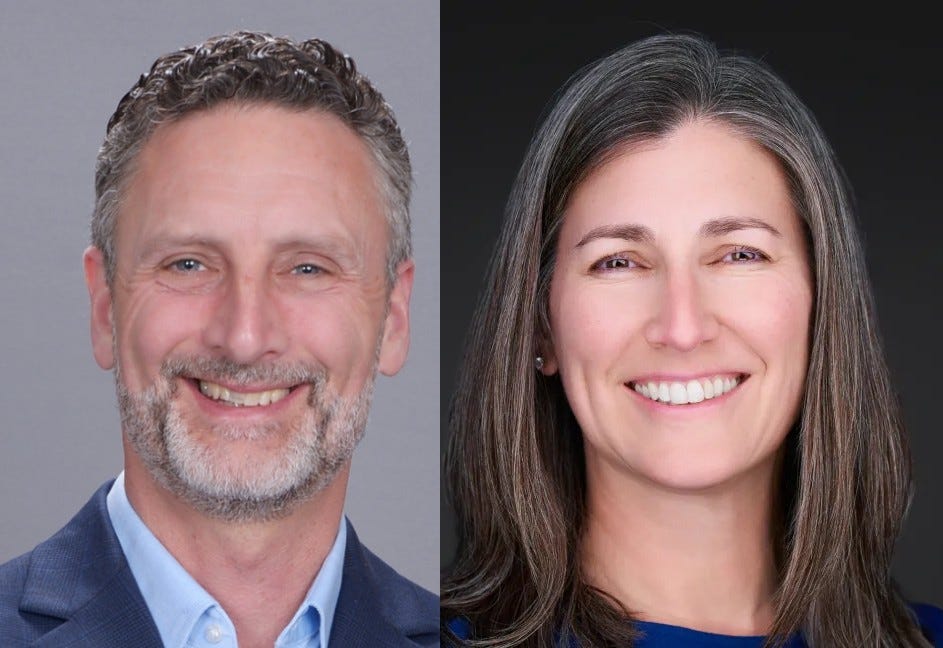
I’m joined by Brian Turner and Kathleen Staks to unpack the details of the newly authorized Regional Organization for Western Energy (ROWE), a unique “à la carte” RTO designed to unify the western US grid without trampling on state independence. We discuss the transition from the existing imbalance market to a full day-ahead market, the safeguards built into the bylaws to protect state clean-energy policies, and the politics of getting 38 separate balancing authorities to cooperate.

(PDF transcript)
(Active transcript)
Text transcript:
David Roberts
Greetings. This is Volts for December 10, 2025. “California warms up to a larger Western energy market.” I’m your host, David Roberts.
One benefit of large regional electricity markets, such as MISO or PJM, is that they balance supply and demand over extensive geographic areas. It’s a basic feature of a power grid: the more area it covers, the more stable, reliable, and low-cost it will tend to be. This makes it especially foolish that the Western US has no such regional energy market. Instead, it consists of 38 separate balancing authorities, each responsible for balancing supply and demand within its own territory.
It is obvious, just based on first principles, that linking up all these fiefdoms into a larger regional market would smooth out fluctuations in supply and demand and reduce average prices. That’s why people have been talking about it forever. I think the first time I wrote about it was in June of 2016, when I called it a “no-brainer.”
But as obvious as the benefits are in the abstract, the political and practical specifics have proven devilishly difficult. I wrote about the subject again in 2018, when they were still discussing it. And then I did a podcast on it in 2023, when they were still discussing it.
Now, something has finally happened. California has passed AB 825, the next phase of what’s called the Pathways Initiative, which sets in motion the process of eventually creating a Western energy market. That process is fraught and controversial, running up against several difficult questions of sovereignty and political economy.
Today, I’m going to dig into those questions with two proponents of the Pathways Initiative, both of whom have worked on it in various respects — indeed, Staks chairs it — both of whom represent trade groups with a strong interest in getting this done: Brian Turner leads regulatory engagement in the West for Advanced Energy United and is a longtime veteran of California energy governance; Kathleen Staks runs Western Freedom, a trade group of commercial and industrial electricity customers advocating for a larger Western grid. She also chairs the Pathways Initiative. We are going to get into all these questions and all the details.
With no further ado: Brian Turner, Kathleen Staks, welcome to Volts. Thank you so much for coming.
Brian Turner
Thanks so much for having us.
Kathleen Staks
Thanks for having us.
David Roberts
Brian, I’m going to start with you. We were just talking off-mic. I used to write for Vox, and part of writing for a general interest publication is that you really can’t assume any background knowledge on the part of your reader, which makes addressing subjects like the one we’re talking about today extremely difficult, since there is unavoidably quite a bit of background knowledge that one needs to make sense of it. But I am, for our purposes here today, going to assume that Volts listeners are reasonably sophisticated, that they know that in the ‘90s and early 2000s, there was a big wave of restructuring that came along to the US electricity market.
About half the US vertically integrated utilities got split up. Generation utilities got put in competitive markets. Distribution utilities bought electricity from those markets and served customers. The two big areas of the country that did not get restructured and that thus do not have those big regional energy markets are the Southeast and the West. The West has no big regional energy market. I was going to ask you to talk about the history, but then I realized there is much. Maybe I will just let you pick where you want to start, maybe the last 10 years of the history of this effort to stitch together a market in the West.
Brian Turner
Sure. Two things I want to say are go back a little bit further and the efforts to stitch. This is a story about markets. This is also a story about the West. Markets make prices more efficient. You can find lower-cost prices, and sellers have more buyers for their goods. Same about electricity, only electricity you have to do in the instant that electricity is generated. You have to buy a buyer and deliver it to them. That makes it a unique commodity. But it’s also a story about the West because the West has a variety of resources and loads.
That diversity of loads and resources is where the benefits come from. That’s been recognized for a long time. I talk about, for instance, the Pacific Intertie, where you created these massive transmission lines from Washington through Oregon down to California. It shares hydropower in the summer when California has more need for power, and it shares solar energy up to the Northwest in the winter when the Northwest has more power for energy. Straddling that diversity of the resources that are generating and the loads that need it seasonally, as we did back then and now within the day and across a broader geographic area, is what we’re going for with stitching together the West in a market.
Going back 10 years — and 10 years is a great time frame to choose because that’s when we were setting up the Western Energy Imbalance Market. That is the seed of the idea that has become Pathways, because creating the energy imbalance market, which means a real-time market, trading power 15 minutes and 5 minutes in advance, takes one small slice of what they do in the Eastern RTOs. But the Eastern RTOs are a whole bundle of services and markets. This takes one small slice — the real-time market. We created it in 2010, 2011, 2012, because there has been longstanding skepticism about markets and about governance of markets, which we’re going to dive into today.
The idea was, let’s take it one piece at a time. We set up the energy imbalance market. I think 2012 was when it first launched. 14, 2014. Thank you. Since then we’ve seen tremendous success. It now covers 80% of the electricity demand in the West and has generated some $8 billion worth of value to all the utilities involved. That success is what set the stage for the appetite to take it a step further and now take on day-ahead markets.
David Roberts
Just to clarify for people, this is a market where you’re trading on a 5- and 15-minute basis, close to instant, close to real-time market. In contrast — there are also markets where you can trade a day ahead, and then there are larger markets where you can do long-term contracts, for months or years. This is just the real-time market.
Brian Turner
It’s the appetizer before the main course. The day-ahead markets are really the whole enchilada.
David Roberts
As you say, since 2014, that’s roughly 10 years, that’s almost $8 billion of value just with the appetizer portion.
Brian Turner
That’s right.
David Roberts
About the imbalance market before we move on, it was created 10 years ago. There was controversy around it. Is it more or less universally agreed that the Western Energy Imbalance Market, this five-minute market, is working? More or less everybody is on board with this. Is there anybody who has learned the other lesson from this? I can’t imagine why, but is this more or less consensus? Yes, this is a good thing.
It’s probably as close to consensus as one can achieve in the energy policy realm, especially in the West. One other thing about the Western Imbalance Market, which exists today and is running. It is run — correct me if I’m wrong, and Kathleen, feel free to jump in here — it is run by CAISO, which is the California ISO. I have been wondering, given all the controversy that we’re going to get into in a minute over how this larger market is going to be governed, I’m curious why there was no controversy about letting CAISO, California’s ISO, run this Western-wide energy imbalance market. Part of what we’re going to get into is that no one just wants to let CAISO run the whole thing, run the whole bigger, larger market.
Why was it okay for CAISO to run this one?
Kathleen Staks
There was a request of the CAISO. Pacificorp, which is the largest utility in the West — just geographically, they cover six states — came to the CAISO and said, “Hey, we want to join a real-time market with you” back in 2014. It was Pacificorp and CAISO that kicked it off. In the intervening 11 years, a lot of other utilities have joined, primarily because they have seen how well it has worked. It has been one of those things, watching your neighbor do something that is working really well and delivering economic, reliability, and climate benefits.
You’ve seen the participation grow over those last 11 years. Again, you’re only having to buy and sell that excess energy in real time. You’re not giving up a lot of control. Now we’re looking at this day-ahead market where it’s going to enable more planning. It does give up a little bit more control over the dispatch of things. We’re taking these very baby steps in the West. As the utilities and stakeholders are getting more comfort and seeing the real benefits, there’s an interest in going a little bit further.
To your point, the more control you give up to an entity that has a board that is appointed by one state’s governor and confirmed by that state’s senate, it gets trickier on the politics side.
David Roberts
On the real-time market, CAISO is not making any particularly big, far-reaching decisions. It’s pretty straightforward what happens. As the market gets bigger, more long-term, those decisions will matter more, and it will matter more that the person running — or the entity running — the thing is independent. This Western Energy Imbalance Market is up and running, has been for 10 years, working great, producing benefits. Everybody loves it.
Talk about the extended day-ahead market. EDAM — all these things, for listeners’ benefit, have acronyms. I’m going to try to spare you most of them. This extended day-ahead market is planned but not implemented yet. Where is that, and how does that fit into this larger Pathways thing?
Kathleen Staks
As an independent system operator, the CAISO has been delivering a day-ahead market to the utilities within its balancing authority forever.
David Roberts
Within California?
Kathleen Staks
Within California, because utilities have seen the benefits of participation in the real-time market, there was interest in, “All right, maybe we can achieve more benefits if we do this day-ahead planning.” There was a request of the CAISO to extend their day-ahead market that they already offer to the further West. The CAISO developed the tariff change necessary to do this. They submitted that to FERC and got approval at the Federal Energy Regulatory Commission at the end of last year. This year, in 2025, there has been a lot of focus on implementation. Pacificorp, again, is going to be the guinea pig on day one. It is supposed to go live in the first half of next year.
David Roberts
Interesting. CAISO will run that too. No one’s objecting to CAISO running that either.
Kathleen Staks
It’s not that no one’s objecting. That’s where it gets a little complicated.
Brian Turner
Here comes the Pathways Initiative.
David Roberts
One question I have is once a new entity is created to run this bigger, broader Western energy market, is that bigger entity also going to take over the existing day-ahead and real-time markets, or will CAISO continue running those on its own?
Kathleen Staks
The new regional organization that is the result of this Pathways Initiative process is going to have governance authority over the existing energy imbalance market and the day-ahead market, and it will contract back with the CAISO.
David Roberts
I see. CAISO is going to hand these off.
Kathleen Staks
Just the governance part, though. The CAISO is going to continue to operate the market. They have all the infrastructure and the software and all the pieces that they have built to run these markets. They are going to continue to do that. There is going to be a contract between the new regional organization and the CAISO to get that done. Any changes to the rules or the policies of those markets at that point will be governed by this new independent entity.
David Roberts
Interesting.
Brian Turner
That’s really one of the innovations here that the Pathways Initiative has come up with. Previous tries — regionalization, as it was called, of the CAISO — imagined that you would take the existing structure all the way up to the top of the pyramid and extend that over the whole of the West. Instead, what we’ve proposed here and is moving forward is that you take that top of the pyramid, the governance, the folks that have the official authority to make decisions about the market rules, and you take that off and put it in a new place somewhere, hovering over the whole of the West. You have Western stakeholders appoint that board to have the authority over the markets. The rest of the pyramid, the actual structure for running the markets, remains at CAISO, an experienced grid operator, established markets.
David Roberts
Maybe this is obvious, but I just point out it was never probably going to be viable for a bunch of Western states to say, “Sure, California, you can run the whole show.” I can’t imagine that was ever going to work. Before we get into the nitty gritty, in terms of existing markets — and we’ll come back to this later — Kathleen, what is the SPP Markets Plus? The SPP is the Southwest Power Pool. It’s one of these RTOs, ISOs, whatever we’re calling them, based elsewhere. It has also started a real-time market in the West. What’s going on there? What is that?
Kathleen Staks
I’ll tell you, I think SPP saw a business opportunity in the West in part because it has taken a while for California to make these changes. Recognizing that there was interest from utilities in the West in having a day-ahead market and going beyond even the markets and thinking about transmission services and resource adequacy services, SPP showed up and said, “We can offer this.” They started offering a real-time market. Theirs is the Western Energy Imbalance Services Market.
David Roberts
That’s helpful.
Kathleen Staks
We have some creativity gaps in our naming provisions here. There are a handful of utilities in the West that participate in SPP’s real-time market, primarily in Colorado. There was interest in seeing a day-ahead market. SPP said, “We’ll develop one.” They did a fabulous job of working with stakeholders across the West to develop this standalone day-ahead market called Markets Plus. It was designed to be an alternative to the extended day-ahead market. They’re essentially the same construct, with some market design differences.
David Roberts
These two day-ahead markets operate simultaneously in the West. As a particular entity or utility, you can’t participate in both, correct? People have to choose which one of these markets they participate in.
Kathleen Staks
Yes, that’s correct, absolutely.
David Roberts
What do I know? Intuitively, that doesn’t seem to make much sense to run two simultaneous day-ahead electricity markets in the same region with different participants participating in different ones. We’ll return to that in a minute. The Southwest Power Pool is also trying to organize markets in this region. Let’s talk about what the bill says briefly. It envisions a three-step process. Maybe Brian, you can run us through what those three envisioned steps are.
Brian Turner
The three steps of the Pathways Initiative: step one is already in place. That created primary authority for the existing governance body over the Western energy markets. That means they are sharing governance with CAISO. Any decisions, they will have the primary governance. That has already established more independence for this separate board than existed previously.
David Roberts
CAISO has already handed off —
Brian Turner
That’s right.
David Roberts
— governance of these two existing markets?
Brian Turner
Not completely, but the Western Energy Markets Governing Body has the first say on the rules for the markets. Currently, what we’re moving towards in step two is they will have the only say. There are special rules under the Federal Energy Regulatory Commission. When you put forward new rules for their approval, only one person gets to say what those rules should be in the first instance. That’s now going to reside with the new regional organization. That’s just over the energy imbalance market and the day-ahead market.
Step three is really exciting, and we should get into more discussion. That is for the future — the development of other market services and planning functions, balancing authority functions that could reside under the governance platform of the regional organization. It becomes a durable, trusted governance framework that can support a variety of market services all the way up to the full suite of services offered by a traditional RTO, only in an à la carte menu or a pie slice, as I described it earlier.
David Roberts
There’s a lot there. First off, this new thing that’s being created, it’s called the Regional Organization Western Energy. R-O-W-E is the new ROWE is the new acronym —
Brian Turner
Because we are all rowing in the same direction.
David Roberts
Was that retrofitted on or did somebody think of that before?
Brian Turner
That was retrofitted.
David Roberts
Yeah, I figured. ROWE is going to first take over the real-time market, or is taking over, in the midst of taking over the real-time market and the day-ahead market, going to fully take over those, and then it’s going to slowly grow up and be a big boy RTO like the other RTOs. I have two questions about — one is, you say we have this real-time market and the day-ahead market, and you say then there’s this suite of other things, services that come along with being a real grown-up RTO. Other than the real-time and the day-ahead market, what are the other buckets of things that RTOs do for their members?
Brian Turner
This is deep in the wonky weeds, but one is ancillary services, which is the things the grid needs to keep it at that 60 hertz frequency and voltage and ramping and those services. Then there would be balancing authority consolidation, where you have the market operator become the grid operator.
David Roberts
I thought that was the core.
Brian Turner
That’s the big enchilada, for sure. But that is a level of commitment that utilities in the West have historically been unwilling to do. There may be some that consider doing that as we move forward and this trust is developed. You could also peel off transmission planning as a service that could be coordinated by a central entity — interconnection planning and studies, etc. That could be one that was taken on. Those are the things that would be the full range of services.
David Roberts
Kathleen, what does it mean for the ROWE RTO to be, in contrast to other RTOs, à la carte? What does that mean? What will that mean, practically speaking?
Kathleen Staks
It remains to be seen because, to your point, it’s not how anything else works in this country. We set this up to be able to offer voluntary services. That was a critical component of the recommendation that we developed. It was a critical part of our conversation with California legislators and is an important piece for utilities across the West because, as Brian said, not everybody’s quite ready to give up control to anyone, really, in the West.
David Roberts
It does seem this whole thing has been built around this being a group of nervous Nellies who are very touchy about their independence. All of this is designed — little baby steps, all voluntary. Everybody is building trust as we go. This is all very slow and careful.
Kathleen Staks
Yes.
Brian Turner
Rugged individualism, I think, rather than your —
David Roberts
There you go, that’s a better way to put it.
Kathleen Staks
As utilities get together and say, maybe this day-ahead market’s working well. We want this thing to oversee all the services that Brian just explained. It’ll be up to the ROWE to develop those services, figure out what they need to look like, and for some of them, likely will have the CAISO operate them. For others, the ROWE has the ability to develop it themselves. We’ll have to see. You have to develop them at scale. This has to be economic. I think the affordability benefits of having a really large footprint are one of the main drivers here. Making sure that these things are being developed economically is really important. I think you’re right. It gives these very independent and politically diverse states and utilities and stakeholders the opportunity to participate in baby steps and figure out what makes the best sense.
David Roberts
Kick the tires, I think, is the cliché you’re looking for.
Kathleen Staks
Exactly. I knew it was in there somewhere.
Brian Turner
The important thing is to build trust. We’re going to start with a few services and build it up over time.
David Roberts
The idea here is you build this thing, the RTO starts offering services, utilities come to it and say, “Okay, this looks pretty good. I’m going to participate.” The utility participates, they benefit, other utilities see them benefiting, and slowly people creep their way into tighter cooperation.
Kathleen Staks
That’s the idea.
David Roberts
This is the vision.
Kathleen Staks
Yeah.
David Roberts
Another question about this is, speaking of touchiness and independence, once you get in, is it equally easy to get out? A lot of the reservations about this are worried about — you get stuck in this, it develops in a way that is not to your advantage, and you are stuck. What is the get-out mechanism?
Kathleen Staks
It’s all voluntary. You can get in, you can get out. It’s not as simple as just saying, “I’m done.” In part because to participate, you’re going to implement software and hardware and you’re going to invest in the infrastructure that it takes to participate in these markets. From an oversight standpoint, if somebody says this is not working, they’re going to have to say, “Here’s my notice. I’m getting out.” One of the things that we included in the legislation in California was that you had to be able to leave with no fees and no extensive —
David Roberts
I was going to ask about that. There are fees for getting out of other RTOs, I believe.
Kathleen Staks
That is correct. For this one, it was an important thing to say, no, we’re not going to — if you’re going to leave, you can go. There are some sunk costs, but you’re not going to have to pay a penalty.
David Roberts
Yeah. That’s interesting. The ROWE itself, what is it going to look like? Is that a council of people? And if so, how is that council chosen?
Hey there, everybody. Don’t worry. I’m not going to tell you about a new mattress or push a credit card on you. This isn’t an ad. There are no ads on Volts. It is supported entirely by listeners like you. If you’ll indulge me for a second, I’d like to ask for your support. I started Volts because we’re all surrounded by depressing news about climate change and misinformation about clean energy. It’s never been more important to share the stories of the real people on the ground doing the real work of transition and all the ingenuity and courage and public spirit they are bringing to it. People are hungry to hear these stories, to learn from and find inspiration in them. I’ve heard from people who change majors or careers after hearing episodes of Volts. People using it in classrooms and community groups. Even state legislators who have passed bills inspired by specific episodes.
Sharing these stories matters. It makes a difference. If you have found value in it and want to help me continue doing it, I hope you will join the community of paid subscribers at Volts.wtf. It’s about the cost of a cup of coffee a month. If you don’t like subscriptions, you can make a one-time contribution, leave a review on Apple or Spotify, or just tell a friend about Volts. I am grateful for any and all support. If you’re already a paid subscriber, thank you. And now back to the show.
The ROWE itself, what is it going to look like? Is that a council of people? And if so, how is that council chosen?
Kathleen Staks
We’re going to set up a 501(c)(3). It’s going to be incorporated in Delaware, and it is going to start pretty small. We wanted to make sure that this was an economically based process and that we’re being very cost conscious. We’re going to start off — we’re going to incorporate in January of 2026. We’re going to go through a process to seat the initial board by July. The way we’re going to do that is we’ve got a nominating committee that is made up of representatives from the nine sectors that we identified through the Pathways Initiative recommendation process. That includes everything from utilities to public interest organizations to large customers to the advanced technologies and distributed energy resources that Brian’s organization works with to regulators.
We’ve got a broad group of independent sector representatives that are going to work with a search firm to identify candidates and then go through a whole evaluation process. Ultimately, the launch committee, which is the group of representatives and volunteers — I sometimes refer to us as suckers — who spent a lot of time developing this proposal over the last couple years, will have the final say and say, “Yes, this is the group of folks that we want to run this thing.” The idea is we’ll get them seated in July of 2026, and then we’ll have that independent structure set up. They’ll then hire an executive director and general counsel and start to build out the staff as we get more funding and functions.
Brian Turner
One of the things about the ROWE board of directors that we’ve designed is — the folks that sit on these boards are drawing on a set of expertise in large-scale financial markets, large-scale electricity systems, other corporate and industry oversight. One of the innovations that we put forward in the Pathways is that you’re also looking for folks with significant public policy expertise. That might be retired politicians or folks from environmental or labor organizations, but folks with that significant public policy expertise. That’s one of the ways that the Pathways Initiative has integrated public policy criteria in multiple stages and levels of the organization. It starts at the top with that board of directors.
David Roberts
Let’s say a little more about that — what you mean by integrating public policy, you want the public good to have a voice in this, not just technocrats?
Brian Turner
Exactly. Public interest and state interest. That’s one of the critiques you see a lot in the Eastern RTOs: the state policymakers feel they are locked out of the process. We’ve really sought to address that here. For instance, the board of directors will have a public policy committee that is charged in the bylaws of the organization with going out to state policymakers and the federal power marketing administrations — Bonneville, the Western Area Power Administration, and public power — and going out to those organizations and checking in on proposed rule changes to see that they do not conflict with state policy goals.
David Roberts
But does that committee have any statutory power? Can it veto anything? Is it more than advisory?
Brian Turner
It is more than advisory. It is a committee of the board of directors. It is charged in the bylaws of this organization, which are the governing documents for the regional organization. It is charged with coming back to the board, and these are voting members of the board, and bringing that perspective from the states to ensure that that is considered and that what the board of directors is doing, the ROWE is doing, is not conflicting with state policy. Elsewhere in the bylaws of the organization, it directs the board to respect state policy. Then we have the stakeholder process that develops the policies, what develops the rules that the board would be voting on. That also is charged with having a fast lane for state policy needs that are brought forward for it to deal with.
David Roberts
Let me ask you this then, because this is one of my basic questions about the whole thing: once all the Western states are involved, you are going to have states like California, which have very aggressive clean energy goals, very aggressive decarbonization goals, and you are going to have some other states, your Wyomings, your Utahs, your what-have-yous, that do not have aggressive decarbonization goals, might even say are politically inclined in the opposite direction. I have been wondering what possible policy could the ROWE make that is not in conflict with either one or the other of those? It is hard for me to imagine what is the common denominator policy for a bunch of states that are so wildly politically different.
Brian Turner
Let me try my answer and see if Kathleen has a different one. Mine would be the principle that’s intertwined here is respect for states’ state policy. In this case, if California says it doesn’t want to buy a certain type of emission level — in fact, they just have a price that says if you sell high-carbon energy into our state, you need to pay this extra price — then the ROWE is going to make accommodations to make sure that California’s policy of buying what electricity it wants is respected and facilitated by the market. If Wyoming in this case or another state wants to have its rules about how electricity is bought and sold in that state, that should be respected and facilitated, accommodated.
But Wyoming isn’t going to say, “We want the ROWE to make California buy our energy.” It’s not about that. You can’t force your policy.
David Roberts
Hang on now. Brian, didn’t — was it Wyoming or Utah? Who was it? They sued adjoining states because adjoining states were not consuming their coal. I can 100% imagine Republicans in Utah or Wyoming demanding that the ROWE force California to consume their coal. Maybe the ROWE would turn them down, but that doesn’t seem out of the realm of possibility to me.
Brian Turner
I think the scenario you’re describing is one in which some interests are saying, “We want to dismantle another state’s policy.” By the structure that we’ve outlined, that would not fly.
David Roberts
Kathleen, do you have any other perspective on that particular question — how to harmonize the interests of wildly different states?
Kathleen Staks
I think this fundamentally comes down to the markets and the economics. The ROWE is not designed to be a policy institution. It’s designed to oversee the markets. Ultimately, the market is designed to dispatch the lowest-cost resource first. If coal’s a more expensive resource and you’ve got an equal amount of solar and coal and you don’t need the total, you’re going to dispatch that solar first because it’s cheaper. At the end of the day, I think we have to keep bringing it back to the economics.
That’s one of the things I think both the respect for individual state energy policies and the ability to set and enforce whatever they want to do and the fundamental economics — those are some of the unifying aspects of this work. That’s how you get Idaho and Oregon to the table together — you’re seeing economic benefits for customers no matter where they live. I think that’s what’s really important, the way these markets are designed.
David Roberts
I would say that there are Republican lawmakers in this country in states with customers who are benefiting from clean energy, who are nonetheless trying to destroy that clean energy.
Kathleen Staks
That is true.
David Roberts
Witness Texas. I worry that if Utah lawmakers find out that solar is cheaper and if they get involved in a wider regional market, they are going to get stuck buying solar. Will the cheapness attract them or will the solar repel them? I do not know that it is obvious to me which of those will prevail.
Kathleen Staks
I’ll tell you, I think there have been enough conversations about affordability that it is going to be a real hard thing for a lawmaker to push something that is ultimately going to continue to drive up costs if we shine the right lights on those things. I agree there are some challenging conversations about your preferred generation and your preferred energy source, but at some point the voters are going to feel the pain of more expensive everything. Affordability seems to be one of those things that can bring a little common sense back into some of these conversations.
David Roberts
You — sweet, hopeful — what is this, sweet summer child? Perhaps reason, perhaps reason will prevail.
Kathleen Staks
We got to have hope and dreams, right?
David Roberts
Let’s talk about another fear or objection that people have brought up, which is FERC, the Federal Energy Regulatory Commission. If you have interstate commerce, which obviously a regional market would, you have FERC authority, FERC oversight, and in this case you will have Trump’s FERC overseeing you, which is a very different thing than any previous FERC — a different kind of consideration than it would have been under any previous president.
The concern here is FERC has some regulatory oversight over CAISO, but it can’t make CAISO subsidize coal and gas plants that are under threat of retiring for the simple reason that there are none in CAISO. If California joins a regional grid, then they come under closer FERC governance. The worry here is that FERC — not might try, is trying — to rig coal and gas subsidies through the rules that govern these wholesale markets. The worry here is that if you put yourself under greater control of Trump’s FERC, he’s going to screw your state clean energy policies. Just curious, Brian, what you make of that reservation?
Brian Turner
I recognize the concern. It’s one we’re hearing a lot. The voluntary nature of the market, the ease of exit — not painless, but completely voluntary, you can leave at any time if something like that were to occur — is one answer to it. The specific that you mentioned about keeping coal plants open, that is a function of DOE’s authority and not FERC now, but it’s also related to FERC in the capacity market construct. That is not one of the — when I went through those market services that we’re thinking might be eventually offered under the ROWE, that is not one of them.
David Roberts
Thank you for flagging this. Let’s pause for a minute and talk about that. These decisions about what services the RTO is going to provide, the ancillary markets, etc., that we discussed earlier, one of the services that some RTOs provide is a capacity market alongside the energy market. This is something that a lot of people involved in this do not want because they see capacity markets as a backdoor fossil fuel subsidy. There’s a huge fight in PJM right now over it. You’re saying, Brian, “it’s settled now that there’s not going to be a capacity market in the West?”
Or is that decision to be made, and if so, who makes that decision?
Brian Turner
It is not in the cards anytime soon. I have had Westerners say that we’d be stepping over their dead bodies before there’d be a capacity market in the West. I’m not prepared to say never say never. Maybe we come up with a design that works for the West, but it is not in the cards right now. There are very exciting developments with what is called resource adequacy, which gets to the same concern — making sure that we have enough capacity to meet growing energy demand. There is an effort, the Western Resource Adequacy Program, that is setting up a pretty attractive structure for that, and maybe something like that occurs under the auspices of the Pathways regional organization.
David Roberts
I thought this was a fear too, though. Aren’t some states nervous about giving up their — some particular states have particular resource adequacy laws and rules —
Brian Turner
That is completely enshrined into what we’ve — it is built on the state’s own resource adequacy structures. What the WRAP does — the Western Resource Adequacy Program, or what’s currently under the CAISO EDAM structure and what might one day be built under the regional organization — is another one of these voluntary coordination structures. You’d have state utilities and policymakers retaining their decision on what resources they think should be built, but determining that as a region we’ve got enough to serve growing energy demand does need these cooperative structures that are voluntary, incremental, etc.
David Roberts
Got it. Is your take that there just isn’t a lever for FERC to pull here to do any of these shenanigans? Do you worry at all about — just one thing I put out there is past performance is no guarantee of future results or whatever they say. It’s hard to predict what Trump —
Brian Turner
Here’s what I’ll say. I am racking my brains about what could be the pitfalls here, and the avenues that I see are not terribly attractive. That’s one. Then number two, there are the political benefits of teaming up with a wider array of states who see the economic benefits, urgency of having a market to provide lower-cost power for all concerned, and the growing demand in the West. The third one, the last resort, is that it’s relatively easy to leave if you see some trouble from federal intervention.
Kathleen Staks
Just to jump in here, I think there are a couple of things that are really important about this. The creation of this new regional organization — and we had a lot of conversations about this throughout the course of the legislative session in California last year — does not increase or change FERC’s jurisdiction over anything. There is no additional jurisdiction for anyone. As we get the new regional organization off the ground, FERC will continue to have oversight over the CAISO and everything that the CAISO does.
The other piece of this too is the timing. We’re going to incorporate this new organization in January, but it won’t have FERC oversight until we get the tariff change filed. That is going to take a little bit of time. Right now we’re looking at probably January of 2028 as the timeframe for the new regional organization to have all of its actual authority over these markets. That’s because it takes a change to the CAISO’s tariff to move that governance over to the new organization. We get to go through the whole stakeholder process. We have to figure out what those changes look like. We have to develop the contract between the CAISO and the new regional organization that will also be filed at FERC. We’ve got a little bit of time. What is — what’s going to happen with FERC? Who knows?
David Roberts
Who knows? Truly. Assuming we are still having elections, perhaps it could be a different president’s FERC by the time this all happens.
Kathleen Staks
Yeah.
David Roberts
Or FERC could be destroyed or we could all be living in nuclear ruins. Who knows? So many possibilities.
Kathleen Staks
So many.
David Roberts
One other fear or reservation or something is going on that I wanted to address, which is the BPA, the Bonneville Power Administration, one of these big public dealies in the West, controls some huge proportion — it’s got 75% of the transmission lines in the Western region and supplies about 60% of the power generation. They have decided — the BPA has decided — to go with the Southwest Power Pool’s Markets Plus day-ahead market rather than the day-ahead market we’re talking about run by CAISO, the one that’s going to evolve into the ROWE.
This is a blow to the whole effort since Bonneville is a huge piece of it. There has been this Brattle study, for instance, on the benefits of doing this. If Bonneville is involved, it’s $700 million a year. It’s going to save California $700 million a year. But that drops to about $300 million a year if Bonneville is not involved. I’m curious from both of you, how big of a blow do you think that is? Is that reversible? Can BPA pull out of one and join the other? Are people trying to persuade it to do that? What’s going on with BPA?
Kathleen Staks
There’s a lot going on. Go ahead, Brian.
Brian Turner
This is a crazy story. I love this story. You mentioned the loss of benefits to the region with Bonneville going with a different market. The loss to the Bonneville region itself, by their own studies, totals about $200 million a year. The loss to the broader Northwest region, if you extend that, is $400 million a year.
David Roberts
You mean loss relative to choosing the other day-ahead market?
Brian Turner
Relative to choosing EDAM. That’s right. It’s even a loss to the status quo. If they did nothing, they would save more money than if they went with Markets Plus.
David Roberts
What the — what the f?
Brian Turner
Are you a Seattle City Light customer? That is going to cost you $20 million a year.
David Roberts
Oh, super.
Brian Turner
Just starting in 2026 or 2027.
David Roberts
Why? That sounds irrational.
Brian Turner
The number one consistent reason they have cited over the years has been governance — this issue of California government influence in the CAISO market. We created the Pathways Initiative. It may have been a little late because Bonneville was already down that path. Their decision came out following our phase two proposal but before the California legislation had passed. It is a case of path determination. Were they already too far down that road? I think there is still time to reconsider.
The other important point to make is that the entire region is worse off, substantially, with two markets. There is the issue of seams. When I say the word seams, you should think of a dark and stormy night, lightning coming down, the haunted house. It is a scary thing to think of the West being bifurcated — balkanized — by these two markets. Every time you go from one market to another, you are dealing with a different system, different transmission constraints, different modeling and congestion, and highly technical issues. They add substantial costs.
David Roberts
Soft costs on top of soft costs.
Brian Turner
Yeah.
David Roberts
Bonneville got paranoid about California having too much governance or too much influence over this, jumped to the Southwest Power Pool day-ahead market where they now sit. Kathleen, do you see any prospect of luring them back? Is anyone talking about that? It does seem a bit of a disaster if you end up with a bifurcated market.
Kathleen Staks
There’s a handful of things going on here, but one of the other things to note is the timing. I mentioned earlier the extended day-ahead market goes live early next year. Markets Plus also has FERC approval, but does not go live until fall of 2027. There’s a little more time.
David Roberts
That’s not up and running yet either.
Kathleen Staks
No, it is not. Bonneville has said they are not planning to participate in Markets Plus or any day-ahead market until at least 2028. Their participation would not be on day one of Markets Plus if that goes live when it is scheduled to. There is some time. Here we are talking about FERC and the Trump administration. Bonneville is also a federal agency.
David Roberts
Yes.
Kathleen Staks
There’s some uncertainty with that, by virtue of where it sits in the government structure. There are lots of efforts. In fact, there’s a lawsuit challenging BPA’s day-ahead market that was filed by some of the environmental organizations, but has seen amicus briefs from Seattle City Light and from the state of Washington and the state of Oregon. You’ve seen letters from the Senate delegation in Oregon and Washington, which is the primary footprint for BPA, saying, “Slow down. What are you guys doing? You’re making decisions that are not good for customers, both from an economic standpoint and from a transmission standpoint.”
BPA owns a ton of transmission, but they’re not building much more very fast. In fact, I think maybe one mile — one mile of transmission in the last five years is what BPA has built. It’s not meeting the demands of the system, that’s for sure. There are a lot of people who are interested in seeing BPA revisit their decision and are working, not even behind the scenes, but through all of the various forums that they can to put pressure on them to revisit, especially now that we’ve got this change in governance and the bill passed in California, there’s a path forward to address those governance concerns.
David Roberts
There’s nothing legal or regulatory to prevent BPA from simply deciding, “Oops, we made a mistake, we’re actually joining the other market, we’re joining this big Western market.” There’s nothing stopping them from changing their minds.
Kathleen Staks
Absolutely, yeah. There’s nothing binding at this point.
David Roberts
Got it. Another one of the final reservations I hear, especially from people in California, is roughly along the lines of this. Your average ISO is nothing to write home about. Look at all the controversy around PJM. The criticism you get from a lot of green-minded people is you create these organizations and theoretically there are pathways for all different kinds of stakeholders to have a say. In reality, it’s the generators and the utilities that have all the money and all the time to relentlessly lobby RTOs. RTOs end up captured by utilities and generators and passing policies to favor them rather than VPPs, etc. It’s a lot of similar complaints about ISO New England, etc.
The whole thing about CAISO as an RTO is it sits in California, it’s appointed by the governor, it’s proximate to the legislature and the California Energy Committee and has been, over time, beaten into shape, into compliance to where it’s roughly governing according to California’s other goals. Californians worry we spent all this time getting our ISO in shape, now we’re going to surrender to another ISO over which we will have less influence. The normal dynamics of RTOs are going to take over — i.e., they’re going to get captured by utilities and generators. This is a more general point about RTOs. What do you think about that, Brian?
Brian Turner
I love this question because you’re hitting on the other half of the public policy and stakeholder interest. Earlier we talked about how state policy interest is integrated into the board. Now let’s talk about the stakeholder process, which is where the rules get developed. What we’ve done here is, unlike in the Eastern RTOs where in the majority of them incumbent interests can exercise a near veto — in SPP, if you have the investor-owned utilities and the public power aligned, and IPP, they can roll all other interests, independent power producers, public policy, what have you, they have 67% of the vote, they can move forward their proposals and veto any other proposals.
Under the structure that we put forward, we have seats for a variety of new interests, including public interest organizations per se, consumer advocates per se, distributed energy resources — a sector that I hold close to heart — major customers. They all have a seat at the table and their voice is equal to the incumbent utilities. All those voices go up to the board and the board can consider them and weigh them as they will. By the way, those same interests are the ones that are nominating the board, that are putting forward the candidates. We are creating a consumer advocate organization.
Each of the official consumer advocates in each state has a funded position that helps them get engaged in the process. There is a public participation office, a funded office to help new public interest organizations and the general public if they have the time. This organization is dedicated to helping them get involved. There is the body of state regulators, which is the PUC commissioners from each of the states that would be participating, with their own body, funding, and a market expert to help them be effective and actively engaged. None of that, or variations on that, exist in some of the Eastern RTOs. Nowhere do we have that constellation of public interest, stakeholder interest, deeply embedded throughout the organization.
David Roberts
Kathleen, what is your perspective on that question?
Kathleen Staks
I think Brian touched on a lot of it. As we were developing this recommendation, we looked at the way RTOs and ISOs across the country do all of this — who has a role, who has a say, how are these things developed? We have the ability to pick and choose and say that stakeholders really like that piece over there, but they don’t like this one over there.
David Roberts
It’s been a long time since a new RTO has been created.
Kathleen Staks
We got the opportunity to learn from everybody else’s challenges at this point. I think we’ve developed a process, including some review opportunities to say, “Five years down the road, is this working the way we thought it was going to,” and do that reevaluation. One of the things that is going to be really interesting with this stakeholder process is we’ve created a structure that has a whole lot of ways to access and participate, which is fantastic. But the more process and the more stakeholders you get at the table, the longer these things take.
David Roberts
I was going to ask about that. There is such a thing as too careful and too padded with stakeholders and too much process. You don’t want things to get bogged.
Yep.
Kathleen Staks
We’re going to have to figure out what the right balance is. We have to get things done. Recognizing some of the criticisms and challenges in other parts of the country, it’s going to take time to figure this out. But it is nice to have the opportunity to build something from scratch.
David Roberts
Yeah, really exciting. Fascinating. Just as a sociological experiment if nothing else. Somebody out there in grad school now is getting a real, live field experiment for their dissertation. Really glad I checked back in on this. Thank you both for coming along and explaining it clearly.
Brian Turner
Thanks for the opportunity.
Kathleen Staks
Yeah, this has been fun.
David Roberts
Thank you for listening to Volts. It takes a village to make this podcast work. Shout out, especially, to my super producer, Kyle McDonald, who makes me and my guests sound smart every week. And it is all supported entirely by listeners like you. So, if you value conversations like this, please consider joining our community of paid subscribers at volts.wtf. Or, leaving a nice review, or telling a friend about Volts. Or all three. Thanks so much, and I’ll see you next time.


