


I’m back with part two of my conversation with Jan Sramek, founder of California Forever, about his plan to build a brand-new city in Solano County. We get into the nuts and bolts of the urban design, discuss affordability and sustainability, get into governance issues, and look forward to what might happen next.

(PDF transcript)
(Active transcript)
Text transcript:
David Roberts
Hey everybody. This is Volts for March 13, 2026: “How to design a brand new city.” I’m your host, David Roberts.
This is part two of a conversation! I published the first part on Wednesday. I highly recommend you go back and listen to that first.
Here’s the short version: Jan Sramek is the founder and CEO of California Forever, a billionaire-backed company that has spent a decade buying up 70,000 acres in Solano County — halfway between San Francisco and Sacramento — with the goal of building a brand new city from scratch. It isn’t meant to be a subdivision or a bedroom community, but a real, 400,000-person city, with jobs, manufacturing, schools, parks, the whole nine.
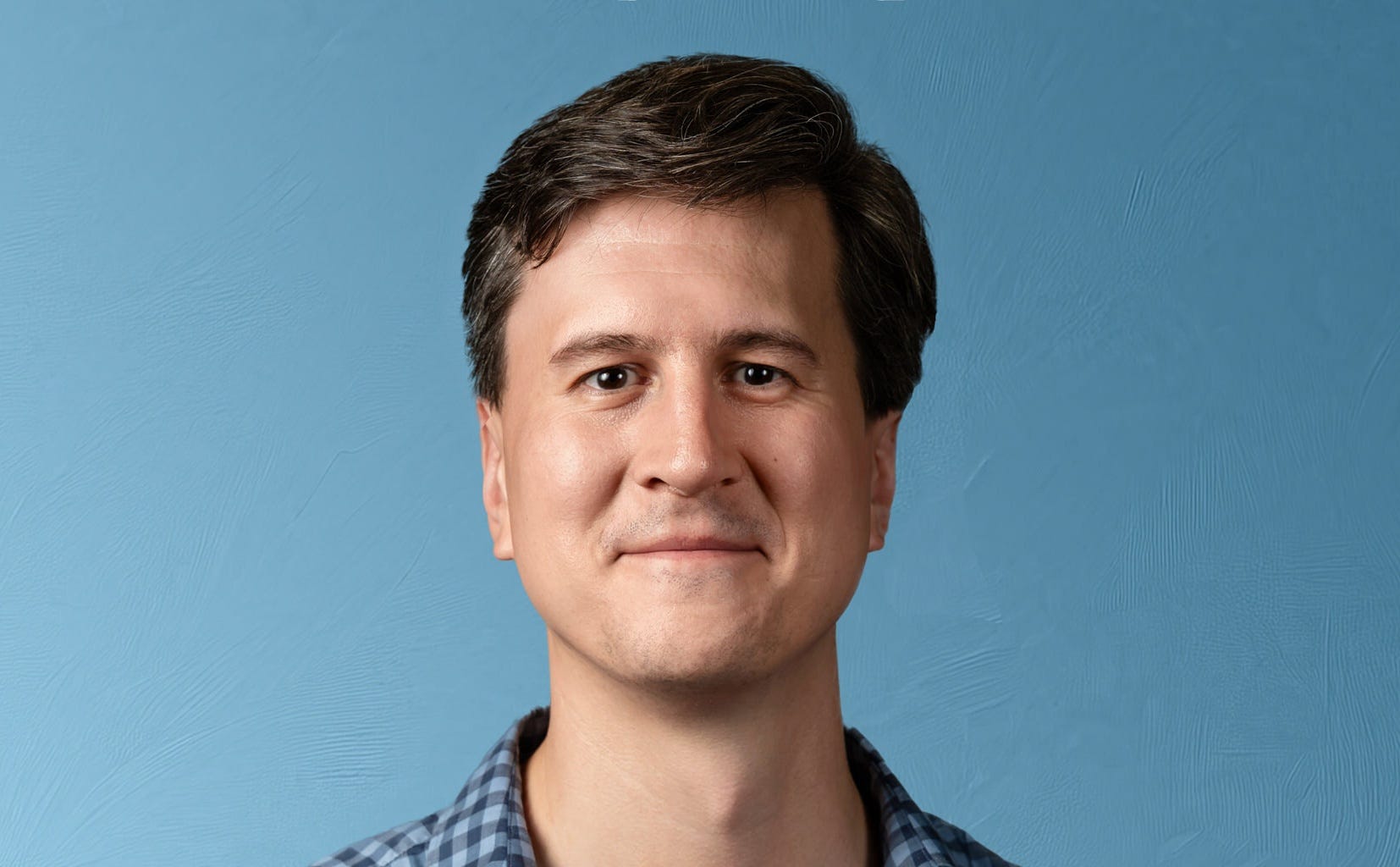
In Part 1, we covered: why here, why now, and why Jan thinks California needs this.
In Part 2, we get into some of the nuts and bolts of the urbanism and talk about the importance, for families and children especially, of being able to do mostly daily tasks without a car. We talk about transit, affordability, and whether nice things in America are doomed to be immediately priced out of reach. We talk about governance — specifically the fear that this is a billionaire techno-utopia in disguise. And we talk about sustainability: the solar strategy, district heating, and water recycling. Finally: what happens next, and whether this thing is actually going to get built.
I’ll be honest with you, we talked for two and a half hours and I still feel like we barely skimmed the surface. Everything we did discuss deserved a little more pushing and we barely even mentioned the advanced manufacturing park or the shipyard. The modular housing angle alone is pod-worthy! I could do another ten episodes on this project, and maybe, if they actually start building in the next couple of years like Jan believes, I will. After this conversation, I’m not ruling it out.
Let’s get into it.
Jan Sramek
I think the way that we thought about the urban design from the beginning is because people talk about zoning and streets and so on. We’ve thought about it from the experience backwards and saying, “What’s the experience we want people to be able to have? What’s the life that I have in this city?” For example, I think life is tremendously more fun if you wake up in the morning and you strap your toddler, if you have kids or something, on your chest and you walk out and you go five minutes to get a coffee than if you start in your kitchen and make it at your machine.
I’ve lived both and one of them is more fun and it gets me out of the house and it gets my day started. We wanted a place where you could have small-scale retail — it doesn’t have to be much — coffee shop, a restaurant, maybe a pharmacy in the heart of each of these neighborhoods. We didn’t start by saying, “What’s the type of housing we want to build?” We started by saying, “If we want everyone to be able to walk to a few basic amenities — a coffee shop and a couple of restaurants — what’s the density that we need?”
Once we knew how many people we needed within a 5, 10-minute radius, what product types in terms of apartment buildings and row homes would get us there? That was the retail at the heart of each neighborhood. I think for neighborhoods to feel like neighborhoods, they need to have a sense of identity. For most neighborhoods, that retail street is what gives neighborhoods at least partially a sense of identity. We can all talk about cities that we know where that’s the case.
Then the school — I wanted to have an experience where I can be number one for older kids. The kids can just walk home alone. But for younger kids, if I am picking them up from childcare or from school, I want to be able to go pick them up and then go pick up some groceries. Not a massive Costco shopping thing, but pick up some fresh bread and produce and pick that up and then go home. Parents are really busy, there is a lot going on. If you can make it easier for them where they can just go pick up the kid, go to the grocery store — little kids love grocery shopping — and then you can take them home, that is a really great experience, particularly if we can also put parks next to the schools.
Maybe another version is you go, you pick up your kids and then you see your friends and they go play in a park and you can sit and have coffee and have a totally different experience of your day than driving around.
David Roberts
That’s the difference between getting groceries being a little fun adventure where you are walking and using your body and seeing your neighbors and meeting people, versus an enervating chore that involves strapping kids into the car seats, driving, finding parking, getting out of the car seat, going in, coming back out, getting back into the car seat, driving again — absolutely draining experience of doing the exact same thing in a car.
Jan Sramek
I could not have put it better myself. I think part of why it has taken us so long to realize the difference as a nation is in some sense, it sounds as if those two experiences should be similar. At the end of the day, who cares how you do it?
But I’ve made it a point to move around when we had a chance with our kids and just experience the contrast. It is a totally different mindset that you get home at 6 o’clock if you do one versus if you do the other. They have nothing in common together.
David Roberts
Also, this is one of the big problems that urbanism faces in the United States — if your sole experience is of the latter, if chores just mean driving around to you and always have, and you have never experienced anything different, you do not know. You do not know what it could be like. It is very hard to get people excited, especially in the US, for something that they just literally have zero lived experience of and no visible example of, practically in the entire country. It is a very alien concept to most Americans, I feel.
Jan Sramek
Exactly. There’s a thing that happens that I can’t quite figure out, why it happens, but I’ve seen it happen where people will go for a vacation in Italy or France or Greece or whatever, and they’ll spend two weeks. They’ll spend two weeks eating and drinking, and they feel great.
David Roberts
“Why is this so nice? Why do I feel so good?”
Jan Sramek
They come back and they’ve lost weight or they feel the same. They spend two weeks partying in different ways.
David Roberts
You can always track it on their fitness tracker because their step count quadruples.
Jan Sramek
100%. But then the weird thing is some of them come back. I think increasingly a lot of them come back and they say, “You know what? It would be nice to have that in the US and maybe I don’t even want to live there, but my kids might want to live there. Or maybe I want to move there when I’m older and I can’t drive,” which is another whole thing, by the way.
David Roberts
Yet they still fight it.
Jan Sramek
But then some of them come back and they go and they don’t assume that we could build it here. We can arrange the bricks in the homes and in the streets in whatever goddamn way we please if we decide as a society. It’s not some rocket science over there — but I think it feels like it’s speeding up. I remember, I think you used to write at Vox. I’m not sure whether it was you or someone else there, but there was a big series on the loneliness epidemic in America. I feel like in 2015.
David Roberts
I did a piece on that. This is something I’ve loved hearing you talk about, because this is something I’ve been talking about for 10 years. It’s not really catching on. But I think, and it sounds like you agree, that a lot of the angst in America, a lot of the loneliness, a lot of the low social trust, etc., is downstream of urban design — downstream of the fact that we’ve built our settlements in a way that physically, actively keeps us away from one another. It’s insane the way we’ve built things. I’m glad to hear you talk about this.
Jan Sramek
I agree 100% with what you just said. Humans don’t build trust online. We’re getting better at it. That happens slowly. For each component of trust building, there’s a destruction that happens. You build trust by sharing the same physical space and seeing people’s faces. I felt the contrast really starkly, where if you walk on streets surrounded by the people in your community and you sit in a tram and you look at them across the aisle and you sit on the Tube — very different people. London and Zurich are full of really, really, really different people. New York is full of really different people.
You need other things, you need functioning police, you need to enforce social norms, you need to deal with homelessness. It’s not as if those cities are doing everything right. You need the right combination. If you want to have trust in society, you need people to spend time in the same physical places. It’s not Walmart. It needs to be sitting on a street with cafes, drinking coffee, and looking at the kids playing in the park.
David Roberts
Yes. One lovely description of that I got from an urbanist guest — I can’t remember which one it was, now I feel bad — but she was describing biking around in Amsterdam cities because they don’t have a lot of markings on the streets. There’s a lot of just ungoverned intersections. I’m sure you’ve visited. She said, as you’re walking and biking around, every few seconds, you are engaged in a little micro-negotiation with another person — “Who goes first here?” or whatever. You’re constantly, at a low level, engaging and coordinating with the people around you. That builds up a fundamental sense that you’re part of something — that you’re part of a community.
Jan Sramek
Then you contrast that with the experience of sitting in a car in traffic where you feel everyone around you is the enemy. You hate everyone around you. Of course you do. You’re sitting in a small metal box — and everyone around you is just taking away from your experience.
David Roberts
Yes. Definitionally looking at the ass of the person in front of you. Ask any biologist what it means in the animal world when one creature turns its ass towards another. It is universally a symbol of dismissal, arrogance, and hostility. It is just built to make people hate each other.
Jan Sramek
And you don’t even see their face. You just sit there and all you see is metal representing some other person. I recognize that given the size of the country and how we’ve laid it out, we are going to keep using cars to get from city to city. But inside cities we should be able to design a lot better alternatives than the current status quo, which I think is destroying the communities.
David Roberts
Couple of questions on that subject. One, the transit inside the city. All these corridor streets, these boulevards have a big lane for transit. The question is, what transit? Is there talk of laying down light rail or would you prefer fast buses or do you have something more futuristic or different in mind or is that not settled yet?
Jan Sramek
It’s not settled yet. We’ve intentionally designed it to be mode-agnostic. We used to name it — there was a version of the plan when it was called BRT for Bus Rapid Transit. I made the team take the B out of it and I said we’re just calling it rapid transit and we don’t know what it is. I think we don’t know what it is for a couple of reasons. I’m a huge fan of trams. I think they’re super fun to ride. People have a different experience with them. I’ve read the theory around the permanence of the tracks gives merchants the confidence this is going to stay there.
I’ve read the literature that says if you’re doing it on day one, when you’re laying down the street, it’s not that much more expensive to lay down the tracks. We’re not ruling it out. BRT is obviously a default option. I think it’s a little unknown at this point. Autonomous seems to be coming along very quickly. Does that mean that instead of one big bus, we end up with lots of 10-person vehicles that have maybe some level of synchronization? I don’t know.
David Roberts
I was thinking about that — if you had smaller autonomous buses, they would have to pass one another, wouldn’t they? The transit corridor would at least have to be wide enough to squeeze two of them in there, wouldn’t it? I don’t know if you have gotten to this level of detail yet.
Jan Sramek
We have two lanes in the corridor and they could pass if you handle the opposing lane traffic. That depends on whether you think of the smaller ones as being a point-to-point system or whether you just think of them as increasing the frequency, but they still run linearly, which I think is as likely as anything else.
David Roberts
The larger point here is that every one of these corridor streets has one of these things and there is one of these corridor streets every half mile.
Jan Sramek
That’s right.
David Roberts
You have a perfect grid. This was one of the most fascinating things when I went to Barcelona and talked with Salvador Rueda, the guy who redesigned their bus system. Precisely what he did is make it more linear, make it more square to follow the grid better and make it more frequent. This is very similar along those lines — these fixed routes with very frequent service. You’re never more than a few minute walk or a few minute wait from transit, is the idea.
Jan Sramek
Exactly. Because it is a perfect grid, you can get from anywhere to anywhere in the city with at most one stop.
David Roberts
Right.
Jan Sramek
Which is a big deal. The next step, and the reason for why I’m cautiously optimistic about having smaller vehicles that are autonomous, but them being more frequent, is as you get the frequency down. I think the magic really happens in an asymptotic fashion.
David Roberts
Five minutes was Rueda’s cutoff — his mental cutoff. No longer than five minutes.
Jan Sramek
If you can get to that point, then people never look at the schedule, they never worry about when it’s going to come. They never think, “Should I take an Uber?” because maybe there’s going to be a 10-minute gap. I think the biggest gift — there are a lot of challenges with how autonomous cars will be deployed, which could cause traffic and congestion and all kinds of issues. It’s a tool and it depends on how we use it and how we regulate it. But I think the biggest gift it could give to the transit community is if we can reduce costs and if we can increase frequency, then the increase in ridership is nonlinear. It’s exponential. Especially if you can keep it nice and safe. It’s exponential and I’ve seen it in my life when I lived in places where it was 10 minutes versus 5 versus 15. The usage explodes.
David Roberts
Mentally, 5 minutes and 15 minutes are worlds apart. There have been lots of studies of this kind of thing. The idea is you can live in this city without a car. There is frequent, easy transit to everywhere in the city. But of course, no matter how self-sufficient a city you build, you are not building an island. People are going to come and go from the city in cars.
A couple of questions about this — this is one of the big objections, one of the problems people have with this is there’s just a little two-lane highway leading here from Sacramento and from San Francisco. There are not substantial regional transportation options to get people to and from San Francisco to here or here to Sacramento. People are worried you’re going to overwhelm the highways with people coming in. That’s the first half of the question.
The second half is part of the plan — you said you’re not doing this, but it looks on the plan like you are doing this. There’s a bunch of parking garages around the edge of the city. I think the idea is people drive into the city, park in a parking garage, and then proceed on foot or on transit. Is that plausible? Talk about the regional transportation issue and then talk about how, if people are coming to your city in cars, you’re going to prevent them from driving around your city in cars.
Jan Sramek
I’ll unpack it from backwards. I’ll talk about the garages first. Yes, the idea is we have a system of garages. They are mostly around the perimeter of the city. If someone wants to drive a car all the way to their home, they can. But we’re providing an option that’s at the edge of the city. We don’t want to prevent people from driving the car — we just want to give them an option that’s much faster and more convenient and more fun that they choose to use it. But if they want to drive, they can, and the reason that’s going to work is what you mentioned earlier, which is the movement streets have one lane for cars.
At some point as the city fills up, there is going to be traffic inside the city and it is going to be slower to sit in your car and drive it than to, for example, get in one of those minibuses or buses, which runs in a dedicated lane. It’s just much faster — or a bike or whatever it is. Our view is let people drive if they want to. Sometimes you have a real reason — you’re coming from IKEA, you are bringing a family friend or family member who is disabled and can’t easily walk. Maybe you’re sick, maybe you’re bringing your wife from the delivery room with a new baby. Maybe you want to.
David Roberts
Have you thought — I’m sure somebody’s brought this up — of having something like a municipal fleet of EV vans or something that people can rent for these types of purposes to eliminate that last reason that people need cars? Has that come up?
Jan Sramek
It’s in the plan. I’m delighted to say it’s in the plan.
It’s not very prominent, but I can point you to it. We think that’s a big part of getting people over that last hurdle of not having to have the car for those situations. Now, that means that you’re still driving it to your home because you’ve got a newborn or you’ve got IKEA furniture or you’ve got your elderly parent who can’t easily use the transit in the car. But you don’t have to have it just for those two days out of the year when you’re doing it or for when you’re going to Tahoe and you want to go skiing and you need a place to put your skis.
That is certainly part of the plan, modeled on some of the — we don’t want to understate how challenging it is to make that system work. We expect we’ll have to subsidize it, for example, from some of the parking revenues. I think some of the co-ops in some of the German cities or Swiss cities have done in some sense the best job of providing these. But we do want to create a situation where if you need a car or a van a few days out of the year, you don’t have to have it just for that.
Then you can tailor the vehicle — instead of having to have one car that I have because sometimes I’m carrying furniture and groceries and sometimes I’m carrying three kids.
David Roberts
Sometimes I’m driving 500 miles.
Jan Sramek
Exactly. I’m going to Tahoe to go skiing or I’m going for a road trip. You can customize the vehicle to what people need. The idea is to win people over by just making the option of park — and then bike or walk or take transit — so much more enjoyable and much faster than sitting there and driving your car. That’s on the internal system. On the regional system, I think a few different answers. Number one, we start by — because we’re building a complete city with jobs and retail and schools and so on — having a really high internalization rate.
One keyword for how many people can meet their daily needs, what proportion of trips is inside the city. We want to make it so convenient to do most of those things within the city that a very high proportion of people can do that. That will be validated in the environmental work that is going to come out. Already, in some of the early reports that even agencies that were skeptical of the plan put out in the beginning, they acknowledged, yes, this would have lower VMT than new development happening in Solano County today, significantly so.
Even once you account for the fact that people would drive to other parts of the Bay Area because many of the trips are internal and short and not driven, even once you account for the external ones, it’s still better than the vast majority of development that’s happening in the region. I think two answers to the question in addition to that. We would love to have as high of a share of people taking transit — whether it’s buses or maybe eventually trains — as possible. We recognize that decision is not just ours.
We’re looking at how do we set up financing mechanisms that would contribute to regionally funding some of the infrastructure. In the Bay Area, we need to decide — in Northern California, it’s the whole Northern California mega-region that Solano is right in the middle of. Between San Jose and Sacramento, there are 12 million people who live there. This is the seventh largest state in the country, if it was a state, just that part of it, not even all of California.
I think there is a big discussion about what exactly happens to transit, where exactly the investments go. We would like to be part of the solution. I think this region used to be two regions. It used to be Sacramento and it used to be the Bay Area. But increasingly it is one place.
David Roberts
Where’s the train, the alleged high-speed train, going to go? Is that a different part?
Jan Sramek
Yeah. That goes from Sacramento down to LA. Then it goes from San Francisco down to San Jose and then connects to it. However, there is a train line that connects San Jose to Oakland to Sacramento called the Capitol Corridor. It is not a very high-frequency line right now. People have been trying to improve it. It runs on an existing Union Pacific alignment, which is one of the issues. It is very windy. They only have so many slots.
For example, there used to be a rail line — you’d love this — called Sacramento Northern, which used to go all the way from Sacramento through the middle of our site to the water. Then they put the trains on a ferry, on a massive ferry called the Ramon. They would ferry it across to Pittsburg and then from Pittsburg it would go on a train all the way to Oakland. When BART was being built in the 60s, the line was shut down and they took the part of the alignment from Pittsburg — Pittsburg is on the other side of the city and the shipyard a few miles across the water. The Sacramento Northern alignment from Pittsburg to Oakland, that’s the yellow BART line. They took that and they made it into BART.
There’s an existing rail alignment that people run trains on on the weekends that runs through the middle of the city and then connects to the UP line in Fairfield. This is a big regional decision and discussions about what exactly happens here. We do think that this now works as a mega-region. People live in Sacramento, they come down to the Bay Area twice a week for work. People have family all over the place. Solano is in the middle of it. This project could help tie the region together in a much better way.
David Roberts
I guess your hope would be — obviously, your legal jurisdiction ends at the edge of the land you own. I guess the hope would be if this got going, it would prompt a discussion about better regional transit. One of the things a lot of people are worried about is that you’re going to get a bunch of highways widened and a bunch more car traffic in the region from this.
Jan Sramek
We are proposing to widen some highways and they would need to be widened. You mentioned Highway 12 — that’s the highway that connects the 80, which is the main corridor from San Francisco to Sacramento, to the city. There’s a bunch of the highway that already goes through cities that’s already been permitted and is now being funded to be widened. Then you will need to widen about another seven miles of highway to get to our city. We think that to build a city for 400,000 people where they can live car-free if they choose to, that’s an acceptable trade-off. I’m happy to go into detail for why that’s the case. There’s an element of highway widening.
We’re doing things to reduce people needing to use those highways as much as possible. For example, one of the components of the plan is running transit from the city to other cities in Solano and potentially to rail connections in places such as Walnut Creek.
The other part of the plan for reducing VMT is if you look at all of the counties in California, Solano has one of the highest rates of people commuting out of the county for work. 68% of people in Solano commute out of the county. It has devastating consequences on families. It’s mostly people who work in skilled and manufacturing and service jobs. The number of people I know who live in the county who commute two hours each way to Silicon Valley every day would blow your mind. You can imagine the consequences on their health, on their families, on their kids.
This was one of the foundational things all the way back 10 years ago — one of the things that radicalized me on this is a good place to build it and bring a bunch of jobs here, was talking to someone who had a two-year-old son and his wife lived in Solano and commuted to Silicon Valley two hours every day. I said, “You just told me you have a two-year-old son. How does that work?” He said, “Oh, it’s fine. We figured it out. She leaves at 4 am to beat the traffic and then she comes home after lunch.” I said, “So when do you —” and he’s like, “Well, I stay home longer.” I said, “When do you see her?” He’s like, “Oh, it’s fine. I see her on Saturdays.” I’m like, we’ve just completely failed at regional planning.
Part of it is the foundry and the shipyard are happening. We have signed letters of intent, binding ones, where companies have put down money to build facilities in those. If we can build them and suddenly we can take a bunch of people not just from our city, but from places like Fairfield and Vacaville that together have 250,000 people who live there and they are no longer commuting 70 miles to Silicon Valley and they have a 10-mile commute to come to the foundry and work there.
Then suddenly we’re starting to make a difference. You have to look at it at the scale of the whole project. The last thing that I’ll say is with all of the impacts that we have, whether it’s VMT or building on some open space and some grazing land, the question that California is really bad at asking is what happens if you don’t build it? We’ll have a chapter of the environmental document that the city is producing that’s going to come out later this year because under the California environmental laws you have to look at alternatives to the project.
One of the alternatives that they’re going to study is what happens if you don’t build it. The reality of what happens if you don’t build it is these people move to a bunch of subdivisions in Stockton and Fresno and Bakersfield, or they do what my sister-in-law did and they move to Phoenix and they buy a massive house and they buy two SUVs and they run air conditioning 24/7. I think that yes, we’re going to need to widen seven miles of highway to get these people connected to the system, but we’re going to have far lower VMT overall. The alternative is they will drive 70 miles from Stockton to Silicon Valley every day instead of 10 miles to a job in the foundry.
David Roberts
That brings up the question then of class mix, affordability, etc. Another knee-jerk reaction people have when they hear about this — “A bunch of tech billionaires want to build a city in the middle of nowhere” — is they assume what’s going to happen to it is the same thing that happens when you build anything nice in the United States. Because there’s so little nice stuff in the United States, anything you build that’s nice is instantly oversubscribed, instantly expensive. A lot of people are assuming that’s going to happen instantly.
If you build this nice — you got all these embedded superblocks and neighborhood schools and etc., just like it is that much nicer and more walkable than any place else, honestly, in the country — demand is going to skyrocket and it is going to be wildly expensive. Why would we not assume that is going to happen?
Jan Sramek
Few different answers. The first one is the scale. People have asked, “Why do you need to get the whole project approved?” I wanted to have the big project approved because I wanted the company to have an economic incentive to optimize for volume rather than squeezing maximum profit from each housing unit. If you have an approval to build 2,000 units on the coast somewhere, you’re going to build the most expensive homes that you can possibly build and you can maximize the profit. We have 174,000 homes to sell. If you look at the economics of the company, it’s much more important for us to get what a developer would call absorption — that is, maximize the amount of supply into the market year after year after year. There’s a lot of time value of money. We have an incentive to optimize for volume — high quality volume, but volume nevertheless — the same way that any company does. That’s number one, I wanted us to have that incentive.
Number two, our focus is on home ownership. We’ll have a mix of units for sale and for rent, but we would like the majority of them to be for sale. In particular, the market that we would like to serve is to fix some of the structural issues in the housing market where people no longer build starter homes in California. A starter home is now 1,800 square feet. That’s ridiculous. That’s not how it worked for a long time. What we’ve told the community is we want to have a starter unit that is less than half a million dollars, which in California is a big deal, particularly if it’s coming not in a random subdivision off a freeway, but a highly amenitized neighborhood with jobs and retail.
David Roberts
Less than half a million?
Jan Sramek
Yes.
David Roberts
I don’t know if you can buy a house anywhere in Seattle for less than half a million.
Jan Sramek
To be clear, that’s not for a single-family home, that’s for a flat in a row home. Think of a classical kind that was the bedrock of the first ladder for homeownership in America for 150 years. You look at these neighborhoods in Boston or Chicago, you build three- or four-story buildings, you divide it into three or four units, and you sold that. We think we can get that below half a million dollars and then full range from there to grand row homes that you might sell at a much higher price point.
Number one, it’s the volume and just having a lot to build. Number two, it’s the range. One of the saddest things in these new neighborhoods that we built is the range is really narrow. The starter home is 1,800 square feet and the big home is 2,600 square feet. I want a range that’s much bigger than that so you can accommodate people from different parts of the spectrum. A thing that we are very committed to that is unusual is I was radicalized when I started to go see these new projects that were being built all over the US and you get there and you’ve got the starter home neighborhood on the worst piece of land, and then you have the middle one. Then up on the hills, you’ve got the executive estates — grand luxury, etc. Then there’s the affordable housing building on the corner by the freeway. I just find it morally abhorrent.
We have a deep commitment, and you see it in the plans, to deeply integrate these neighborhoods, where someone might have a 3,000, 4,000 square foot row house — fine, have it. But you can have next to it the same home that has been divided into 4,000 sq ft flats, which means these kids go to the same schools, you go to the same coffee shops.
That’s how you create economic mobility. You’ll see it in the plans — when you go look at the plans, you will not see the traditional exclusionary zoning of big homes in this neighborhood and medium homes in this one. It’s all mixed. The third component of it is thinking about the total cost of ownership rather than just the price or the rent on the home. Basic example: If we can make it possible for a family to have one car instead of two cars — not even going all the way to no cars, but they can have one car instead of two cars.
David Roberts
That’s huge.
Jan Sramek
It’s $1,000 a month between the lease payment and insurance and gas. Suddenly you can afford a better thing than bringing jobs. Some of these new manufacturing jobs pay $100,000 to someone who might be working for $60,000 right now or $70,000. You increase the incomes. The last point is there’s certainly going to be a component of — as the city grows and we add more amenities and more employers come, the home prices are going to go up over time. But I think that creates a tremendous opportunity for a bunch of people to move in.
In the early days when this is not going to overnight drop from the sky and be this super-amenitized neighborhood, the first thing is going to be a little bit rough and there is going to be some contraction and the urbanism is going to be good. But the people who can get there in the early days, I think, can benefit from getting into some of the best neighborhoods on day one and build generational wealth.
David Roberts
It’s funny, I asked Salvador Rueda in Barcelona, “You’re making these superblocks, they’re real, real nice. How are you going to prevent them from instantly being expensive?” His answer was exactly the same. He’s saying, “Everybody in the city is going to live on a superblock. That’s the goal. In the end, everybody is going to have a nice place to live and nice amenities. We’re going to get rid of scarcity.” That was his answer as well.
Jan Sramek
I really like that way of thinking about it. I think that is really smart.
David Roberts
Most of the affordability you’re shooting for, you think is going to come naturally out of the mixed-use zoning, the code you’re putting on builders, and the form factors. It sounds like you have not thought a lot about explicitly affordable housing — capital A, capital H — of the type that is so contested in California. Are you hoping that zoning and housing form do the affordability work for you or do you think there will be more needed?
Jan Sramek
We would like to try to see how far that can go. We’ve had discussions with affordable housing developers, for example, about donating land for them to build capital A affordable. We’ll see where we end up in those discussions. We’ve had discussions about building dedicated housing for the airmen at Travis Air Force Base. That’s a big deal. There are 12,000 people who work there. There are a lot of jurisdictions in California in particular that have really focused on inclusionary requirements. We’ve now had the benefit of seeing data over the last 10 years.
The data that I’ve seen is not great. You create a set of housing that people never can buy into — rental, permanent capital A affordable — and then you just push the rest of it to go into executive housing to pay for that. We have a lot of places that are doing that. I think if we could get one major contribution to this, it would be figuring out how do we build stuff that’s more affordable by design. I think we have a unique site that allows us to do that and a unique scale. I’m also excited about innovations in housing construction.
David Roberts
That’s hilarious. Jan, I’m sitting here, literally my eyeballs are on the next question. You’re just queuing me up here. Let me frame it this way because I’d love to hear your angle on this. One of the things one could imagine being located in the foundry is a factory producing modular housing. The whole quest for modular housing — I know you went on this reading binge, I’m sure you’ve read about this — it has been the wave of the future forever now and never quite pays off. It never quite happens.
There are a lot of theories about why it hasn’t taken off. But what you are building is theoretically a place where they can be produced and then transported three blocks and plopped down in a guaranteed growth market. If manufactured housing could work anywhere, it seems like it would be here. I wonder if you have your eye on that.
Jan Sramek
We very much do. It’s very perceptive. I will say to start with, we come at this — and this is both Gabe who runs planning and myself and Andreas who runs the foundry, the manufacturing zone — we all come at it with interest and excitement but cautiously because of all the failures that have happened over the last 10 years. I read a lot about — Brian Potter has in Construction Physics on his Substack written about this in a really deep way. We are open-minded and interested and we would like to see it succeed.
If I look at the reasons for why it hasn’t worked elsewhere, you have different zoning codes, different lot sizes and you need to move it around a lot and you have fluctuations in demand. In theory we will still have fluctuations in demand, but we have a single location where you can make them on site. We can probably bring in the materials on rail or even on a barge. We have standardized lots. The row homes and the small apartment buildings that we want to build lend themselves very naturally to this. We have high standardization in the same jurisdiction.
We could be a really good launching pad for this. We are interested. We are talking to a lot of the companies in the space. I was just with one of them last Sunday. I am cautiously optimistic about the climate in California for this as well. Assembly member Buffy Wicks, who led many of the housing reforms in California over the last few years.
David Roberts
Previous Volts guest.
Jan Sramek
Oh really? Excellent. You might have seen, she just launched a select committee on innovation in housing construction, I believe.
David Roberts
Oh, interesting. No, I did not see that.
Jan Sramek
This just came out six weeks ago. I know that they are going to be looking at what the state could do to help incentivize the industry.
David Roberts
If you’re a company that wants to do this, it’s hard to imagine a better environment to do it than this. You have a bounded area, as you say, standardized lot sizes, 40-year runway. If you can’t make it work here, you can’t make it work anywhere.
Jan Sramek
Exactly. What I hope we will be able to do, if it can work here, is we can bootstrap it, but then that factory from Solano can also supply the entire Northern California market. We can be the baseline place where it happens and the baseline customer, but then on top of it, they could provide other things. Cautiously optimistic is the way that I would put it.
David Roberts
Interesting. Here’s a meta question that I think is on a lot of people’s minds, and I guess there’s a tension here. I’d love to hear you talk about this. On the one hand, you’re promising amazing transit, amazing urbanism, and we haven’t really talked about building code yet. On the other hand, I worry that you won’t have enough control. That is, how much of this vision can you really enforce? If a private builder comes, is there legal code that requires them to build along these urbanist lines? In other words, can you enforce this that you envision?
On the other side of that question, there is a whole other set of paranoid people who are worried that you are going to have too much control, that this is going to be some creepy billionaire — there is this whole — we do not have to get all the way into it, but I know you are familiar with, there is the whole set of tech billionaires that have these visions of going off and building these new digital cities, which they will run like tyrants and will be free of the dysfunctions of California. There is a whole movement. I forget what it is called. There is a whole lot of nonsense around that. I think a lot of people are associating you with that.
On the one hand, do you have enough control to make the vision what you envision it being? On the other hand, what reassurances do you have that this is not going to be a billionaire tech colony — like Stepford Wives, where all the rules and bylaws — one giant HOA of billionaires? That’s a lot to throw at you. I’m curious about your thoughts on all that.
Jan Sramek
Finding the right balance has been a lot of the focus for the last two years. That’s what I’ll say. The concerns that you outlined — 100% correct. We’ve heard it from both sides. The YIMBY crowd, after they’ve gotten to know us and after they’ve seen the plans, a lot of them have said what you’ve said, which is, “We think you guys want to do the right thing, and you have the right people and the right vision to do it. But we’re really worried that the system is going to water it down and build some bad suburbia because of some design approval that someone is going to have to issue.”
On the other hand, I completely understand the concerns that people have who’ve come at it and said, “This shouldn’t just be some private company that gets to run it as a private city.” We’ve found — I remember one of the early meetings in the county when we first introduced it, and people said, “You want to have all of these special regulations and do all of this.” I said, “Look, I only want one special regulation in the whole city, which is that after we’ve had this big debate and we’ve approved the whole thing, if someone wants to come in and build a home, they should be able to get a building permit in 60 days.”
That’s the only radical idea. That’s the only radical regulation, if you want, that we’ve ever proposed. The good news is we have existing frameworks in California law that have been in place for 40 years that allow us to get the right mix of flexibility and control and governance that I think can make everyone happy, particularly now that we’re doing it through the annexation rather than the ballot initiative. One of the problems with a ballot initiative, which is what this was originally when it was meant to be in the unincorporated county, is you write the initiative, then you go get signatures, and then it’s a yes-or-no vote. It’s a very binary thing.
Whereas the annexation is a long negotiation — hundreds of rules around how much flexibility do you have on road designs and the benches and the architecture and where the schools go. We have to have agreements with — the city governs it overall. That gave a lot of people a lot of comfort — this isn’t some crazy billionaire city. The city council is going to run this place. The police chief is going to run it, the fire chief is going to run it, the school district is going to run the schools.
David Roberts
It’s going to be a normal city government.
Jan Sramek
It’s going to be a normal city government.
David Roberts
It’s going to have a mayor, a city council, not some weird council of billionaires.
Jan Sramek
No, no, no. It’s literally the most vanilla set of government that you could imagine. The city council and the city manager are going to run it, the fire district, the school district — all of it is very vanilla.
David Roberts
How do you enforce the urbanism then?
Jan Sramek
Some of it sits in the zoning code. For example, we talked about the minimum density, which is one example here. Another example is if you go to the zoning code in the specific plan — it’s on our website, people can look at it — we have a maximum setback. Normally people have minimum. We’ve completely inverted normal American zoning. Normally you have a minimum setback — your building must be at least this far from the street. We have a maximum setback because we want to have an urban street wall where the buildings are all friends and they form that.
There’s a whole set of entitlement documents that come with this. At the top of it is a general plan change. Then there’s the specific plan, which is the zoning. There’s a lot of municipal regulations that are going to come with that. Then there’s a vesting tentative subdivision map, which again is on our website. People can look at it. It’s a 45-page document that has the movement streets that we talked about and the boundaries of the park located with precise latitude and longitude where they are sited to the closest tenth of an inch. That’s the amount of engineering work that we’ve had to do to be able to have this one big approval.
We’ve had to figure out the cut and the fill and the grading plan for about 40% of the city that’s going to be built first, including the slope on all of the streets. We have to make sure that the gravity-fed utilities — water, sewer, and stormwater — flow. You can look at this vesting map. You can see the locations of the water mains and the sewer mains and the diameter of the pipes — which one is an 18-inch pipe and which one is a 12-inch pipe.
There’s an incredible amount of engineering that’s gone into this and I think a lot of what step by step changed opinions of a lot of people who are open-minded — now they are big supporters or people who were skeptical and now they are supporters or they are saying, “I don’t know but I’m open-minded” — is they’ve just seen the work and they’ve been able to look at it and say this isn’t some crazy thing that got thrown together by a bunch of people who have no idea what they’re doing. All of this is going in the entitlement documents and there’s others. That will get us the right balance of public-private partnership to build this and build something great, but also give the community the safeguards that everyone is looking for.
David Roberts
That gets you a lot of the way on form. What about building standards themselves? Are you going to mandate passive house, zero energy? Are there going to be — you are getting into the building itself?
Jan Sramek
A couple of different components there. The framework that we are most excited about, which really was designed by Bronson Johnson on our team, who is the head of infrastructure and sustainability and one of the smartest humans that I have met on these topics ever, probably the smartest person. Bronson came up with this really innovative idea of how do we build a place where the sustainability, or at least a lot of it, lives in the infrastructure layer. We make it much easier for the builders to just build a building that is already really high performing.
David Roberts
For instance, a district heating system.
Jan Sramek
Exactly. When you did the introduction, I was delighted that you picked up on it because it’s a thing that we’ve been through all kinds of skepticism, through all kinds of people about. Is this a good idea? But Bronson really deeply believes in it and convinced me and everyone else on the team that it’s the right move.
David Roberts
Is this a district heating system that draws its heat entirely from sewage or partly from sewage?
Jan Sramek
Partly it would be geobores and heat exchange with the ground. Partly it’s stripping it off from sewage. Partly, by the way, could also be drawing it from data centers. To the extent that there’s any data — yes, to the extent that we locate any data centers in the community.
David Roberts
But you’ve got all this manufacturing — you’ve got all this manufacturing that’s producing a lot of waste heat over there on the west side.
Jan Sramek
We’ve intentionally located the distributing system and the wastewater recovery plant next to the industrial zone so that if we build anything that produces extra heat, we can just recycle that into it. Another example is oftentimes when you look at bad development projects, or for example, on the grid front, the way that the power works is, first of all, we recognize that in 20 years — who the hell knows how all of this is going to work? There’s so much innovation happening.
David Roberts
A district — let me just say you are never going to regret a district energy system. I will just put that flag there. Is that meant to — before we move on to the grid, because I am very interested in the grid — just to be clear, the whole city is meant to be heated and cooled by this district heating system. Is that accurate?
Jan Sramek
Yeah, that’s the intent. We haven’t made it a must condition. We have permitted it as an option because we want to be able to go through the process of getting the operator and verifying that we can do it economically. Permitting-wise, it’s hard to build it in as a condition. We’ve done a lot of work to permit it as an option and we are very committed to making it happen.
Funny story about it — we’ve gone through all of these discussions and design and making it happen. This Christmas I flew to see my mom and dad in the Czech Republic and the 50,000-person city that the village is — the village where I grew up is 10 miles from it. We are driving through the city where I went to school for 10 years and knew it pretty well. There was something that people always described as a heating plant to me. For the first time I looked at it — what is this heating? The whole city has a district heating system, 50,000 people.
David Roberts
Quite common in Europe.
Jan Sramek
It’s been there for 60 years. I never knew because we didn’t live in the city. People say, “You can’t make this work, it’s too complicated.” It’s been operating there for 60 years.
David Roberts
Imagine the people 60 years ago debating whether to build it there. Will it pay off in five years? Who knows? Ten years? Who knows? But 60 years — exactly. It has paid itself back dozens of times over in that time.
Jan Sramek
Exactly. Another example is on the grid front. The current plan is — the city has a 40-year build-out, you mentioned. There’s a portion of the city that is not expected to be built on for about 25 years because it takes a long time for it to grow. What we’re doing on the grid is on the portion of the city that is not expected to be built on for the next 20, 25 years, we’re putting down solar on day one. That solar is going to power the first half of the city. By the time that you get to the useful end of the life of those panels, we can reevaluate and see exactly where we are. That solar, between the solar plus batteries, is going to provide about 85% of the supply, which then dramatically reduces the need for the PG&E interconnection.
David Roberts
Wait, wait, wait. Now hang on. You’re talking about just solar on not-yet-built-on land is going to power 85% of this giant city with a giant manufacturing park next to it.
Jan Sramek
For the first 20 years, 25 years, yes.
David Roberts
Wild!
Jan Sramek
I think it’s 7,000 acres of solar. It’s a lot of solar.
David Roberts
Interesting. Is there anything about residential solar? Are you mandating it, requiring it, or encouraging it?
Jan Sramek
That’s part of this platform approach that Bronson designed where, when we’ve run the numbers, because we are building at this scale, the conclusion was that in order to improve affordability, it was better for us to do the solar at a commercial scale and then not mandate it, especially at least on the smaller buildings. On big buildings we’re going to do it, but on small buildings it’s expensive to install if you have the opportunity to do it at a commercial scale. We’ve done it that way. Similar approach, for example, on stormwater, where in a lot of the new projects you end up with bad urbanism because someone is building something and they need to leave a bunch of grass or a swale or something available to deal with stormwater.
We’ve designed it where, as a builder who’s taking a parcel, you literally don’t need to worry about stormwater. You can just dump it down the pipe and it’s our problem. We’ve designed the infrastructure to manage it at a city scale. From an environmental performance perspective, we are very convinced and we believe the environmental documents that are going to come out later this year are going to show it. It is going to have the craziest performance of any place in America.
David Roberts
Energy-wise?
Jan Sramek
Energy-wise in terms of energy use, in terms of low water use, on top of that water use, the amount of recycling on the water, VMT compared to any other greenfield project in the country, and so on.
David Roberts
I’ve heard this before, made as a broader point — sustainability desperately needs to get beyond being a customer choice thing into being an infrastructure thing. Build it into the infrastructure. This is, I think, a key insight. If you make the infrastructure green, you just take the expense and the worry of it off the heads of individual builders or individual consumers, build it into the infrastructure. But you can only do that at some scale. You have to have your hands on some substantial amount of infrastructure. Which is why doing this piecemeal is hard and unsatisfying in many other places.
Jan Sramek
Exactly right. It also allows you to do one other thing — first of all, you can do it, which is what you said, you’re able to do it in the first place. The second thing that it does is it creates far better incentives. For example, many of the discussions that we’re having right now are that we can look at these systems and we can look at — to your point about the district heating system in the town where I grew up — because we might be operating many of them or a partner of ours may be operating them for 30 or 40 years, we can look at the total cost of ownership over that period.
Someone who’s just coming in to build 500 homes is never going to build a district heating system or anything like it because they just look at the CapEx and then they dump the OpEx on the residents. We can look at it and say, “Okay, this will take a little more money to get it there in the beginning, but then you make it back over time through far lower OpEx.”
David Roberts
There’s physical scale that is working to your advantage and then there’s also time scale working to your advantage.
Jan Sramek
Exactly.
David Roberts
Working to your advantage — have longer time horizons. This comes up — listeners, if there are any still left with us, listeners will be familiar — this comes up over and over again in sustainability, which is that these choices are better in the long term but more expensive in the short term. Everything ends up coming down to financing. Who can cover that, who can amortize it, what sort of vehicles do you have to extend? A lot of that just goes away if you are the owner and you are invested in the whole project for the whole life of the project. There are just lots of these holistic decisions that start to make sense.
Jan Sramek
Now that we’re talking about it, I’m thinking about it differently. There is a component of time that is the running theme through a lot of what we’re doing. It’s taking the long-term view. In one sense it’s reflected in just what are we building — the product, which is taking a long-term view, which is saying, “let’s look over the last 3,000 years of civilization and see which neighborhoods survived and became most beloved and durable and charming.” What do people like? Let’s learn from that. Then it’s how do you set up the scale of what you’re doing and the financing and the incentives where you can take a long-term view and build something great.
It’s taken a really long time — a decade to get all of the pieces together. But I think we have something where if we can execute on everything that’s been planned and have the right partners around the table in terms of the agencies and cities and counties that we work with, we can build something pretty spectacular.
David Roberts
What are the phases? You can’t just — it’s 175,000 housing units, obviously going to take a lot of time to build. I’m curious, when you think about phased building, are you starting in particular geographic areas and trying to create a little concentration and agglomeration from the first phase and then build out from there? How are you thinking about phasing this? The second question after that is just, what are the legal — what’s next? This is California, so I assume there’s a list of 30 permits or sign-offs or documents or reviews or whatever that you have to go through. I’m curious what’s next and how long the road is between here and breaking ground.
Jan Sramek
It’s a long list, but it’s gotten a lot shorter. On the phasing question, we’re very likely going to start at this place where you would call the art district — the downtown and the residential neighborhoods interact. If people are looking on the map, it’s the northwestern corner of the downtown. We’re going to start there because it’s a place that gives maximum access and proximity and flexibility. The people who live there can work in the downtown, they can work in the foundry. We’re close to the art district. If the foundry really explodes quickly, we can build there. If the downtown explodes, we can build there. If it’s mostly residential for a while, we could do there. If for some reason the jobs take a little bit longer to materialize, we’re going to start there.
That means that we can share the infrastructure and that is probably going to be the first phase of it. The goal is very much to concentrate and condense the development and the heat in as small an area as possible. We do not want to have scattered projects all over the place. There are lots of reasons for that. One is just infrastructure cost. More importantly, we want it to feel like a city really early on.
David Roberts
It’s the agglomeration benefits that are going to draw people there. Scattered developments won’t get you there.
Jan Sramek
Exactly. My controversial opinion, in some sense, one of the leaps of faith in the beginning of this is I believe really strongly that if you build one incredible superblock — 16 blocks — when you are in the middle of the superblock, maybe it’s two superblocks, but something on that order, it’s a couple of thousand people living there. When you’re in the middle of it on that street, you’re going to forget where you are. You can create a feeling of enclosure and energy. This place is different. I want to be here at a much smaller scale than people realize. We have examples in the real world that have proven that.
David Roberts
This is the minimum viable scale we were talking about earlier — how much has to be there for it to start growing on its own.
Jan Sramek
I think you have one great subsidized retail street where you have two coffee shops and a few restaurants and a small grocery store, and you have a couple of thousand people living there, maybe even less. It will begin to feel like a place. If you are sitting on that retail street and it is a May evening and you are sitting outside a restaurant and your kids are playing in the street, and you see a couple of hundred people having dinner, you look at it and think, “This place is different. This place is special. This feels different.” When you come visit, you will see that on the weekend and so on.
David Roberts
I forgot to ask about aesthetics when I was asking about building codes and everything else, but as I’m envisioning sitting here looking around at all this, it occurs to me to wonder, what does it look like? Lots of people have lots of complaints about the aesthetics of typical new development in typical American cities. I see this in Seattle. It’s very cookie-cutter. It’s very bland. It all looks the same. It’s not any particular style. Everybody knows what I’m talking about. Everybody’s seen these buildings. How tight a leash are you going to put on aesthetics?
Jan Sramek
We are certainly going to lean a little bit off the beaten path here. Number one, I think that the ransom note five-over-one style that you see everywhere is absolutely horrific. I also think that faux Spanish revival home builder design is not great either. Architecture is hard. It’s the one thing that I worry about more than almost anything else. I’ve spent a lot of time thinking about it.
David Roberts
You’ve read all these books and tell me if you think this is right. My sense — I’m an amateur at all this stuff — is that you lean in the direction of variety, even at the expense of tolerating some things that you don’t like.
Jan Sramek
I agree.
David Roberts
You lean that way as well, or I do.
Jan Sramek
I will say a broad — my gut feel right now is that we’re going to lean in a broad range but with a traditional vernacular architectural tilt.
David Roberts
Traditional versus clean, modern steel and glass?
Jan Sramek
Yeah, not a lot of modern steel and glass and more warmer materials, more ornamentation. The windows look like windows. The doors look like doors. There’s a cornice on the building. Very basic things. At the scale that we’re building, you have to lean into variety. One of the things that’s going to make this feel like a city — and not like a subdivision — is just having more variety within these neighborhoods.
I would like it to have, generally speaking, some rhythm, but I think that means that you probably pick a couple of styles that you lean in. They are maybe 70% of the buildings, and then 20% is another few. Then you have some buildings that look really different. I think the architecture is the hardest thing that we have ahead of us to make it a great place.
David Roberts
It seems you have an opportunity because you have this layered architecture — these superblocks that are in some sense distinct communities of their own. You can imagine different neighborhoods or different superblocks or different districts coming to be defined by particular styles. You could have different looks in different neighborhoods. It seems that would be an advantage.
Jan Sramek
I’m excited about the possibility of doing that. There’s a big open question of how big these units are. Is it at the superblock level? Is it at a bigger level? There are also some interesting cautionary tales. You look at some of the new cities that have been built in China and some of them have the Amsterdam neighborhood and the London neighborhood and the Madrid neighborhood. I haven’t visited. I’ve seen pictures. Sometimes some of them are not that bad. But you definitely don’t want the London — Barcelona — West Village — Chicago — San Francisco neighborhood division.
Architecture is genuinely hard. In a place like San Francisco or New York — I don’t know Seattle that well — but in those two places, the neighborhoods partially acquired character because the city took a while to build out and fashions changed. Architectural sense changed. We no longer have that rhythm — and so we may not have that. Honestly, it’s the thing that I worry about the most other than execution and politics. How do you make it charming and interesting and feel real, but also feel grounded in a sense of place and not feel like it’s just another bunch of ransom-note buildings?
I worry about that a lot. It’s going to be a huge focus for us as we get into design. What are we doing, by the way? What are we doing in the entitlements is — it’s still being discussed, but we’ll probably have a really broad lookbook or design catalog or pattern book that permits a broad range while giving the community a sense of safeguards — you can build from this broad range, but we know what to expect.
David Roberts
Because you are committing to rapid permitting, whatever restrictions you want, they are going to have to be upfront. The last thing you want is what we get in Seattle, which is you design a building, it conforms to code, it is fine, and then it goes before a design review committee that spends several years nickel-and-diming your individual architectural choices. You do not want that kind of nightmare. Whatever conformity you want has got to be upfront.
Jan Sramek
Which is one of the things that destroys affordability. If everyone — people have to price all of those buildings that did not get approved into the ones that do. We worry about that a lot. Stay tuned. We will be writing and posting more about it over the coming months.
David Roberts
It’s another version of the same question that you’re facing over and over again, which is — good cities we know grow organically. To a certain extent, you don’t want to overprescribe and choke off that organic development. But on the other hand, you want some — you don’t just want chaos, you want some in that line. Tricky. I’m sure they’ll change over time. It’s a tricky one.
Last question then is just where are we? What happens next? When do you feel groundbreaking at this point is inevitable or are there still hurdles and barriers that could sink the whole thing, and what are they? When could actual building start?
Jan Sramek
I wouldn’t say inevitable. I would say very likely. I would say that because that’s the response you would get if you went and asked people on the street in Solano County and you would say, “What do you think about the project and is it going to break ground?” I think the answer you would get is generally more people would say that they want it to break ground than don’t. Within that, some people would say, “I want it to break ground tomorrow,” some people would say it should go through a couple of years of process, but it should break ground in the next few years.
That’s why I say, I think it’s likely because it’s now gotten this broad community support behind it that it didn’t have before. Where we are right now in the process is we have submitted the formal application to the city of Suisun, which is doing the annexation, about four months ago. They’ve published what’s called a Notice of Preparation for the environmental work in November, and they are now working on the environmental work.
David Roberts
That’s the CEQA that we all keep hearing about. This is the CEQA review.
Jan Sramek
That’s the famous CEQA review. It’s going to be tens of thousands of pages. Given the scale of the project, it might be —
David Roberts
I thought that alone would take a few years.
Jan Sramek
— one of the longest environmental documents in California’s history.
David Roberts
They make multi-hundred-page documents for people who want to build an apartment building. I can’t imagine what it’s going to look like for a whole city.
Jan Sramek
Absolutely. Because the plan is similar to what we proposed two years ago, and we’ve done a lot of the technical studies, often in the environmental documents, what takes the longest is producing the environmental studies — what’s called technical reports. There’s going and doing environmental mapping and borings on the site and biological surveys and archaeological surveys. We’ve done a lot of that work over the last two years. That’s why it can now move forward faster. I think the city has said that they’re looking to publish that sometime this year.
After that, it goes through a review process. Eventually the planning commission, then the city council, and then there’s another approval by a commission at the county level. After that, we would be closer to breaking ground.
David Roberts
Doesn’t every CEQA review end up generating lawsuits? Don’t you think you’re going to do the CEQA thing and then immediately people are going to sue for something or other?
Jan Sramek
Yes, that’s very likely. When I was saying, “Then we are closer to breaking ground,” I was going to add, except the environmental work is likely going to get sued, and then there’s a question of how long that takes. There are two main discretionary approvals ahead — the city, and then this commission at the county level, and then any possible environmental litigation. It’s a fairly straightforward process from here onwards.
David Roberts
Interesting. Then that will set off 40 years of building, supposedly.
Jan Sramek
That’s correct.
David Roberts
Crazy. Theoretically, you could see this. You could live to see this.
Jan Sramek
I plan to. Number one, I’m definitely living there. We’ve said, we’re moving in the first house. I get to design the entirety of the city, except for our house. I have zero say in what our house is going to look like. My wife is already designing it and she is the boss, and I have zero say in that. We’ll move there. I hope it’s the last job I ever have and I’ll probably have to work well into my retirement.
I started this when I was 28, and it helps. When I was starting this, I went to see a bunch of experienced people and asked them for advice, and one of them said, “If you’re going to start a new city, it really helps if you do it when you’re young. I’m glad that you’re in your 20s.”
David Roberts
Awesome. This has been utterly fascinating, and I really can’t wait to see how this — I really cannot wait to see how this all plays out. Maybe we’ll have you back in a couple years and see where we are.
Jan Sramek
I would love to. Once we break ground, you should come down and we will record a podcast on the construction site.
David Roberts
Yes. Maybe that’ll finally be my pivot to video.
Jan Sramek
All right.
David Roberts
Thank you so much, Jan.
Jan Sramek
It was great to talk, David. Thanks so much for having me on.
David Roberts
Thank you for listening to Volts. It takes a village to make this podcast work. Shout out, especially, to my super producer, Kyle McDonald, who makes me and my guests sound smart every week. And it is all supported entirely by listeners like you. So, if you value conversations like this, please consider joining our community of paid subscribers at volts.wtf. Or, leaving a nice review, or telling a friend about Volts. Or all three. Thanks so much, and I’ll see you next time.


