


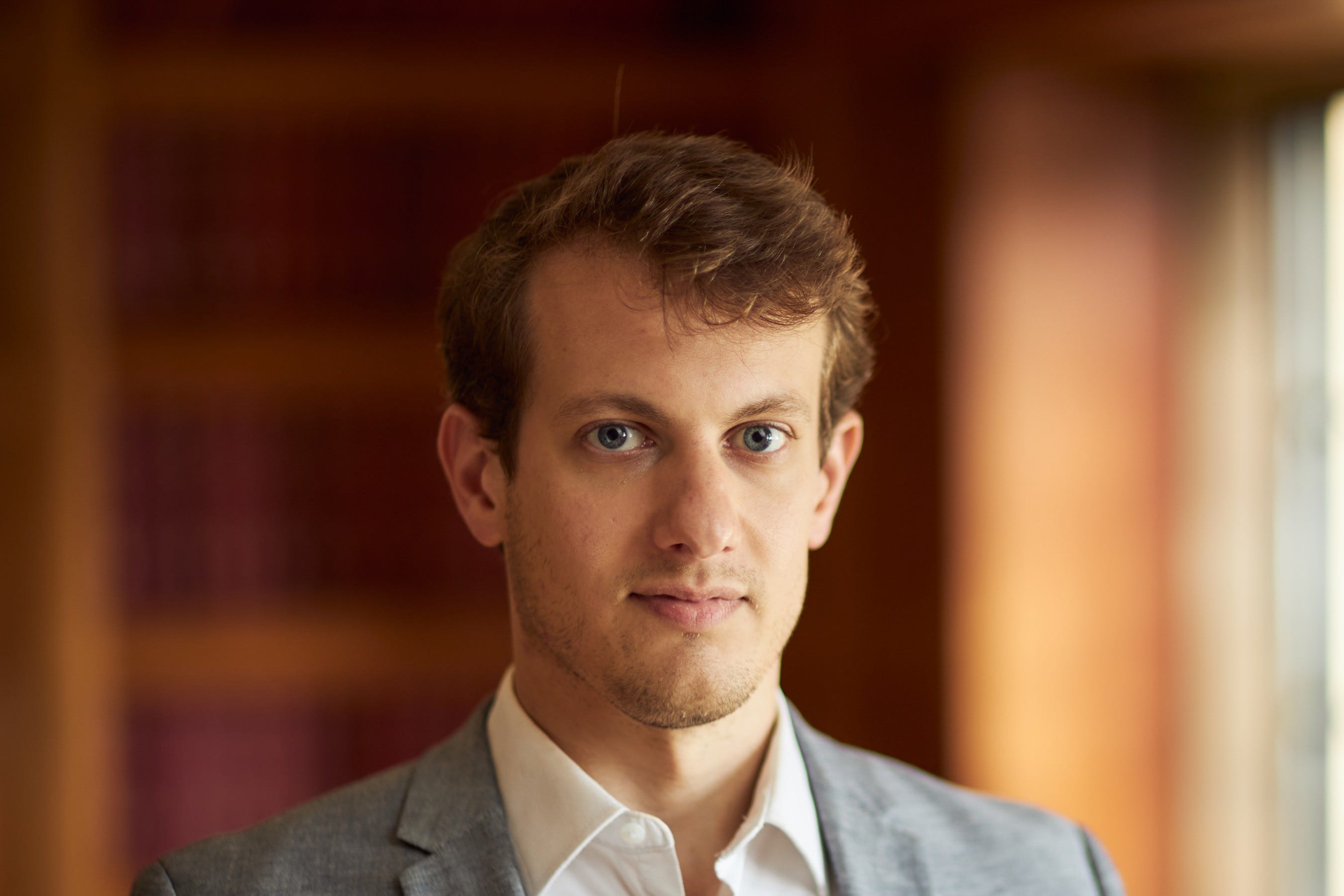
The problem of misinformation in the current age, argues political scientist Samuel Bagg, is not that reliably truth-producing institutions and practices don’t exist, but that people have ceased to trust them. Changing that requires something deeper than factchecking or media literacy. It’s a matter of social identity, and solving it will mean reconfiguring the social identity landscape. I talk with Bagg about that daunting conclusion and its implications for democracy.

(PDF transcript)
(Active transcript)
Text transcript:
David Roberts
Way back in 2010, for Grist, I started writing about what I called “post-truth politics” (one, two, three), the rise of nonsense and conspiracy in the mainstream information diet, along with increasingly explicit pressure on the institutions meant to distinguish truth from nonsense to cease doing so.
In 2017, I called it an epistemic crisis, or, alternatively, the rise of tribal epistemology. In 2018, I talked with Chris Hayes on his podcast about it, and then returned to it in 2019. After launching Volts, though, I turned my professional work toward other things, even though I never quit ranting about “the information environment” on social media.
Anyway, I recently came across a post from political science professor Samuel Bagg at the University of South Carolina that sketched out what I was never quite able to achieve, which is something like a coherent theory about all this. He acknowledges the epistemic crisis but argues that it is a mistake to seek “epistemic solutions [like] better fact-checking, more deliberation, improved education, [or] greater media balance.” The problem runs deeper, he says: “decades of research have demonstrated that our political beliefs and behavior are thoroughly motivated and mediated by our social identities.”
If you want to change minds, you have to change identities. “More than any particular institutional, technological, or educational reform,” he writes, “promoting a healthier democracy requires reshaping the social identity landscape that ultimately anchors other democratic pathologies.”
This strikes me as both bracingly true and incredibly daunting, so I immediately wanted to talk to him about it, and as I prepared for this episode and read around his other work, including his book on democracy — which also articulates things I agree with but have struggled to capture — I realized that I might just be Bagg-pilled across the board.
So it’s a bit of a departure from clean energy today, folks. We’re heading into epistemology and social psychology. Buckle up.
All right, with no further ado, Professor Samuel Bagg, welcome to Volts. Thank you so much for coming.
Samuel Bagg
It’s great to be here. Thanks for having me on.
David Roberts
I loved all this stuff I read. I think the place to start is let’s talk about the limitations of the individual cognitive agent, the individual person. As I have read more of your work, I read this thing on epistemology and then I jumped over and started reading your stuff on democracy, which I thought was also really fascinating. As I read around more, I realized that it’s all of a piece and it all issues from what you call a critical realist take on the limitations of individual cognitive agents — almost everything else follows from that. That’s where I want to start.
The only thing I would say by way of preface is I think lots of people have read all these pop articles about the cognitive flaws that bedevil human beings and all these different ways you can arrange experiments to make them do or say silly, wrong things, to reason badly. Lots of people have read this work on social identity and they can see in other people how those identity commitments distort their reasoning or filter what they pay attention to, etc. But I think what happens to people — and this is just my experience talking to people in the normal world — is they have trouble seeing that about themselves.
When they see that in other people, the way they read it, the way they interpret it is “that’s just stupidity.” The cure for it is thus education, more information, fact-checking, all this stuff, more better information. Make the cognitive agent smarter — “like me.” Your premise, which is that this is true of everyone, including you, including me, including everyone.
Maybe start with the evidence base and the consensus that has formed in social psychology about how limited humans are as cognitive agents, as opposed to this enlightenment cliché of humans as little quasi-scientists who gather evidence and sift through it and reason their way to conclusions and compare the conclusions to further evidence, etc. Talk a little about what we know about humans as cognitive agents.
Samuel Bagg
Sure, yeah. I would say it’s a very big question. There’s a lot of different problems that have been identified by the kinds of studies that you’re talking about in social psychology. A lot of different biases. Some of them are the types of things that behavioral economists talk about — biases in the way that we conceive of values and losses and gains. Then there’s the kinds of things that, there are various self-serving biases that have nothing to do with politics really.
The ones that I’m most concerned with tend to be about how we interact in the political world because that’s the most relevant for democracy and for how we get out of the situation that we’re in. I would say, in any academic discipline, there’s going to be different interpretations of the data and so on. But I think there is a fairly strong — something close to what could be called the consensus — that social identities are extremely important for shaping every stage in the reasoning process.
What do we perceive in the world? We see the same information as somebody else with a different social identity. They are going to have different lenses than us. Different things are going to stick out to them about what’s important, they’re going to remember different things.
David Roberts
I really think it’s important to start there because when people think of these biases, they think of biases that take place within the explicit, conscious reasoning process. But those biases express themselves well before that. They shape not just what you think, but literally what you see and hear.
Samuel Bagg
Exactly. This is one reason to tie it back to the broader picture of the human mind, which is — it’s bias all the way down. Everything, the way that we — this is not just a feature of political perception that happens to be modulated by identity or whatever. Everything that we perceive, even just color and shape, down to the very basics, it’s all being processed through these heuristics and through what can be called biases. We’re constantly filling in information that we expect to perceive. We’re using all sorts of heuristics and biases in order to select which things in our environment are going to be most important.
David Roberts
And to survive. The one way I put it is, think about what we know about the origins of humanity and evolution. Why would evolution select for truth-finding as opposed to survival? Evolution has no particular interest in truth as an abstract concept. All evolution cares about is that you get by. That’s what shapes perception — what’s useful, what helps me survive, which is not a complete picture, of course, of the environment.
Samuel Bagg
It’s going to have something to do with truth, because it’s not good for survival if you believe completely false things all the time. There’s going to be some connection to reality, but it is not maximizing for truth. Truth is incidental. It’s going to be there somewhere. There’s some sensitivity to it, but it’s not going to be the primary goal. It’s certainly not going to be designed to approach it in all situations. In any case, I think it’s important to start with, or at least remind ourselves of the background, that this is not some special political problem. This is all perception.
But going back to the political case, it shapes what information we seek out, where we seek it out, how we perceive it, which of it we remember, what seems salient to us, what arguments seem convincing, which things seem irrelevant, all of that. These are the building blocks of reasoning. If the Enlightenment picture of reasoning is that we have this generalized capacity to engage in the world, to perceive the world, to reason about it, to make arguments and engage in arguments with other people, we just know that is not an accurate picture of what human reasoning is. Human reasoning is constructed out of various biases. That is not to say that we cannot get better, that we cannot, gradually, through a lot of training and so on, weaken the influence of some of these biases over our reasoning processes.
David Roberts
Some of them, I would say, there are layers. Some are buried deeper than others.
Samuel Bagg
But we certainly can never get rid of all of them at once entirely, and we can’t be sure that we’ve done so. That’s just thinking about internal biases and so on. But there are also these collective structures that we’ve built socially that help us get closer to something like the truth, because they’re putting all of these perspectives together. Those, of course, are also going to import whatever biases we happen to have collectively. But insofar as other people’s biases cancel them out, and there are strict procedures for determining these things, we can do better and better, but nothing is perfect.
David Roberts
I want to get back to that collective nature because I think that’s another huge point that I just practically shouted at when I encountered it in your piece. Often when I point out people’s cognitive limitations and the ways that their social identities shape and filter what they see, what they perceive, how they reason, very often — I’m sure you encounter this too — people’s instinctive move is to go to what you call epistemic solutions, which is if a bunch of people are out there believing a bunch of misinformation and being misled by their biases, the solution socially is to make them better reasoners, to give them more training, more epistemic training, and to make more good information available, etc.
I want you to talk about, because what you say in the piece is not that those things are bad or that they can’t work at all, just that they are really, really difficult to do and thus extremely difficult to do at scale. Talk about that — why is it so hard? Why is it harder than people understand?
Samuel Bagg
One thing is that there are many areas of knowledge that we have to have in order to navigate the world, even just our daily lives, not to mention the political world, but once we bring the political world in, there are many things that we have to know about, and it is not possible for any single individual to know with a decent level of certainty what is right on any of these questions on their own steam.
We’re always going to end up trusting certain sources, certain people, certain authorities, certain institutions as the relevant authorities on these questions. We can’t navigate our life without doing that.
David Roberts
This is such a crucial point. I just want to put a million exclamation points next to this, because people have such naive views about how people come to truth. They imagine people gathering evidence and reasoning. But as you say, and I’m sure this is always true, particularly in the modern world, no individual could hope to even encounter all the evidence that we’ve gathered, much less reason their way to all the conclusions we’ve come to. It’s a tiny, tiny, tiny little millifraction of truth that you personally come to — the overwhelming bulk, 99.9% of what you believe.
You believe not because you gathered evidence and reasoned to conclusions, but because someone told you and you trusted them. That cannot be emphasized enough.
Samuel Bagg
Theoretically, you might think, okay, yes, we always have to trust other people. But one way that we could go through the world is we could constantly update who we trust based on our own independent reading of the evidence. We can make perfectly rational decisions about who to trust in all situations. We’re constantly optimizing on that basis.
Here is where the brute facts that are discovered by social psychology and experimental studies come in. It’s a great idea to try and do that and to try to optimize. Some of these ways of becoming more rational and hearing other sides can help. But at the end of the day, a lot of what is going to shape which sources you trust has to do with the broader social environment that you are in and the social identities that you hold within that environment.
David Roberts
Who are my people? Who are people like me?
Samuel Bagg
Who are people like me? A lot of people, when they hear identity, they think, oh, race, gender. That’s not what I’m talking about here. It can be. Those are identities based on race and gender. Partisan identity is another big one that gets studied a lot in American political science. But those are just a few of the many possible identities, and they’re the ones that we focus on, perhaps because they’re most salient in certain contexts, they’re easiest to identify from the outside.
But really, when social psychologists talk about identity, which is what these studies are based on, they’re talking about — it could be anything. Some of the early studies literally induce a fake identity. They say, “You’re on the blue team,” and these people are identified.
David Roberts
It’s quite easy to induce. We’re very inclined to do it. It takes very little for us to choose a team.
Samuel Bagg
You can have many identities at once. They could become salient at different times in different contexts. In fact, a lot of political strategy, whether people realize it or not, is trying to make certain identities that people hold more salient or try to interpret them in different ways at different times. It often comes about through what looks like reasonable debate or stating facts and so on. But a lot of it, what it is doing in practice is activating certain identities, shaping the way people interpret them and so on, because that is what affects how they interpret, respond to, process, whatever information they are receiving.
David Roberts
I think it’s true what you say, that we can bring our reason to bear on who it is we trust. We can dig down a few levels and try to figure out are we trusting the right person. But even if you are dedicated to that, there’s a limit. It’s like trying to see the back of your head in a mirror. You ground out at a certain point. You come to a base level of, “I just have to trust somebody.” There’s no way to get completely behind this. Everybody to some extent is within and embedded in their social identities and having their perceptions shaped.
The second thing you said, which I think is also important, is it can very often feel like we are gathering evidence and reasoning and coming to conclusions. We very often want to view ourselves that way. But almost always their social identity is shaping things in the background — that is just human. Humans are social creatures. That is the way humans work. There is no way out of it.
A lot of places to go from here. One of the things that also made me clap when I encountered it in here is, when you’re trying to figure out who to trust, I’m just going to read this. Going to quote you to you.
Samuel Bagg
Sure.
David Roberts
I’ll read the sentence: “Indeed. This explains why all of our reasonably successful epistemic practices are collective in nature, relying not primarily on individual-level rationality, but on social structures calibrated to correct for individual limitations.” That is a sentence that I’ve had almost verbatim in my head. I constantly start preaching this to people.
I interact a lot with this rationalist community. I’m sure you have encountered these people who are obsessed with this idea of becoming individual superheroic reasoners. I always want to say in response that, over time, when I was young and naive, I viewed reason as a human capability that you can just tap into when you want to. You can go in your brain and turn it on and do it.
Over time, I’ve come to see rationality and reason as not the default, but as an achievement, a rare achievement, and almost always a collective achievement, a social achievement, something people achieve together. No matter how much of an individual brain genius you are, you can’t — it’s like trying to see the back of your head in a mirror. You can’t chase down all your own biases and distortions. The only way we can iron that stuff out or sift that stuff out over time is collectively. That’s how we reason well. In those rare instances we reason well, we do it together over time.
Samuel Bagg
If you want to test this theory, just think of your favorite genius, and I guarantee they will have had some crazy beliefs or at least non-rational beliefs. No matter who it is, no matter how smart — the best individual reasoner you can possibly imagine — in retrospect it will be very easy to see where they went wrong. There isn’t just this general capacity, this faculty, that is the quality of somebody’s reasoning or something like that.
David Roberts
The smartest people I know are eager to say that. This is a team sport. I could not have done this alone. I could not have done this without getting checked. There have been so many popular discussions lately about science and scientism and who trusts the science and who doesn’t trust the science and who owns the science. I find that the naive public perception of science is very weird.
On some level people are “The right wing has their preachers and these are just the left wing’s preachers.” The choice to trust these people rather than these people is on some level arbitrary. But there’s a reason to trust science and it is precisely this: you’re correcting individual limitations over time. You’re groping over time in a generally positive direction. It’s a limited number of people who’ll be directly involved in this precisely because reasoning the way science asks you to reason is not natural. It’s not the way we normally reason. We do not normally try to suspend our biases. We do not normally try to assume we might be wrong about everything.
A lot of that is you have to be trained to do that. What you want ideally is for the public to trust the results of institutions that have these practices. This gets to an interesting juncture. I thought in your paper you say it is possible for these institutions where you have these practices, these truth-finding practices, these generally truth-finding practices — you’d say it of science, but you also cite academia and journalism, all based on the same basic principles, which is we’re correcting each other over time. What you want is for the public to trust those practices.
You say the problem is not these days the epistemic crisis. The core of the epistemic crisis is not that those truth-finding practices don’t exist, it’s that people don’t trust them anymore. Maybe for limitations of space, you breeze a little quickly past the point that a lot of people would read this — a Joe Rogan listener, for instance, might read this and say, “Hold on, buddy. Those institutions, you can’t just wave away their flaws. They have betrayed our trust and that is why we don’t trust them.”
I don’t really agree with that, but you recognize that perspective. You recognize that’s what’s going on in a lot of those circles. It’s precisely that those people have concluded that those institutions don’t work that way anymore.
Samuel Bagg
That’s right. This is the tricky thing. I believe that science is ultimately a collective truth-tracking enterprise. I believe that about a number of the other ones that we have developed over the years which have different purposes. Professional journalism has a lot of truth-tracking properties. Legal reasoning has a lot of truth-tracking properties. They function for different purposes and on different timescales. Science is probably the most reliable overall because it has the most time and the most rigorous procedures of all. The others have different purposes and they have developed in different directions.
Other forms of scholarship that are not strictly scientific also have their own truth-tracking procedures and so on. I think that all of them do an okay job on the whole for what they’re — given the problems that they’re tackling. I would believe that, because I’m an academic and that’s my social identity.
How do you then respond to people who are in the other camp saying, “They forfeited our trust in some way?” In a given moment there is no argument that you can give. Ultimately, I think I can tell you what I would say. “Yes, there are biases in science. There are problems. It gets the wrong answer sometimes just because of random mistakes, and it also gets the wrong answer sometimes because of vested interest and so on. Nevertheless, on the whole it has the self-correcting procedures that other alternatives don’t have, and probably the next thing to say would be to examine the credibility and the procedures that are used by whatever alternative the person is trusting instead,” and say, “Okay, let’s take a look at this comparatively and see how many biases there are.”
David Roberts
Is your alternative better?
Samuel Bagg
Exactly.
David Roberts
If you really think that the flaw of mainstream news is that it is biased, would you produce Fox News if that was genuinely your concern? Is that epistemically better on that particular metric? I don’t think so.
Samuel Bagg
The tricky thing is that it’s experienced in the same way that you and I experience that. How obvious it is that Fox News is a biased source of news — it’s experienced in the same way, with the same certainty by folks who would claim that MSNBC or CNN or certain government agencies perhaps are biased, unreliable. Of course these arguments should be had. The substantive arguments about which of these sources is less biased than the other — that discussion needs to be had, and those arguments need to be made publicly, constantly, over and over again.
However, that is not going to be sufficient to make the change that needs to happen, which is that more people need to trust the institutions that —
David Roberts
We’ll get into that next. I just want to establish this critical realist view of these things. It is entirely possible to acknowledge that science and journalism, etc., are populated by human beings and thus afflicted with the same problems human reasoning generally has. There are going to be flaws, but there is a general, over time, corrective move toward the truth collectively.
Samuel Bagg
That’s right.
David Roberts
It’s just like democracy. It’s not great — it’s just better than the alternatives. This is just to establish there are higher and lower quality sources that you can choose to trust, and there are sources that you can choose to trust that will over time generally lead you in the direction of truth. The trick then, as you say, if cognition is mostly about social identity and who you trust —
I’m going to read another quote from you because I loved this one too. “The difference between epistemic success and epistemic failure then is whether we trust the right people at the right times.”
This, I think, is the core for ordinary people, insofar as ordinary people care about epistemology at all, or even know what it is. But insofar as ordinary people engage in this and care about this, it’s not about your ability to gather evidence and assess it and reason to conclusions — everybody will have better or worse of those faculties.
But the real core of the issue is have you chosen the right people to trust? Have you chosen the right institutions to trust? This gets us at last to your core description of the epistemic crisis, which is that we have by and large lost social trust in these truth-finding institutions and that the road back to health is persuading people to resume trusting these institutions. Again, Rogan is going to hear this and pass out because the perfidy of these institutions is core to that whole world, that whole mindset, the whole reactionary backlash in the US would be outraged at the idea that these institutions are trustworthy. I just want to say, you breeze past this in the piece, but I do think there are lots of things you can point to even in recent times where these institutions have fallen down.
Samuel Bagg
Absolutely.
David Roberts
Or performed poorly or not lived up to the trust. But again, there is just no alternative. There is just no better. I do think also that these institutions improve insofar as they are valued and invested in. Trusted and conversely, the more trust they lose, the more resources they lose, the worse they get. It is a self-reinforcing cycle in either direction.
Samuel Bagg
It’s also the case that trust does not mean blind trust. You’re not just going to trust whatever these guys tell you. Not whatever they say. I’m going to look at it with a critical eye. I’m going to see what the arguments are against it and so on. But at the end of the day, conspiracy theorists can always come up with a reason to justify their beliefs. It can be a very consistent set of beliefs if you highly discount certain information sources and so on. You’re just in a whole different universe that may be quite internally consistent, at least to as high of a standard as we would hold ourselves in thinking about whether our worldview is internally consistent and may feel like subjective reasoning. Certainly does, of course, to the people who are doing it.
David Roberts
But they’ve just had the bad luck of trusting the wrong people. I love this notion that you introduce of epistemic luck. I found in political arguments when you try to highlight the fact that the left, broadly speaking, still trusts these knowledge-finding institutions that still, broadly speaking, lead us toward truth, the reaction you often get is, “Oh, you’re trying to say that lefties are smart and righties are dumb.” That’s the reaction. But that is not the point.
The point is just that insofar as most people on the left believe true things, it’s not that they’re geniuses or better reasoners, it’s just that they were lucky enough to be born into a set of social identities that leads them to trust institutions that produce truth. It’s luck. It’s epistemic luck.
Samuel Bagg
Or to have adopted those social identities for other reasons down the line. One of the many processes that might determine what social identities you hold and how you interpret them is a process of epistemic learning, but it is not the main one that is going to determine which social identities we accept. Very few of us are going to decide, “I’m going to identify with this group because it seems like they tend to have the most accurate information on the whole.” Even if we did, the basis on which we are making that judgment is at least partly determined by the prior social identities that we already accept. The problem you are characterizing is trying to see the back of your head.
David Roberts
It’s much more often you choose a group to trust for unrelated social reasons.
Samuel Bagg
Exactly.
David Roberts
And then conclude that they have the best information and the best reasoning. It usually happens the other way around.
Samuel Bagg
It’s partly the communities you’re born into, partly the communities you choose, but even when you’re choosing them, you’re not choosing them for that reason. It’s still unrelated to the epistemic merit of what the community is concluding.
David Roberts
This comes up in climate change. I’ve been involved in climate change journalism discussions for many years, and one of the points I often try to make is that your average person on the left believes in climate change for reasons that are just as arbitrary, in the end, as the reason that the person on the right doesn’t believe in climate change, which is that they’re involved in social groups that believe those things. They haven’t gathered the evidence either. They’re not reasoning in any special way. They are just lucky enough that they inherited these social groups that trust scientists, and so they trust scientists.
Again, it’s mostly luck. It’s not any particular skill, any higher level of intelligence, any particular power — mostly epistemic luck. People would characterize it as a dim view of human cognition, but I think it’s just realistic. Most people, insofar as you want them to believe true things, need to adopt social identities that trust trustworthy institutions.
Samuel Bagg
That’s the bottom line.
David Roberts
That’s the bottom line. I love this because it takes seriously these cognitive limitations and, we were saying off mic, you’re constantly reading these articles and work from psychology about cognitive limitations, but I just don’t feel political people take it seriously and incorporate it into their worldview and into their view about how human societies work.
Samuel Bagg
It’s hard to do, especially from a democratic perspective. There are some people who take it seriously and a lot of the times they come to the conclusion that, “That means that we shouldn’t have democracy.” I think that’s absolutely the wrong conclusion to draw. There are some libertarian versions of this. There’s even some people in the authoritarian or meritocratic China model space that really are into this idea that, “Oh, what we have to have is a political meritocracy.”
David Roberts
Or Straussian — this sort of Straussian view that we should have a cabal of people who know what’s really going on running things and then the masses just need good illusions, basically need good stories to be pacified.
Samuel Bagg
There are a lot of problems with this view, but one of them is that it assumes that the results don’t apply to them, that meritocracy selects out these problems and that the problems really only afflict the masses.
Problem number one with this solution is that that’s not true — these same problems affect everybody. Then there are a bunch of other problems that are related to that, some that are not related, but it’s a non-starter. You have to figure out how to do democracy with this assumption in mind. There are very few people who take this seriously from a democratic perspective. That’s part of what I’m trying to do in my work.
David Roberts
I would just say on the Straussian point, not only is no one free of these things, but no one is more likely to be deeply in the grips of such biases than people who think they aren’t — than people who think they have reasoned their way free of these things. There’s a famous podcast interview between Ezra Klein and Sam Harris. I don’t know if you ever heard this or are familiar with Sam Harris.
Samuel Bagg
I am, but I haven’t heard that interview.
David Roberts
One of the prominent atheist guys, a rationalist guy, and he was talking about various other people’s biases and Ezra was trying to get him to admit that “You are situated too, you also are in the midst of these things in a way that you can’t necessarily see.” Harris would not admit it. It was remarkable.
Some people, I have noticed — and maybe you have noticed the same thing — find this view of things deeply threatening. The idea that they are not masters of their own mind, that things are going on that are affecting them and affecting how they think that they cannot see, that they cannot get ahold of. Some people really hate that idea.
Samuel Bagg
It’s funny, I just have no problem with that. I’m always puzzled when people do. But it’s a real phenomenon that some people — in a way I want to see everything in terms of identity — have this identity as it’s invested with being hyper-rational or being the master of your mind. For somebody to challenge that is to challenge the core of your being. That’s a threat that is not going to be accurately perceived.
David Roberts
Probably my own personal theory is that there’s the authoritarian personality and then there’s the non-authoritarian personality. There’s a bell curve distribution of that. I think if you’re more on the authoritarian side, this is what the psychologists say, you have a greater need for certainty and clarity and clear lines and clear categories. If you take what you’re saying seriously, what you’re saying is you never get there. You can’t get there as a human being. You are always in some sense — might be wrong, there might be some bias behind where you can see affecting things. To be human is to be in a perpetual state of uncertainty. I can understand why people of that personality find that notion horrific.
Hey there everybody. Don’t worry, I’m not going to tell you about a new mattress or push a credit card on you. This isn’t an ad. There are no ads on Volts. It is supported entirely by listeners like you. If you indulge me for a second, I’d like to ask for your support.
I started Volts because we’re all surrounded by depressing news about climate change and misinformation about clean energy. It’s never been more important to share the stories of the real people on the ground doing the real work of transition and all the ingenuity, courage, and public spirit they are bringing to it.
People are hungry to hear these stories, to learn from and find inspiration in them. I’ve heard from people who change majors or careers after hearing episodes of Volts, people using it in classrooms and community groups, even state legislators who have passed bills inspired by specific episodes. Sharing these stories matters. It makes a difference.
If you have found value in it and want to help me continue doing it, I hope you will join the community of paid subscribers at volts.wtf. It’s about the cost of a cup of coffee a month. If you don’t like subscriptions, you can make a one-time contribution, leave a review on Apple or Spotify, or just tell a friend about Volts. I am grateful for any and all support. If you’re already a paid subscriber, thank you. And now back to the show.
To be human is to be in a perpetual state of uncertainty. I can understand why people of that personality find that notion horrific.
Samuel Bagg
Yeah. It’s also possible to take this in the other direction. I remember having a conversation with a dear friend about astrology. The defense that she offered of not necessarily believing in it, but not not believing in it —
David Roberts
Yes.
Samuel Bagg
— was, “Oh, we don’t know. There’s so much that we don’t know. We’re just uncertain.”
David Roberts
And, “I can believe whatever I want.”
Samuel Bagg
It is maybe true that the movement of the planets affects our moods or whatever, and that it is possible to take this uncertainty in the wrong way because there are degrees of uncertainty.
David Roberts
This is what I like about your work, both on democracy and on epistemology — you acknowledge the limitations, the humanity, but say we don’t have to then throw out the idea that there can be better or worse reasoning or better or worse morality, or better or worse ways of arranging society. You don’t have to go from there to wild subjectivity and nothing matters. You can still have discernment and judgment.
Samuel Bagg
At the end of the day, we have to make judgments because we have to act in the world. From that flows everything else. What is the best information that I have to act on now, given that I have to make a decision? That is what you are working with. You cannot be certain about it. You can acknowledge the uncertainty and still say, “This is the best I got now.”
David Roberts
A lot of people are comfortable in that space. This brings us to the big pivot here, which is the idea is yes, there’s this epistemic crisis, this crisis of misinformation, this crisis of a lot of people believing a lot of wacky dumb stuff, which derives from the crisis of people losing trust in institutions that reliably find truth. But as we’ve discussed, that trust is born out of social identity, not out of classic enlightenment-style reasoning.
What follows is if you want people to resume trusting institutions that reliably move toward truth over time, it is not a matter of persuading them or making them smarter or giving them more information. It is deeper than that. This is what I was getting at earlier with the difficulty of this — the experimental evidence shows that it is really just wildly difficult to change people’s minds.
I feel people in the politics world underplay this, but there is a lot of evidence on this score and people by and large do not change their minds and even if you give them better information, will often double down on their previous beliefs. These things are identity-based, they are very deeply rooted and it is very difficult to persuade people away. Your conclusion is if we want to bring people back to trusting these truth-finding institutions, we have to change their social identities. That is what we are doing in politics.
When you put it plainly and starkly like that, that’s really hard. As you point out, these social identities are not formed via words and ideas, they’re deeper than that. It follows that if you want to change them, you need something deeper than words, deeper than discussion, deeper than deliberation. If you want people to reorient their identities and have new identities, that comes from deep emotional experiences. The analogy I always use is there’s a reason the army takes people and immediately puts them through six weeks of sleeplessness and privation and difficulty and trauma together, because you have to strip people down to their brainstem and then build them back up from there. That’s how you get a new identity, by an emotional experience like that.
Thus we come to your work on democracy. What we need to do to get better democracy is change people’s identity. That is a tall order. Most of what my cohort, especially in the elite left these days — and as we know, there’s been this sorting where more and more Dems in the left are just nerds, “A” students, people who love words and thinking and thinking in words and have this unshakable belief that words can do anything and that persuasion can do anything and framing can do anything.
If you just frame things — I’ve been involved, as I said, in climate change for decades, and I cannot tell you how many discussions I’ve had about the way to solve the political problem around climate change is just talk about it differently, use different words, the faith in words. But as you are pointing out, this runs deeper. The question becomes what type of political intervention that is available to us carries that kind of depth of emotion?
Samuel Bagg
First I’ll just remark, here I am trying to change people’s minds about this with words.
David Roberts
That’s my whole life, dude. I’m not talking it down. That is literally what I’ve devoted my life to.
Samuel Bagg
I had somebody read my work once and say, “I think that what you really want to be is a novelist or something.” Maybe that would help.
David Roberts
If you really want to change minds, you need to produce emotional experiences in your readers. There is some truth to that.
Samuel Bagg
Another frame-setting exercise. I think it’s important to say the problem is that identities are disconnected. People’s identities are disconnected from these truth-tracking systems. One path, probably the hardest path, is to get people to completely change their identities and to have new identities that are aligned better with those systems. That’s going to be the most thoroughgoing, foolproof, but in many ways it’s the hardest. I’ll get back to that.
I also want to say that an identity-oriented or identity-conscious strategy can look different than that. It can look like not breaking somebody down to the brainstem and building them back up in a new mold. It can look like changing how people interpret their identities. This is essentially how a lot of everyday political battle happens, even if it is not the way that people conceive of what they are doing.
People who identify as working class understand this almost universally in mid-century to imply identification with a union or the Democratic Party in the United States or various other institutions. They might also, depending on where they live, understand it as being embedded in a certain ideal of masculinity or a certain ideal of whiteness even. These are the connotations of what it means to be working class. This has obviously shifted over time. It shifted in different ways for different people.
Now for many people in certain regions of this country and others, being working class and that identity is in a sense an anti-elite identity which leads one to not trust elite institutions. You don’t have to have been torn down to the brainstem and reformed in order to have that shift happen. A lot of the identity-conscious effort at persuasion or changing minds is going to be about this process. How do we make the identities that people already hold more amenable to the truth-tracking institutions?
David Roberts
What you’re describing, you can see this happening in real time about masculinity right now. People are very openly and explicitly contesting what is masculine identity, what comes along with it, what is implied by it. Who else I thought did a fantastic version of this? I’m not sure if you ever cite this in the book or have talked about this example, but I thought Obama was great at this. One of the things he did is he tried to make what does it mean to be an American? One way to think about America is it’s a particular set of people in a particular geography, a blood and soil. That’s the default nationalism, I think, of ordinary people and most people throughout history.
But another way of conceiving of being an American is as part of this perpetual ongoing project to perfect ourselves, to live up to our original ideas. In other words, the change and the striving were the identity, were Americanness. That is what it is to be an American. He was trying to redefine what American identity means, and I think pretty successfully. I think he was identity-conscious in a way. That probably comes along with being a minority.
Samuel Bagg
Absolutely. This is tricky because I think there’s a certain way in which those kinds of identity narratives ring false because the idea that, “This is really who Americans are.” Look around. Historically, Americans were slaveholders. They weren’t really invested in diversity, and they weren’t. It’s a myth. It’s not true that this is what America fundamentally is about. However, it might be, at least in some contexts, a quite effective method of identity mobilization to draw on this myth, this aspirational vision of what Americans are, rather than a factually accurate vision of what Americans are.
David Roberts
I do think there’s a strand —
Samuel Bagg
I sympathize with both sides of this.
David Roberts
There’s a strand of that in American history.
Samuel Bagg
Absolutely.
David Roberts
That’s totally made up. If you go pull out the strand —
Samuel Bagg
It wouldn’t be an effective myth if it had no basis in reality. But I think it’s a strategic question because there can also be downsides. There are plenty of people who won’t find themselves in that identity, that the factual mismatch is going to be too strong. It won’t draw some people in. But I think the power of that can’t be denied. It’s tricky when you get into situations where, when Obama was president, the American flag was a pretty bipartisan emblem. Now if you see somebody waving an American flag, that is a signal.
It’s actually interesting. I live in South Carolina. I would say that it’s less the case here, but certainly at the No Kings rally and so on, it’s very leaning into this American patriotism vision and that sort of identity, reclaiming American identity in that sense, redefining it. That absolutely has to be a part of any strategy for reclaiming that and shifting the way people interpret identity. I still haven’t answered your big question about this other vector of opinion change through identity change on a more holistic level. I don’t know if you wanted to interject there, but I did want to make sure I got to that before —
David Roberts
I just think that when politics people hear this message that you are not just trying to persuade people of different facts. You need to be changing people’s identity. You need to be changing how people see themselves. I think people are very daunted when they hear that because I think one of the reasons the Democratic technocrats are constantly trying to focus on kitchen table issues is that they understand how much money people have and how to give them more money. That is manageable, it is a metric.
But when you start talking about changing people’s identities, you’re getting past rational persuasion into something more like preaching, or you’re bringing to bear the tools of preachers, which I think to some of the democratic technocrats feels like cheating or feels like propaganda, feels illegitimate in some way to be told to do this.
Samuel Bagg
The idea that Mamdani would, for instance, propose policies that don’t meet the highest technocratic standards of viability, even though they express and connect to people because of the affordability crisis. A friend of mine in New York just said, “Yeah, everybody’s social identity is somebody who can’t afford to live in New York.” That’s basically the core social identity of everybody who lives here now. No wonder Mamdani was so popular. He appealed to that identity.
David Roberts
Yes. He was saying, “I’m like you. I’m a guy who cares about the bus price.” I run into the bus price every day. The blindness of the democratic consultancy complex toward that other register, that non-literal register is crazy because most of politics is done in that other register.
Samuel Bagg
Obviously, I’m not saying that people should advocate for some policy that they have no intention of implementing and then do something completely different because that’s a Straussian or Platonic view of, “Just mislead the masses and then do something else.” It should obviously be connected. But the idea that you might propose something to connect with people that is not exactly the final form that the policy will take — that seemed to be at least on face the character of a lot of objections to Mandani and candidates like that, saying, “Well, this would never work.” I think that’s the core objection, maybe not, probably that’s their rationalization of some other underlying social identity reason that they’re not particularly well disposed to that sort of candidate. That’s on the level of political strategy and candidates, what they should say and that sort of thing.
The more fundamental question, we’re talking about a problem that’s developed over decades and decades. Probably the solutions that are going to be effective are on that timescale. When you’re talking about changing people’s identities, I think you’re absolutely right to identify the need for there to be these powerful experiences akin to something like going through basic training or a religious conversion experience. Sometimes those things can be one-off experiences if they’re powerful enough. People talk about psychedelics in this way sometimes.
David Roberts
Much of the reason psychedelics are coming back into vogue in therapy is precisely because they are a short-term cut to that deeper level that words can not get to.
Samuel Bagg
In politics and the kinds of decisions we can make, the kind of resources we can allocate, what gets people to have these kinds of experiences that genuinely change their views and is also not drugs or something that the military — not that that’s always bad — but what can we do in ordinary politics that will also have other good effects and on? To me, the number one answer is labor and labor unions. That’s the thing that’s always done this best in the past.
David Roberts
You call it organizing for power. The emotional experience comes from working together toward a common goal and then achieving it. Doing something together. Getting something together. That is just about the only thing in politics that has that emotional heft. That requires face-to-face organizing on the ground. This is what you end up emphasizing in your book on democracy and for the epistemology too. If you want people to have more accurate views, organize them into identities that respect these institutions. The organizing is the same on both sides. I have a bunch of questions about organizing, but we are almost out of time. There is one other question that is super abstruse and nerdy, but was very much on my mind. We are going to finish with that, which is this.
As I’m reading about organizing for power, your long description of organizing for power and why it works along these lines, along these deeper emotional identity lines, it all made sense to me except for you treat it as — we didn’t have time to get into this — but your vision of democracy is efforts to prevent the capture of excess state power by powerful and wealthy forces. That is what democracy is. You treat organizing as inherently operating toward that goal.
As I was reading your descriptions of the tools of organizing, I kept thinking over and over again, I know who does this really well. It’s the right wing. It’s TPUSA, iconic example of get people together face to face, give them a common goal, give them victories along the way, tell them, and then once you’ve got them aligned on identity, then you can fill in that identity with whatever ideological content you want. “Guess what? We’re against inheritance taxes.” Some 19-year-old TPUSA member, why would they care? But if that’s what people like us think about inheritance taxes, then that’s what I think about.
I kept thinking over and again, it seems to me the bad guys — that’s my editorializing — understand this better than our side, which is full of technocrats. The right wing understands very well the power of identity and is very good at using the tools of building identity. If you genuinely put your trust in these institutions that you’re talking about that find truth over time, science, journalism, academia, etc., one of the things about science is it is almost definitionally true that eventually science is going to produce a result that is not amenable to the short-term priorities and needs and desires and preferences of your faction or tribe.
That’s the nature of these things — they very often disappoint us. Truth in general very often is awkward and unpleasant and doesn’t fit with our identity, our social identity. If we’re trying to persuade people to trust in these institutions, these institutions, by their nature, insofar as they are genuinely truth-finding, seem to me inherently corrosive to social identity. They’re not going to tell you what you want to hear, and that’s what you need to reinforce a social identity over and over again — a holy book that never changes.
Science is going to constantly disappoint you and surprise you. Same with journalism. The truth is constantly going to be slightly at odds with what you wanted. It’s almost like we’re trying to build a social identity out of institutions that are themselves, over time, corrosive to social identities. In other words, we have a steeper hill to climb than they do. It’s easy to build identity around resentments or ancient hatreds or what God told you, etc. Building an identity around constantly evolving truth just seems harder to me. Does that scan to you?
Samuel Bagg
Absolutely, and it’s a pretty deep point. The other way in which we have an uphill battle is that there are a lot of very wealthy people in whose interest it is to fund the kinds of organizations that do what TPUSA or similar organizations do. Organizing for power is not inherently — it doesn’t go one way or another. The tactics can be used by anybody. You’re right to identify that there are organizations like that very successfully using those kinds of tactics. They’re pushing on an open door in terms of the ability to get funding from people who benefit from the kind of message that they’re selling.
The more interesting way, which I haven’t thought too much about, that we’re facing an uphill battle — I think that’s not exactly the metaphor you use, but there is something about the institutions that we want people to trust that makes it difficult for us to stay committed. It’s not just going to tell us everything that we want to hear.
David Roberts
Science demands that you hold your truths lightly and consider them all revisable and falsifiable. That is counter to a very deep psychological need. We want to hold our truths deeply.
Samuel Bagg
I think there’s a certain identity of a scientist or a liberal that one can have that involves holding one’s truths lightly. Then the problem becomes, if we hold our truths lightly, are we going to stand up for them? We’re way past the point where scientists don’t think they should get involved in politics. But there was a point, especially even among climate scientists, saying, “Well, that’s not my — there is uncertainty. It’s not my place to go tell other people how to interpret the facts. I just produce the science and that’s for somebody else.” Few climate scientists at least are in that boat anymore. There’s the old saying about liberals: a liberal is somebody who can’t take his own side in a fight.
David Roberts
Remember when Bush used to talk about — what was his phrase — moral clarity? That was his reference to, “Our identities come from fundamental unchangeable truths and metaphysical truths, and theirs you can’t trust from day to day.” He was explicitly viewing holding your truths lightly in a negative light as a weakness.
Samuel Bagg
The complaint that stuck about Kerry was that he was a flip-flopper. You have to remember that. To some extent I think this is — there is a real issue here, but to some extent I think you can hold core convictions and still be open to having the meaning of those convictions or the interpretation or the specifics change based on the facts. It is possible to have moral clarity about a lot of things, even when you acknowledge a great deal of uncertainty.
I have a lot of things that I feel very committed to politically and morally, despite the fact that my whole philosophy is based on uncertainty. There are varying degrees of uncertainty and there are things that I’m pretty certain about, relatively speaking, and there have been lots of chances to disconfirm them and they haven’t appeared. Could I be convinced out of them if I saw enough data in the other direction? I think it would be pretty hard, but perhaps it’s possible.
The real point is that I don’t think there’s a necessary conflict between being committed to and trusting journalism, science, academia and so on. On the one hand, it’s not blind trust, it’s a trust- but- verify, where appropriate, critical trust. To some extent, if science says a few things we don’t like, we can ignore those things and we can still be committed to science in a lot of ways. We’re going to, because that’s how social identity works. That’s how perception works. There’s going to be results that we just don’t pay so much attention to. As long as they’re not leading us completely in the wrong direction in terms of our judgments, that’s maybe okay. I don’t think that there’s this necessary conflict. I think we can worry a little bit too much about that sometimes.
What we need to care about is portraying a clear and attractive vision that is going to resonate with many identities, or at least certain kinds of identities that don’t accept the validity of these institutions and draw them in. That may require simplifying some things, but I don’t think it requires abandoning a commitment to the idea of uncertainty — the idea that things are going to work out slightly differently than we might imagine. That’s okay.
David Roberts
I could talk about this stuff forever. This really took me back to my old days. To wrap up here, quoting again, you say, “It was once common sense on the left to prioritize organizing, solidarity, contestation and collective action over more individualized and deliberative forms of political engagement.” I think if we’re taking away advice from both your work on epistemology and your work on democracy, it is that if you want to change what people think, how people think, you need to change their identity or change how they think of their identity, how they interpret their own identities.
The only way to do that is not through white papers and words, words, words. It’s getting in rooms with people, sharing pheromones, doing things together, fighting together. These things tap into deeper emotional waters and create identities. We’ve got to go make the identity of being a decent person who respects freedom and egalitarianism and respects science — we’ve got to make that an attractive identity, an attractor that people want to be part of.
Samuel Bagg
We got to do it in spaces where people who aren’t already like us exist.
I think that’s one trap people fall into. They want to say, “Okay, I’m going to engage politically, I’m going to contribute to this organization.” That can be effective in its own way. But it’s not doing the identity work unless it’s reaching out beyond, unless it’s having an impact. Reaching, involving, engaging, bringing people in who are not already on that side. Because we’re so sorted geographically, in institutions, in professions, we rarely encounter people like that anymore. But there are still places, and we have to find them. We have to not necessarily have a direct discussion — “You and I disagree about this, let’s hash it out.” That’s not going to work. It’s about connecting on other levels first to build trust and bring people in that way. Maybe over time, people are attracted to that.
David Roberts
The way I summarize that in the climate context, and this is something I’ve said for ages, along these lines of thinking is, if you find a climate denier who denies the existence of climate change and you want to change their mind, the best way to do that is to get them involved in doing something with you. That involves some work on climate change, enjoying it, succeeding, having some emotional experience, and then all of a sudden, the “facts” about climate change are going to look different to that person. You change their identity, which is a bigger task than persuasion.
But I think we’re just being realistic here — that is what’s required. That is the necessary movement, both on getting people to believe the right things and on getting people to support democracy. In both cases, it’s organizing ultimately that is doing the work.
All right. Sam, this was fun. I really enjoyed discovering your work. I went down a real rabbit hole. I’m glad you’re out there making these points and I recommend everyone to your book, which is — by the way, why don’t you shill your book real quick?
Samuel Bagg
Sure. It’s called “The Dispersion of Power: A Critical Realist Theory of Democracy.” It’s currently available only at a very high price. If you would like a copy digitally, there are ways to get it. Or you can email me. My email address is just my name at Gmail, samuelbagg@gmail.com. I’ve been promised that there will be a much more affordable paperback version coming out next year, so you can look forward to that as well.
David Roberts
Thanks, Sam.
Samuel Bagg
Thanks, David.
David Roberts
Thank you for listening to Volts. It takes a village to make this podcast work. Shout out, especially, to my super producer, Kyle McDonald, who makes me and my guests sound smart every week. And it is all supported entirely by listeners like you. So, if you value conversations like this, please consider joining our community of paid subscribers at volts.wtf. Or, leaving a nice review, or telling a friend about Volts. Or all three. Thanks so much, and I’ll see you next time.


